
Trill
MOTIF AS PROTAGONIST — a small musical idea that *is* the story's main character, undergoing six stages: introduction → motif statement → development → contrast → recapitulation → resolution.
Press play to listen along. The line being read lights up as you go.
Show full transcript
Loading transcript…
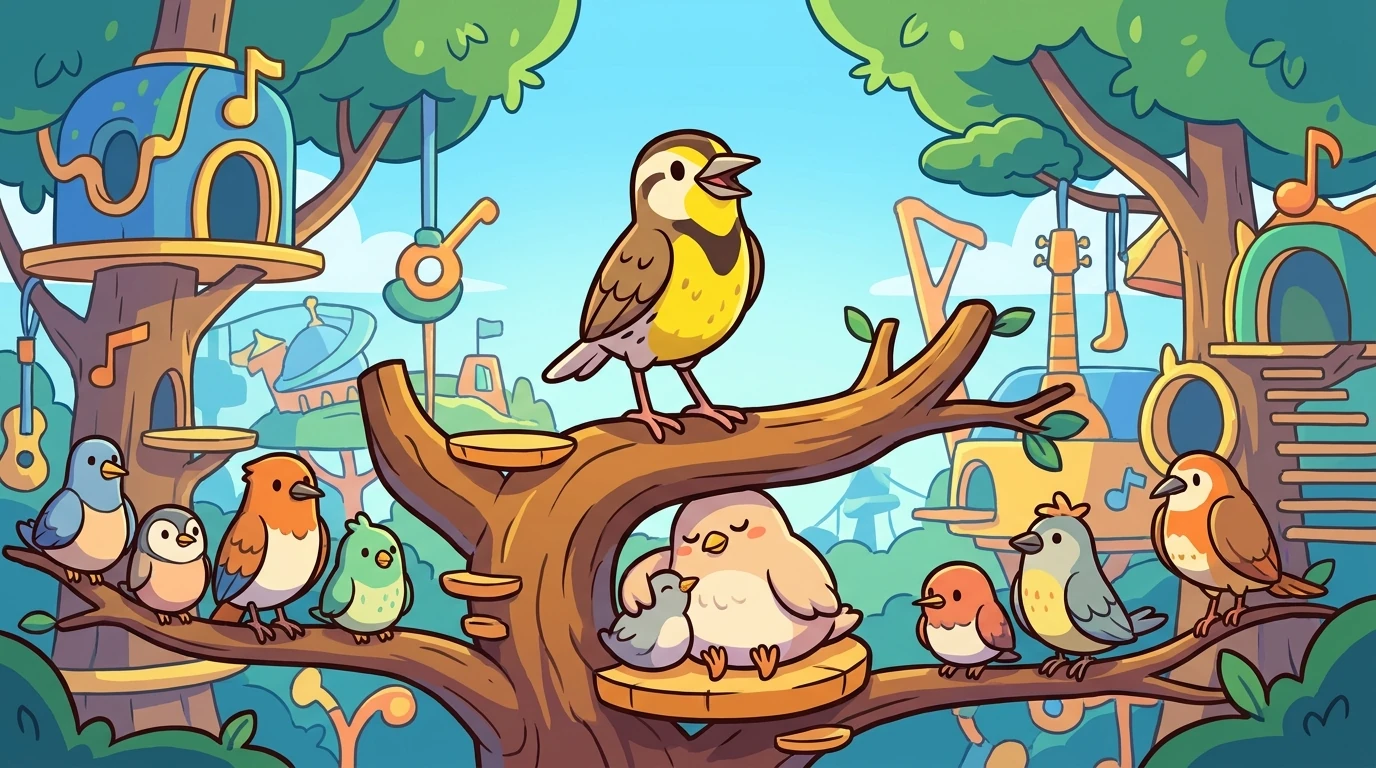
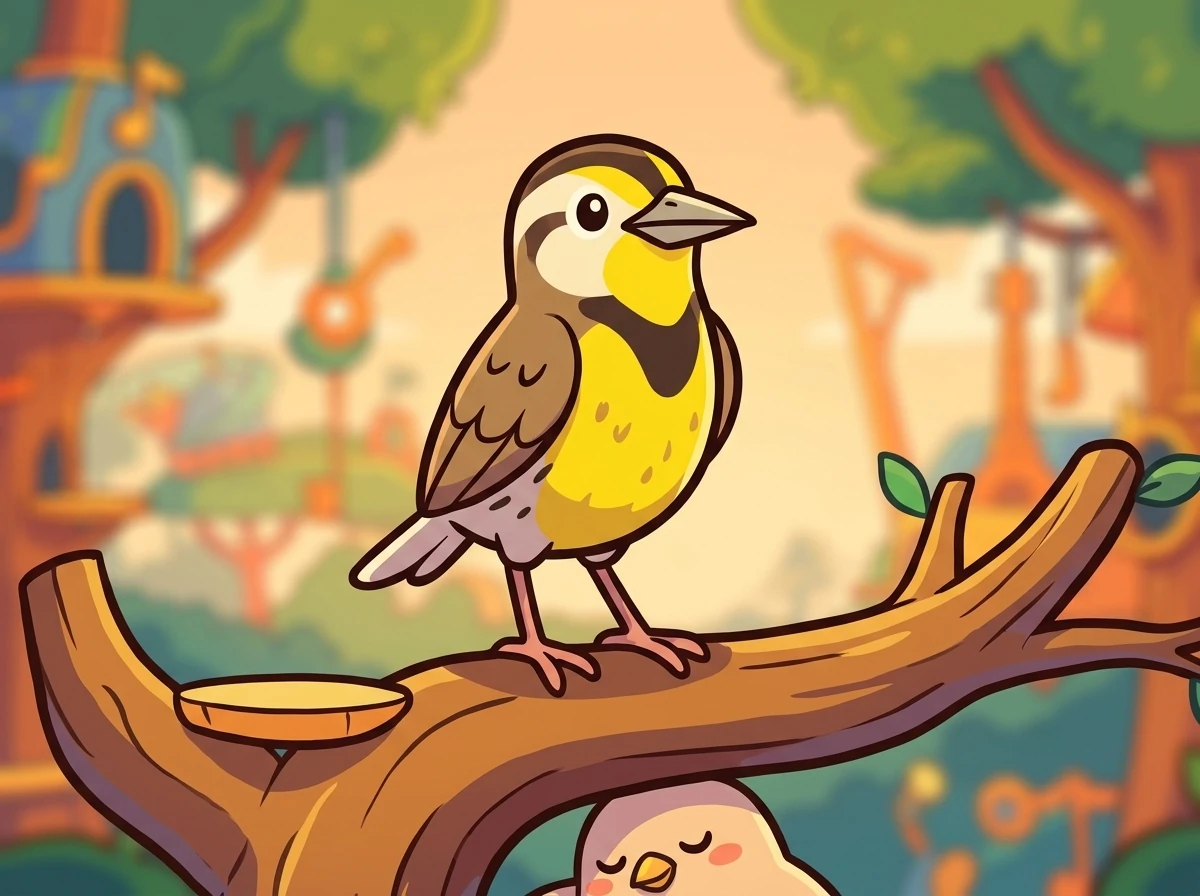
Trill is a young meadowlark with bright yellow feathers on his chest. He always stands very straight and proud. Trill loves to sing. In fact, he has been singing the exact same four-note tune since he was a tiny chick.
This short tune is his *motif*. A motif is a small musical idea that acts like the main character of a song. At the MotifLab academy, Trill is the star of the show. When kids write a song, Trill's whole life changes on the screen. If the music is happy, his feathers look bright. If the music gets wild, he might tilt his head or stretch a wing.
But a main character cannot do everything alone. Trill has nine friends who help him turn his short tune into a real piece of music. They hang out around his branch, waiting for their turn to play.
First is *Meld*, who handles the harmony. Harmony means the extra notes that bloom underneath the main tune to make it sound rich. Meld is a soft, round bird who loves to cozy up right under Trill's perch.
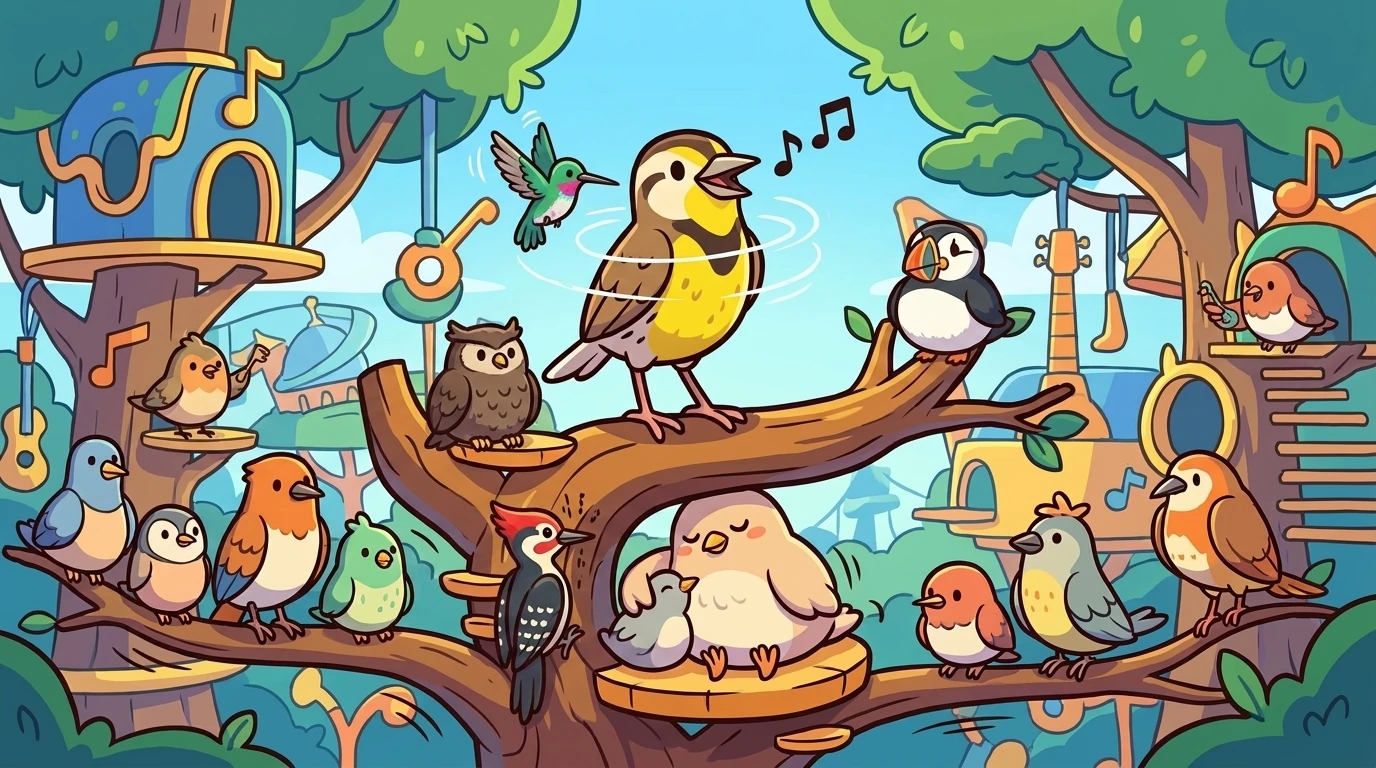
Next is *Thrum*, the bass. The bass is the deep, low sound that gives the song a steady floor. Thrum is a large, heavy owl who sits on the lowest branch and makes the whole tree shake.
Then comes *Clap*, who keeps the rhythm. Rhythm is the pattern of beats that makes you want to tap your foot. Clap is a woodpecker who taps out steady patterns on the bark.
*Twine* is the counter-melody. A counter-melody is a second little tune that weaves playfully against Trill's song. Twine is a quick little hummingbird who flies in loops around Trill's head.
*Surge* controls the dynamics. Dynamics are just how the music grows loud and soft. Surge is a puffin who puffs up when the music gets loud, then shrinks when it gets quiet.
*Ply* manages the texture. Texture means how many different layers of sound are playing at the same time. Ply is a goose who gathers all the other birds together in a big group.
*Tint* brings the timbre. Timbre is the special color of a sound, like a warm wooden flute or a bright metal bell. Tint is a parrot with feathers that change color depending on how the music feels.
*Nest* is the key. The key is the musical home base where the song always feels safe. Nest is a cozy, warm nest where Trill can always rest his feet.
Finally, there is *Wend*, who handles the cadence. A cadence is the gentle way a musical phrase rolls to a nice, neat close. Wend is a swan who glides in slowly to finish the song.
Trill is always the leader. His friends are the extra magic that grows up around him.
To write a great song, students guide Trill through six special stages. Each stage changes how Trill looks and acts on the screen.
*Stage One: Introduction.* The music is just starting. The song is setting a quiet mood, but Trill has not sung a single note yet. He sits very still on his wooden perch. He is waiting. You can feel the excitement in the air.
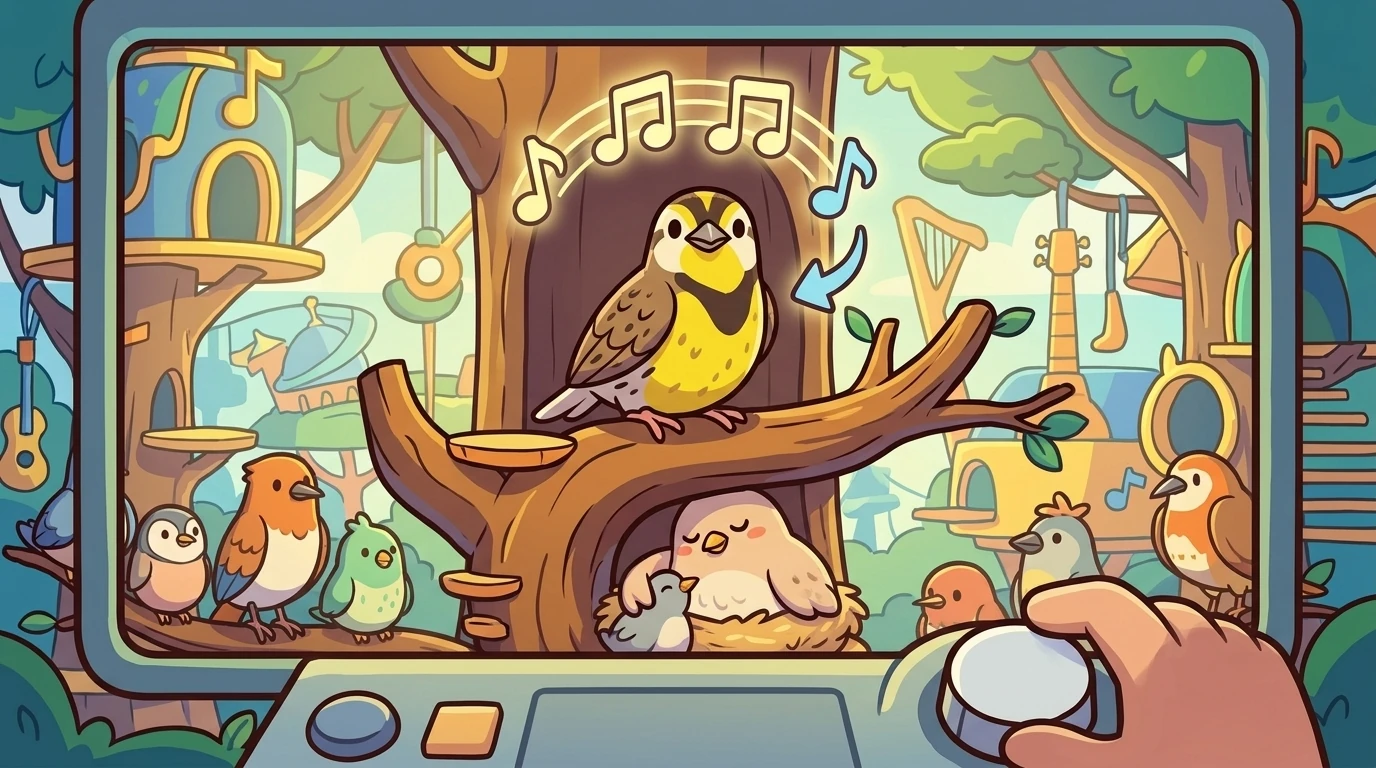
*Stage Two: Motif Statement.* This is the big moment. Trill stands up tall, puffs out his yellow chest, and sings his four-note song. This is the first time we hear his tune. Now everyone knows who the hero of the story is.
*Stage Three: Development.* Now the music starts to play around with Trill's tune. The notes might get faster, slower, or change their pitch. Trill tilts his head. He lifts one wing and stretches a leg. He looks different, but you can still tell he is Trill.
*Stage Four: Contrast.* Suddenly, a completely new tune takes over the song. Trill steps off the screen to let the new music shine. He is gone for a little while. The listeners miss him and wonder when he will come back.
*Stage Five: Recapitulation.* Trill flies back onto the screen! He has been on a big journey, and he looks a little different. His feathers are slightly ruffled. He looks braver. His song is back, but it has a tiny twist from his travels.
*Stage Six: Resolution.* The song is ready to end. Trill settles down on his perch. He sings his four-note song one last time. It sounds clean, simple, and perfect. He is finally back home.
At the academy, the teacher shows Trill on a big screen. Trill is just sitting quietly on his branch in Stage One.
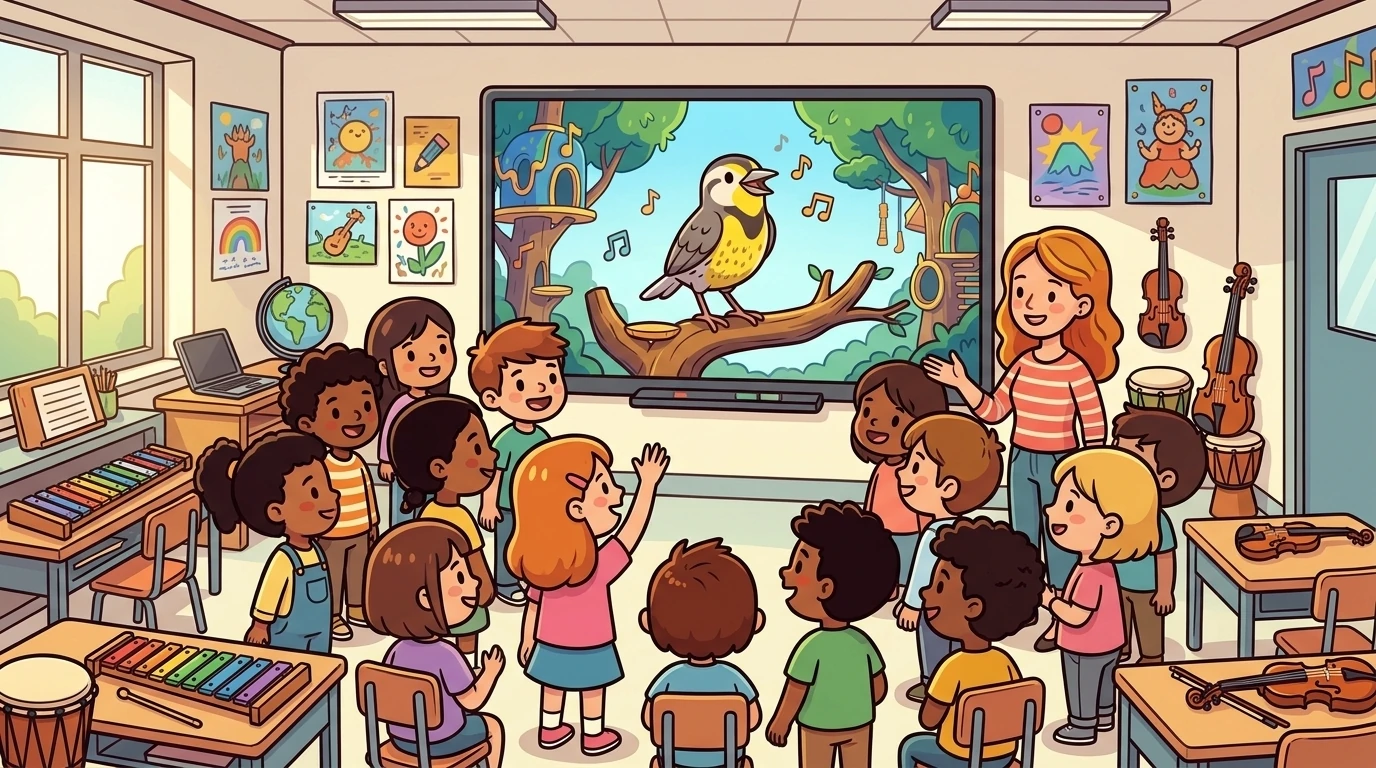
"This is Trill," the teacher says with a smile. "He is your main musical idea. Right now, he is waiting. Your job is to write a song that gives him a full life."
The students lean in close. They love watching the little bird.
"If you write the song correctly, Trill will change on your screen," the teacher explains. "If you forget to change his tune, Trill will just sit there. He won't move at all. That means your music is stuck."
One student raises her hand. "Is it hard to write a whole song?"
"Not at all," the teacher says. "Just follow the six stages. Introduce him. Play his tune. Change it up. Try something new. Bring him back. Then let him rest."
Trill lets out a sweet, clear chirp. The students laugh. They are ready to start writing.
The MotifLab ensemble
Trill is part of MotifLab's distributed-narrative cast. Each character embodies a different curricular primitive; together they teach the full subject.
-
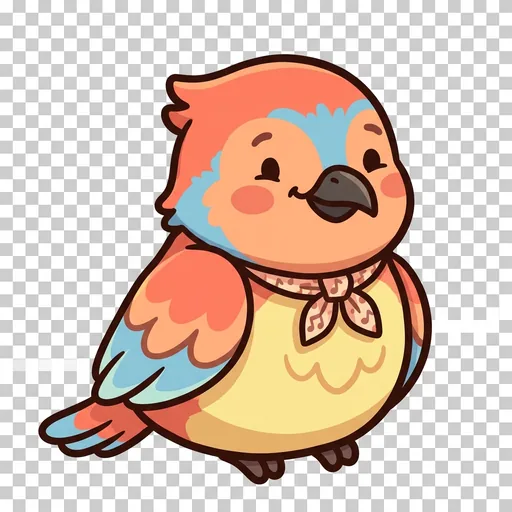
Meld
Harmony — notes that bloom underneath to support the melody
-

Thrum
Bass — the deep low foundation the whole song stands on
-

Clap
Rhythm — the steady beat pattern the song walks on
-

Twine
Counter-melody — a second tune that weaves against the main one
-

Surge
Dynamics — how loud and soft; how a song breathes
-

Ply
Texture — how many layers sound at once; thick or thin
-

Tint
Timbre — the color or flavor of a sound
-
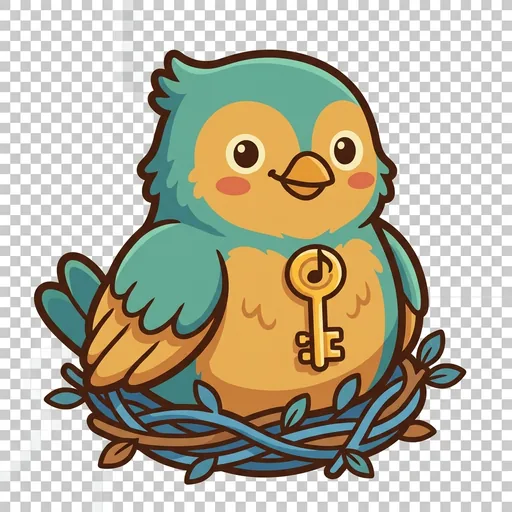
Nest
Key — the home note the song keeps returning to
-

Wend
Cadence — how a phrase comes to rest; the song's punctuation