
Trill
MOTIF AS PROTAGONIST — a small musical idea that *is* the story's main character, undergoing six stages: introduction → motif statement → development → contrast → recapitulation → resolution.
Press play to listen along. The line being read lights up as you go.
Show full transcript
Loading transcript…
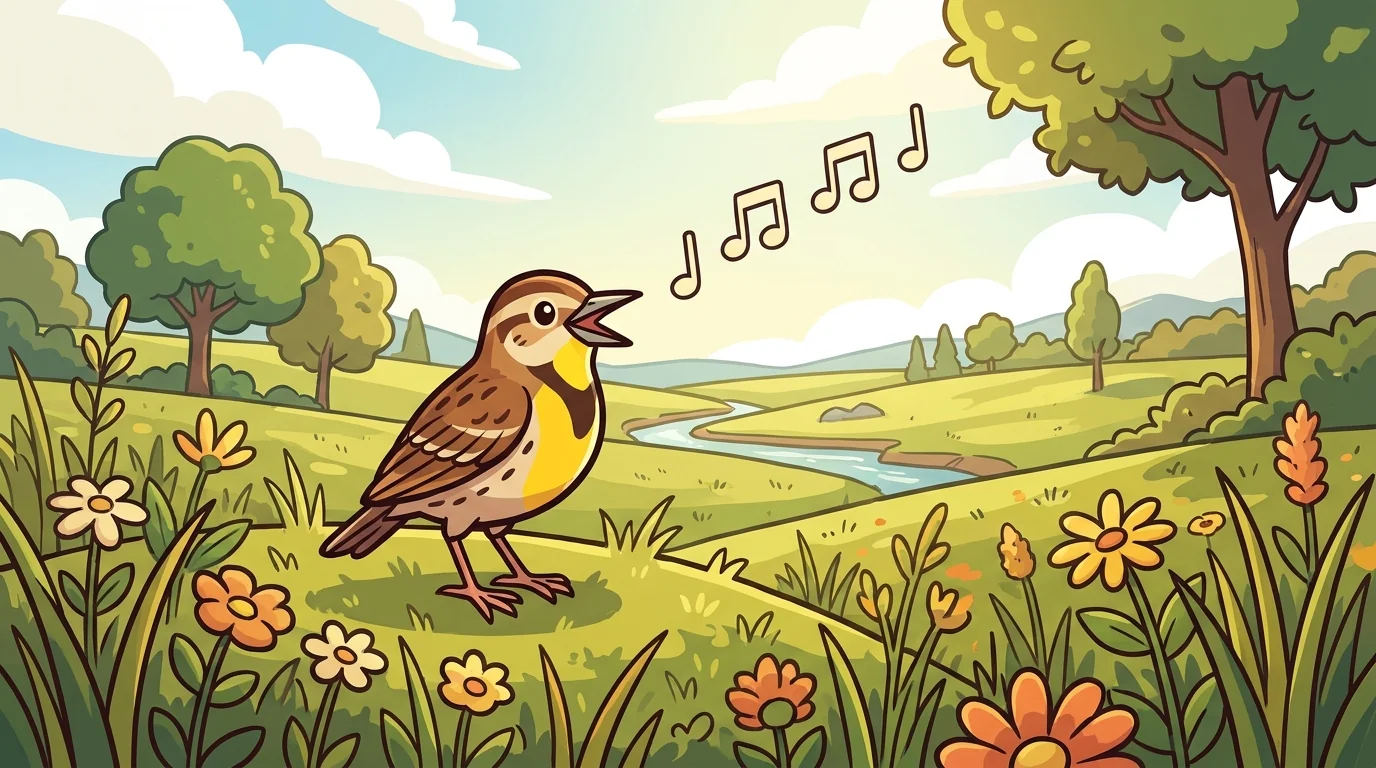
Meet Trill. He’s a songbird, a meadowlark-tween, to be exact. His feathers are warm, his chest a bright yellow patch. He sits with a perfect, upright posture, always ready. Trill sings. He has sung since he was old enough to make a sound. His song is short, just four notes long. It’s been his song his whole life. This little tune is his *motif. It is also him. Trill is* the motif.
The teachers at MotifLab designed it this way for a reason. They believe a small musical idea – a motif – can be the main character of a song. Just like a person is the main character of a story. MotifLab teaches composition as a narrative arc. The curriculum’s central idea is that music can tell a story. Trill shows this. He is that main character. As students compose, Trill's posture, plumage, and song change. They show the story unfolding in the music. The motif’s life becomes Trill’s life on the screen.

There are six stages to this musical story. Each stage changes Trill visibly.
*Stage One: Introduction.* The music begins, but Trill’s song hasn't played yet. The piece sets the tone, a slow scene-setting at the start. Trill waits. He sits quietly on his perch. His song remains inside him. Students see him there, resting. They know his song is coming. The waiting is active, full of expectation.
*Stage Two: Motif Statement.* The composition plays the motif clearly for the first time. This is the entrance of the main character. Trill stands tall. He sings his four-note song, clear and strong. The song is the motif being stated. Students hear it. They will hear it again in different forms throughout the piece. This first statement introduces the song's central character.
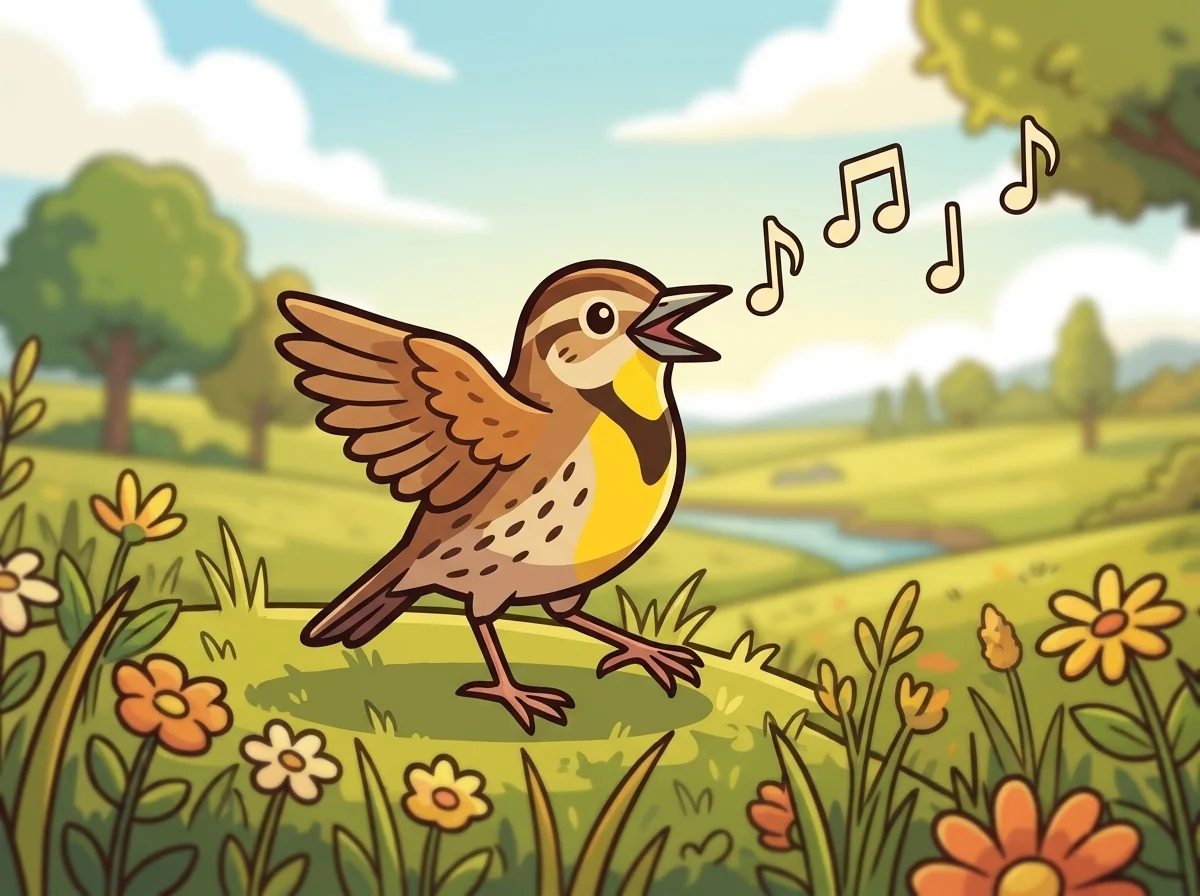
*Stage Three: Development.* The composition takes Trill’s motif and changes it. The pitch might shift, the rhythm might speed up, or the sound might feel different. The motif evolves. Trill moves his posture. He turns his head. He lifts a wing. He stretches a leg. His song shifts too. The notes are the same, but they might be in a new order. Maybe they are at a new pitch, or a new tempo. Students hear the variation. They recognize it is still Trill’s motif, because Trill is still recognizably Trill. But they also hear that he has changed. This is the motif’s character development.
*Stage Four: Contrast.* The composition introduces a different musical idea. This new part contrasts with Trill’s song. The piece moves away from his tune temporarily. Trill leaves the page. Or, more precisely, Trill steps aside. He lets the contrasting music take the foreground. Students experience Trill’s absence. They miss him. They wonder when he will return. This absence is active. It creates a longing for his return.
*Stage Five: Recapitulation.* The composition brings Trill’s motif back. It has been changed by everything that has happened to it. Trill returns to the page. He is visibly altered by his journey. His feathers might be slightly ruffled, showing he has traveled. His posture might be more confident, showing he has developed. His song might include a small echo of the contrasting music. He has been changed by what was outside him. Students recognize him – it is still Trill. But they feel the weight of his return. This return is not just a repeat. It is a return with experience.

*Stage Six: Resolution.* The composition concludes. Trill settles. He sings his motif one final time. It is plain and clear, in its original form. But it carries all the meaning the piece has built up. The final statement is not a fresh start. It is a meaningful conclusion. Students feel that Trill has come home. The composition has given Trill a complete life arc.
This is the six-stage motif-as-protagonist arc. It is MotifLab's central idea. Children compose pieces by guiding Trill through these six stages. Each stage has its own musical task. Each stage also has its own visual transformation of Trill. The composition’s structure becomes Trill’s narrative. A well-composed MotifLab piece is one where Trill lives a complete story.
In Trill's introductory lesson, the academy's instructor presents Trill on the screen. He is at Stage One. He sits quietly on his perch, his song unstated. The instructor says, "This is Trill. He is the motif. He has not yet sung. Your composition will give him a six-stage life. He will sing his song, develop it, step aside for contrast, return changed, and resolve. As you compose, you will see Trill transform on screen. The transformation is the structural feedback. A well-composed piece is one where Trill's transformations track the composition's structural progression."
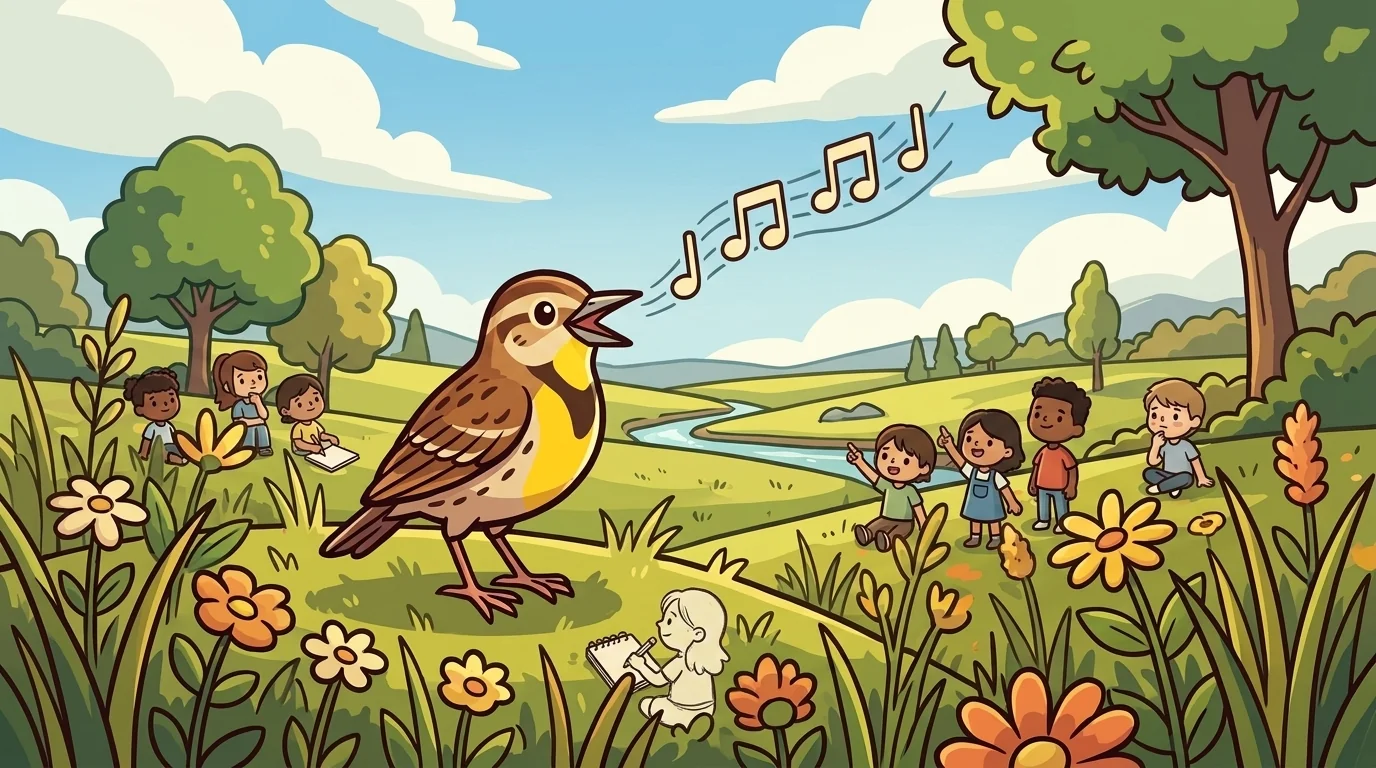
The students always, always, find Trill charming. He is a small, steady presence. He carries the entire weight of the app’s lessons. The composition's structure becomes visible through what is happening to Trill. If Trill should be developing, but the music hasn't actually developed the motif, Trill stays static. This is a real-time signal. It shows something structural is missing. If Trill should be resolving, but the music is still in the contrast stage, Trill stays away from the page. This is a real-time signal that the composition is rushing the ending.
Trill's visible transformations are MotifLab's primary teaching device. Students learn to compose by watching Trill. The motif's life becomes their composition's life.
When students ask the instructor whether composing motif-driven pieces is hard, the instructor says, quoting Trill's own implicit lesson, "It is not hard. It is six stages. Introduce. State. Develop. Contrast. Return. Resolve. Trill will show you when each stage is working. Watch him. Compose to him. He is the motif. He is also the protagonist. Give him a complete life."
Trill sings his four-note song. The students hear it. They will hear it again – altered, contrasted, returned, resolved – by the end of the piece.
The MotifLab ensemble
Trill is part of MotifLab's distributed-narrative cast. Each character embodies a different curricular primitive; together they teach the full subject.
-

Meld
Harmony — notes that bloom underneath to support the melody
-

Thrum
Bass — the deep low foundation the whole song stands on
-

Clap
Rhythm — the steady beat pattern the song walks on
-

Twine
Counter-melody — a second tune that weaves against the main one
-

Surge
Dynamics — how loud and soft; how a song breathes
-

Ply
Texture — how many layers sound at once; thick or thin
-

Tint
Timbre — the color or flavor of a sound
-

Nest
Key — the home note the song keeps returning to
-

Wend
Cadence — how a phrase comes to rest; the song's punctuation