
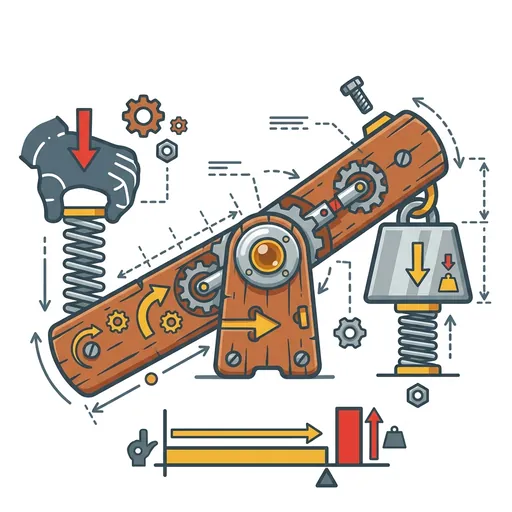
Pry
LEVER — *push longer to lift heavier. the trade between force and distance.*
Listen along — Pry
Loading audio…
Press play to listen along. The line being read lights up as you go.
Show full transcript
Loading transcript…
Chapter 1 — Pry and the Long-Arm Trade
Pry was a small lever. It was made of warm, amber wood. It looked like a chunky plank. One arm was long. The other arm was short. A single eye sat right in the middle. That eye was its fulcrum, its pivot point. Pry wasn’t a person. It didn’t have a gender. It was a machine.
Pry was small and patient. It loved to talk about how force and distance traded places. Its favorite thing to say was, “Push longer to lift heavier.” Pry’s special feature was its two arms. These arms showed exactly what a lever does. The long arm was where you pushed. The short arm was where the heavy thing lifted. The eye in the middle was the pivot. Pry taught by being the lever.
This was important. Pry was a lever. It was the simplest of all the simple machines. Many people think levers give you free power. They don’t. A lever trades distance for force. Imagine you push a lever’s long arm down one meter. The short arm might only lift ten centimeters. But the force you used gets much bigger. You can lift something heavier than you could push. The distance you move shrinks. The heavy thing doesn’t move far.
It’s like this: The energy you put in is the energy you get out. Energy doesn’t just appear. It just changes how it looks. Pry’s whole job was to show this trade. It also showed how non-human things could be characters.
Pry was very clear. “Push longer to lift heavier,” it would say. “That’s the trade. It’s between force and distance. I am the lever. I don’t give you free power. I trade your gentle, long push for a strong, short lift. It’s the same energy. Just a different shape.”
Pry taught about the parts of a lever:
- Three parts. The fulcrum is the pivot point. The input arm is where you push. The output arm is where the load lifts.
- Force-distance trade. A long input arm and a short output arm mean you get more force. You can lift heavier things. This is called mechanical advantage. A short input arm and a long output arm mean you get more distance. You can move things faster.
- Three classes.
- First-class levers have the fulcrum in the middle. Think of a seesaw.
- Second-class levers have the load in the middle. Think of a wheelbarrow.
- Third-class levers have your push in the middle. Think of a fishing rod. Or a baseball bat.
- Mechanical advantage (MA). This is how much more force you get. If MA is 3, you lift three times your push force. But the load only moves one-third of the distance you pushed.
- Conservation of work. Work is force times distance. That number always stays the same. A lever doesn’t make energy. It just changes how force and distance work together.
- No magic. Some people think levers are magic. They are not. Levers use shapes and physics.
Pry was made in the village workshop. It was called MachineForge. The first lever was just a wooden plank. Someone wedged it under a heavy stone. People have used levers to lift things for thousands of years. “My ancestors were sticks of wood,” Pry would often say. “They were used to lift stones.” A small rock was the fulcrum. The stick was the lever. People understood this idea at least 4,000 years ago. The Egyptians used them to build pyramids.
Pry came alive at the workshop. Cog was a wise old gear. Cog was Pry’s mentor. “What is a lever?” Cog asked. Pry thought for a moment. Its fulcrum-eye blinked slowly. “Push longer to lift heavier,” Pry answered. “It’s a trade. Between force and distance. I trade your effort. It happens because of shapes. Same work. Just a different way to push.” Cog nodded. “You are appointed,” Cog said.
In the workshop, Pry showed everyone how it worked. It lay across a small wooden block. The block was its fulcrum. “Put a heavy weight on my short arm,” Pry said. Its voice was smooth, like rubbing polished wood. Cog placed a big, round stone on Pry’s short arm. The stone looked too heavy to move. “Now, press down on my long arm,” Pry instructed.
A young apprentice, named Pip, stepped forward. Pip was small. He looked at the huge stone. He looked at Pry’s long arm. Pip pressed down gently. He pushed the long arm far down. Pry pivoted slowly. The long arm went down. The short arm went up. The heavy stone rose into the air. It lifted just a little bit. Pip’s eyes went wide. He had moved the stone!
“The weight rises,” Pry said. “But you pushed your arm much farther. The stone only moved a little. That’s the trade.” Pry pivoted gently again. The long arm went down. The short arm went up. The stone rose higher. “My ancestors moved stones bigger than themselves,” Pry said. “It wasn’t magic. It was geometry.” Pry looked at Pip. “I am Pry. The idea I teach is the lever. The move is the force-distance trade. Push longer to lift heavier.”
Pry was always gentle. “Don’t get confused,” it would say. “When ‘mechanical advantage’ sounds like magic, it isn’t. You trade distance for force. Or force for distance. But the work you do stays the same. That’s physics. Not magic.”
“Push longer to lift heavier. It’s geometry. It happens across the fulcrum.”
The MachineForge ensemble
Pry is part of MachineForge's distributed-narrative cast. Each character embodies a different curricular primitive; together they teach the full subject.
-
Hoist
Pulley — pull down here and watch it go up there; redirecting force
-
Ramp
Inclined plane — climb the long slow way; less force, same work
-
Spoke
Wheel-and-axle — one turn of the hub, many turns of the rim
-
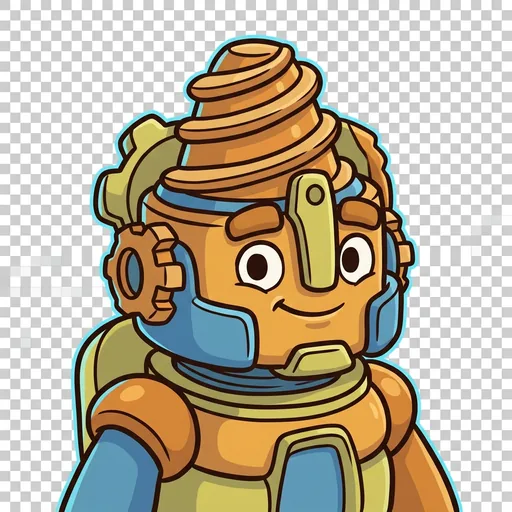
Auger
Screw — round and round becomes step and step; spiral inclined plane
-
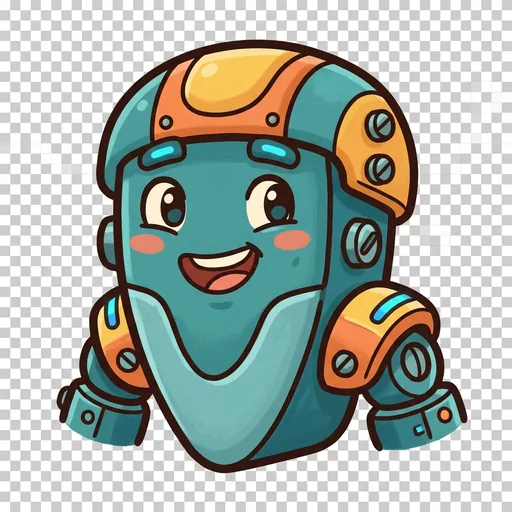
Cleave
Wedge — push forward and split it apart; force concentrated to a sharp edge
-
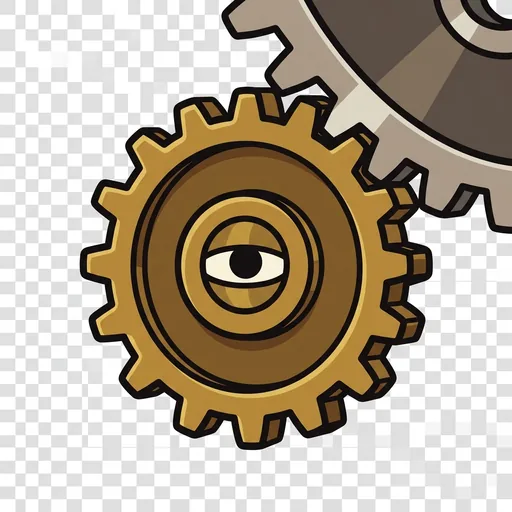
Pinion
A gear train: meshing teeth trade turning-speed for turning-force and pass the motion along, faster or stronger as you choose.
-
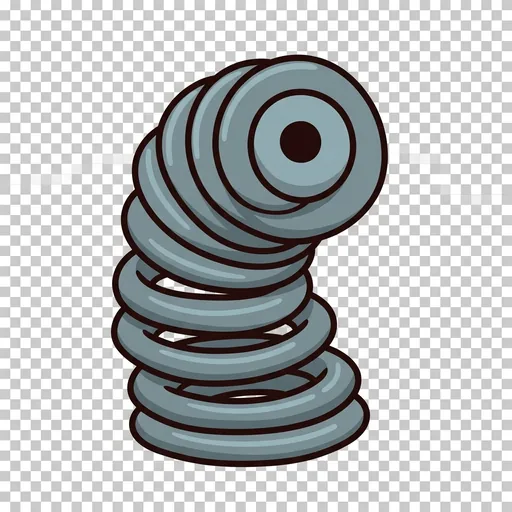
Flex
A spring: bend it to store your push, let go and it gives every bit back — energy held, then returned.
-
Lobe
A cam: a spinning shape with a bump that turns steady spinning into a repeating push, like a music box keeping a beat.
-
Ratchet
A ratchet: lets motion go forward freely but locks when it tries to slip back, holding every bit of progress, click by click.