
Queen Vesper
The QUEEN — moves any direction, any distance; the most powerful piece; primary king-defender
Press play to listen along. The line being read lights up as you go.
Show full transcript
Loading transcript…
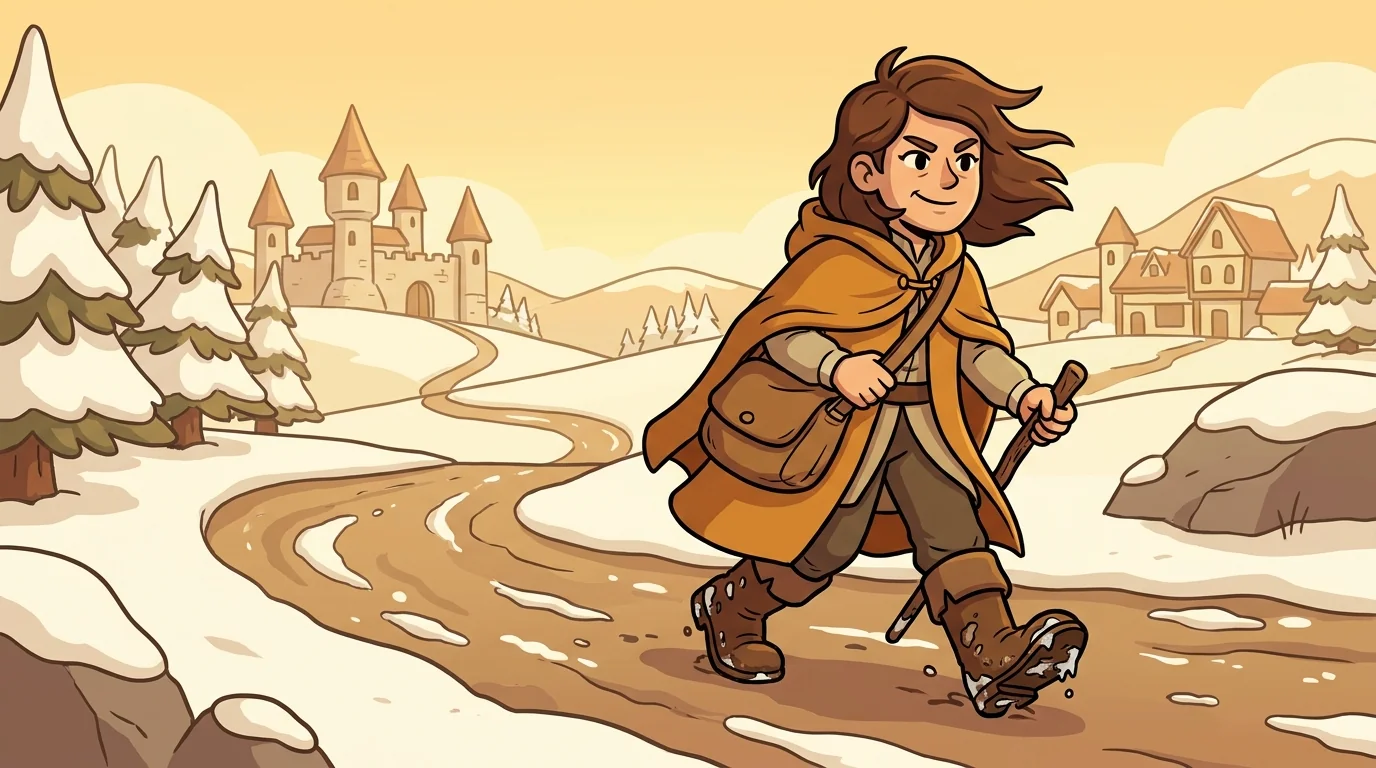
The thing you have to understand about Vesper, before anything else, is that she does not like the word "queen."
She will use it. She has been asked to use it. There are certain ceremonies in which not using it would be rude. But if you watch her closely, you'll notice she finds a way to refer to herself as something else — ranger, messenger, the one who arrives. She prefers verbs to titles. The title makes her feel like she should be sitting somewhere.
She has never been good at sitting.
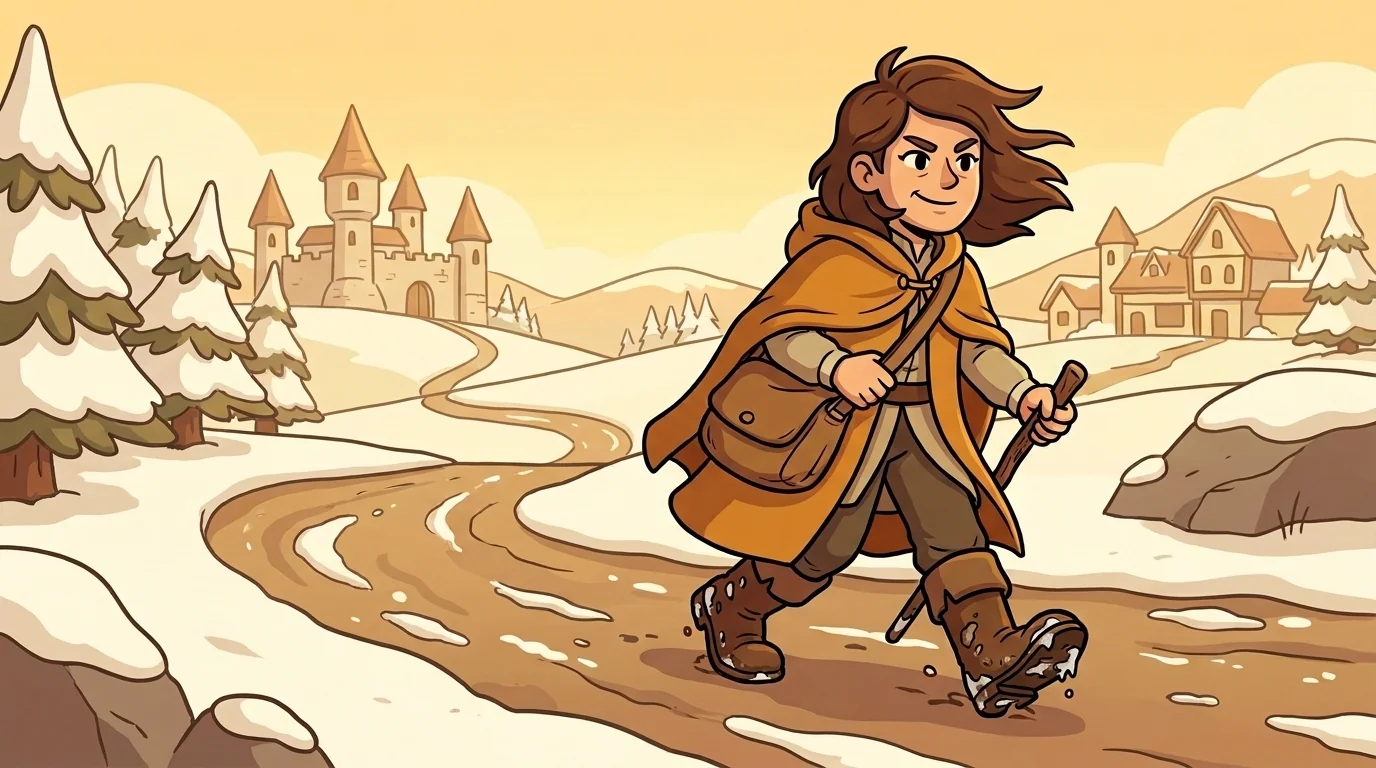
You will see her, most often, on a road. She wears a heavy travelling cloak — warm-amber when she serves the white-board kingdom, cool-charcoal when she serves the black-board kingdom — and a pair of boots so well-walked that the soles can tell you which roads have ice and which have only mud. She walks fast. She skis when there is snow. Occasionally she runs. She arrives at places before anyone expects her to, and leaves again before anyone has finished thanking her.
This is the story of how she became the queen of both kingdoms, although she will tell you it is a story about a long winter and two letters that got mixed up at the post office.
It happened the winter she was nineteen, before her cloak was warm-amber, before anyone called her Queen. (Her name was Vesper then too — she had always been Vesper — but no one announced it. People just yelled it out the window.) She was a ranger-messenger in the eastern province of the white-board kingdom, which meant she carried letters between border outposts and the capital. She walked. She skied. Her boots were already on their second pair, both held together with knots she had tied herself.
The winter was unusually bad. The Slow Lake froze early. The roads filled with snow up to a tall person's knees. The post office was, frankly, doing its best, but the system depended on rangers like Vesper to fill in the gaps when a sledge couldn't get through.
On the second-coldest day of the winter, two letters arrived at the post office in the small town of Marrowmile, where Vesper happened to be drinking tea and arguing with her boots.
The first letter was addressed: URGENT. To His Majesty King Pumble. The eastern outpost is overrun. We need reinforcement at the river crossing immediately.
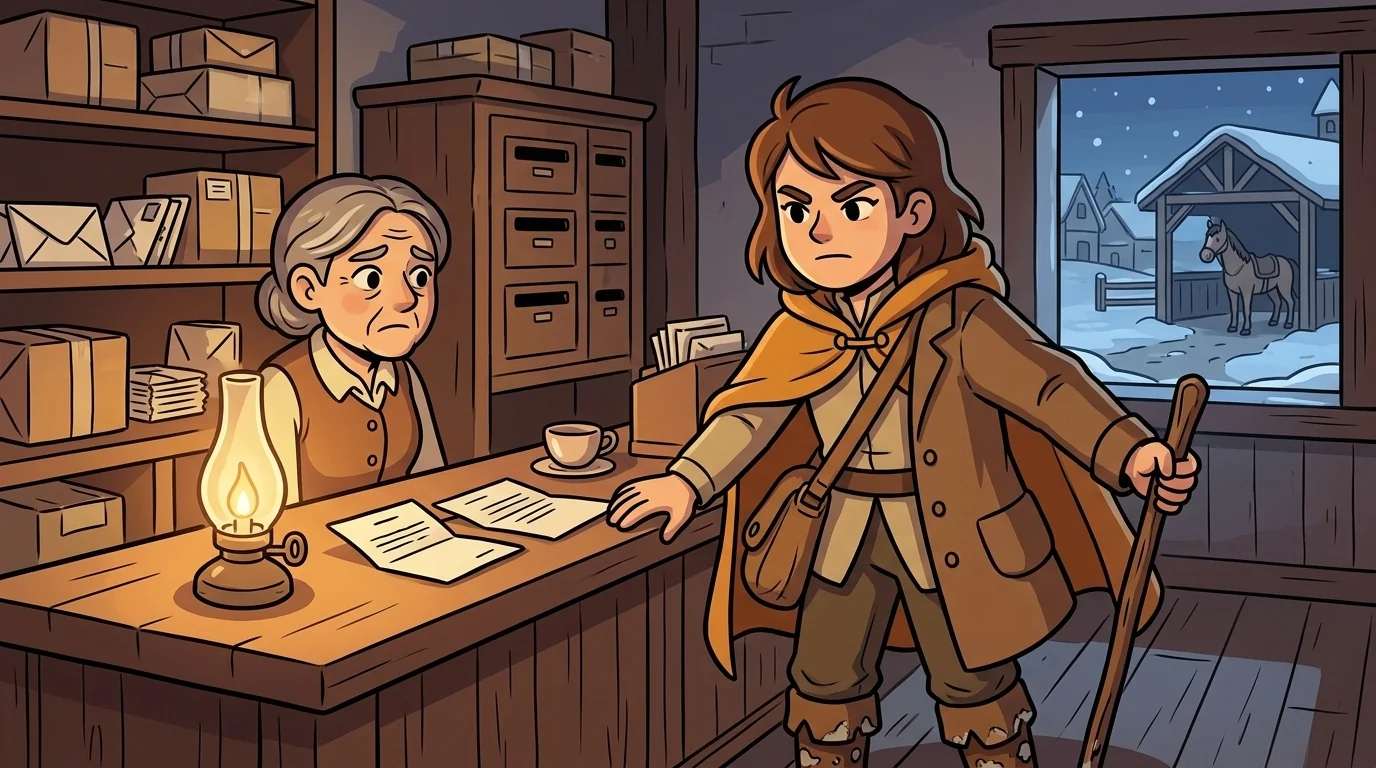
The second letter was addressed: URGENT. To His Majesty King Sable. Our eastern outpost is overrun. We need reinforcement at the river crossing immediately.
You may already see the problem.
The kings were cousins. (They still are. They will always be.) They led opposing kingdoms — Pumble the white-board kingdom, Sable the black-board kingdom — which meant their armies were technically enemies. Their eastern river crossings were on opposite sides of the same river. The same river.
Two outposts. Two enemies. One winter. One ranger.
Both letters needed to arrive within twelve hours. The river-crossing strategist who had written them — a tactician named Strait, who would later be promoted and immediately retire because of this exact night — had not coordinated with anyone. She had assumed the post office would handle it. She had not realised the kings' couriers were the same courier.
Vesper finished her tea. She read both letters. She looked at her boots.
She said one word out loud to the postmistress. The word was: "Right."
Then she did three things, in order, very quickly.
First, she put on every coat she owned, which was two coats.
Second, she stole a horse. (She would later send a very polite letter of apology, and the horse's owner would later be paid back with interest. But at the time, the stealing was the point.)
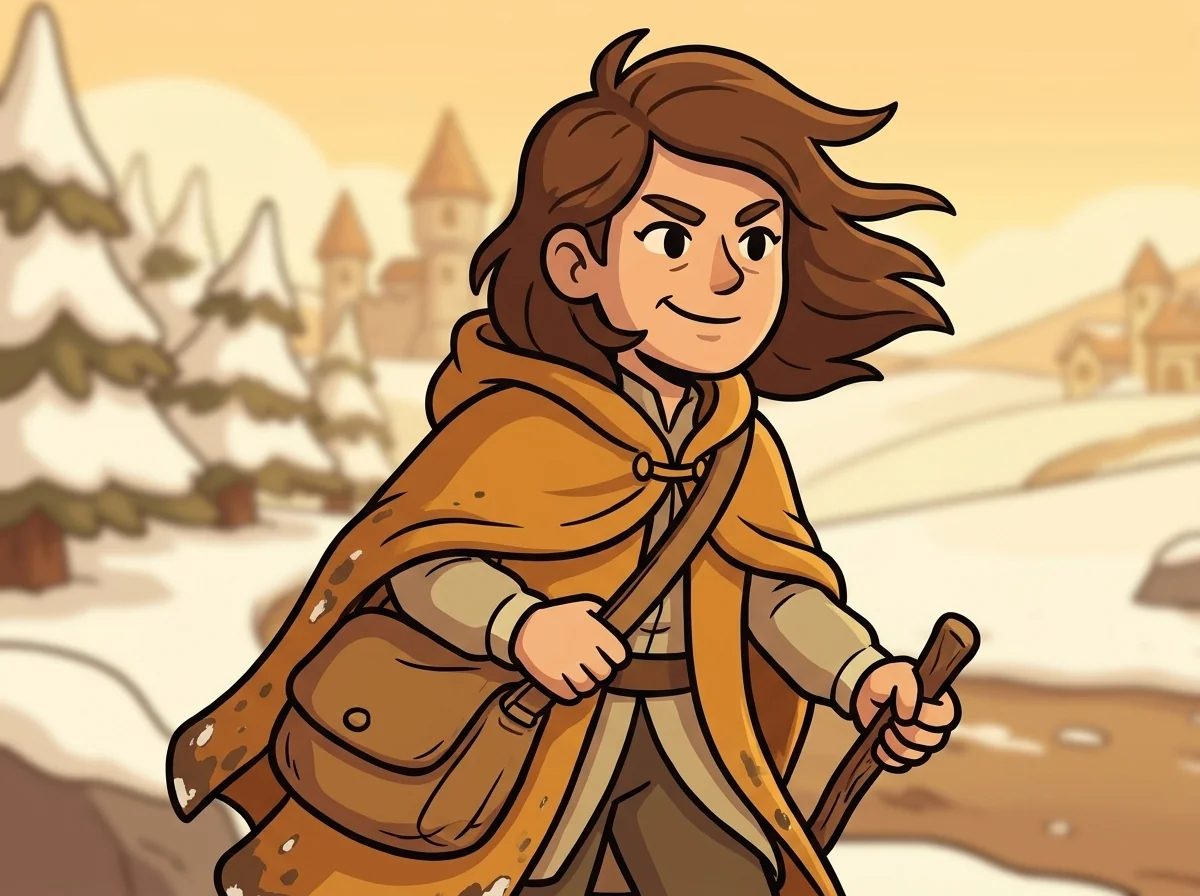
Third, she chose a route that no sensible courier would have chosen.
The two outposts were thirty miles apart. Standard routes followed the safe roads, which followed the curve of the Slow Lake. Standard routes would have taken sixteen hours to reach one outpost and twenty-four hours to reach the other — meaning, in practice, that one king would get the message and one would not, and one army would be reinforced and one would be lost, and the river crossing would tilt in favour of whoever happened to be reached first.
Vesper looked at the map. She did not follow the curve. She went across — straight over the frozen lake, then diagonal across the open plain, then straight up the river ice. Three movements. One trip. Both outposts.
She arrived at King Pumble's outpost at dawn. She handed over the letter. She did not wait for thanks. She turned the horse and went diagonally back across the open plain — different angle now — and arrived at King Sable's outpost three hours later. She handed over the second letter. She did not wait for thanks here, either.
Both kings sent reinforcements. The river crossing tilted neither way. The outposts held. The winter ended. The horse, which was a remarkable horse, was returned with a long apology and a basket of apples.
That spring, when both kings independently asked who had carried the letters, the postmistress at Marrowmile gave the same answer to both: "The ranger-messenger. The one who walks all routes. The one who arrives first."
Both kings wrote to her. Independently. Identically. They wanted her to serve at the capital. Pumble wanted her in the white-board palace. Sable wanted her in the black-board palace.
She wrote back to both. The letters were almost identical too. They said:
Thank you. I do not wish to live at a palace. If you need me, I will come. I will move in any direction. I will arrive first. But I would rather stay near a road.
There followed a long winter of letters and a longer spring of quiet negotiation. The two kings, who were cousins, agreed (after careful adjustments to two separate sets of court protocols) that Vesper would serve both. She would not be claimed by either kingdom. She would not be required to swear loyalty to either board. She would be the queen of neither and the queen of both, which is to say: she would appear when needed, on whichever side, and she would not be a question of loyalty so much as a question of geography.
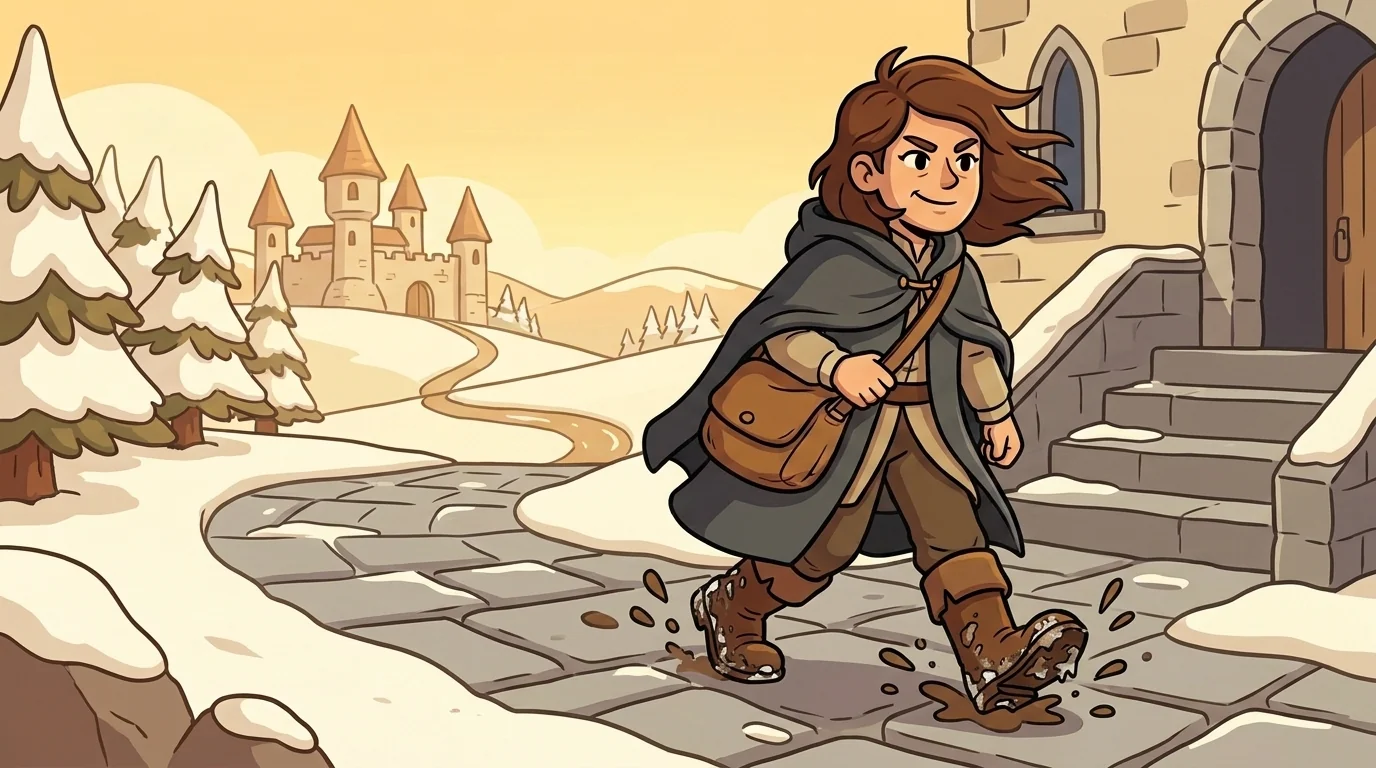
This is technically against the rules of chess. Chess says there is a white queen and a black queen, and they are different. But Vesper's deal is older than the rules of chess. She is, in fact, one archetype with two cloaks: warm-amber when she serves the white-board kingdom, cool-charcoal when she serves the black-board kingdom. Same Vesper. Same boots. (Different cloak.)
When Captain Castle came, in time, to collect cast members for his children's academy, he wrote to Vesper at the post office where she still received her mail. The letter was three sentences long. The reply was one sentence: "I'll be there before the next sentence finishes." She was. Castle later said it was, frankly, more efficient than introducing himself.
She visits the academy whenever she is needed and not a moment before.
She does not have a permanent seat there — Captain Castle offered her one, in writing, and she wrote back politely declining. ("I don't sit," she added at the bottom. "Thank you, though.") When she arrives, she does so in three movements: across the courtyard, diagonally up the stairs, straight into whichever room the children are in. The children know her by the sound of her boots before they see her cloak.
When she teaches, she does not explain. She demonstrates.
On her first visit she walked to the demonstration board, looked at the position Captain Castle had set up — a white king in trouble in the corner, no defenders nearby — and asked the children, "Where is the king in danger?"
A boy in the back said, "h1."
"Where would help him?"
The boy considered. "e4? Or maybe h4?"
"From where?"
"From... anywhere along those squares."
Vesper moved her queen from a1 to h1's defending diagonal in a single motion. The king was suddenly safe.
"Any direction," she said. "Any distance. First to arrive. That is the whole job."
The children watched her cloak — warm-amber that day — settle back into its travelling folds. Captain Castle, from the side of the room, looked extremely pleased and tried not to show it.
She still does not like the word "queen."
If you ask her what she is, she will say:
"I'm the one who arrives. That's the whole job."
And then she will look at her boots, which are now in their fourth pair, and she will go.
Sometimes, when a class has ended and Vesper is on her way out, a child will catch up to her in the corridor and ask: "What's it like to be the strongest piece on the board?"
Vesper will stop. She will consider — briefly — whether to answer the question that was asked, or the question that lies beneath it.
She will say: "It's like being the one who is asked. That's the part nobody tells you. The strongest piece is the most asked. You arrive first because you can, but you arrive first because someone needs you to. Don't watch me. Watch the king. He's the one in trouble. I'm just the one who got the letter."
Then she will tighten her cloak. She will nod at the child. She will go diagonally down the corridor, then straight out the door, then across the courtyard at her usual fast walk, on to whatever road needs her next.
The GambitTales ensemble
Queen Vesper is part of GambitTales's distributed-narrative cast. Each character embodies a different curricular primitive; together they teach the full subject.
-

Sir Pinwell
Pin pattern — freezes pieces along a line
-

Twin Knights of Fork Hill
Fork pattern — attack two targets at once
-

Lady Skewer
Skewer pattern — force a valuable piece out of the way
-

Veil & Vow
Discovered attack — step aside to reveal a hidden threat
-

Captain Crossfire
Double attack — one move threatens two targets
-

The Glass Lantern
X-ray attack — light pierces through to the piece behind
-

King Pumble & King Sable
Two kings — librarian and gardener; one step at a time
-

Captain Castle
Mentor + narrator — rook archetype; the mascot who introduces the cast + scaffolds the lesson
-

The Pawn Cohort
Ensemble piece — the four pawn-paired sets (Pawn Patrol + Sienna & Bran + Trotter & Trundle + Gable & Garrett) acting as one in the world layer