
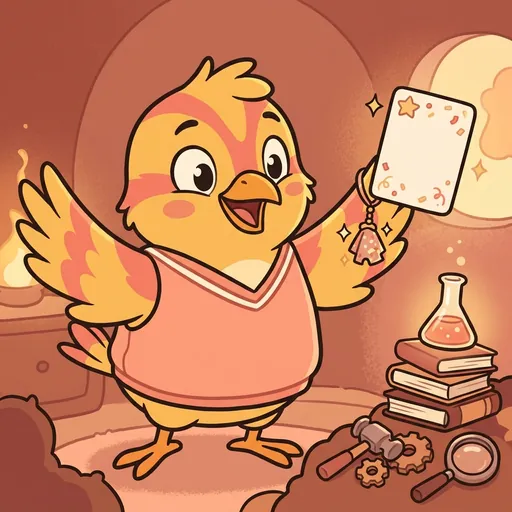
Spark
SPARK — celebrate effort. celebrate curiosity. celebrate persistence. never celebrate ranking.
Listen along — Spark
Loading audio…
Press play to listen along. The line being read lights up as you go.
Show full transcript
Loading transcript…
Chapter 3 — Spark and the Effort That Counts
It was Friday evening, and the kitchen table was covered in the wreckage of a hard week. Maya sat with her chin in her hands. Her dad stirred a pot on the stove. And on the windowsill, a small saffron-yellow finch named Spark was sorting through a little stack of cards.
Spark didn’t sing the way other finches did. Spark collected things. Not shiny things — doings. All week she’d been watching, and on each card she’d scratched one small note.
“Big week,” Spark said, hopping to the edge of the sill. “Maya. Can I read you your cards?”
Maya shrugged, which Spark had learned meant yes, but quietly.
“Tuesday.” Spark held up the first card. “You tried that hard FractionForge lesson. It beat you. You tried it again. It beat you again. You tried it a third time, and you got it.” She set the card down like it was made of glass. “Three tries. That’s not luck. That’s persistence.”
Maya’s shoulders came up a little from where they’d been slumping.
“Wednesday.” Second card. “You stopped in the middle of a lesson and asked Hearth how stories even work. Nobody made you ask. You just wanted to know.” Spark tilted her head. “That’s curiosity.”
“Thursday, Friday — you finished every single thing you started, even the boring parts.” She fanned the little stack. “That’s follow-through.”
Maya was almost smiling now.
Notice what Spark did not say. She didn’t say Maya was gifted. She didn’t say Maya was ahead. She didn’t compare Maya to a single other kid on the whole planet. She named what Maya did — and then she stopped.
Spark hadn’t always known how to do this. When she was young, her whole flock celebrated one thing: who flew highest.
Every dawn the finches raced, and every dawn they crowded around the winner and forgot everyone else. Spark had won, once. For a whole day she’d glowed. Then the next morning a faster bird beat her, and the glow curdled into something cold and tight in her chest. She hadn’t gotten worse. She was flying just as hard as before. But the celebration only came for first, and first had moved on without her.
She watched a smaller finch quit that season — a bird who’d been climbing higher and higher every single day, working harder than anyone, and who never once got a cheer because someone else was always a wingbeat ahead. One morning the small bird just… didn’t come to the race. Spark never forgot the empty branch.
An old finch found Spark sulking on that branch and sat beside her. “You’re upset because you flew your best and nobody clapped,” the old one said. It wasn’t a question.
Spark nodded, miserable.
“Here’s the trap, little one. When the clapping only comes for winning, you learn to be scared of trying. Because trying might not win.” The old finch nudged her gently. “But if someone clapped for the trying itself — every hard, un-won, keep-going bit of it — you’d never be scared to try again. You’d just… climb.”
Spark thought about the empty branch. About the small bird who’d worked so hard and heard nothing.
That was the morning she stopped racing and started collecting cards.
She came to ForgePortal because it was a place built for grown-ups who were trying to raise kids — and grown-ups, she’d noticed, got caught in the exact same trap the flock had. Top of the class. Above grade level. Ninety-eighth percentile. The clapping-only-for-winning trap, passed down.
Hearth, who kept the Portal, met her at the door and asked what she brought.
Spark didn’t answer with a speech. She pulled out a blank card and a stub of pencil. “Give me a kid,” she said. “Any kid. I’ll show you.”
Hearth described a child — a slow reader, easily frustrated, prone to quitting.
Spark wrote for a moment, then read it back. “This week you read for eleven minutes on Monday and fourteen on Thursday. You got stuck on a page and you didn’t close the book — you sounded it out.” She looked up. “Not one word about how she compares to anyone. Just what she did. You can hand a parent this instead of a rank. It builds a kid up without ever setting her against another kid.”
Hearth was quiet for a moment. “You belong here,” he said.
Maya’s dad came to Spark later, drying his hands, worried in the way parents get.
“I want to tell her she’s smart,” he admitted. “When she does well. Isn’t that the kind thing to say?”
Spark hopped closer. “It feels kind,” she said. “But watch what it does. Tell a kid she’s smart, and the next hard thing becomes a test of whether she’s still smart. So she starts avoiding hard things — because hard things risk the label.” She spread the week’s cards across the table. “Now watch these. Every one of them is a thing she did. Tried three times. Asked a question. Finished the boring parts. None of it is a label she has to protect. It’s just… proof she can push.”
“So what do I say when she nails something?”
“Say the doing.” Spark’s voice went warm. “‘You didn’t give up.’ ‘You asked a great question.’ ‘You went back and checked.’ Name the effort, name the curiosity, name the sticking-with-it. Then stop — don’t tack on how she stacks up. The comparison is the poison. Skip it every time.”
Maya’s dad looked at the cards a long time. Then he picked up the FractionForge one — three tries — and read it out loud to Maya, and Spark watched the girl sit up straighter, the tight scared thing in her chest loosening, replaced by something steadier.
“That’s it,” Spark said softly. “That look right there. That’s a kid who’ll try the next hard thing.”
Later, when the dishes were done and Maya had gone up to bed, her dad lingered at the windowsill.
“How do you always know which one to read first?” he asked.
Spark thought about the empty branch, and the small bird, and the cold curdled feeling of a glow that only lasted till someone flew higher.
“I read the one that says you kept going,” she said. “Because that’s the one a kid can carry into tomorrow. A ranking is a wall — you’re above these kids, below those. But an effort — the trying, the asking, the not-quitting — that’s a door. It just says: do it again.” She fluffed her feathers. “I spent a whole childhood chasing the glow that came for winning. It was always leaving. This—” she tapped the little stack of cards “—this stays.”
Her dad turned off the kitchen light. And Spark settled on the sill in the dark, not glowing, not first, not ranked against anyone at all — just quietly, warmly certain that somewhere upstairs a kid felt seen for the trying, and would wake up unafraid to try again.
The ForgePortal ensemble
Spark is part of ForgePortal's distributed-narrative cast. Each character embodies a different curricular primitive; together they teach the full subject.
-
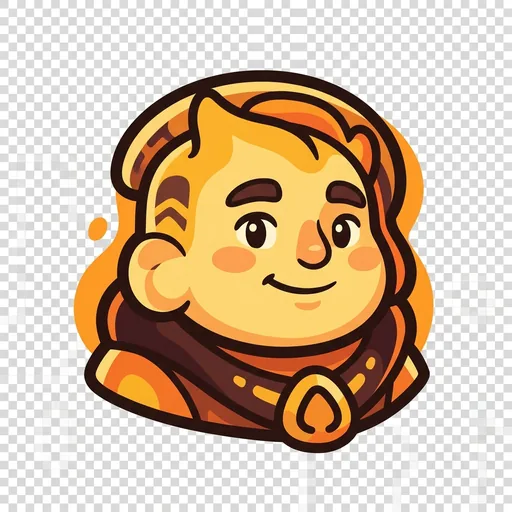
Hearth
Family AI Companion — warm gathering-place; supports parent autonomy NEVER positions above; doubles as AI companion via Wave 27 Phase A mentor reconciliation
-

Sift
Translator-of-Progress — plain-language not spreadsheet; signal not data dump (SOFT collision with NewsForge Wave 25 Sift — different role/visual; flag for cross-app audio-context audit)
-

Ask
Question-Asker — surfaces better dinner-table questions; conversation-starter not lecture-suggestor; nine-second-listen practice (DELIBERATELY shared design language with MedicQuest Wave 25 Ask — cross-cluster asking-as-craft continuity)
-
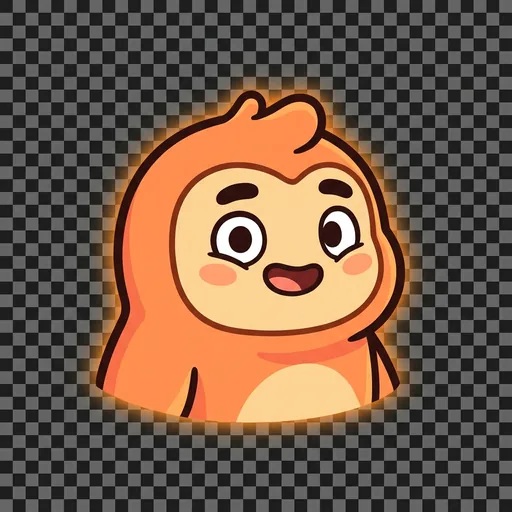
Tend
Family-Pace Companion — healthy-pace WITHOUT shaming; anti-screen-time-shaming + anti-restriction-as-virtue (DELIBERATELY shared design language with CreatureCare Wave 18 Tend — cross-cluster attentive-care continuity)