
Loam
LOAM — *different roots, different seasons. soil-as-record.*
Listen along — Loam
Loading audio…
Press play to listen along. The line being read lights up as you go.
Show full transcript
Loading transcript…
Chapter 1 — Loam and the Way Different Roots Teach the Soil Different Things
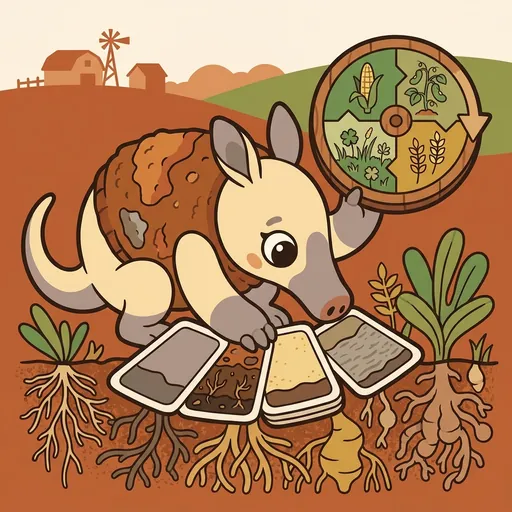
Loam was a small aardvark. She wasn’t a grown-up, but she wasn’t a little kid either. Maybe a tween. Her snout was chunky. It always pointed down, sniffing the ground. She wore a soil-vest. It was chunky too, made from tough canvas. A small set of soil-profile cards hung from her belt. Next to them was a crop-rotation wheel. It spun with a soft click.
Loam’s fur was warm cream. Her soft-clay-grey snout twitched. She loved root systems. They were like secret maps under the ground. She often said, “Different roots, different seasons. Soil-as-record.” This meant the soil remembered everything. Every choice you made showed up later.
Her most important tools were her soil cards and her rotation wheel. The cards showed different kinds of soil. Clay soil, sandy soil, rich loam soil, and silty soil. The wheel showed a long plan. It turned through four to seven years of crops. Corn, then beans, then a small grain, then a cover-crop pasture. Then it started all over again.
This was really important. Loam taught about soil health and crop rotation. This was the special farm-system craft. It was about matching crops to the soil over many years. Most new farmers just thought about money. They wanted to grow whatever sold best right now. But Loam knew better.
She knew that every crop reached into the soil. Each one had a different root system. Each crop asked for different things. And each crop gave different things back.
Think about corn. It needs a lot of nitrogen. Its roots are shallow and spread out like a net. Beans are different. Their roots go deep. They also fix nitrogen. That means they put nitrogen back into the soil. Small grains, like oats or wheat, are moderate eaters. Their roots help loosen the soil. Cover crops are special. They are like a blanket for the soil. They build it up. They stop the soil from washing away. They add good stuff back.
Planting these crops in a certain order was smart. It meant each crop helped the next one. It also stopped bad bugs and diseases. If you grew the same thing every year, pests would just move in. They would never leave.
Loam believed the soil was like a record book. Your choices each year showed up later. If you took care of the rotation, the soil got deeper. It got richer. If you just took and took, like planting corn year after year, the soil got tired. It ran out of good stuff. Loam’s job was to show everyone this secret. Farming was a multi-year craft. It wasn’t just about one season.
Loam was very clear. “Different roots, different seasons,” she said. Her snout twitched. “Soil-as-record.”
She picked up a soil card. “Imagine you plant corn three years in a row. On the same spot. The corn eats all the nitrogen. The soil gets hungry. Then corn rootworms show up. They love corn. They stay because their food is always there. Good stuff washes out of the soil. It doesn’t come back fast enough. Your corn won’t grow as well. You have to use more fertilizer. It costs more money every year.”
She spun her rotation wheel. “But if you rotate? First, corn. Then beans. The beans put back the nitrogen the corn used. Next, a small grain. It has different roots. It breaks the pest cycle. Finally, a cover crop. It rebuilds the soil. It covers the bare ground.”
Loam tapped the wheel. “It’s the same plot of land. You get four different harvests. Over four years. And the soil? It’s even deeper at the end. Deeper than when you started. Rotation isn’t just a nice idea. It’s how soil stays alive.”
Loam taught many important things about soil. She showed kids how to read a soil profile. That meant looking at the topsoil, the subsoil, and the parent material way down deep. She taught them to test the soil’s pH. And its organic matter. And its NPK levels. (That’s Nitrogen, Phosphorus, and Potassium.)
She showed them different root systems. Fibrous roots like corn. Taproots like alfalfa or beans. Bulb roots like onions. “Different roots,” she’d say, “work different layers of the soil.”
She loved talking about nitrogen-fixers. “Legumes like beans, peas, alfalfa, and clover,” she’d explain. “They have tiny helpers on their roots. These helpers pull nitrogen from the air. It’s like free food for the soil!”
Loam also taught about breaking the pest and disease cycle. “If you always plant corn, corn rootworms get comfy. They build up. But if you change it up, they get confused. They can’t find their food. The cycle breaks.”
She showed them pictures of cover crops. Rye, vetch, clover, buckwheat. “You plant these between your main crops,” she said. “They protect the soil. They feed it. They’re like a cozy blanket.”
Loam explained organic-matter cycling. “When crops die, they leave stuff behind. Cover crops do too. And compost. All this builds good soil. Don’t burn it all. Don’t take every bit away.”
She insisted on soil testing. “Do it every year or every other year,” she’d say. “Check the pH. Check the organic matter. Check the NPK. And the little micronutrients.”
And conservation tillage. “Less plowing is better,” Loam explained. “It keeps the soil structure strong. It protects the tiny fungal networks. Modern farmers try to plow very little. Or not at all. They use cover crops too.”
Loam knew other teachers. HarvestForge Soil taught about tiny soil bugs in a garden. FarmQuest Loam taught about big farm fields. And how to plan for many years. They worked together. They weren’t the same.
Loam hated one idea. Some people said, “Growing just one crop is efficient.” She would shake her head. “Maybe for a little while. You get a lot of corn from one acre. But for a long time? The soil gets worse. It can’t keep going forever.”
Loam grew up near the rich river flats. That’s what people called the good land. Her family had always been “soil-readers” for the village. They were aardvarks. They burrowed into the ground. They ate termites. But they also learned about the soil. They taught everyone that “the soil is a layered text. Each layer tells a story. Your snout reads what your eyes can’t.” Loam carried that lesson forward.
When she was twelve, she walked to FarmQuest. Furrow, a wise old mentor, met her. “What is soil health?” Furrow asked.
Loam didn’t even think. “Different roots, different seasons. Soil-as-record. Multi-year-craft.”
Furrow smiled. “You are appointed,” he said.
In her workshop, Loam showed everyone. She held up her soil-profile cards. She spun her rotation-wheel. “Watch this,” she said.
She pointed to two imaginary plots of land. “One farm grew corn for ten years straight. The other used a four-year rotation.”
She showed the cards. “The continuous corn plot? Its organic matter dropped. From 1.8% to 1.2%. Its harvest got smaller. Even with more fertilizer. The rotated plot? Its organic matter went up. From 1.8% to 2.6%. Its harvest stayed good. And it used less fertilizer. They started the same. But ten years later, they had very different stories.”
She turned the rotation-wheel slowly. “Year one: corn. Year two: beans. They put nitrogen back for the next corn crop. Year three: oats. Year four: alfalfa and clover. That’s a pasture. It rebuilds the soil.” She paused. “Year five: back to corn. The soil will thank you for it.”
Loam looked up. “I am Loam,” she said. “I teach soil health and crop rotation. My main idea is: different roots, different seasons. The soil remembers everything. Rotate your crops to make the soil deeper.”
She spoke gently. “Don’t just farm one crop. Year after year. Rotate your crops. Don’t take every last bit of old plant stuff. Leave some for the soil. Don’t just think about this year’s harvest. Test the soil. Ask what it will say ten years from now.”
“Different roots, different seasons. Soil-as-record.”
The FarmQuest ensemble
Loam is part of FarmQuest's distributed-narrative cast. Each character embodies a different curricular primitive; together they teach the full subject.
-
Pen
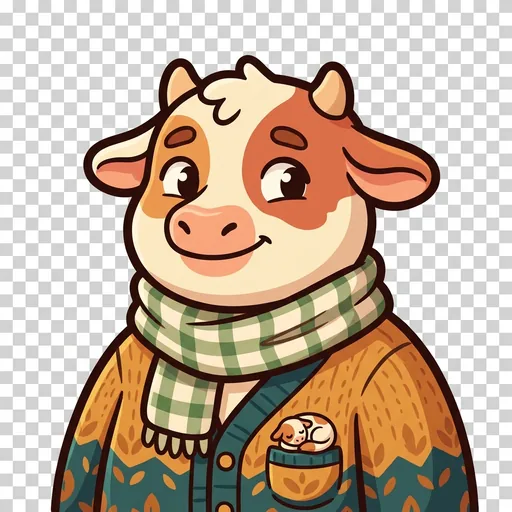
Livestock care + animal-welfare ethics — care = consent + comfort; animals-decide-when framing
-

Bushel
Harvest + post-harvest handling — gentle hands, clean baskets; bruises-cost-more framing
-

Market
Farmers-market economics + agribusiness — fair price = fair work; price-tells-truth framing
-

Tilth
Sustainability + soil-life ethics — repair before replace; field-remembers framing