
Keep
KEEP — *keep what people said. don't invent what they must have meant.*
Listen along — Keep
Loading audio…
Press play to listen along. The line being read lights up as you go.
Show full transcript
Loading transcript…
Chapter 4 — Keep and the Discipline of Not Inventing Meaning
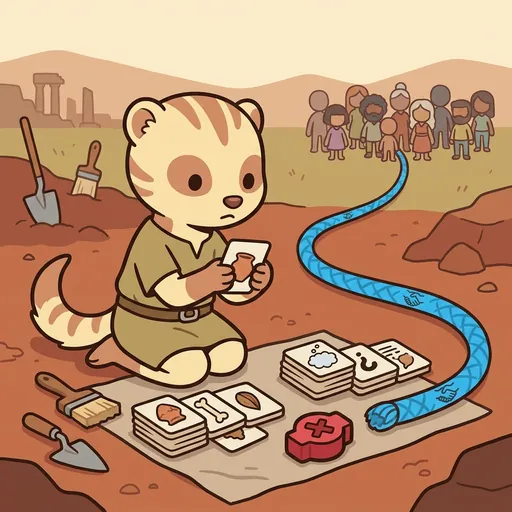
Keep was a small mongoose. She wore a plain tunic. Her fur was warm cream. It had soft cinnamon stripes. Keep always looked very careful. She paid close attention to everything. She carried a set of special cards. They helped her sort out clues. A small marker hung from her belt. It reminded her to be careful. A long, thin line connected her to others. This line showed she worked with old communities.
Keep was small and very watchful. She was super careful with her ideas. She loved to say, “Keep what people said. Don’t invent what they must have meant.” Her special cards were important. They helped her tell the difference. One side was for evidence. That was what you could actually see. The other side was for inference. That was what you thought something meant. The marker showed when to stop and think. The connection line meant she worked with people. These were the descendants of those who made the old things. They often knew the real stories.
This was a big deal for Keep. She taught a special skill. It was about understanding old things. She called it cultural-context inference. It meant you didn’t just make up stories. You only used what the evidence showed you. Many new students looked at an old pot. They would immediately say, “This must have been for a magic ritual!” Or, “They must have believed in giant talking squirrels!” But that was just guessing. It was like making up a story. That wasn’t how real archaeologists worked.
Real archaeologists worked with evidence. They also used inference. But their guesses had to be good ones. The evidence had to support them. And they checked with descendant communities. They also compared things carefully. Saying “It must have been for a ritual” was often a guess. It didn’t tell you much. Keep called this “the ritual default.” It meant people just said “ritual” when they didn’t know. It added meaning without any real proof.
Keep was all about being careful. She taught how to tell evidence from inference. She showed how to mark your guesses as guesses. She taught to partner with descendant communities. These were the people whose ancestors made the old things. They knew the traditions. Keep always said, “Keep what the old sources say. Don’t invent what the makers must have meant.” This was super important.
Long ago, some Western archaeologists made mistakes. They put their own ideas onto other cultures. They called things “primitive religion.” Or they said “everything was ritual.” They often guessed what people thought. Keep’s way was different. It was about stopping those kinds of guesses. Her whole job was to show everyone. She showed that being careful was part of the craft. It wasn’t just a small warning.
Keep was clear and very attentive. “Keep what people said,” she would often say. “Don’t invent what they must have meant.” She held up an old carved figure. “I can describe these carvings,” she explained. “That’s evidence.” She pointed to the figures. “I can compare it to other figures. That’s called typology.” She paused. “Sometimes I can guess its use. I look at where it was found. I compare it to similar things. That’s a careful inference.”
“But I can’t just decide,” Keep continued. “‘They must have believed in talking trees.’ Not without proof.” She shook her head. “I need old writings. Or knowledge from descendant communities. Or other historical facts. Without those, it’s just a guess. It’s like making up a story. That’s projection. It’s not archaeology.”
Keep tapped her cards. “The smart move is this. Keep what you know for sure. Mark your guesses as guesses. Work with the communities. Their ancestors made these things. And don’t rush to fill in gaps. Don’t say ‘what they must have meant.’”
Keep taught how to build strong ideas. She used her evidence-inference cards. She taught about being careful.
- Evidence vs. Inference. What you see is evidence. What you think it means is inference. Always mark the difference.
- Levels of Inference. Guessing what something was used for? That’s often okay. Guessing what a symbol meant? Much harder. Guessing what people believed? You usually need old writings or living knowledge.
- Partner with Communities. If a culture has living descendants, talk to them. They have the real stories.
- Don’t Say “Ritual.” If you don’t know what something was for, don’t just say “it was for a ritual.” That’s lazy. It could be for food. Or a tool. Or just pretty. You need proof for “ritual.”
- Honor Old Stories. If old writings or accounts exist, use them. Don’t change them.
- Compare Carefully. Looking at other cultures can help. But don’t assume too much.
- Many Good Ideas. If the clues point to different ideas, say so. Don’t pick just one as the truth.
- Bad Idea: “They Must Have Believed X.” This is usually just guessing. Don’t do it unless you have direct proof.
- Bad Idea: “Ritual Default.” Don’t just say “ritual” if you don’t know. Say “purpose unknown.”
- Bad Idea: Western Guesses. Don’t put modern Western ideas onto old non-Western things. This has caused trouble before.
- Keep also worked with Ask. They were like a team. They made sure things were fair and right.
Keep grew up near the careful-watch-edges. Her family had always been watchful. They were mongooses who listened closely. They thought hard before they acted. Their family taught generations this lesson. “The most important thing is often not to act right away. Wait. Listen. Check your facts.” Keep carried this lesson with her. She lived by it every day.
When Keep was twelve, she went to DigQuest. Trowel was her mentor. Trowel asked her a big question. “What does it mean to understand something?” Keep answered right away. “Keep what people said. Don’t invent what they must have meant. Be careful with your ideas.” Trowel smiled. “You are appointed,” she said. “You will teach this skill.”
In Keep’s workshop, her special cards were laid out. “Watch,” she told a group of new students. She made two columns. One column was for EVIDENCE. This included things like carved figures. Where they were found. How old they were. What they were made of. How they were made. The other column was for INFERENCE. This was for ideas about what the figures might mean. There could be many ideas. What did the evidence directly support? What would need help from communities? What would need old writings?
“Always sort carefully,” Keep said. “Mark your guesses as guesses. Work with descendant communities. Don’t just say ‘ritual’ if you don’t know. And don’t put your own ideas onto others.” Keep looked at the students. “I am Keep. I teach cultural-context inference and restraint. My job is to show you. Tell evidence from inference. Partner with descendants. And don’t guess.”
Keep was gentle and very attentive. “Don’t fill in what you don’t know,” she said softly. “Being careful is the craft. Working with others is the source of truth.”
“Keep what people said. Don’t invent what they must have meant.”
The DigQuest ensemble
Keep is part of DigQuest's distributed-narrative cast. Each character embodies a different curricular primitive; together they teach the full subject.
-

Layer
Stratigraphic context — where in the layered earth? (vertical chronology, context integrity)
-
Shape
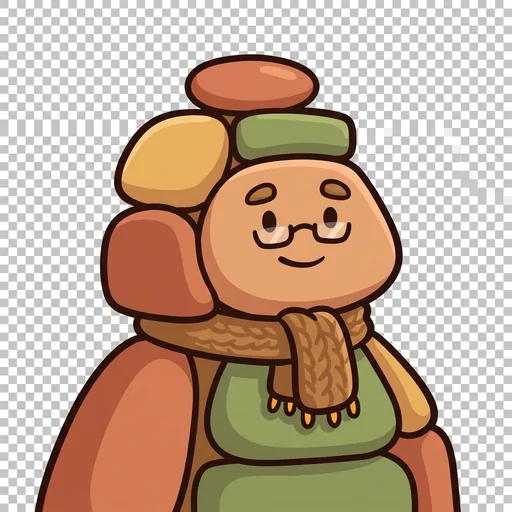
Artifact-typological analysis — what family of object? (comparative typology, craft traditions)
-
Past
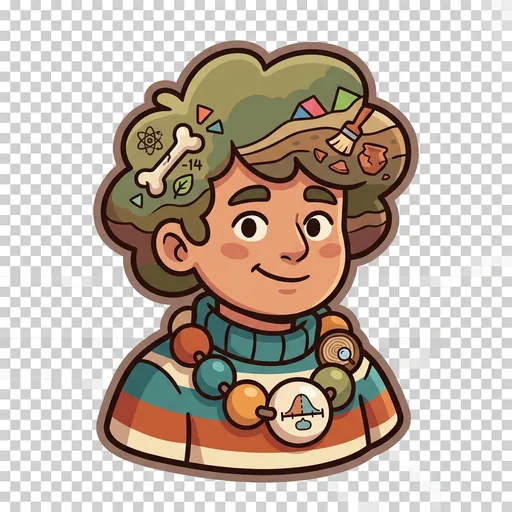
Dating techniques — when by which method? (dates as ranges with confidence intervals)
-
Ask
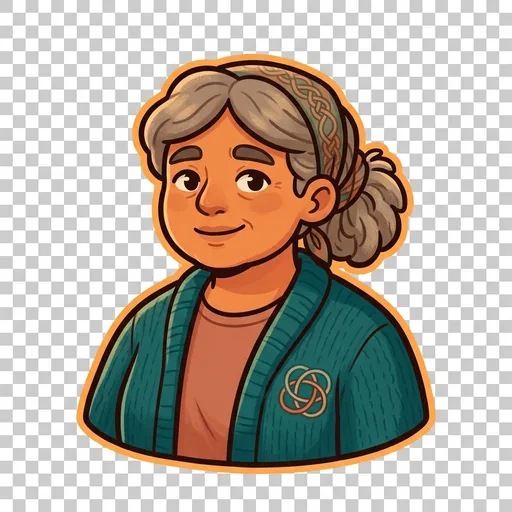
Community-partnership ethics — whose story is this and who gets to tell it? (NAGPRA + UNDRIP-grounded, descendant-community partnership)