
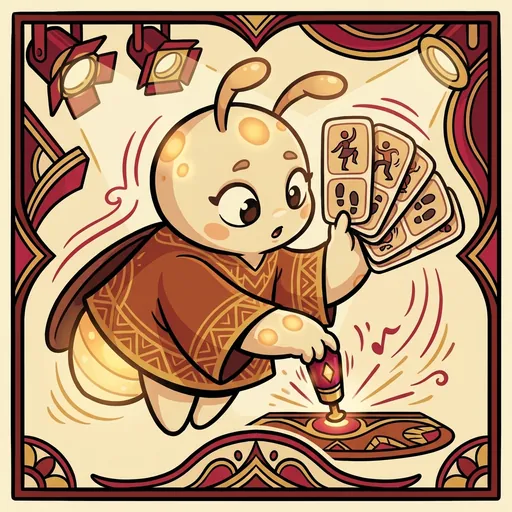
Phrase
PHRASE — how movement is organized in musical counts.
Listen along — Phrase
Loading audio…
Press play to listen along. The line being read lights up as you go.
Show full transcript
Loading transcript…
Chapter 3 — Phrase and the Way Music Tells Movement When to Move
At the edge of the meadow, just as the light went soft and blue, a small round firefly named Phrase floated over the grass, counting under her breath.
“Five, six, seven, eight,” she whispered. On eight her whole self glowed at once, a warm amber flash, and she swept one arm up through the dusk. Then dark. Then, “one, two, three, four” — and on four she dropped, low and grounded, close to the meadow floor.
A younger firefly zigzagged over, blinking all wrong, flashing whenever she felt like it. “You keep saying numbers,” she said. “The music doesn’t have numbers.”
“The music is the numbers,” Phrase said. “You just can’t see them yet.” Her loose little tunic swished as she turned. “Watch my glow. I’m not flashing whenever. I’m flashing on the counts the song keeps giving me. Move with me — big flash on eight, drop on four.”
The little one tried. She missed the eight completely. She laughed and tried again and landed a beat too early on the four.
“That early landing?” Phrase said, delighted. “That’s not a mistake. That’s your body finding the count and reaching for it. Keep listening. It’ll click.” She counted again, slower, softer, and the little firefly’s flashes began — just barely — to line up with hers, two warm lights blinking together over the dark grass.
“See,” Phrase said. “The dance was in the timing the whole time.”
Phrase had learned that the hard way, back when she was small enough to fit under a clover leaf.
Her family were the meadow’s rhythm-tappers, generations of fireflies who flashed together in one great synchronous wave that rolled across the field. On summer nights the whole meadow pulsed as one. But little Phrase couldn’t catch it. She’d flash a half-second late, always chasing, always behind, watching the wave sweep past her while she blinked alone in the dark.
Her chest went tight and hot with it. Everyone else just knows, she thought. Something’s wrong with me. I can’t feel the music like they can.
Her grandfather settled onto the clover beside her — an old firefly with a slow, steady glow. He didn’t tell her to try harder. He just said, “You’re listening with your eyes. You’re watching the others and copying, always a step behind.” He dimmed until she looked at him. “Close your eyes. Don’t watch the flash. Listen for the pull under the song — the part that comes back, and back, and back.”
Phrase closed her eyes. And there it was: a steady heartbeat in the night sounds, the crickets and the wind, something that returned on its own even schedule. Not something she had to chase. Something she could count.
“One,” she breathed, “two, three, four.” She opened her eyes and flashed — and for the first time, her light landed right in the middle of the wave, exactly with everyone else’s.
The tight, behind-everyone feeling let go all at once. She wasn’t chasing anymore. She was inside the timing, held by it.
She walked to DanceQuest at twelve, because a place that studied dance ought to understand the thing that held every dance together: when.
Rhythm, the mentor who ran the workshops, met her at the gate. He didn’t ask her to prove she was quick. He asked one quiet question. “What is time, in dance?”
Phrase didn’t answer with a speech. She pulled out her little set of counting-cards and her tempo-tap marker, set the marker ticking a slow, even pulse, and began to move — an arm reaching on one count, a turn folding in on another, a low grounded drop landing exactly on the beat the marker gave her.
“You’re not just moving to the music,” Rhythm said, testing her. “You’re moving inside it.”
“Every dance lives in counts,” Phrase said. She tapped the marker faster; her movement got quicker to match, but never lost the pulse. “Slow or fast, the counting doesn’t change — only the speed does. If I know where the beat is, I always know where I am.”
Rhythm listened to the little marker tick for a long moment. “You belong here,” he said.
Phrase’s workshop was full of dancers who thought they had no rhythm.
A kid came in one afternoon, shoulders slumped, arms crossed. He’d been trying to learn an eight-count phrase all week and kept landing his big move in the wrong place. “I just can’t feel it,” he said. “Everyone else feels the music and I don’t. I’m counting and it feels stupid and I still mess it up.”
Phrase knew that slump. She’d felt it under the clover leaf.
“Count with me. Out loud. No moving yet.” She tapped the marker. “Five, six, seven, eight — one, two, three, four.” He mumbled along, embarrassed. “Louder. The counting isn’t the babyish part. It’s the secret part.”
He counted louder. She counted with him until the numbers stopped feeling like math and started feeling like a song he already knew.
“Now — the hit lands on four,” she said. “Don’t watch your feet. Just listen for the four coming, and let your body go when it arrives.” She counted him in. “Five, six, seven, eight, one, two, three—”
He dropped into the move on four. Right on it. Clean.
His head came up. “I felt that one.”
“You didn’t feel it instead of counting,” Phrase said, grinning. “You felt it because you counted. The count showed your body where the moment was, and your body ran to meet it.” She sped the marker up. “Again, a little faster. When counting lives inside you, you can even land a hair late on purpose — hold, then hit — and it looks like magic. But only because you know exactly where the beat really is.”
He danced it three more times, faster each round, laughing by the end, his shoulders nowhere near his ears anymore.
Later, when the workshop had emptied, the kid came back with one more question. Quieter now.
“When it finally works,” he said, “and I’m not counting out loud anymore… how do I still know where the beat is? It’s like it just — happens.”
Phrase thought about the clover leaf. About the tight hot chest and the chasing and her grandfather’s slow, steady glow.
“You feel it,” she said. “That’s the honest answer. There’s this ready, leaning-forward feeling right before the count comes — like the top of a breath, like the tiny hush before a jump — and your whole body knows now. You spent all those loud counting days building that feeling. Once it’s in you, the numbers can go quiet and the knowing stays.” She glowed soft amber, once, on some beat only she could hear. “Every dancer who ever moved right with the music started exactly where you are — counting out loud, feeling silly, landing early. It’s not a sign you don’t have rhythm. It’s how rhythm gets in.”
The kid nodded slowly, and Phrase watched the last of the slump lift off his shoulders — the same way, long ago, hers had lifted under the clover.
She didn’t say the rest out loud, but she thought it, warm and sure: the beat was never something out there to chase. It was always something you could hold, steady and safe, right inside your own chest.
The DanceQuest ensemble
Phrase is part of DanceQuest's distributed-narrative cast. Each character embodies a different curricular primitive; together they teach the full subject.
-

Pose
Body-awareness + position — listening to your own shape
-

Trail
Space + pathways — the floor-pattern shapes you draw moving through space
-

Lift
Energy + effort + dynamics — quality of movement, not aesthetic judgment
-

Glide
Locomotion — the craft of going from here to there with whole attention
-
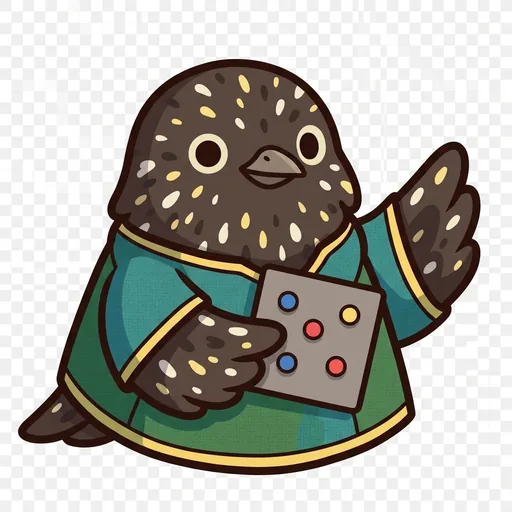
Flock
Formation — how a group of dancers arranges itself in space (lines, circles, clusters, wedges) and how that shape flows and changes; the group as one moving picture
-

Storey
Level — dancing in the vertical space: low on the floor, mid at standing, high in reaches and jumps; every height belongs to dance, no height better than another
-
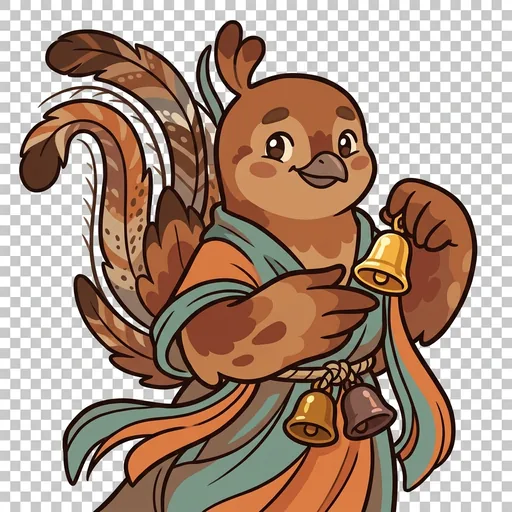
Beckon
Call-and-response — one dancer or group makes a movement and another answers it; a movement conversation built on truly listening before you reply
-
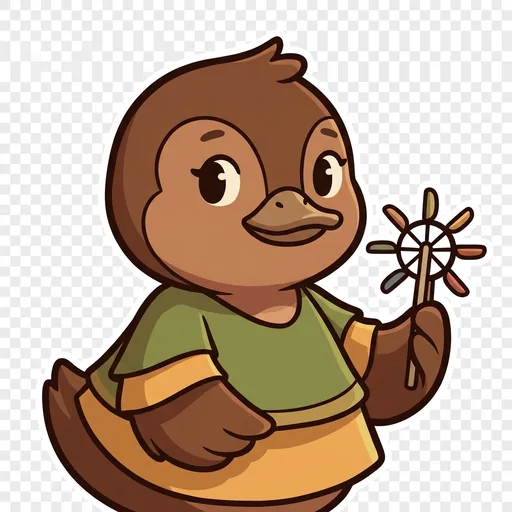
Canon
Unison and canon — unison is everyone moving together as one; canon is the same move staggered one after another, rolling across the group like a wave
-
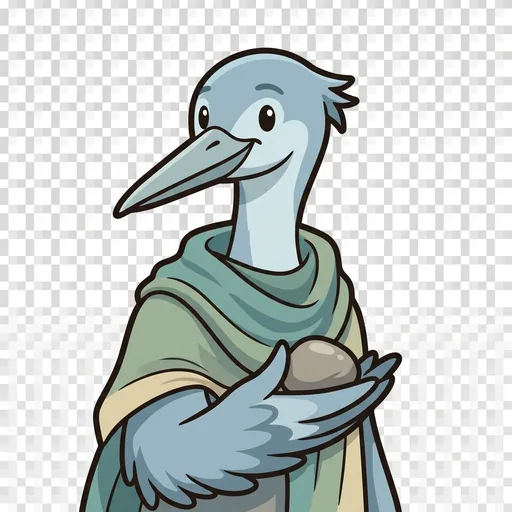
Bide
Stillness and the hold — the held, alive, motionless moment inside a dance; negative space made of time; a strong chosen pause, not tiredness or absence
-
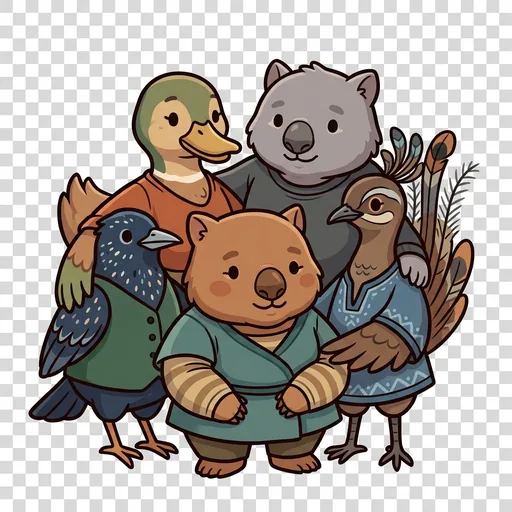
The Company
The whole group dancing as one — how formation, level, call-and-response, unison and canon, and stillness weave together so a group of dancers moves as a single living thing