Reclaim
ENERGY TRANSITION — *swapping the power we get from burning fuels for power we catch fresh from the sun, wind, and water — energy that keeps arriving and doesn't add carbon to the sky.*
Loading audio…
Press play to listen along. The line being read lights up as you go.
Show full transcript
Loading transcript…
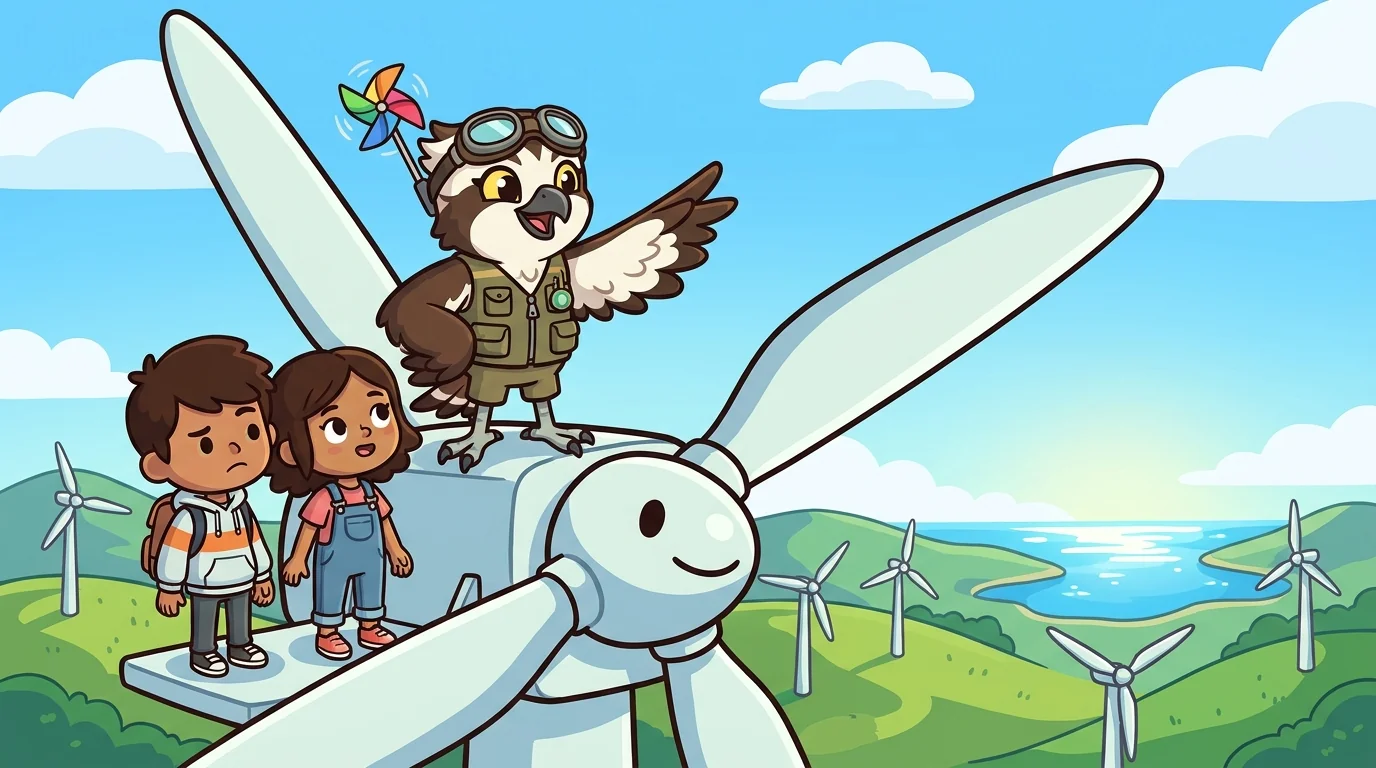
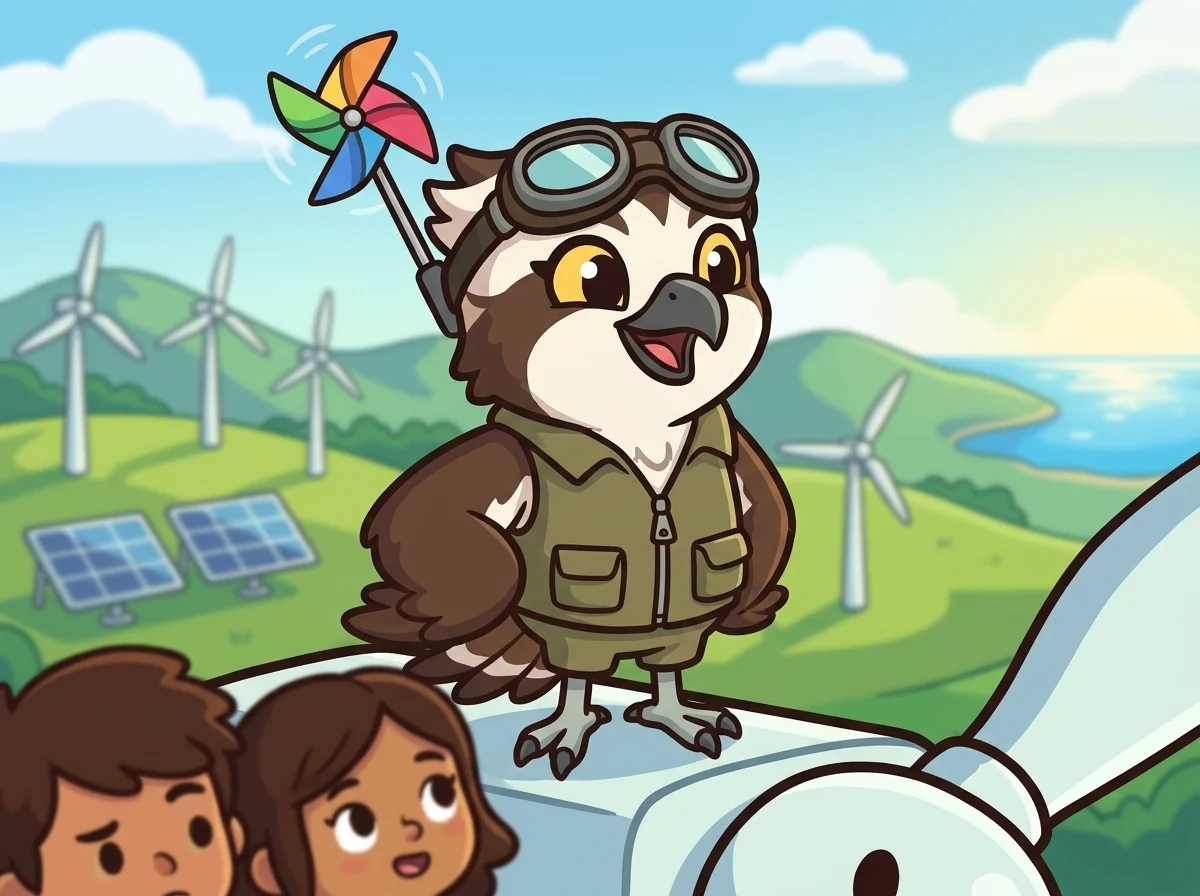
Reclaim was a bright-eyed osprey tween with a little pinwheel clipped to her flight goggles that spun whenever the wind blew — which, being an osprey, was often. She perched on the tallest turbine on the hill and watched the sky the way other kids watched a favorite show.
Two children climbed up to find her, one of them frowning. "Reclaim," he said, "everyone says burning fuel is wrecking the sky and there's nothing to do about it."
Reclaim's pinwheel spun merrily. "Oh, there's LOTS to do about it," she said, delighted. "That's the best part. Come watch the wind with me. I want to show you a swap."
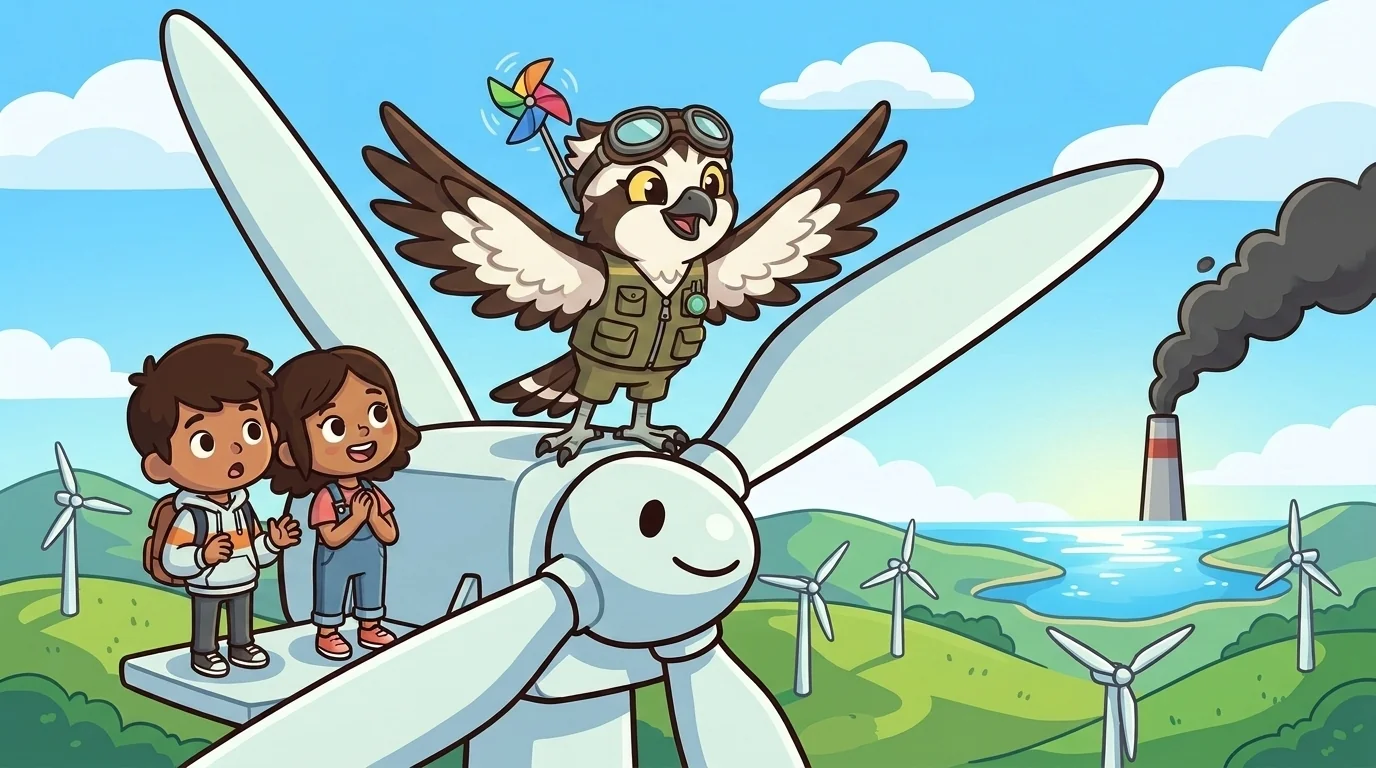
"Here's the old way," Reclaim began, pointing a wing toward a distant smokestack. "To make power — for lights, for machines, for warmth — people have mostly burned things. Coal, oil, gas. Burning makes energy, sure. But it also puts carbon up into the sky, every single time. The power's useful. The smoke is the problem."
"So we just... stop having power?" the boy asked, alarmed.
"No!" Reclaim laughed, her pinwheel whirling. "That's the doom-story, and it's wrong. We don't stop having power. We swap where we get it from. Look —" she spread her wings toward the sun, the wind, the river far below. "The sun pours energy down all day, free. The wind pushes on these turbines. The river runs and runs. That energy's arriving right now, whether we catch it or not. The whole trick is learning to CATCH it instead of burning things."
She showed them how. The turbine under her talons turned in the wind and made power — clean, no smoke. The dark panels on the hillside soaked up sunlight and made power — clean, no smoke. The dam on the river turned the running water into power — clean, no smoke.
"This is called the energy transition," Reclaim said. "Swapping the burning kind for the catching kind. And here's why it's hopeful and not scary: the sun and the wind and the water don't run out. Burn a lump of coal and it's gone forever, smoke in the sky. But the sun comes up again tomorrow. The wind blows again tonight. This power keeps arriving. We're not running out of anything. We're just learning to catch what was there the whole time."
The boy stared at the spinning turbine. "So it's not hopeless."
"It's the opposite of hopeless," said Reclaim firmly. "It's already happening. More turbines every year. More panels. It's not a someday-dream. It's a swap people are making right now, faster and faster."
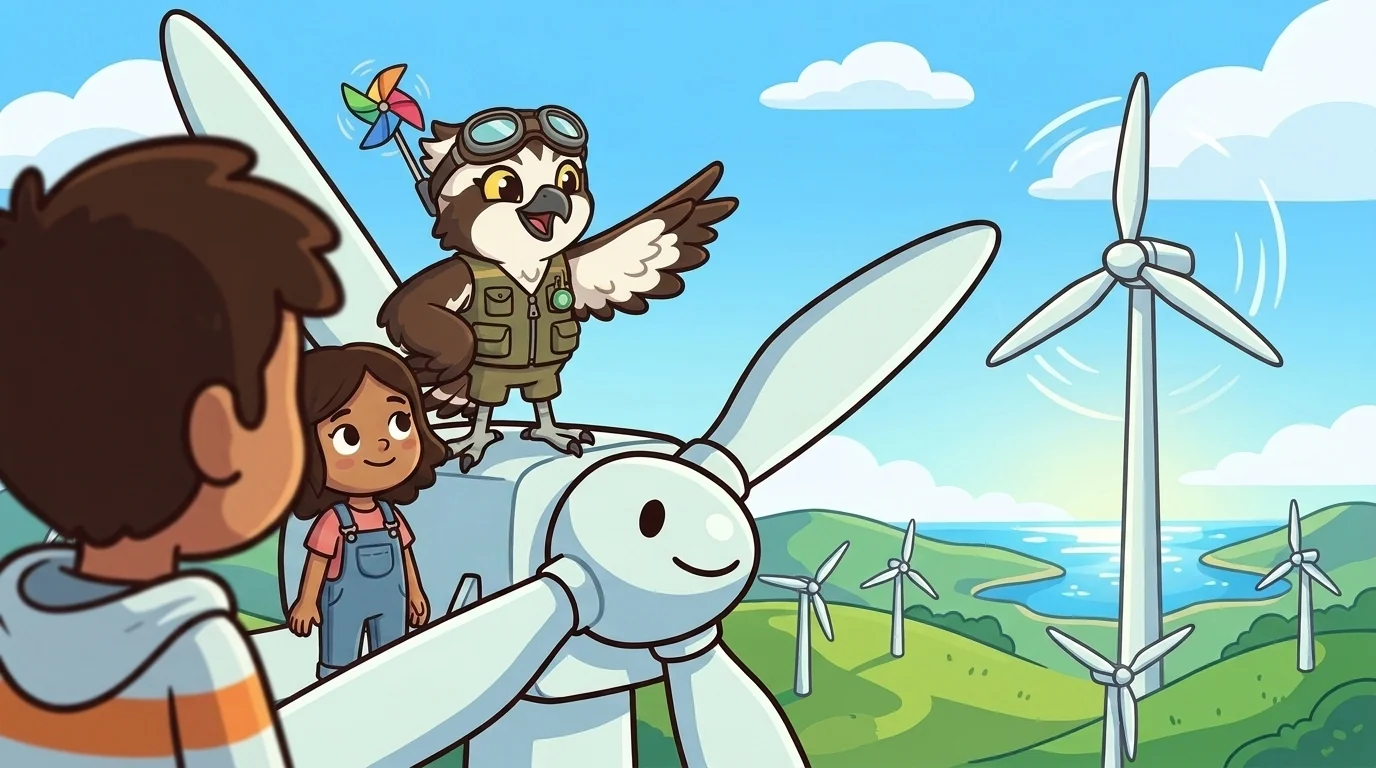
The children watched the clean turbine turn against the blue sky, and something in their faces changed — the gloom lifting, replaced by the plain, practical hope of there is a real thing being done, and it works.
"The old story says we're stuck with the smoke," Reclaim said. "The true story is we've found how to catch the sun. That's not a small thing to know. That's the difference between giving up and getting to work."
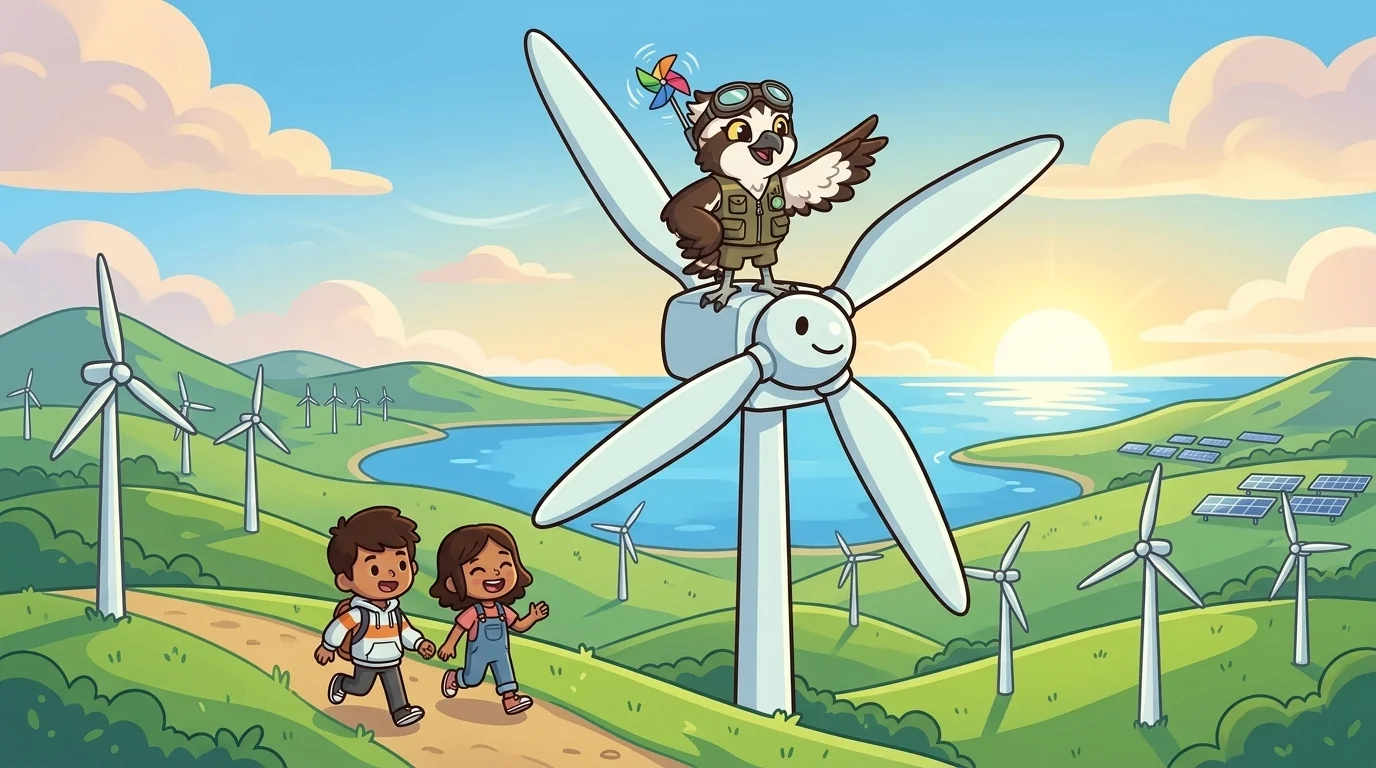
Reclaim watched the two kids scamper back down the hill, chattering now about wind and sunlight instead of doom, and a warm, glad contentment rose in her chest and spread out to her wingtips.
This was the whole joy of her work: not to scold anyone about the burning, and not to frighten them about the sky, but to hand them the bright, hopeful, entirely-true news that a better way was already arriving — free, every morning, on the wind and in the light. There was no despair in it once you saw the swap clearly; there was only the buoyant, settled ease of a young osprey who knows the answer keeps blowing in on the very next breeze. Her pinwheel spun, and she felt, all the way through, light and hopeful and calm. "It keeps arriving," she said to the turning wind, and grinned. "We just had to learn to catch it."
The ClimateQuest ensemble
Reclaim is part of ClimateQuest's distributed-narrative cast. Each character embodies a different curricular primitive; together they teach the full subject.
-

Haze
Atmosphere (air, gases, the sky as a thin layer)
-
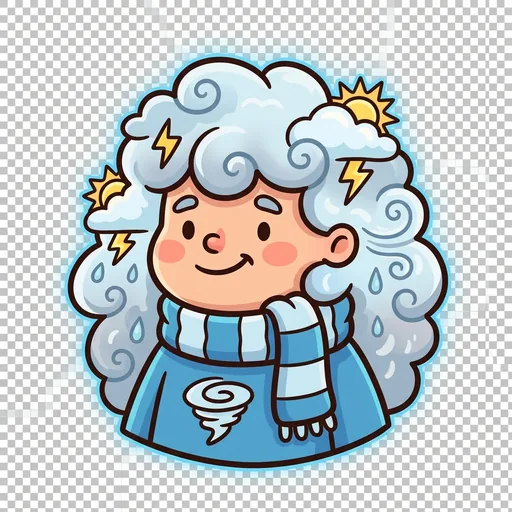
Squall
Weather events (vs. climate — short-term variability)
-

Round
Carbon + water cycles (recurring loops, balance)
-

Blanket
Greenhouse effect (insulating gases)
-

Stitch
Collective action / policy / repair
-

Glint
Ice-albedo feedback (bright ice reflects, dark water absorbs — a warming loop)
-

Fathom
Ocean heat + carbon sink (thermal inertia — the sea stores and slows change)
-

Cusp
Tipping points (thresholds where small change flips a system all at once)
-

Thaw
Permafrost thaw (frozen ground warming — releasing an old carbon secret)