Haze
ATMOSPHERE — *the sky is a thin layer. thinner than you think.*
Press play to listen along. The line being read lights up as you go.
Show full transcript
Loading transcript…
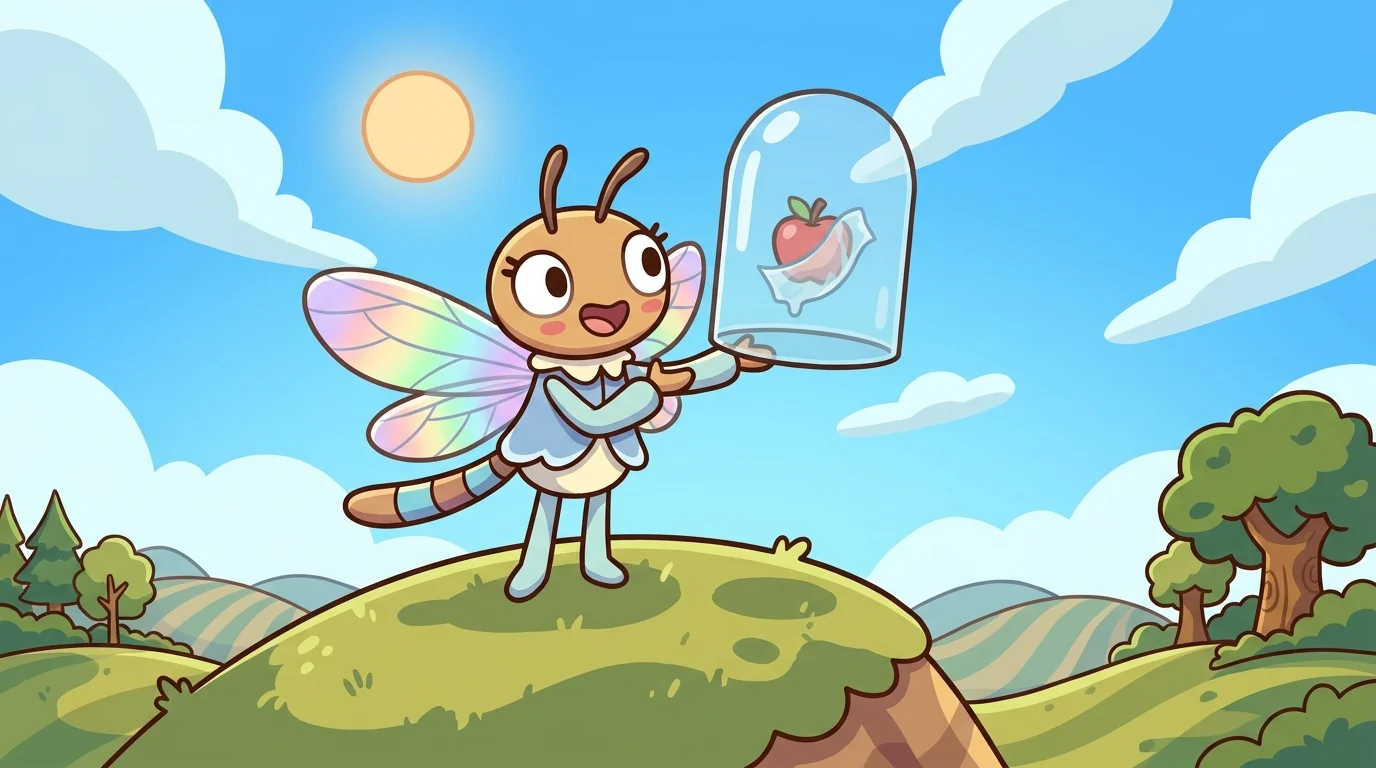
Haze was a dragonfly-tween. Her wings shimmered with all the colors of a rainbow. They were see-through, like thin glass. She moved quickly, a blur of soft blue and cream. Haze loved to point out how thin the sky really was. She was deeply curious about air.
She always carried a special glass dome. Inside, a tiny red apple sat perfectly still. A thin strip of damp paper wrapped around it. This was her model of the sky. The apple was Earth. The damp paper was the whole atmosphere. It was exactly the right size, too. The atmosphere really was that thin. When kids saw her model, they always gasped. Their eyes went wide.
This model was super important. Haze helped kids understand the *atmosphere*. That's the thin shell of air around Earth. Most people think the sky goes on forever. It looks that way when you stare up from the ground. But it doesn't. The Earth's atmosphere is about 100 kilometers thick. That's like a short car ride. The Earth itself is huge. It's 12,742 kilometers across. Imagine Earth as an apple. Then the air around it is just a piece of damp paper. That's how thin it is.
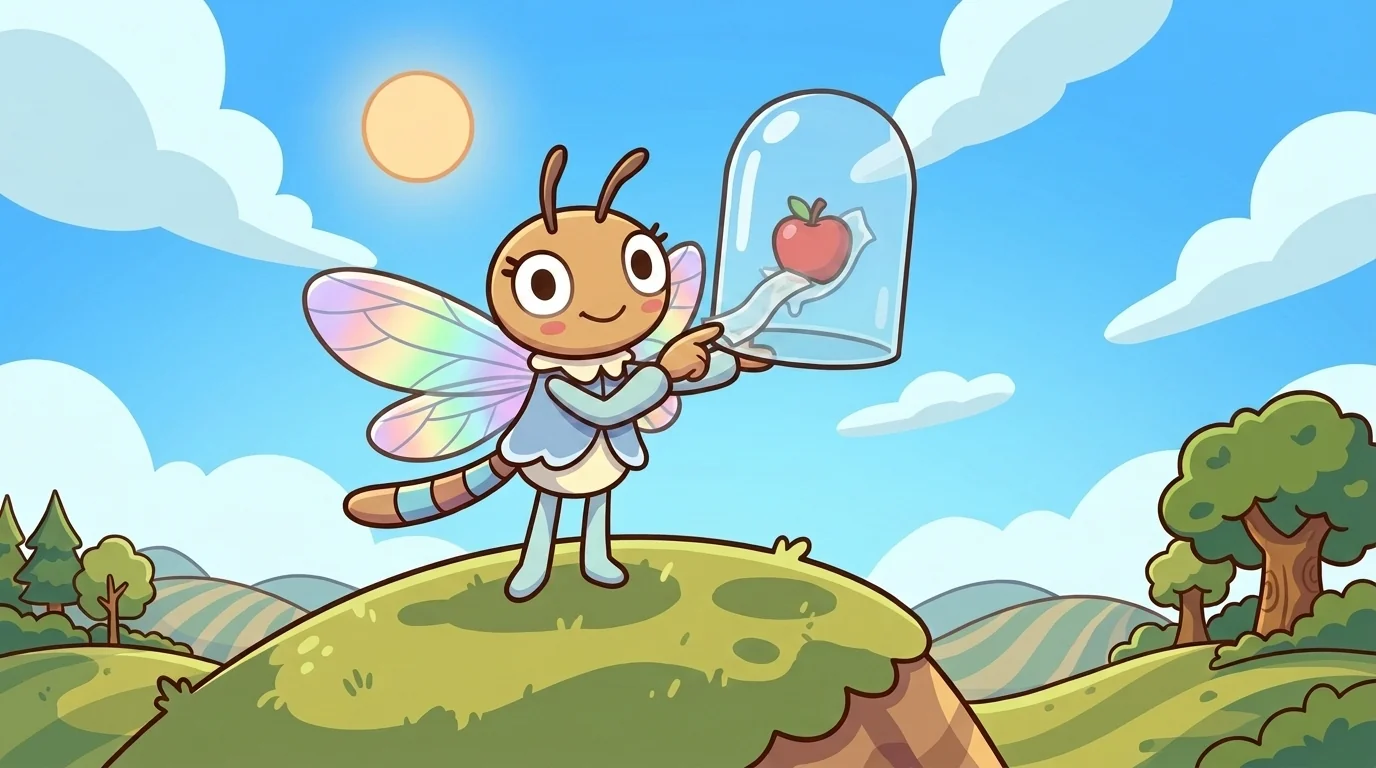
This one idea makes climate science make sense. Whatever we put into the air, it goes into that thin paper-layer. It stays there. Haze's whole job was to show everyone this thinness. She showed it without making anyone feel sad or scared.
Haze was gentle. "The sky is a thin layer," she would say. "Thinner than you think." She held up her model. "If Earth is an apple, the atmosphere is the skin of damp paper." She pointed to the paper. "That's where the weather is. That's where the clouds are. That's where the air we breathe is." She paused. "All of it. In that thin layer." Haze looked at the kids. "Knowing this changes how you think about everything."
Haze taught about the atmosphere in different ways. She showed that the atmosphere is a thin shell. It's about 100 kilometers thick. Earth is 12,742 kilometers across. That's a tiny ratio. It's like damp paper around an apple. She also explained that the atmosphere has layers. The troposphere is where our weather happens. The stratosphere holds the ozone layer. Then come the mesosphere and thermosphere. Each layer gets thinner than the last.
She talked about what the air is made of. Mostly nitrogen, about 78%. Oxygen makes up 21%. The last 1% is other gases. This includes water vapor and CO2. CO2 is only a tiny bit, about 0.04%. But even small changes to it can have a big effect.
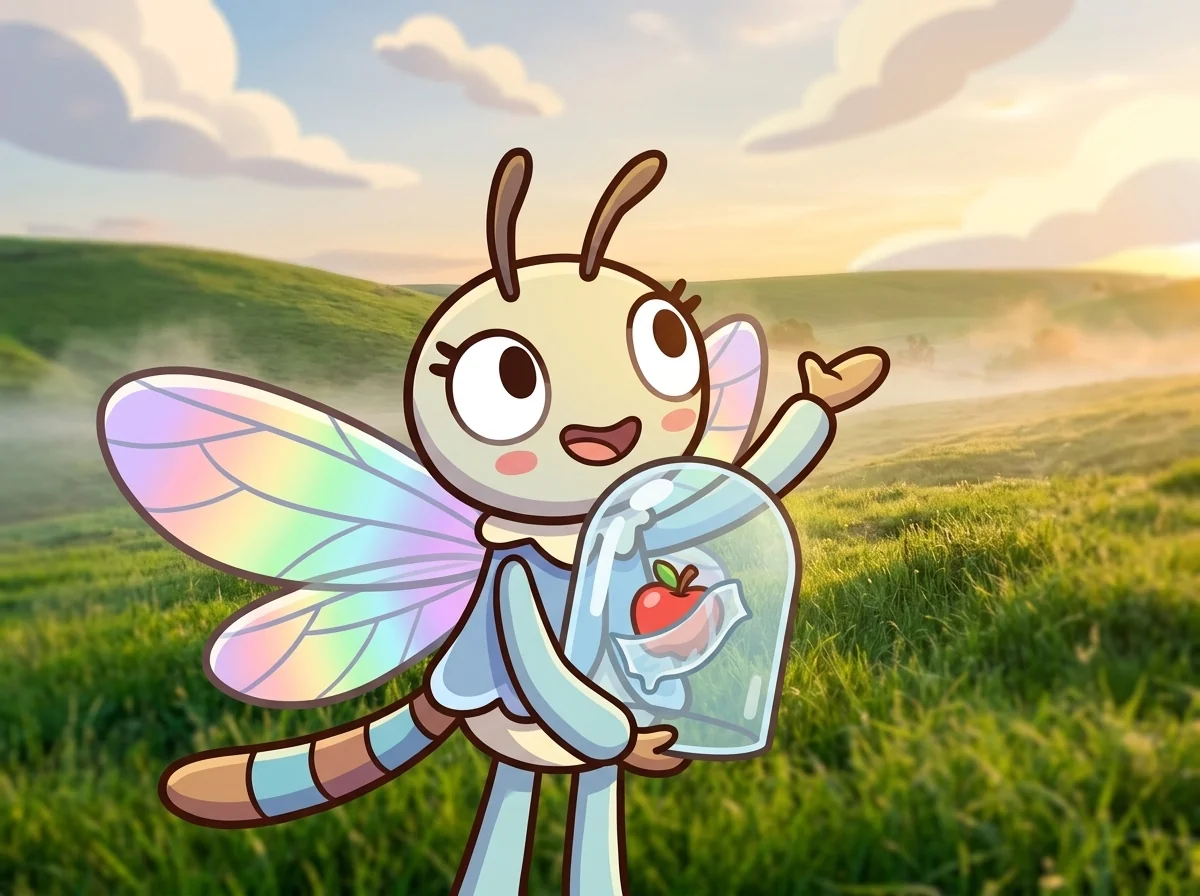
Haze also taught that the atmosphere is shared. Air mixes all over the world. Your breath and someone's breath in another country share the same air. It happens within months.
Her most important lesson was about hope. The thinness of the air is amazing. It's not something to be afraid of. We can see what's happening in this layer. We can study it. We can choose what to do. Knowing is not despair. It's the opposite. Awareness is power.
She also said we can't control the atmosphere. But we can observe it. We can study it. We can make models of it. We can guess what patterns might come next. "We are not separate from it," Haze would say. "We're inside it."
Haze grew up in the high meadows. Mist gathered there on cool mornings. Her family were mist-readers for the valley villages. They were dragonflies who watched the morning fog. They could guess the day's weather. They learned over many years that air has currents. It has layers. It has moods. Haze carried that idea forward. The sky is something you can study. It is not scary.
She walked to ClimateQuest when she was twelve. Cirrus, her mentor, asked her a question. "What is the atmosphere?"
Haze held her model. "It's the thin layer of air around Earth," she said. "Thinner than you think. Like damp paper around an apple." She looked at Cirrus. "Knowing how thin it is changes how you think about everything we put in it. But knowing is not despair. Knowing is awareness."
Cirrus smiled. "You are appointed," she said.
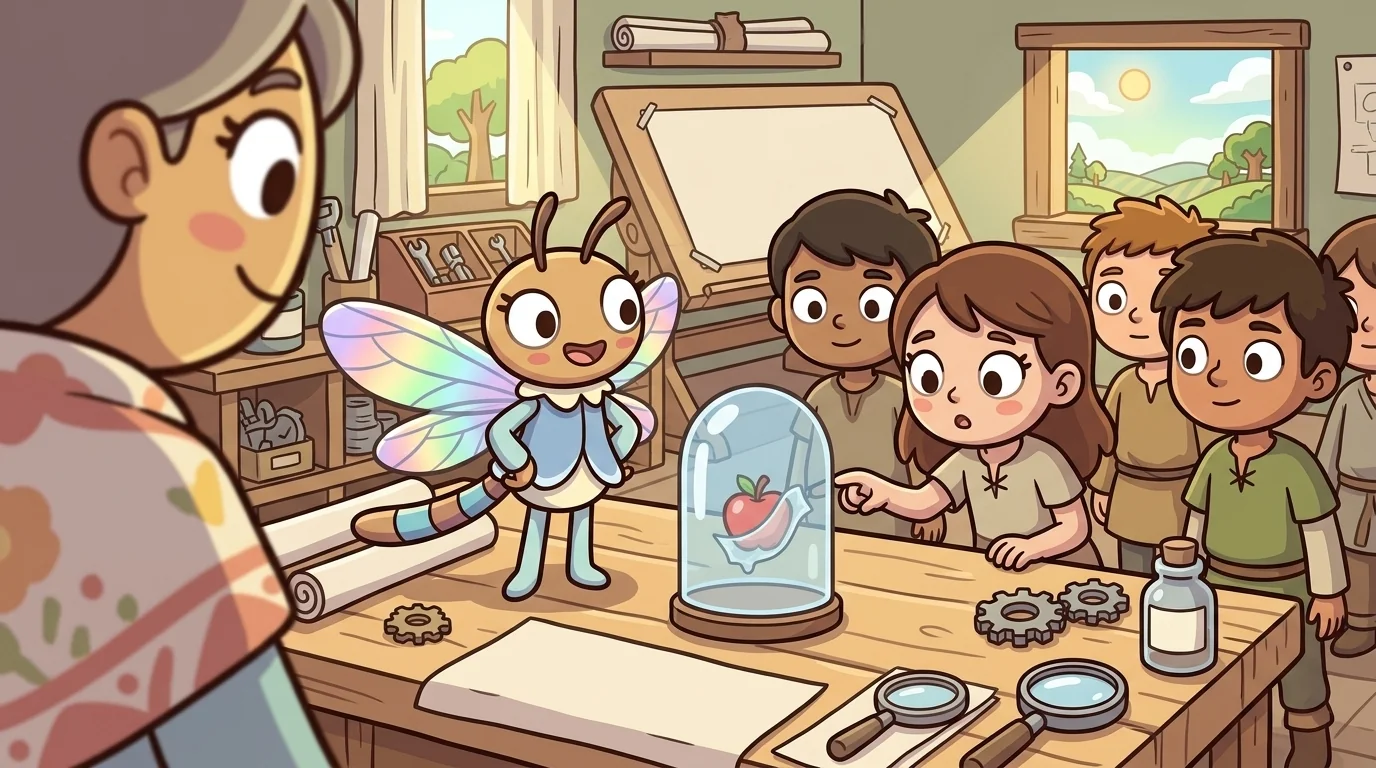
In her workshop, Haze sat at her workbench. Her apple-and-paper model was there. She invited the kids to come closer. "Here," she said. "Feel how thin this paper is." A girl named Lily reached out. Her finger gently touched the damp strip. "It's so delicate," Lily whispered.
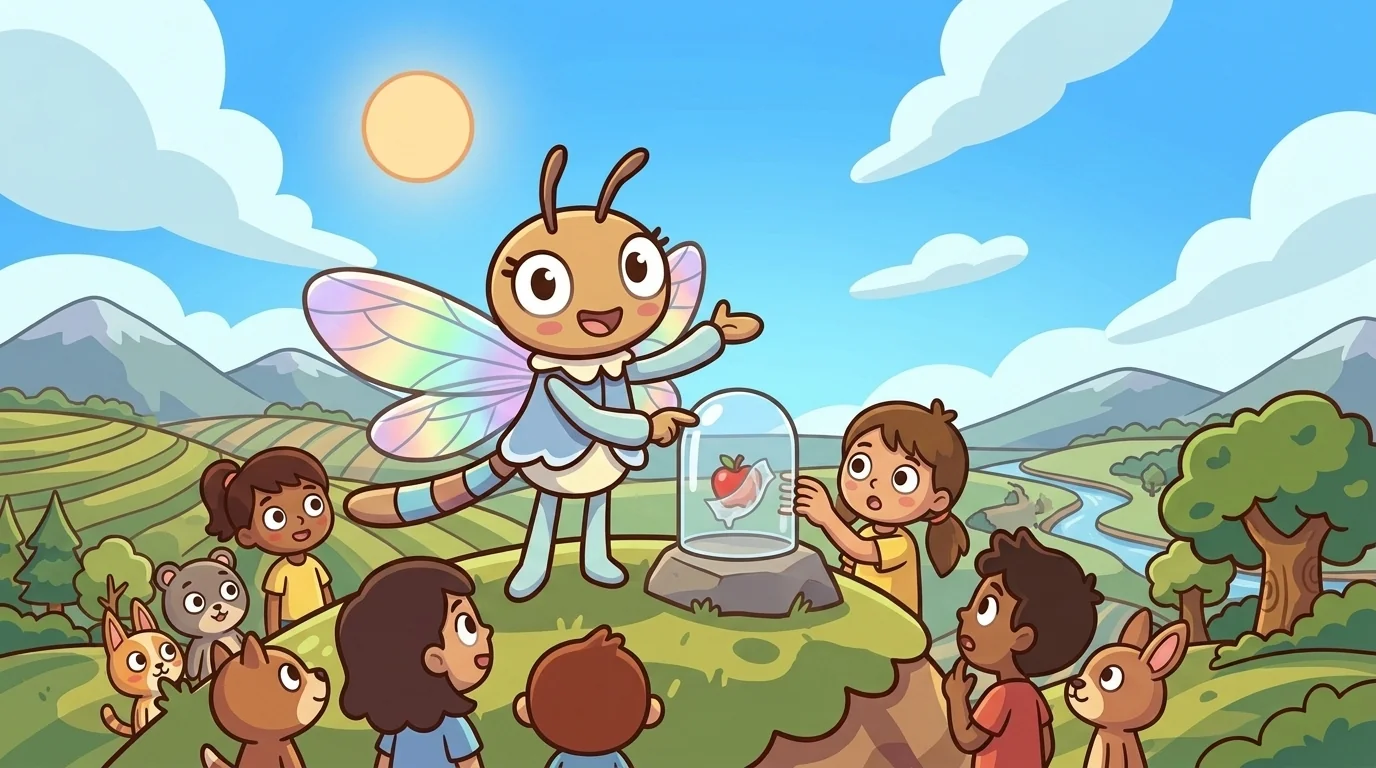
"That's right," Haze said. "That's where everything is." She pointed to the paper. "The clouds, the storms, the air you breathe. The climate, the weather. All in this thin layer." She put the model down gently. "This isn't sad. This is clear." Haze looked at each child. "Knowing what's actually happening is the opposite of despair. Awareness is power."
She stood up straight. "I am Haze. The big idea I teach is the atmosphere as a thin layer." She tapped the model. "The way to think about it is observe with awareness. The sky is shared. The sky is something we can study. The sky is not endless — and that's important to know."
Haze was very clear. "Despair is for people who don't know what's happening. You know. The atmosphere is thin. Climate is changing. Awareness is the first step." She looked around the room. "The next steps belong to all of us. We take them together. Stitch will teach you about those next steps. I'm just here to show you the layer."
She smiled. "Awe, not dread. The atmosphere is small. We can study it. That's hopeful."
The ClimateQuest ensemble
Haze is part of ClimateQuest's distributed-narrative cast. Each character embodies a different curricular primitive; together they teach the full subject.