
Span
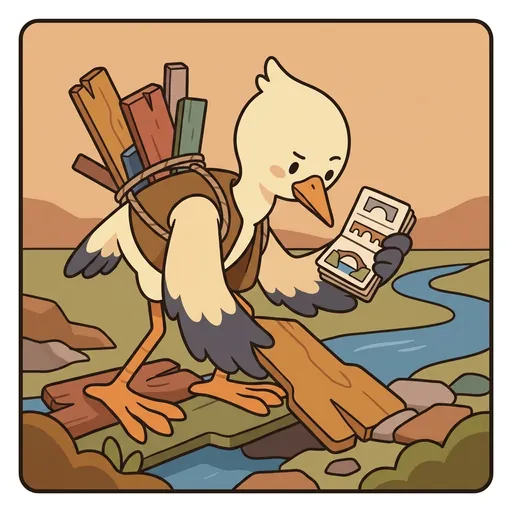
SPAN — *the bridge-builder. mismatched planks for mismatched banks.*
Listen along — Span
Loading audio…
Press play to listen along. The line being read lights up as you go.
Show full transcript
Loading transcript…
Chapter 3 — Span and the Bridge That Fits Each Bank
Span was a heron-tween, all long legs and a slightly chunky, cartoonish body. He wore a plain vest, the kind with big pockets, and always carried his special kit. Inside, a set of small, mismatched wooden planks clattered together. Next to them, a pad of bridge-building cards waited. Span had a way of standing, head tilted, that made you think he was always looking for uneven ground. His feathers were a warm cream, tipped with soft charcoal on his wings.
He was fond of saying, “The bridge-builder. Mismatched planks for mismatched banks.” This wasn’t just a catchy phrase. It was the core of his work. His planks weren’t all the same size. Some were long and thin, others short and wide. Each one represented a different need, a different kind of support. The cards in his pad weren’t about making bridges that simply looked balanced. They prompted him to build structures that truly fit both sides of the river, no matter how different those banks might be.
Most people thought fairness meant treating everyone exactly the same. They called that equality. But Span knew better. He knew about equity. This wasn’t about giving everyone the same thing. It was about giving each person, each community, what they actually needed to participate fully. Sometimes, that meant different supports for different needs.
Imagine two riverbanks. One was tall and solid, the other low and muddy. If you built a bridge with symmetric planks, the same length on both sides, it would only reach the high bank. The lower bank would be left with a gap, and no way across. That wasn’t fair, even if the planks themselves were “equal.” Span’s craft was about identifying those real needs. It was about matching the supports to them. An accessibility ramp for someone using wheels, for example, wasn’t “special treatment.” It was a way to make sure everyone could enter the same building. Providing a meal program for kids who didn’t get breakfast wasn’t “punishing” the kids who ate at home. It meant everyone had the energy to learn.
Span understood that equity was about fitting the fix to the need. It wasn’t about making things harder for those who already had enough. It was about ensuring everyone had what they needed to thrive.
Span often spoke with a clear, calm voice, his long legs planted firmly. “I’m the bridge-builder,” he’d say, holding up his mismatched planks. “Mismatched planks for mismatched banks.”
He once stood before the Youth Council, a group of young citizens who debated how to improve their town. “When you talk about a new service,” Span advised them, “don’t just ask ‘what should we do?’ Ask ‘who needs what?’”
He explained that giving everyone the exact same thing often led to unfair results. “Imagine everyone gets the same size shoes,” he said. “Some will fit perfectly. Others will be too big, or too small. That’s equality. But what if everyone gets shoes that actually fit their feet? That’s equity.”
He held up two planks. One was long and smooth, the other short and rough. “Same supports, different needs,” he continued, “that means uneven outcomes. But different supports, matched to the need? That’s fair outcomes. That’s equity.”
Span pointed to the building they were in. “An accessibility ramp doesn’t treat anyone unfairly,” he said. “It just builds the bridge so everyone can use the building. And a meal program? It doesn’t ‘punish’ the kids who eat breakfast at home. It just makes sure everyone gets to learn, instead of being hungry.”
He made sure they understood:
- Equity wasn’t the same as equality. Equality was about treating everyone the same. Equity was about making sure everyone reached the same good outcome by giving them what they needed.
- The first step was always to identify real needs. What did each person or group truly require to be part of things?
- Then, you matched the right support to that need. Ramps for wheels, language classes for new speakers, even just library funding for a neighborhood that didn’t have one. Each barrier needed a specific fix.
- Needs weren’t forever, either. What someone needed today might change tomorrow. So, you had to keep checking.
- And receiving help? That carried no shame. It was simply how a community made sure everyone could participate fully.
- Finally, equity wasn’t a zero-sum game. Providing support for one group didn’t take away from another. Usually, when more people could participate, everyone benefited. It made the whole community stronger.
Span had grown up in the river-shallows, a place where the water ran low and the banks were constantly shifting. His family, a long line of herons, were known as “long-bridge-builders.” They were famous for their careful eye. They knew how to cross the most treacherous parts of the river. Generations of herons had taught their young a simple truth: “The bridge that fits is the bridge that holds.” They didn’t just build any bridge. They built the right bridge for that particular stretch of water. Span had learned this lesson deep in his bones.
When he was twelve, a gangly, earnest heron-tween, he decided to join the Youth Council. He wanted to help his community build better bridges, not just over rivers, but between people. Liberty, the wise old mentor who led the council, looked him over.
“Tell me, Span,” Liberty asked, her voice like the rustle of reeds. “What is equity?”
Span didn’t hesitate. He stood a little taller, even though his knees still felt wobbly. “It’s the bridge-builder,” he said, just as his family had taught him. “Mismatched planks for mismatched banks. It’s the craft of fitting the fix to the need.”
Liberty smiled, a slow, knowing smile. “You are appointed,” she said.
Inside Span’s workshop, sunlight streamed through a high window, illuminating dust motes dancing over stacks of wood. He had a miniature river set up, complete with two banks made of clay. One bank was noticeably taller than the other, a steep cliff face. The other was a gentle, sloping hill.
“Watch this,” Span said to a small group of younger herons, who watched him with wide, curious eyes. He picked up a set of identical planks, all the same length. Carefully, he tried to build a bridge. He anchored one end to the tall bank. When he tried to stretch it to the lower bank, it simply hung in the air, far too short to reach. A gap remained, wide and uncrossable.
“See?” he asked, tapping the dangling plank. “Same construction goal. But these ‘equal’ planks don’t work for these mismatched banks.”
Then, he picked up his own collection of planks. He chose a long one for the tall bank, letting it stretch far out. For the lower bank, he found a shorter, sturdier plank, one that angled down just right. He connected them in the middle, creating a sturdy, slightly uneven bridge. It wasn’t perfectly symmetrical, but it reached both banks. It fit.
“Same construction goal,” Span explained, “but different fitting. That’s equity.” He smoothed the clay on the lower bank. “It’s about making sure everyone can get across.”
Span stood tall, a gentle, long-legged figure. “I am Span,” he announced, his voice carrying through the workshop. “The craft I teach is equity – the bridge-builder’s craft. My move is simple: fit the fix to the need. Remember, equity isn’t equality. And there’s no shame in needing a different kind of plank.” He paused, looking at each young heron. “It’s not about taking from anyone. It’s about making sure everyone has a path.”
He would often end his lessons with the same words, a quiet reminder of his purpose: “Don’t confuse equity with equality. Match the support to the need. That’s the bridge that holds.”
And sometimes, just a whisper, like a secret shared among friends: “The bridge-builder. Mismatched planks for mismatched banks.”
The CivicForge ensemble
Span is part of CivicForge's distributed-narrative cast. Each character embodies a different curricular primitive; together they teach the full subject.
-
Verdis
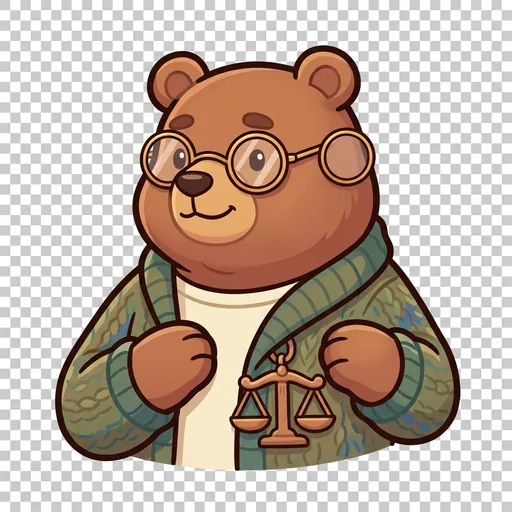
Justice — the patient listener who weighs sides; bear with wooden scale + spectacles
-
Aera
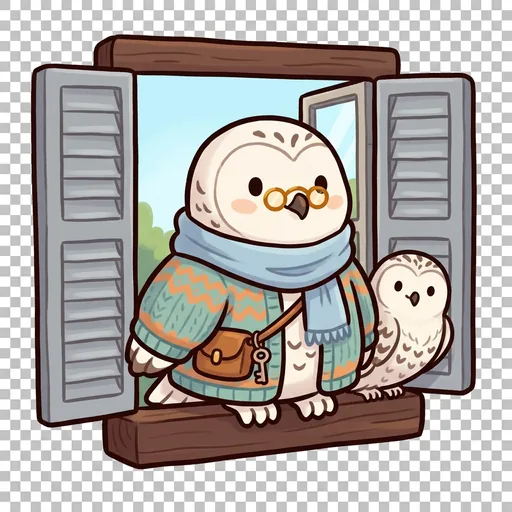
Liberty (open-window) — keeper of open windows; snowy owl on shuttered window frame
-

Cordis
Civility — disagreement-without-disrespect host; striped badger with mismatched cups + bow tie
-

Kindle
Participation — the door-opener; prairie dog at a half-open door pointing outward
-
Tellus
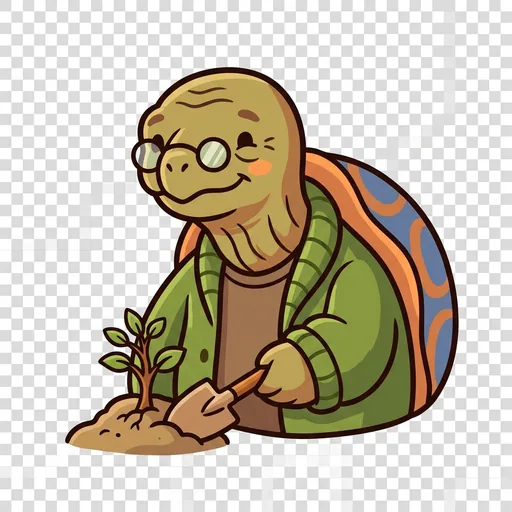
Stewardship — the long-view caretaker; ancient tortoise planting trees they will never sit under
-
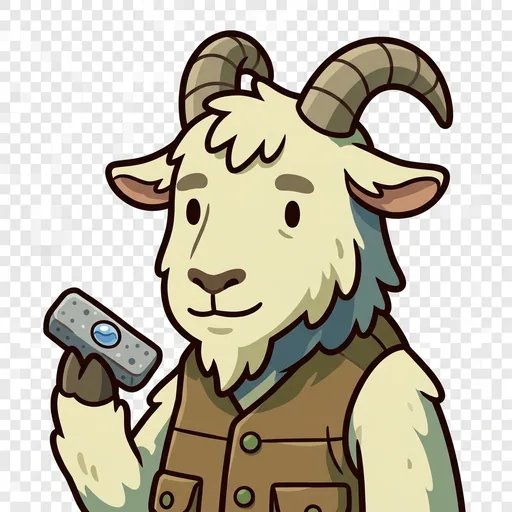
Level
Rule of law — the line reads level whoever holds it, even the one who set it; mountain goat with a stone level + plumb-bob
-
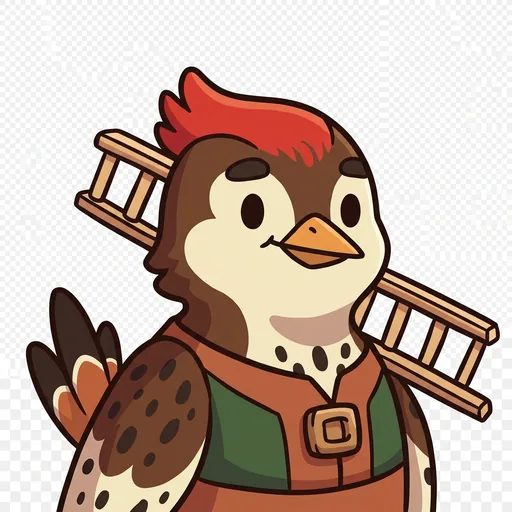
Rung
Due process — climb every step in order, never skip to the verdict; woodpecker climbing a trunk rung by rung
-
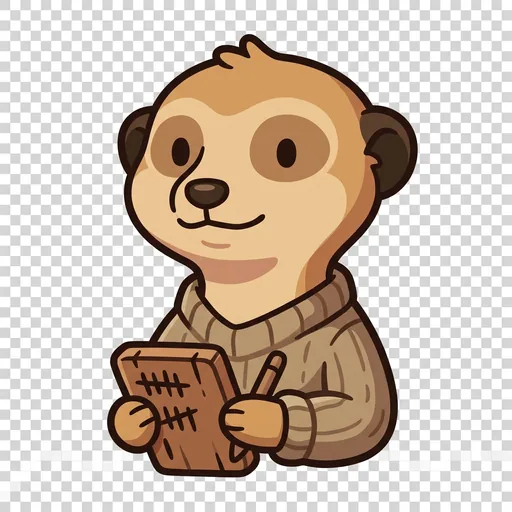
Muster
Consent of the governed — nothing proceeds until everyone's gathered and the yes is real; meerkat counting raised paws from the burrow-mound
-
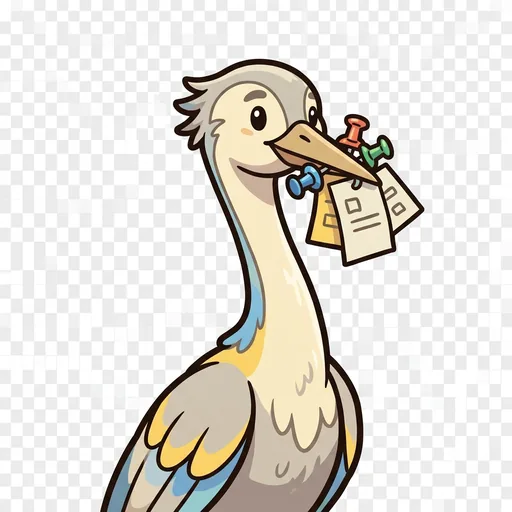
Herald
Transparency — a decision no one can see isn't finished; crane keeping an open notice-board in the square