Berm
RESILIENCE — *designing a city to bend and absorb instead of break; raised earth, green banks, and room-for-water so a storm passes through without wrecking the place. Planning for the flood before it comes.*
Loading audio…
Press play to listen along. The line being read lights up as you go.
Show full transcript
Loading transcript…
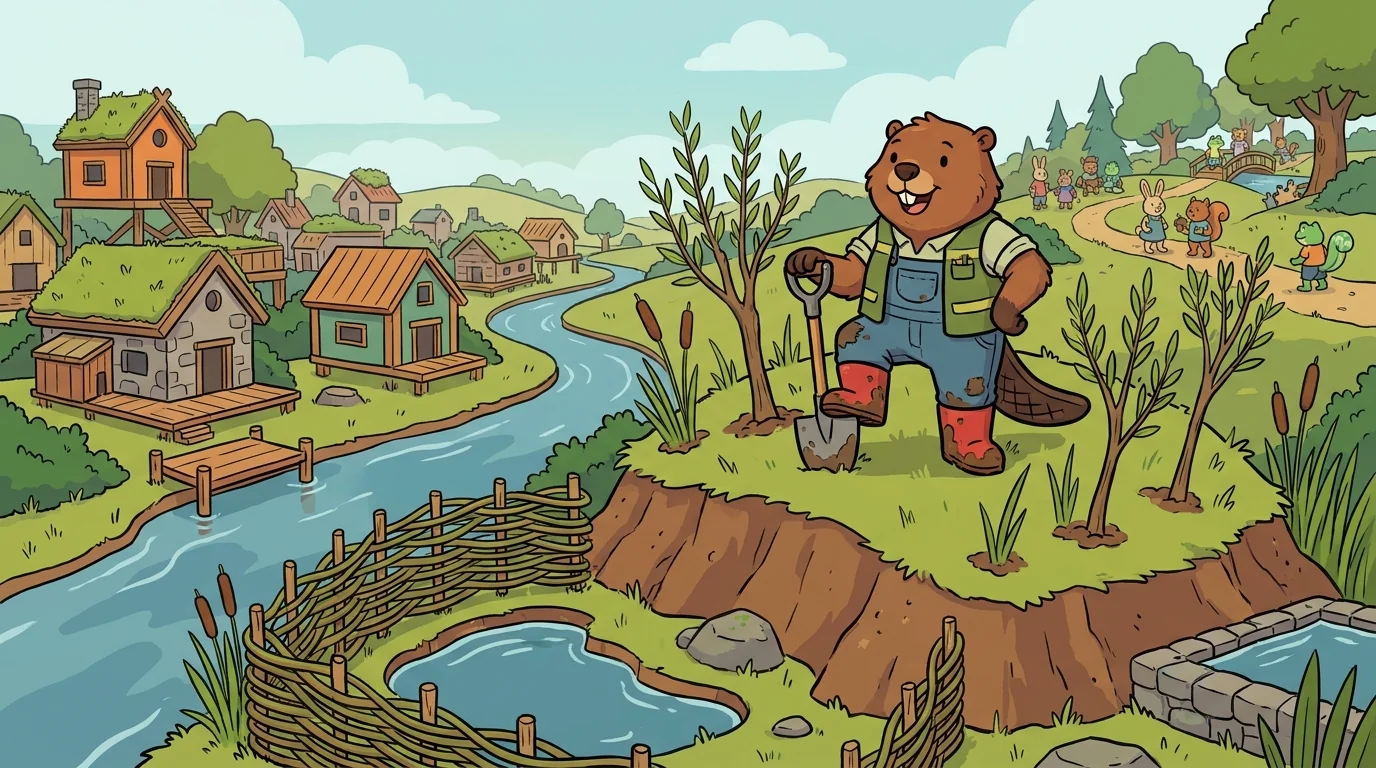
Berm was a sturdy, unhurried beaver in muddy boots, and she was always building up gentle mounds of earth, planting them thick with grass and reeds and willow. Folks sometimes teased her for it. "A little hill of dirt?" they'd say. "That's your big flood plan? Where's your great tall wall?"
"I don't build walls against water," Berm would answer, patting a green mound. "Water always wins against a wall, sooner or later. I build a place for the water to GO. Room for it. That's resilience — not stopping the storm, but bending so it passes through without breaking you."
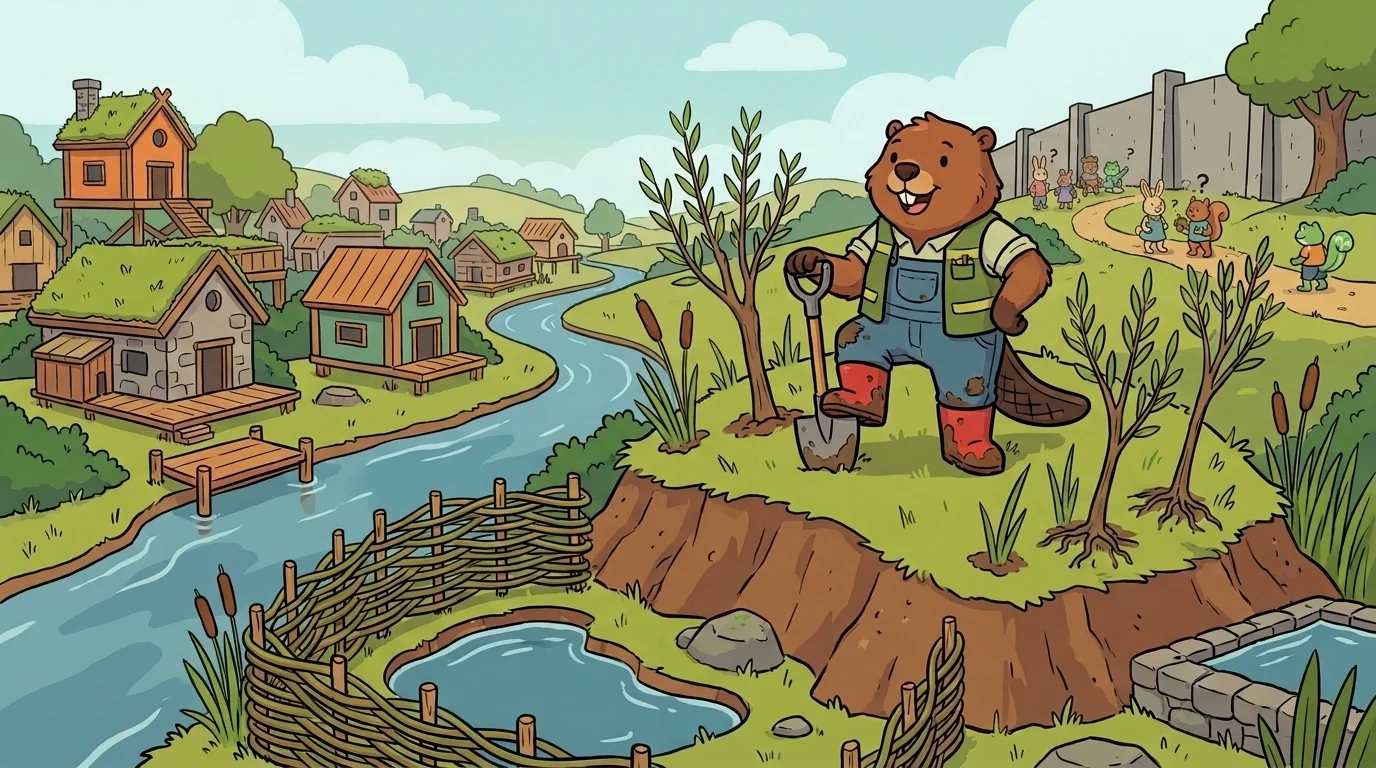
Cityforge sat by a river, and the river, everyone knew, would flood someday. The only question was how the city would meet it.
Most of the town wanted a wall — a tall, hard, concrete rampart along the river, to keep the water OUT. It felt strong. It felt like a fortress. It felt like the obvious answer: threat on that side, city on this side, big hard wall in between.
Berm didn't argue much. She just kept quietly building her low green banks, her soaked-in reed beds, her set-aside patches of park down by the water — places that could flood harmlessly and drain again, room she was leaving for the river to breathe into. It didn't look like defense. It looked like she was just... gardening near the river.

The great flood came in a wet autumn, higher and harder than anyone had planned for.
It hit the tall concrete wall first. The wall stood — proud, rigid, unbending — and the water rose against it, and rose, and pressed, all its force met by all the wall's stiffness with nowhere for either to give. And then, with a sound like the world cracking, the overwhelmed wall shattered, and the flood it had been holding back poured through the break all at once, in a single furious wave, into the streets behind it. The rigid thing had held perfectly right up until it failed completely.
But where Berm had built — her low green banks, her reed beds, her flood-ready parks — something else happened. The water rose there too. And the soft earth and the thirsty reeds and the set-aside parks simply... took it in. Soaked it up. Let it spread wide and shallow and slow across the room she'd left for it. The willows stood in water to their knees and didn't mind. The flood arrived, and was welcomed, and passed, and drained away — and the neighborhoods behind Berm's gentle mounds stayed dry.
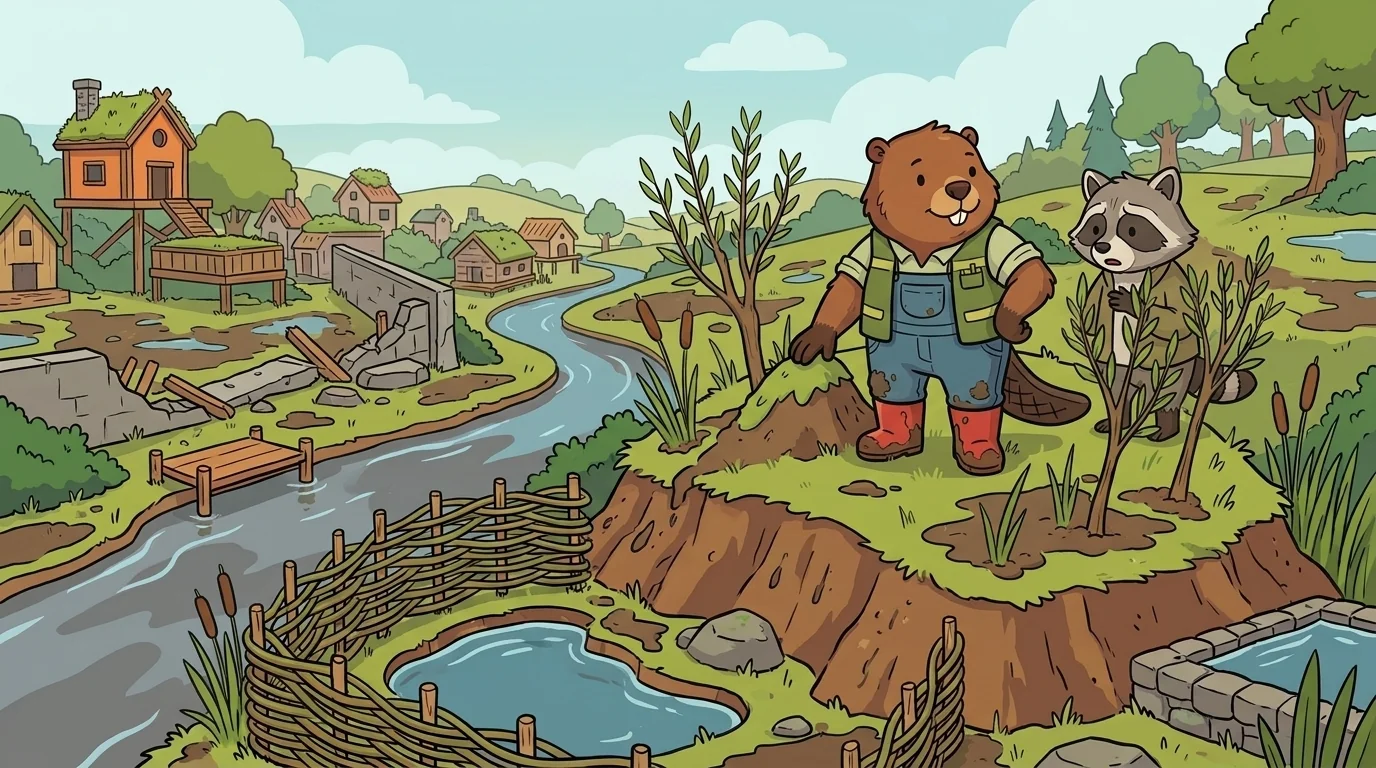
Afterward, standing in a muddy, soggy, entirely-intact park, an old raccoon councillor turned to Berm. "The wall was so much stronger," he said, bewildered. "And it broke. Your little hills of dirt held."
"The wall wasn't stronger," Berm said gently. "It was stiffer. And stiff things shatter, because they meet all that force with no give at all. My banks aren't strong — they're resilient. They bend. They make room. They let the water do what water's going to do anyway, somewhere it can't hurt anyone. You can't out-wall a river. But you can plan for it, and leave it somewhere to go."
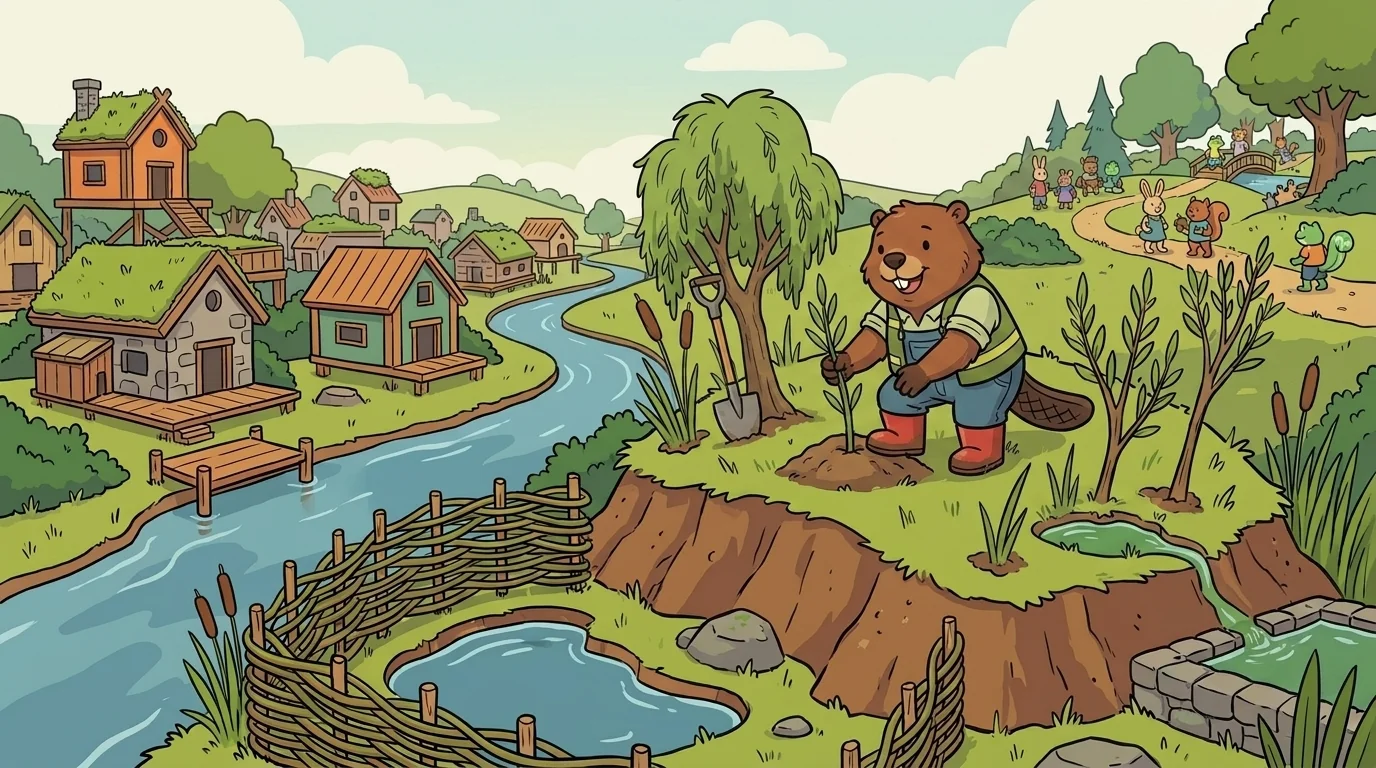
Berm walked her drying green banks as the last of the flood soaked away, pressing a fresh willow cutting into the soft earth, and felt a deep and rooted calm spread all through her. She would never build the tall proud walls people wanted. Her work would always look humble — a little grass, a little room, a few soaked reeds.
But there was a warm, settled peace in it, steadier than any fortress: the grounded contentment of a builder who had learned that real strength is often the willingness to bend, to make room, to work with a force instead of against it. The city behind her was dry and whole, and that quiet fact felt better in her chest than any wall ever could. "Not a wall," she murmured, tamping down the willow, gentle and sure. "A place to go." And she felt, all the way down, at ease.
The CityForge ensemble
Berm is part of CityForge's distributed-narrative cast. Each character embodies a different curricular primitive; together they teach the full subject.
-

Block
Zoning + density — the badger-tween with clay-block models who teaches zoning as 'plan for the neighbors first, not the buildings'
-

Stoop
Public space + community — the capybara-elder on a wooden stoop who treats public space as the city's living room, foregrounding existing stoop-cultures (Brooklyn / Latin American plazas / Italian piazzas / West African gathering trees)
-

Lane
Walkability + mobility — the rabbit-tween in safety-vest with a chalk-spool who teaches streets-as-spaces ('streets are rooms; cars are guests, not owners')
-

Hub
Transit nodes — the pangolin-tween in conductor-vest who teaches that transit is about ACCESS, not about cars-vs-trains ('many ways, equal ways; the bus matters as much as the train')
-

Dwell
Housing equity + repair — the owl-elder in a mended quilted-coat who teaches anti-displacement, repair-not-replace urbanism ('repair before replace; listen before plan; the people who live here ARE the design')
-

Canopy
Green infrastructure — trees and parks cool the city and soak up rain; shade placed where it is needed most
-

Mix
Mixed-use land use — weave homes, shops, and work close so daily life is a short walk
-

Seam
Edges and connection — a highway can rip two neighborhoods apart; design can stitch them back
-

Conduit
Infrastructure — the badger who tends the hidden pipes, wires, and drains beneath every street