
Sample
SAMPLE — *a small careful look that stands in for the whole.*
Press play to listen along. The line being read lights up as you go.
Show full transcript
Loading transcript…

Sample was an otter who took his job very seriously. He wore a special stats-vest, which bristled with pockets for all his tools. In one paw, he always carried a small metal bucket. In the other, he held a crisp estimate-card. Sample moved with quiet, thoughtful steps, as if the floor were covered in sleeping cats.
His fur was the color of a deep river, with stripes like soft grey pebbles. He was small, but he had a knack for guessing big things from just a handful of evidence. He watched everything with intense focus, especially how people chose things. He had a favorite saying. "A small, careful look can stand in for the whole," he'd murmur, polishing his bucket. "But only if it's a careful look."
The big idea Sample taught was *sampling*. It’s a powerful trick for understanding huge things you could never measure completely. Think about it. You can't count every single fish in a lake. You can’t ask every person in the country who they’ll vote for. You definitely can't taste every cookie that rolls out of the factory. It would be impossible.
So instead, you take a *sample. A small, carefully chosen handful that stands in for the whole thing. But "carefully chosen" is the most important part. If you only scoop fish from the sunny, shallow end of the lake, you’ll get a wrong idea about the whole lake. You’ll miss all the strange creatures lurking in the deep, dark parts. If you only ask your friends who they’ll vote for, you’ll just get friend-answers, not a real picture of the whole town. That mistake has a name: sampling bias*. It's a sneaky trap that can ruin a perfectly good guess.
Sample had a whole toolkit of ideas for making good guesses. He showed us random *sampling, which is a way to pick that gives everything an equal chance, like drawing names from a hat. He also warned us about convenience sampling—just grabbing whatever is easiest, which is usually a recipe for disaster. He explained that a bigger sample almost always makes for a better, more accurate guess. But he always came back to sampling bias*. He called it the "silent killer" of good data.
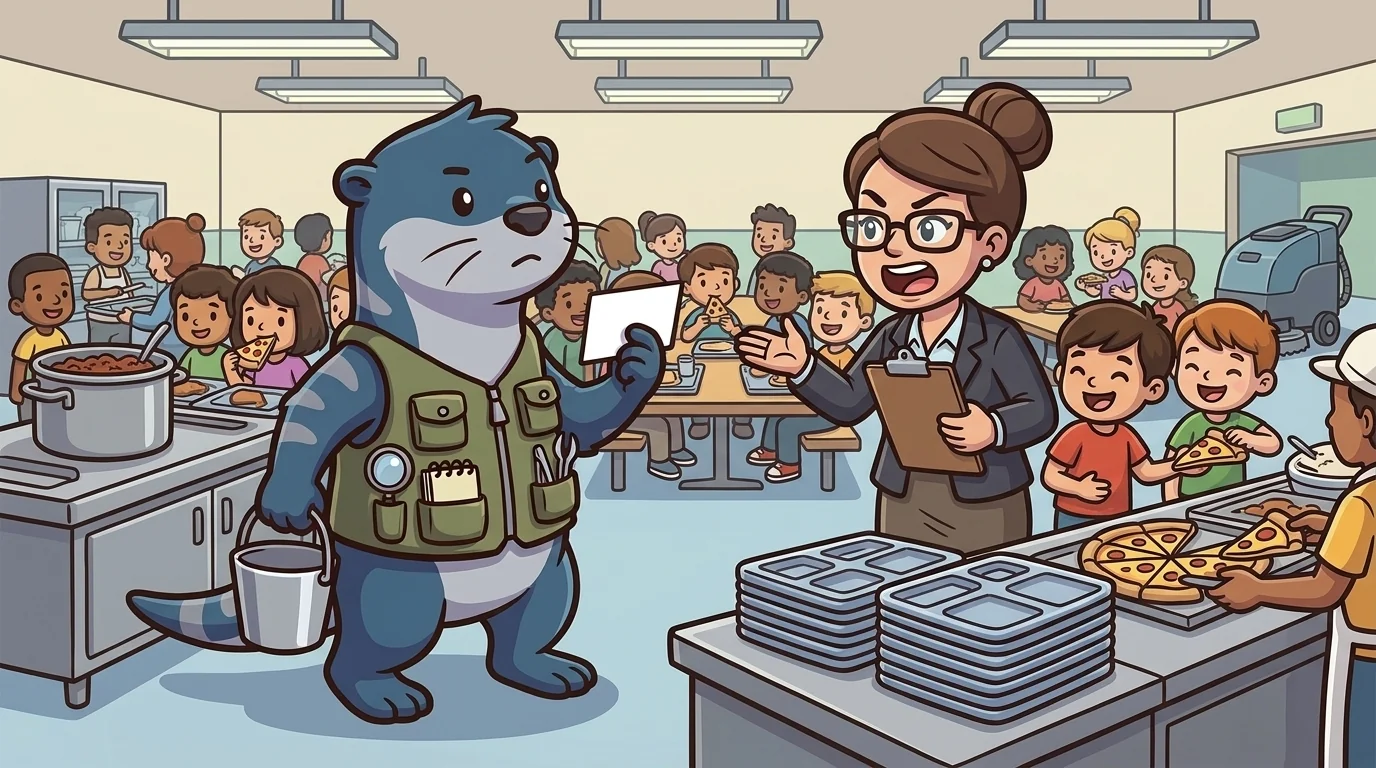
If you asked him what his whole deal was, he’d polish his bucket and say, "I'm Sample. I teach *sampling*." He often reminded everyone of his most important rule: "How you pick," he’d say, his voice serious, "changes the answer you get."
Sample’s biggest showdown happened, of all places, in the school cafeteria. The air smelled like mystery meat and floor cleaner. Principal Higgins, a woman who loved simple answers, had a very important question. "Do the students," she announced, "want pizza on Tuesdays?"
The week before, she had conducted her own survey. She stood right by the pizza line during lunch. "DO YOU WANT PIZZA?" she boomed at every kid who was already waiting for a slice.
Of course, every single one of them said yes.
"One hundred percent!" she had declared, beaming. "The data is clear! Everyone loves pizza!"
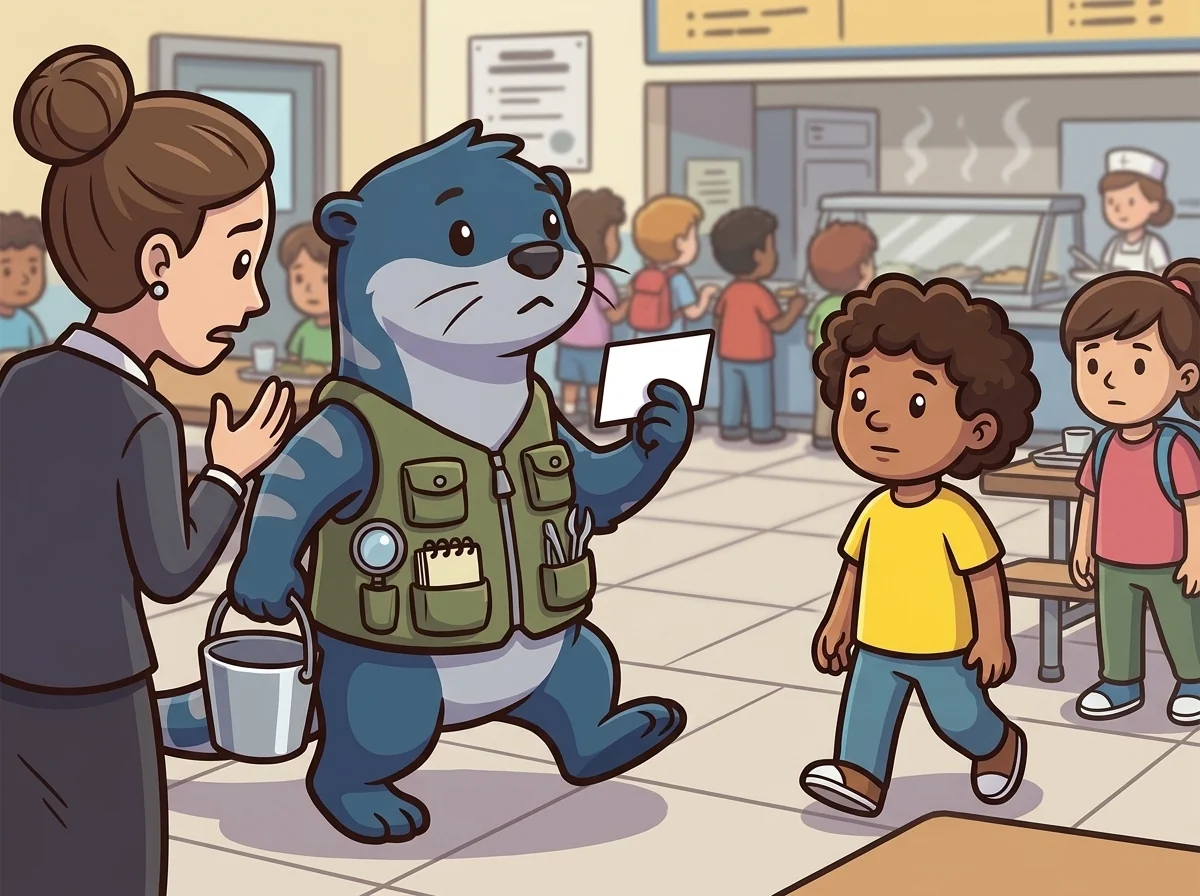
Sample, who was quietly observing from a corner, just shook his head. "That's not data," he muttered to his bucket. "That's an echo."
The next Tuesday, he set up his own station by the main cafeteria doors. He placed his bucket on a small stool and held his estimate-card like a tiny, serious scientist. Students poured into the noisy room. Sample didn't shout. He waited patiently. As the river of kids flowed past, he would politely stop every fifth person.
"Excuse me," he'd say. "Quick question. Would you want pizza on Tuesday?" He carefully marked each answer on his card. A check for yes, an X for no.
He did this through the entire lunch period. Finally, as the last student went through, he tallied his results. He held up his estimate-card for the principal to see. "According to my *sample*," he announced, "sixty percent of students want pizza."
Principal Higgins stared at the card. Her smile faltered. "Sixty? That's impossible! Last week I got one hundred percent!" she insisted. "I asked the kids in the pizza line myself!"
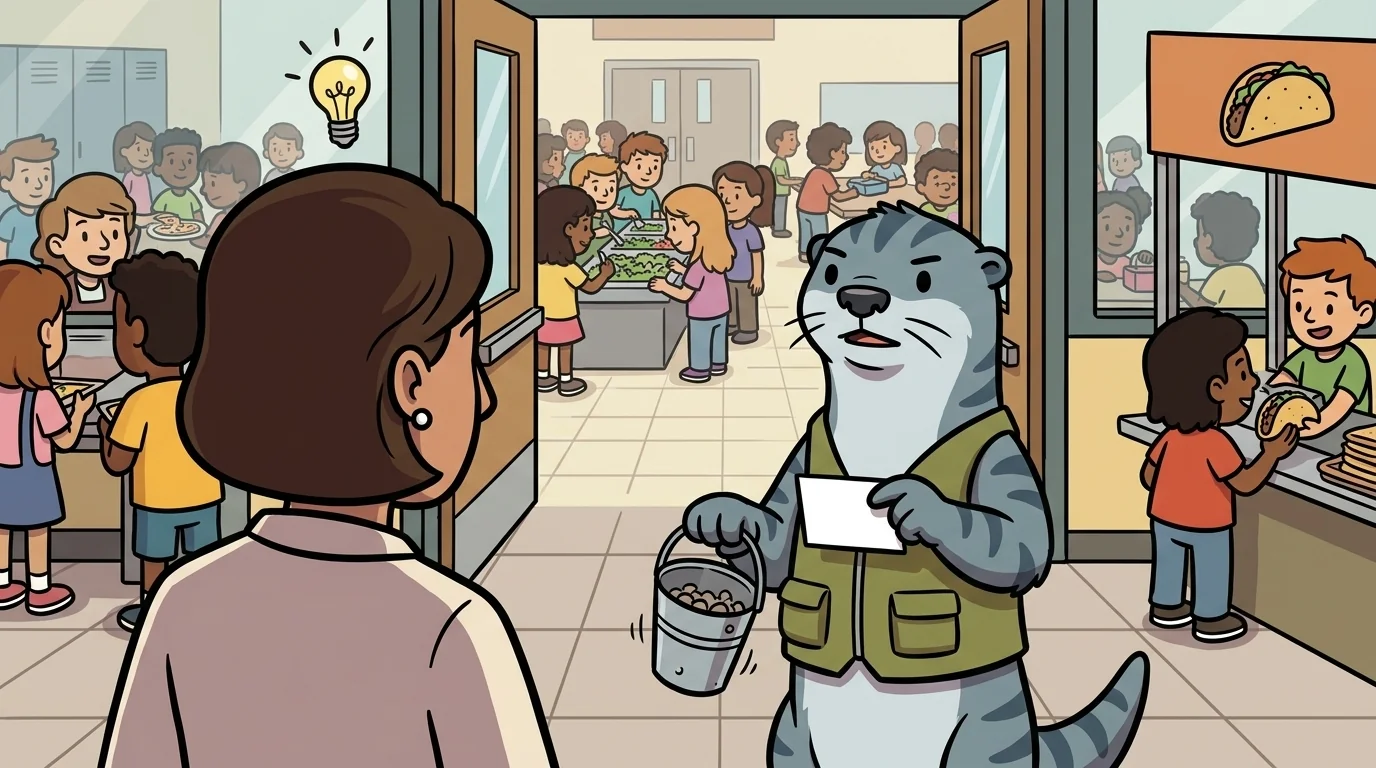
Sample nodded slowly, his expression calm. "Exactly. You asked the pizza-line kids," he explained. "So you got a pizza-line answer." He paused for effect. "I asked the door-kids. That gives us an answer that's closer to what the whole school thinks." He tapped his card. "Same school, different *sample*, very different number."
The principal looked baffled. She stared at her own mental number—100%—and then at Sample's—60%. How could they both be true?
Sample tilted his bucket, and a few small pebbles he used for counting rattled inside. "How you pick changes the answer," he said softly. "The pizza number isn't the real question." He looked her right in the eye. "The real question is who you asked."
For the first time, Principal Higgins looked past the pizza line. She saw the kids at the salad bar. The ones unpacking lunches from home. The kids grabbing tacos. Her eyes widened. She finally understood.
Everyone learned to trust Sample's numbers, because he was always honest about what they were: a guess. "This is a careful guess," he would say every single time he presented his findings. "It is not a known fact." He always added the most important part. "The bigger my *sample*, the closer my guess gets to the truth. But it's still a guess."
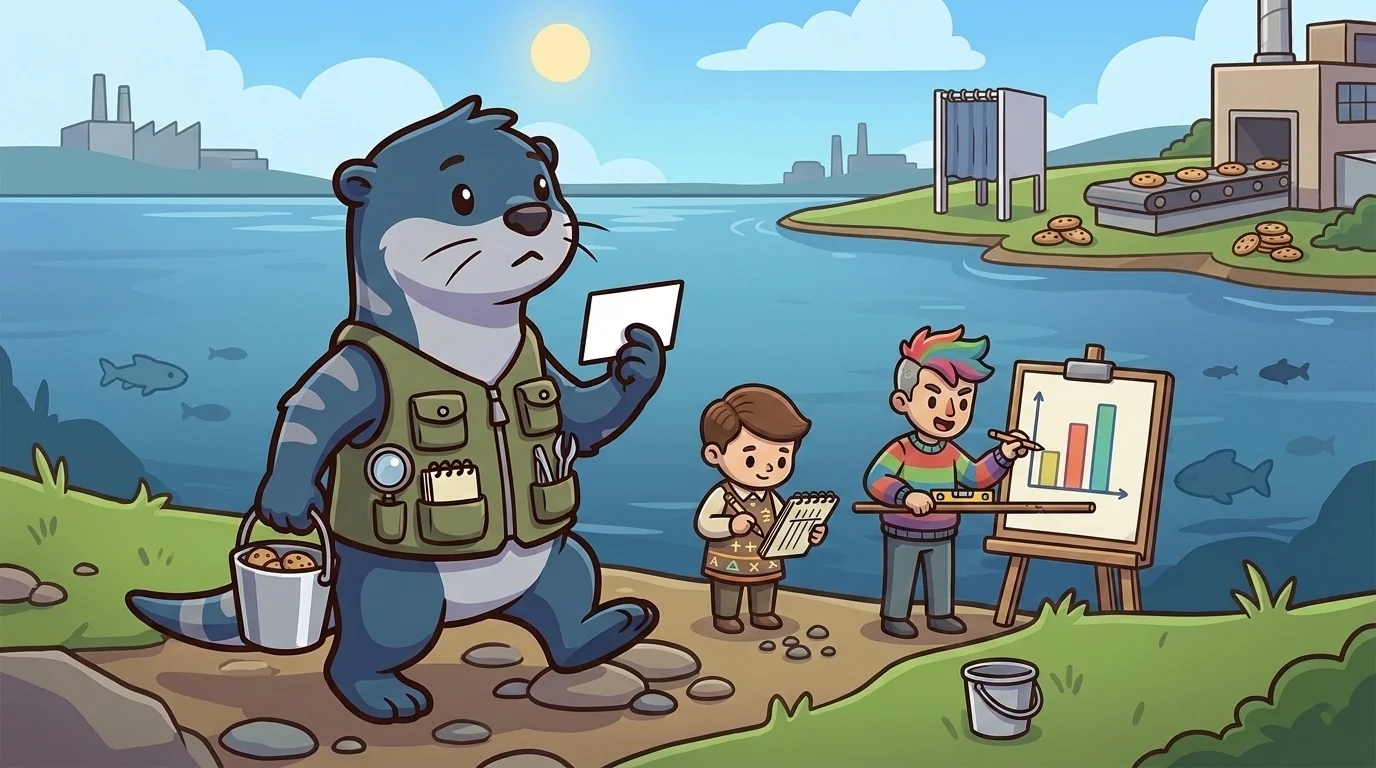
This was his job on the team. Tally could track the counts and Display could draw the cool charts. Center could find the middle of everything. But Sample was the one who kept them all honest. He was a constant, quiet reminder that their amazing charts and numbers all came from one small bucket. Just a handful. Not the whole pile. He made sure they never forgot where their data came from.
He had one rule he repeated more than any other. Whenever someone got too excited and declared they knew the absolute truth, Sample would clear his throat.
"A small, careful look," he'd say. "The care is the whole job."
*A quick note on guessing vs. gambling Sample's big idea helps us see a common trap. Sometimes people think, "If I just keep trying, I'm bound to win eventually." That's the logic behind a slot machine. But Sample's way of thinking is the exact opposite. You take a sample because you know you can't test everything. You can't taste every cookie or ask every voter. Sampling is a humble, careful craft to get a good guess without having to try a million times. It's about being smart so you don't* have to play forever. A casino's motto is "play more to win more." Sample's motto is "look carefully so you don't have to."
*Where you'll see this idea again Sample's careful way of picking shows up in other places. In BioForge, scientists use his ideas to set up experiments with random groups. In TruthQuest, you'll use his skills to figure out if a news poll is trustworthy by asking, "Who did they ask, and how did they pick them?" And in CivicForge, you'll see that understanding a whole country often starts with a small, careful sample* of voters.
The ChanceForge ensemble
Sample is part of ChanceForge's distributed-narrative cast. Each character embodies a different curricular primitive; together they teach the full subject.
-

Tally the Counter-of-Outcomes
Data collection + frequency counting (the foundational "what happened, how often?" move)
-

Display the Picture-Maker
Graphs and visual displays (bar charts, histograms, dot plots, line graphs — turning numbers into pictures)
-

Center the Middle-Finder
Central tendency — mean, median, mode (the "what's typical?" question)
-

Tree the Compound-Brancher
Compound events and probability trees — multiplication rule for independent events, addition for disjoint, conditional dependencies
-

Odds the Likelihood-Reader
Basic probability — placing a chance on the 0-to-1 scale from impossible to certain
-

Scatter the Spread-Reader
Spread and variability — how far apart the data is (range), not just the middle
-

Flipside the Other-Outcome-Counter
The complement rule — find the chance it doesn't happen and subtract from 1
-
Clew the Clue-Follower
Conditional probability — how chances change once you learn a new fact
-
Evens the Long-Run-Settler
Expected value and the long run — results settle toward the average over many tries