Strand
STRAND — *muscles contract. force makes movement.*
Press play to listen along. The line being read lights up as you go.
Show full transcript
Loading transcript…
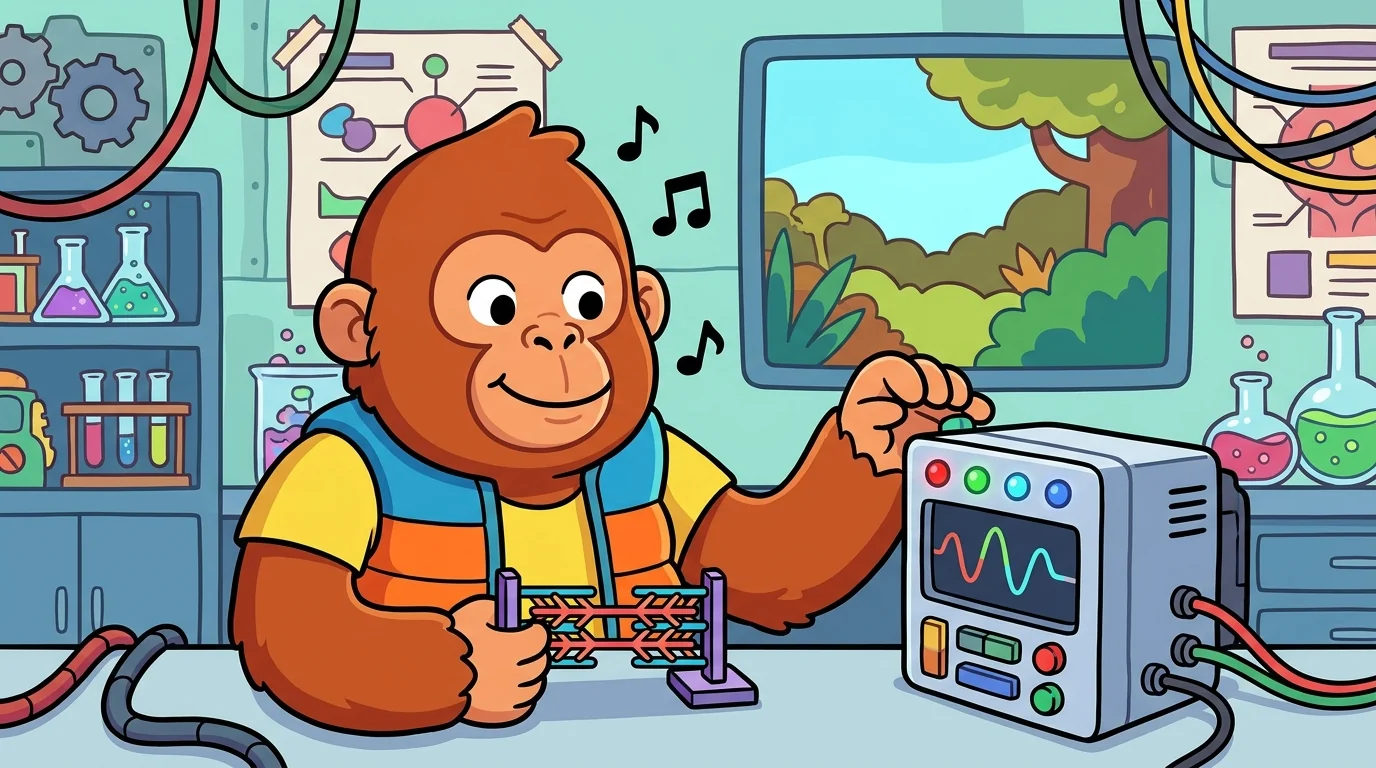
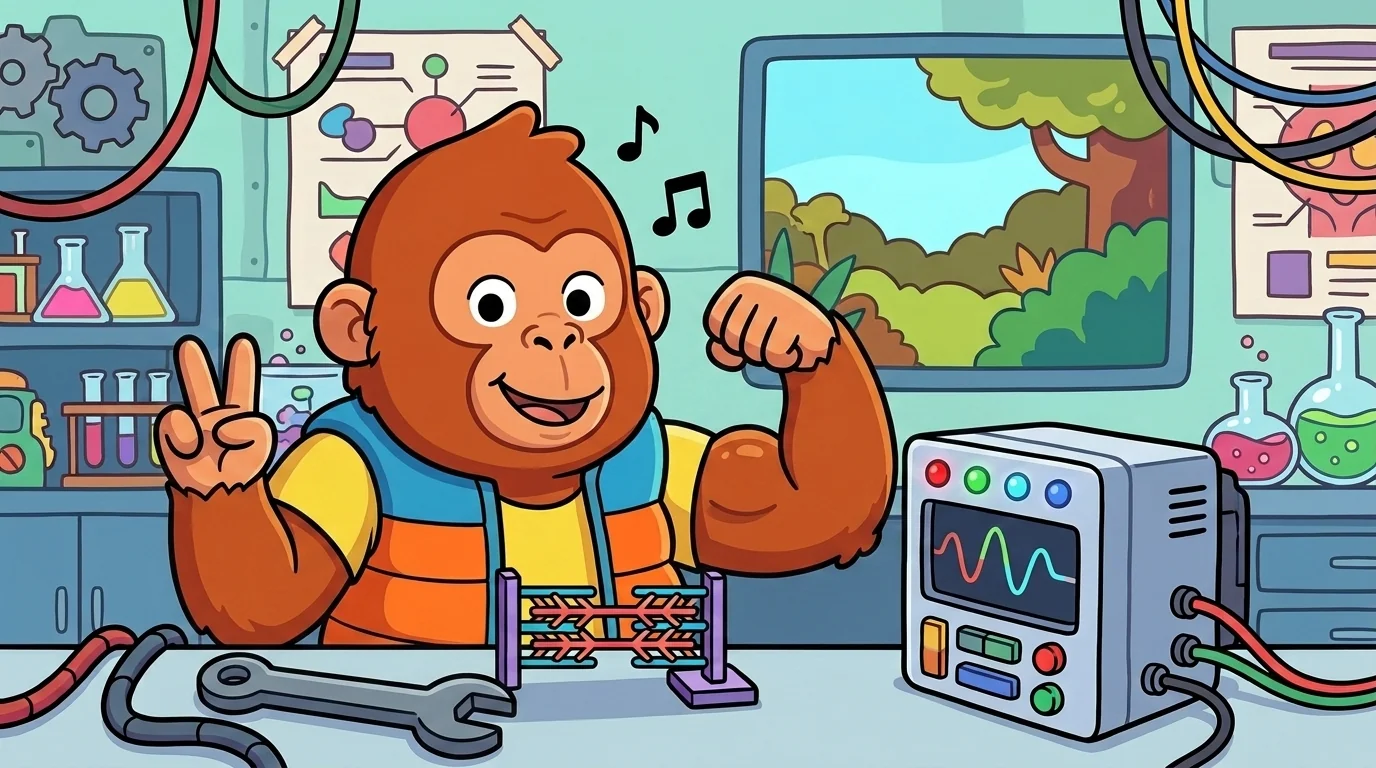
Strand, the orangutan kid, hummed a little tune. He was busy in his lab. He wore a chunky lab vest. His broad shoulders filled it out. He wasn't lean or skinny. Strand was round and soft, but super strong. He held a small model. It showed tiny muscle fibers. A blinking contraction-tracker sat next to it.
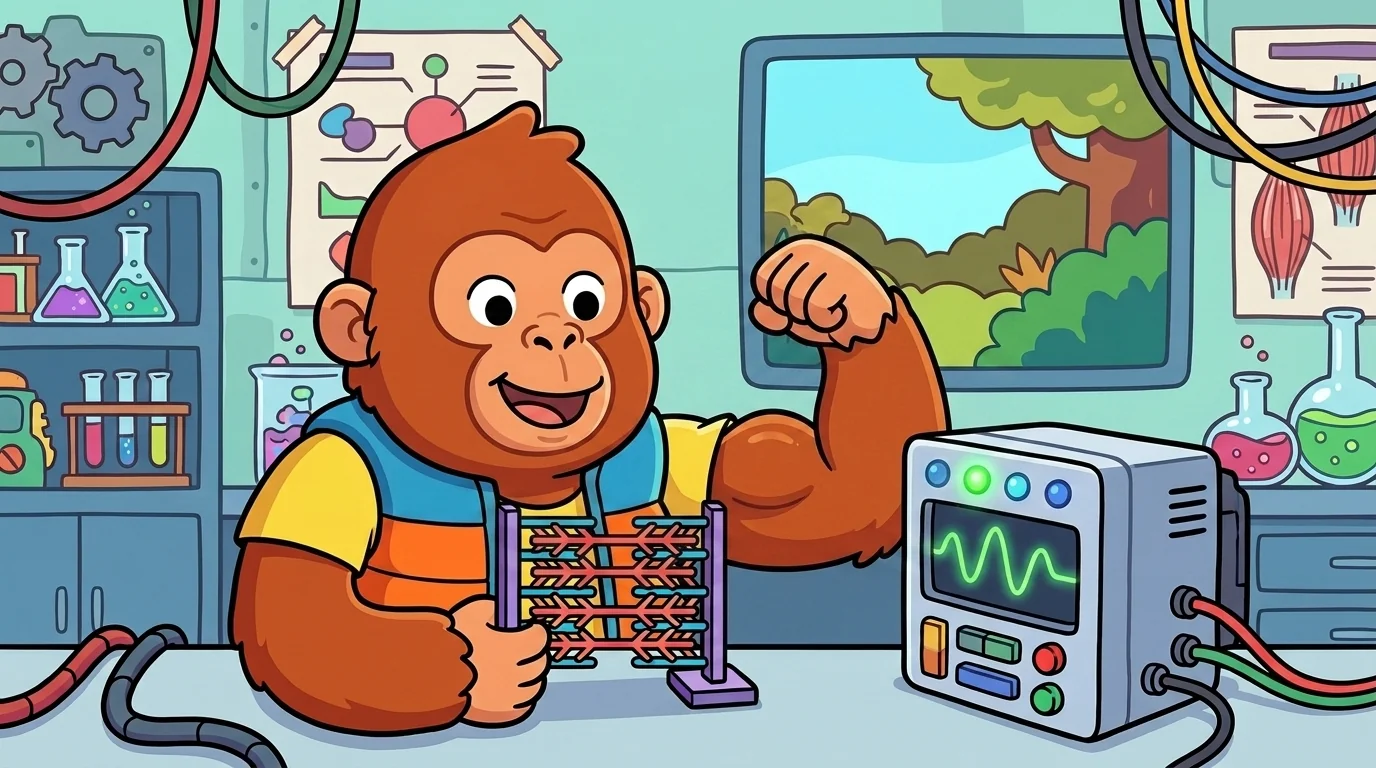
Strand was warm-cream colored. Soft rust fur covered his body. He paid close attention to his muscle craft. He loved to say, "Muscles contract. Force makes movement." His muscle-fiber model showed actin and myosin sliding. His contraction-tracker blinked green.
He pointed to the model. "See these tiny threads?" he asked. "These are muscles." He flexed his own arm. "My muscles make my body move. Your muscles do the same for you." He tapped the model again. "The big idea is this: muscles contract. That means they get shorter. When they get shorter, they pull on things. That pulling creates force. And force makes movement!"
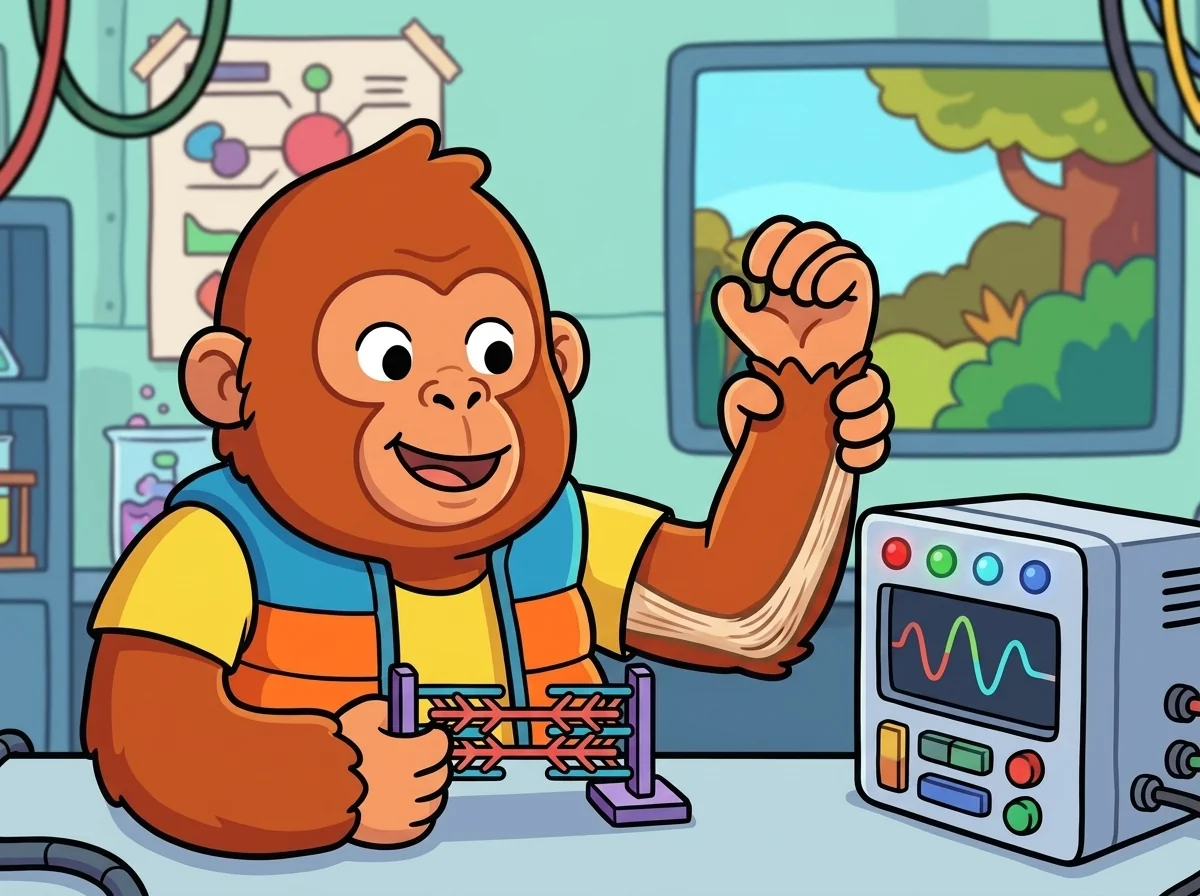
Strand showed how the model worked. "Inside every muscle are even tinier parts. Think of them like super-small ropes. Some are called actin. Others are myosin." He made a sliding motion with his hands. "When a muscle gets the signal, these ropes slide past each other. Like two sets of fingers lacing together. That sliding makes the muscle shorter. It pulls tight."
He grabbed his own wrist. "When a muscle pulls tight, it pulls on your bones." He pointed to his elbow. "Strong, stretchy ropes connect muscles to bones. We call these tendons. They're like super-glue for your body!" He moved his arm up and down. "So, muscle contracts. Tendon pulls bone. And poof! You move your arm. Or kick a ball. Or jump really high!"
Strand held up three fingers. "There are three main kinds of muscles. First, smooth muscles. You don't have to think about them. They work all by themselves." He patted his stomach. "Like the muscles in your tummy. They help digest food. You don't tell them what to do!"
He pointed to his chest. "Next, cardiac muscles. These are special. They're only in your heart. They pump blood all day and night. They never get tired!" He flexed his arm again. "And finally, skeletal muscles. These are the ones you control. The ones you use to run, jump, and lift. They're connected to your bones. You tell them what to do!"
Strand picked up a big, heavy-looking wrench. He lifted it with one hand. It looked easy for him. "See?" he said, setting it down gently. "My muscles are strong." He looked at his own broad, round arm. "You don't have to look super skinny to be strong. Or have muscles that stick out everywhere." He tapped his arm. "My body is round. But it's also soft. And strong. That's a complete body!"
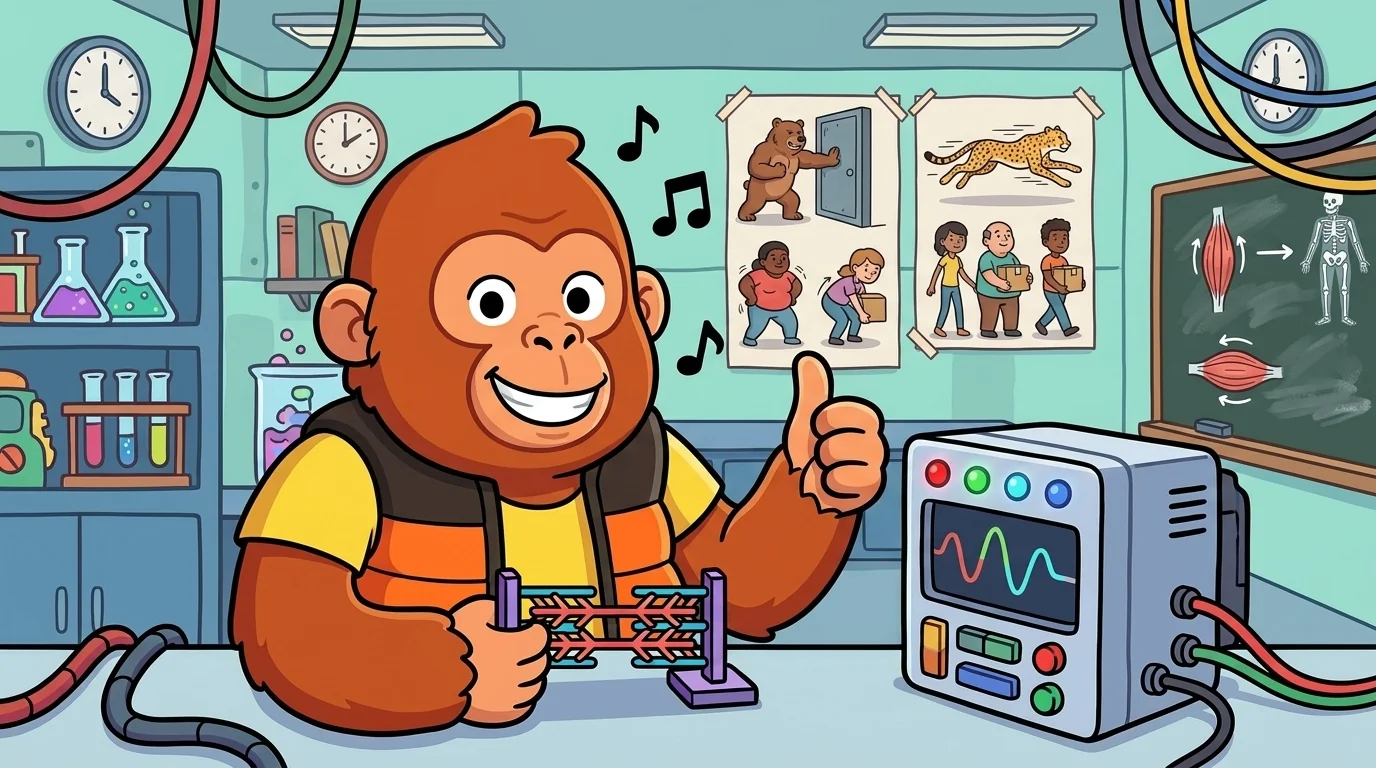
He explained that how muscles look can be different for everyone. "It depends on lots of things. Your family. Your age. What you do every day." He showed a picture of different strong animals. "A bear looks different from a cheetah. But both are super strong in their own ways. What matters is what your muscles can do." He talked about pushing doors open. Or hinging down to pick something up. Or bracing yourself to stay steady. "These are all ways your muscles help you move and live!"
Strand grinned. "I am Strand. I teach about your muscular system." He gave a thumbs-up. "The big lesson is this: muscles contract; contraction makes movement. And remember: muscle strength does not mean muscle visibility. A round, soft, strong body is a complete body!"
He finished with his favorite saying. "Muscles contract. Force makes movement!"
The BioForge ensemble
Strand is part of BioForge's distributed-narrative cast. Each character embodies a different curricular primitive; together they teach the full subject.
-
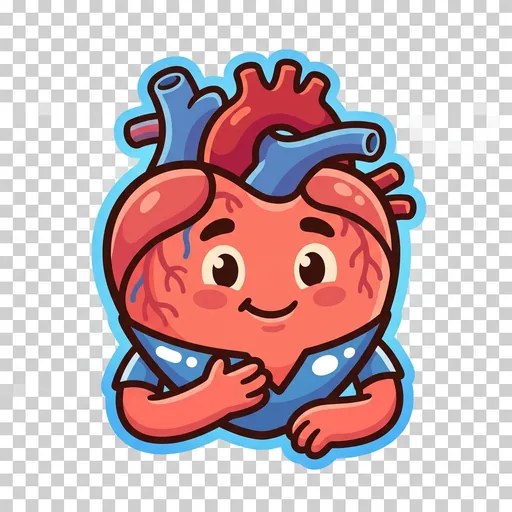
Pump
Cardiovascular (heart, blood, vessels)
-

Bellows
Respiratory (lungs, oxygen exchange)
-

Sprout
Digestive (stomach, intestines, nutrients)
-

Flicker
Nervous (brain, signals, reflexes)
-

Beam
Skeletal (bones, levers, support)
-

Ward
The immune system: recognizes what does not belong, sends defenders to fight germs, and remembers each one for next time.
-

Courier
The endocrine system: sends slow chemical messages through the blood that tell faraway body parts to grow, rest, or fuel up.
-

Mantle
The skin: a living wall that keeps the outside out, holds your warmth, feels the world by touch, and heals itself.
-

Sieve
The kidneys: filter the blood clean, keep the good stuff, and balance the body's water so the inside stays just right.