
Strand
STRAND — *muscles contract. force makes movement.*
Press play to listen along. The line being read lights up as you go.
Show full transcript
Loading transcript…
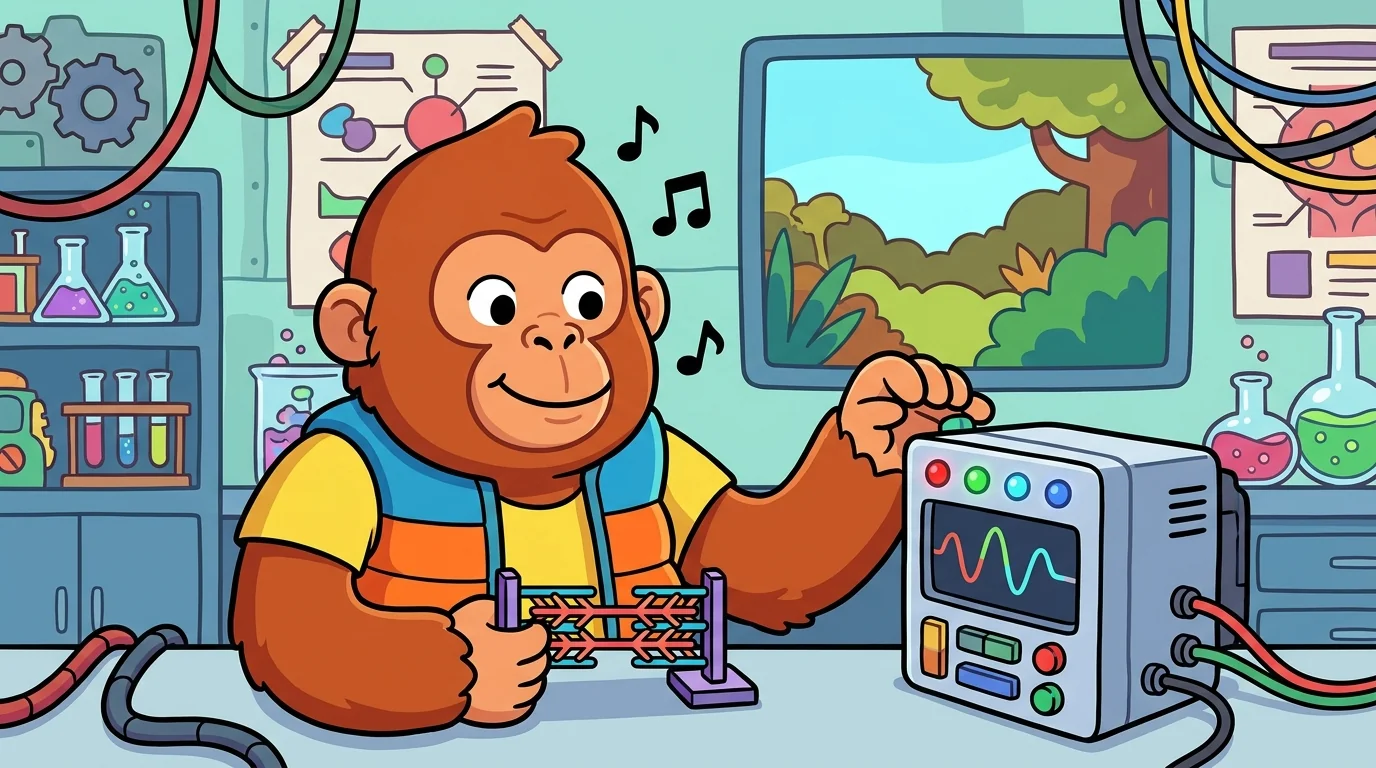
Strand stood in the center of the Movement Lab, a place filled with whirring machines and soft mats. Sunlight streamed through tall windows, glinting off the polished chrome of exercise equipment. Strand was a strong-orangutan-tween, broad-shouldered and round-soft-strong, with warm-cream-and-soft-rust fur. They wore a chunky-cartoon lab-vest, the pockets bulging with various tools. In one hand, Strand held a small, intricate muscle-fiber-model. Its tiny filaments glowed softly. In the other, a contraction-tracker blinked with data.
Strand wasn't lean-coded, not in the way some people expected a "strong" person to look. Their strength was quiet, deeply rooted. It was in the way they moved, steady and powerful, and in the careful attention they gave to the model. Strand liked to say, "Muscles contract. Force makes movement." It was their signature, a simple truth they believed in completely.
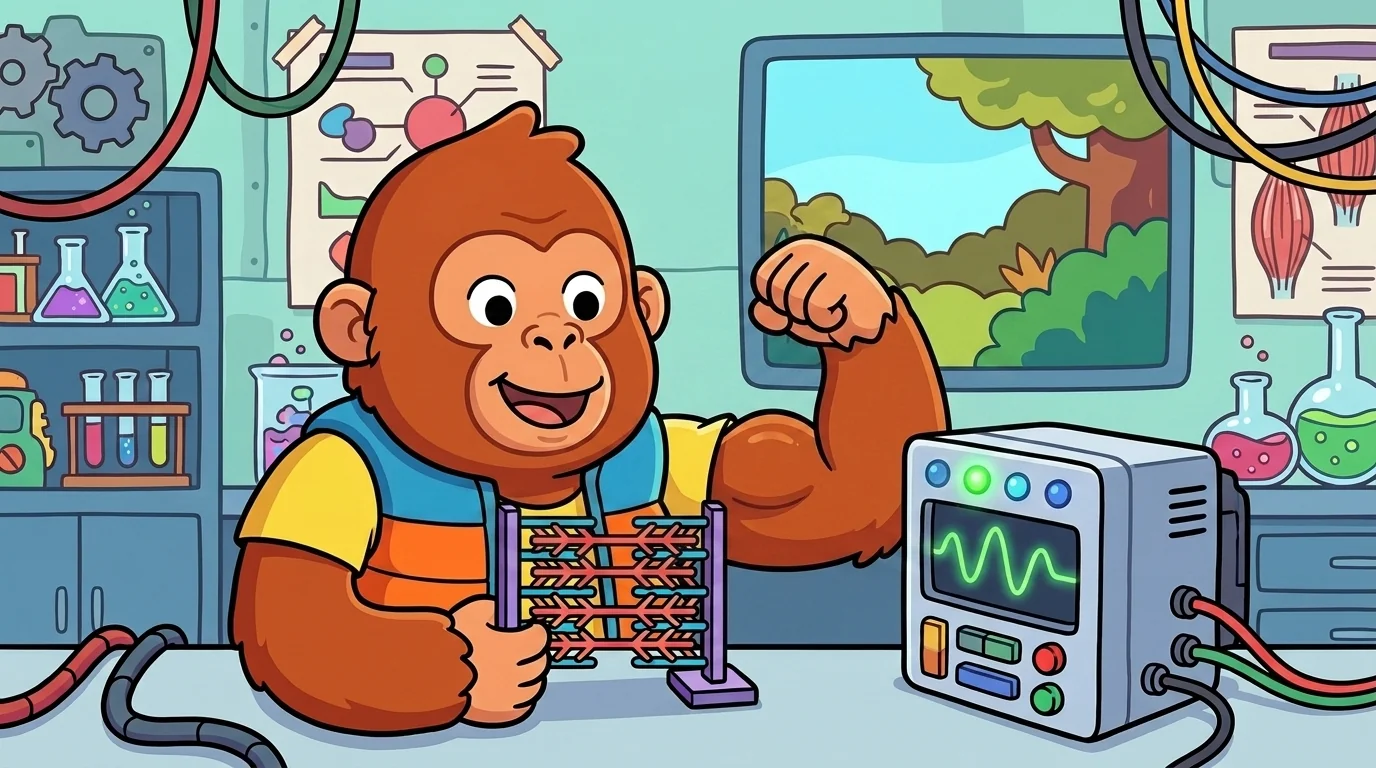
"Alright, everyone," Strand called out, their voice clear and steady. "Welcome to the Muscular System session. I'm Strand, and the primitive I teach is muscular system. The move is muscles contract; contraction makes movement; muscle strength ≠ muscle visibility; round + soft + strong is a complete body."
Strand held up the muscle-fiber-model. It was a marvel of tiny, interlocking parts, showing the inner workings of a single muscle fiber. "See these tiny threads?" Strand pointed to the model. "These are called actin and myosin. They're like microscopic ropes inside every muscle cell."
They pressed a button on the model. Instantly, the tiny threads began to slide past each other, pulling closer. The contraction-tracker beeped, showing a spike in activity. "This is what happens when your brain tells a muscle to work," Strand explained. "The actin and myosin filaments slide. They hook together, pull, then let go, then hook and pull again. It's called the sliding-filament model."
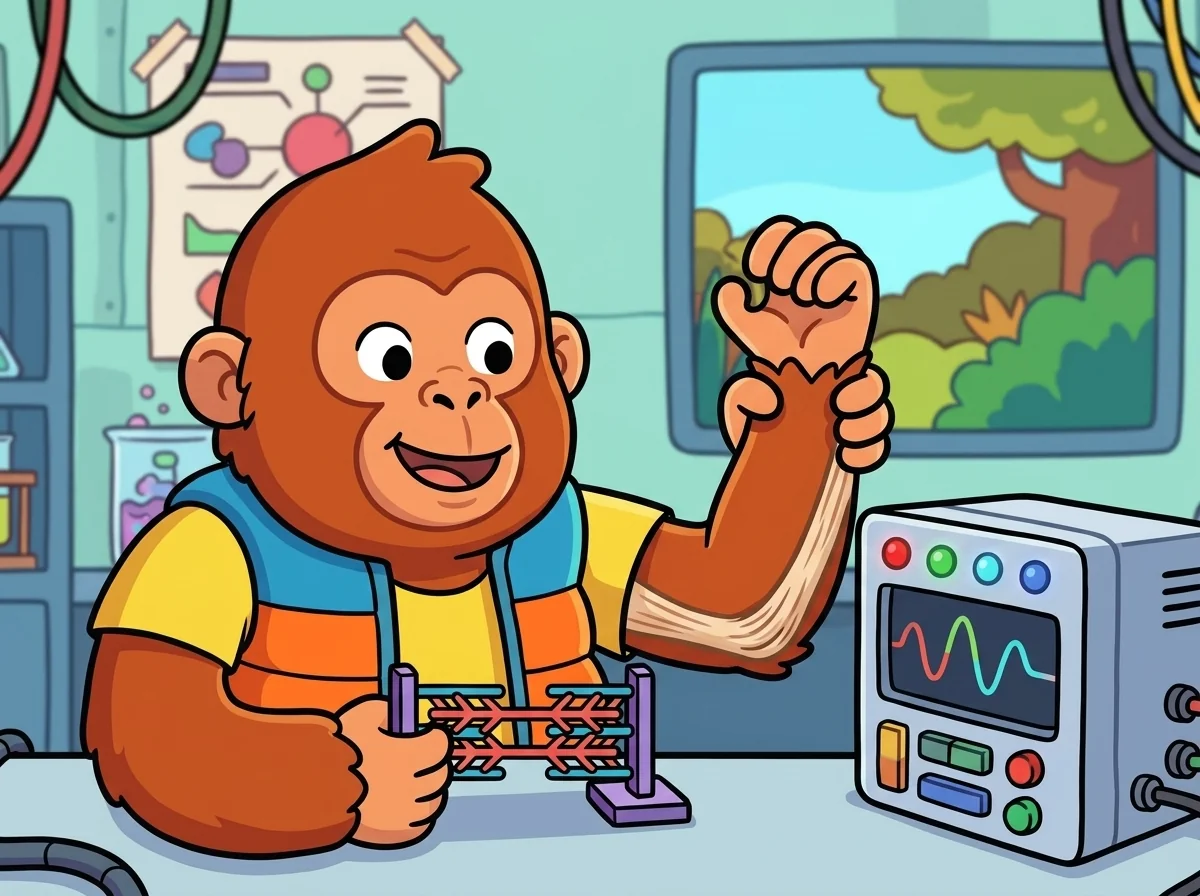
Strand flexed their own arm, the muscles beneath their fur bunching smoothly. "When these tiny filaments slide, the whole muscle gets shorter. It contracts. And when a muscle contracts, it pulls on something." Strand tapped their bicep. "What do you think it pulls on?"
A voice from the small group of students offered, "Bones?"
"Exactly!" Strand beamed. "Muscles pull on bones. They're connected by tough, rope-like tissues called tendons. Tendons are like the strong cables that attach your muscles to your skeleton. So, when your bicep muscle contracts, it pulls on the bones in your forearm, and your arm bends." Strand demonstrated, bending and straightening their arm slowly. "Contraction makes movement. It's that simple, and that amazing."
Strand walked a few steps, their broad shoulders swaying slightly. "We have over six hundred muscles in our bodies. They don't all look the same, and they don't all do the same job. We have three main types."
They held up three fingers. "First, smooth muscles. You don't even think about these. They're working right now inside your organs, like your stomach and intestines. They help digest your food, or move blood through your vessels. You can't control them. They just do their thing."
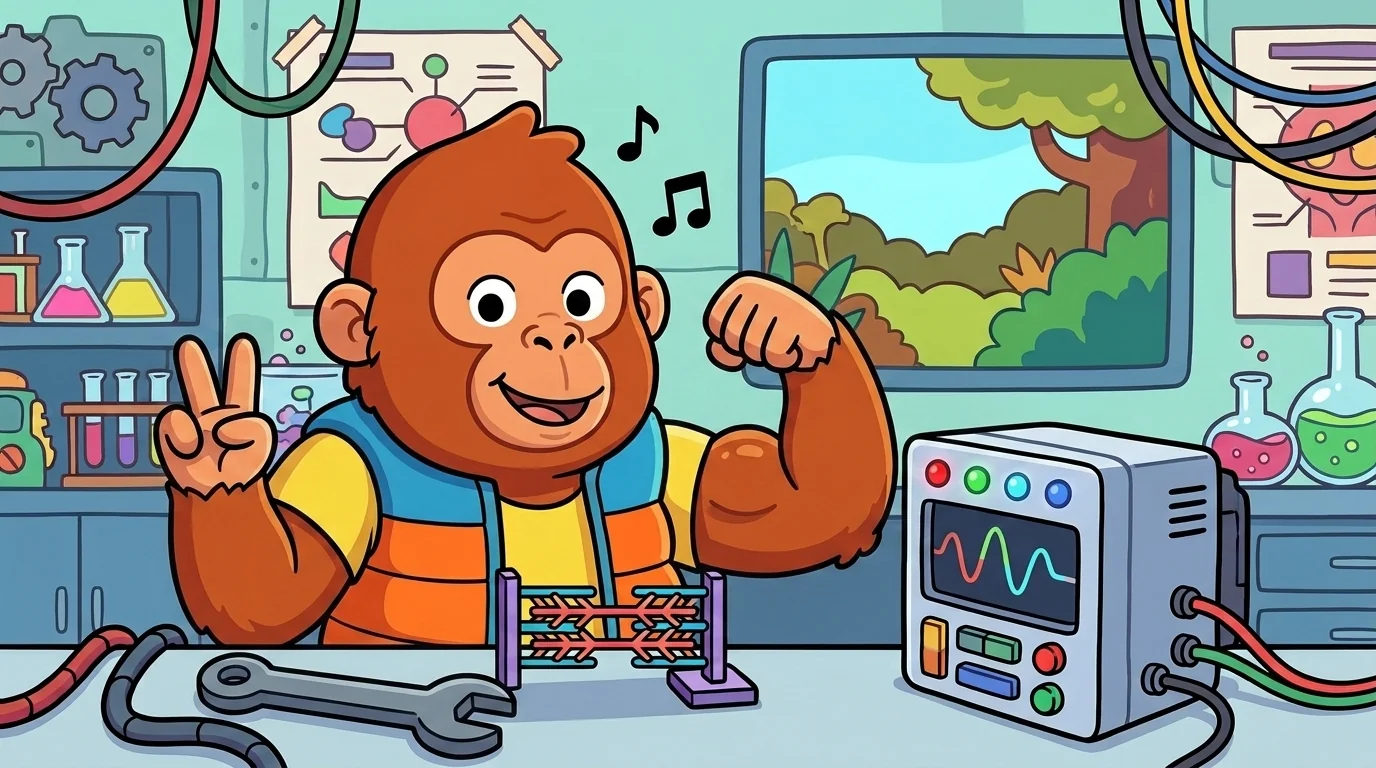
Strand moved to the next finger. "Then there's cardiac muscle. This is a special kind of muscle, found only in one place: your heart. It's incredibly strong and never gets tired. It just keeps pumping blood, every second of every day. And like smooth muscles, you don't have to tell it what to do."
Finally, Strand held up the third finger. "Skeletal muscles. These are the ones we usually think about. They're attached to your bones, and you can control them. Like when you decide to lift something, or run, or even just wiggle your toes. These are the muscles that let you move through the world."
Strand paused, letting the information sink in. "Now, here's something important to remember," they said, their tone softening slightly. "People often think strength means having muscles that really 'pop out,' or being super lean. But that's not the whole story. Muscle strength doesn't equal muscle visibility."
Strand gestured to their own body, which was clearly powerful but also soft and rounded. "My muscles work just as hard as anyone else's. They contract, they pull bones, they make movement. Whether you see every ripple or not, the strength is there, inside." They tapped their chest gently. "How much your muscles 'show' depends on things like your genetics, your age, and your body fat percentage. It's not a measure of how strong or capable you are."
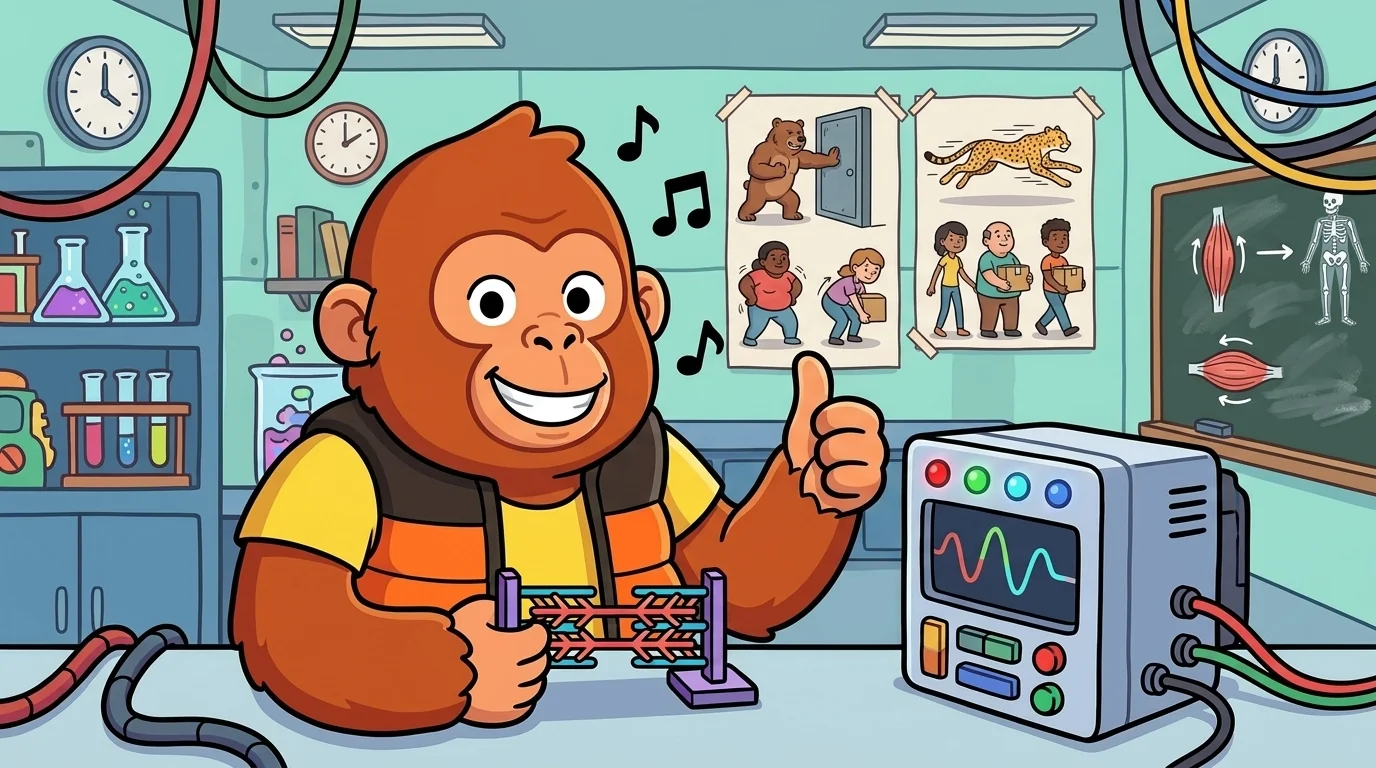
"Plenty of people with rounder bodies have incredible strength," Strand continued. "And people with very visible muscles might be strong in some ways, but not in others. What matters is what your muscles can do, not just how they look."
Strand picked up a small, weighted ball. "Think about it. When I lift this ball, my bicep contracts. But to put it down smoothly, another muscle has to work too. Muscles often work in teams, in what we call antagonist pairs." They lifted the ball again. "My bicep pulls, but my tricep, on the back of my arm, has to relax. Then, when I straighten my arm, my tricep contracts, and my bicep relaxes. They work against each other, but also with each other, to create smooth, controlled movement."
Strand set the ball down. "It's all about function. What can your body accomplish? Can it push, hinge, brace? Can your heart pump blood efficiently to those working muscles? That's what real strength is. So, remember this: round + soft + strong is a complete body. Every body is capable of amazing things, because inside, those tiny actin and myosin filaments are always ready to slide. They're ready to make force. They're ready to make movement."
Strand gave a final, firm nod. "Muscles contract. Force makes movement. And every body, in its own way, is strong."
The BioForge ensemble
Strand is part of BioForge's distributed-narrative cast. Each character embodies a different curricular primitive; together they teach the full subject.
-
Pump
Cardiovascular (heart, blood, vessels)
-

Bellows
Respiratory (lungs, oxygen exchange)
-

Sprout
Digestive (stomach, intestines, nutrients)
-

Flicker
Nervous (brain, signals, reflexes)
-

Beam
Skeletal (bones, levers, support)
-

Ward
The immune system: recognizes what does not belong, sends defenders to fight germs, and remembers each one for next time.
-

Courier
The endocrine system: sends slow chemical messages through the blood that tell faraway body parts to grow, rest, or fuel up.
-

Mantle
The skin: a living wall that keeps the outside out, holds your warmth, feels the world by touch, and heals itself.
-

Sieve
The kidneys: filter the blood clean, keep the good stuff, and balance the body's water so the inside stays just right.