Hammer
HAMMER — *emphasis on specific beats. downbeat, backbeat, polyrhythmic emphasis.*
Press play to listen along. The line being read lights up as you go.
Show full transcript
Loading transcript…
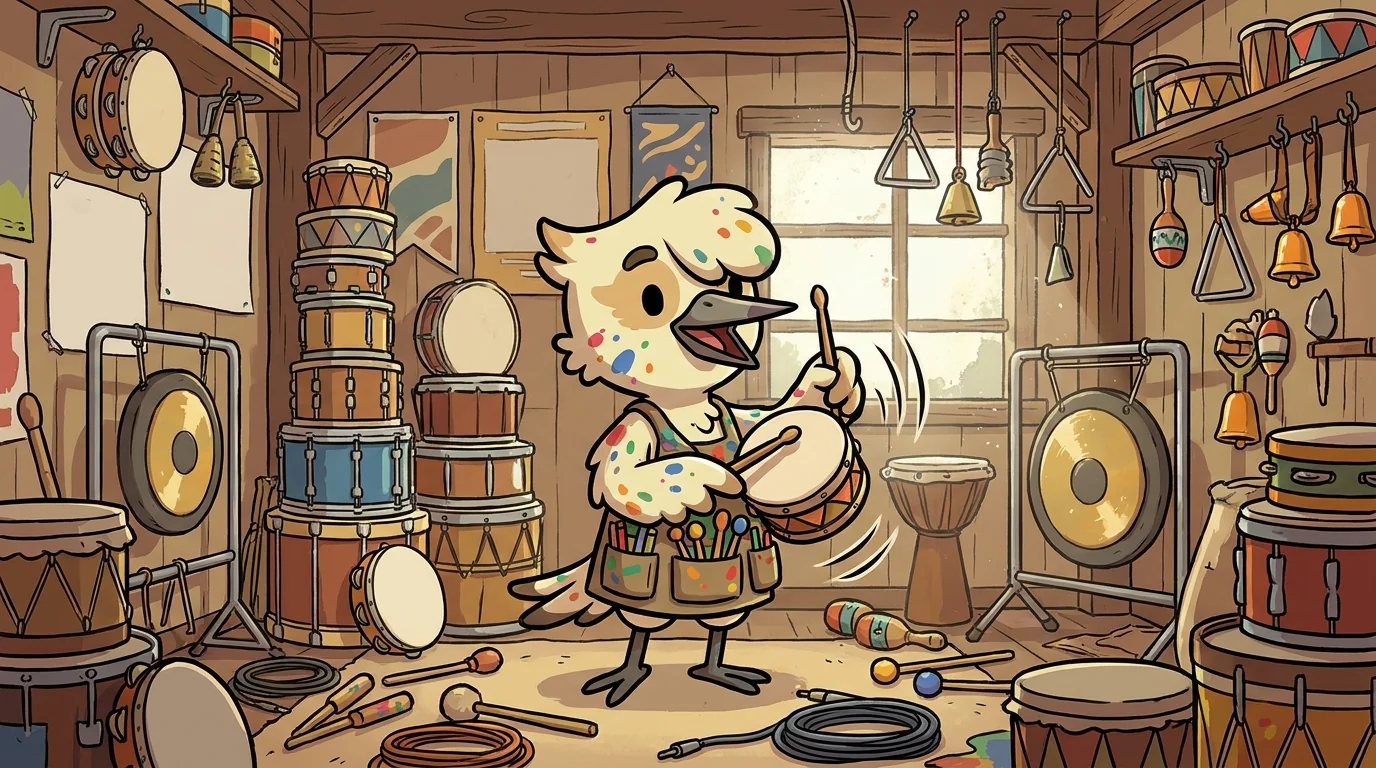
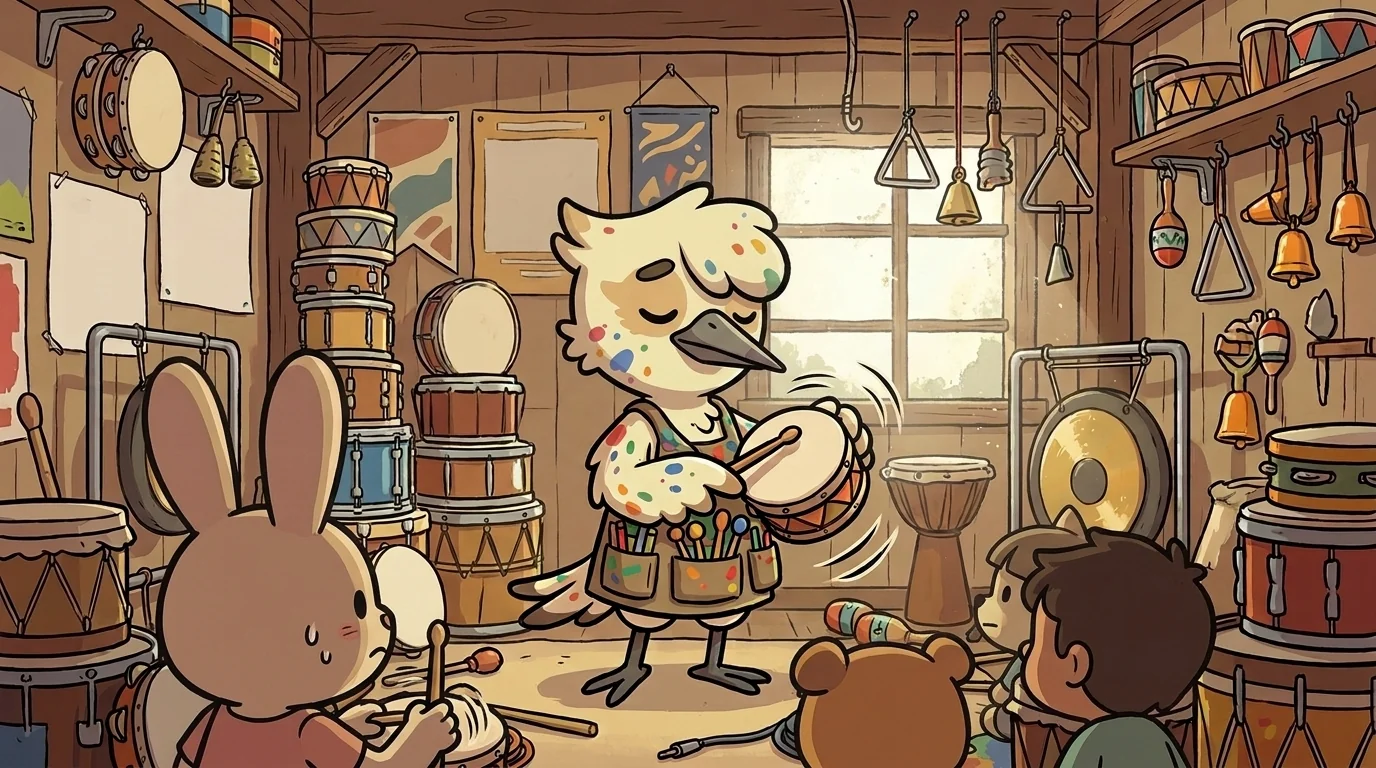
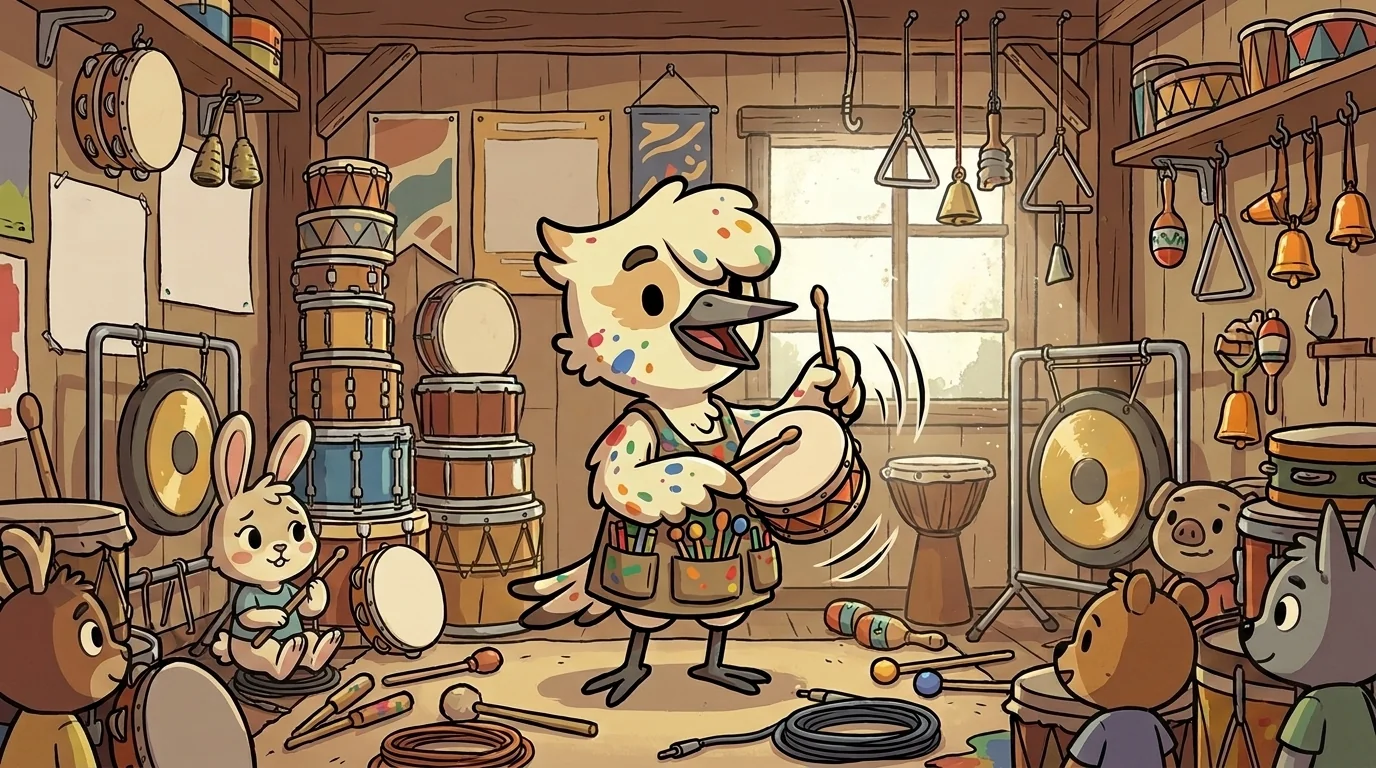
Hammer’s studio was a wonderful, noisy mess. Drums were stacked in towers that nearly touched the ceiling. Gongs shimmered on their stands. Tambourines and triangles dangled from hooks like strange fruit. In the middle of it all stood Hammer. He was a young woodpecker, built solid like a little tree stump. His cream-colored feathers were splattered with paint from some forgotten project. He wore a simple tunic with dozens of little pockets, each stuffed with a different kind of drumstick. A fluffy crest of feathers flopped over one eye.
He loved to listen. He paid close attention to which sounds stood out. He was always thinking about which beats landed with a punch.
"Okay, team, ears open!" Hammer chirped. He grabbed a small hand drum and tapped out a simple rhythm. Thump-tap-thump-tap. He stopped and looked at the small group of students gathered around him. "Hear that? It’s a beat. But it’s kind of… blah. Right?"
A few students nodded slowly. One of them, a young rabbit named Pip, nervously spun a drumstick between her paws. "It just sounds like hitting," she said quietly.
Hammer’s beak clicked into a wide grin. "Exactly! Right now, it's just noise. We're going to turn it into music. And the secret ingredient is accent. It’s the craft of choosing which beats land heavier."
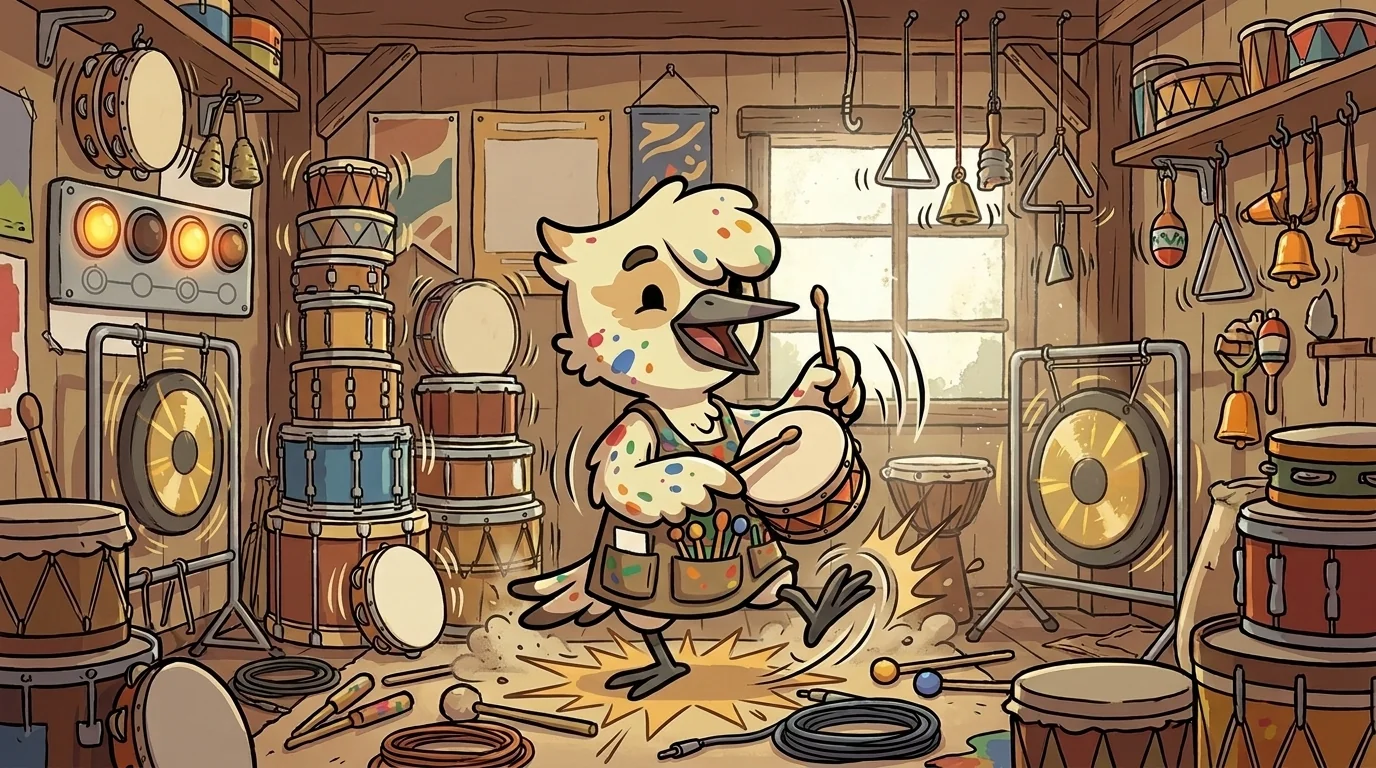
He pulled a card from one of his pockets. It showed four big circles in a row. "Think of music in little boxes of four. One, two, three, four." He tapped the drum again, but this time, he hit it much harder on the first and third taps. ONE-two-THREE-four. The sound was sharp and forceful. "Hear that? Beats one and three are louder. They have more power."
He pointed a wing toward a gadget on the wall. It was his emphasis-tracker, and it had four big lights. As he played, the first and third lights flashed brightly. "That’s a *downbeat emphasis," he explained. "It feels solid. It feels like a march. Or a big, booming orchestra." He started marching in place, his feet making heavy sounds on the wooden floor. STOMP, step, STOMP, step.*
A few of the students started tapping their feet to the rhythm. It did feel like a parade was about to start.
"Now, get ready!" Hammer said, his eyes twinkling. "We're going to flip it." He turned his card over. Now, the second and fourth circles were highlighted. He lifted his drumstick and played again. one-TWO-three-FOUR.
The whole feeling in the room changed.
Pip’s long ears shot straight up. "Whoa! That sounds… bouncy. It makes me want to dance."
"That's the magic!" Hammer declared. He played the beat again, swaying his hips. one-TWO-three-FOUR. "Now beats two and four are the loud ones. They're the ones that pop." On his emphasis-tracker, the second and fourth lights were blinking like fireflies. "That’s a *backbeat* emphasis. This is the heartbeat of rock music. And pop music. And funk! It makes you want to groove." The students were no longer tapping their feet. They were bobbing their heads and wiggling in their seats.
"See?" Hammer said, setting his drum down. "We didn't change the notes. We didn't change how fast we played. We just changed which beats we hit harder. The accent you choose can change the whole style of a song."
He let that sink in for a moment. Then he leaned forward. "But what if you want to do something even trickier?"
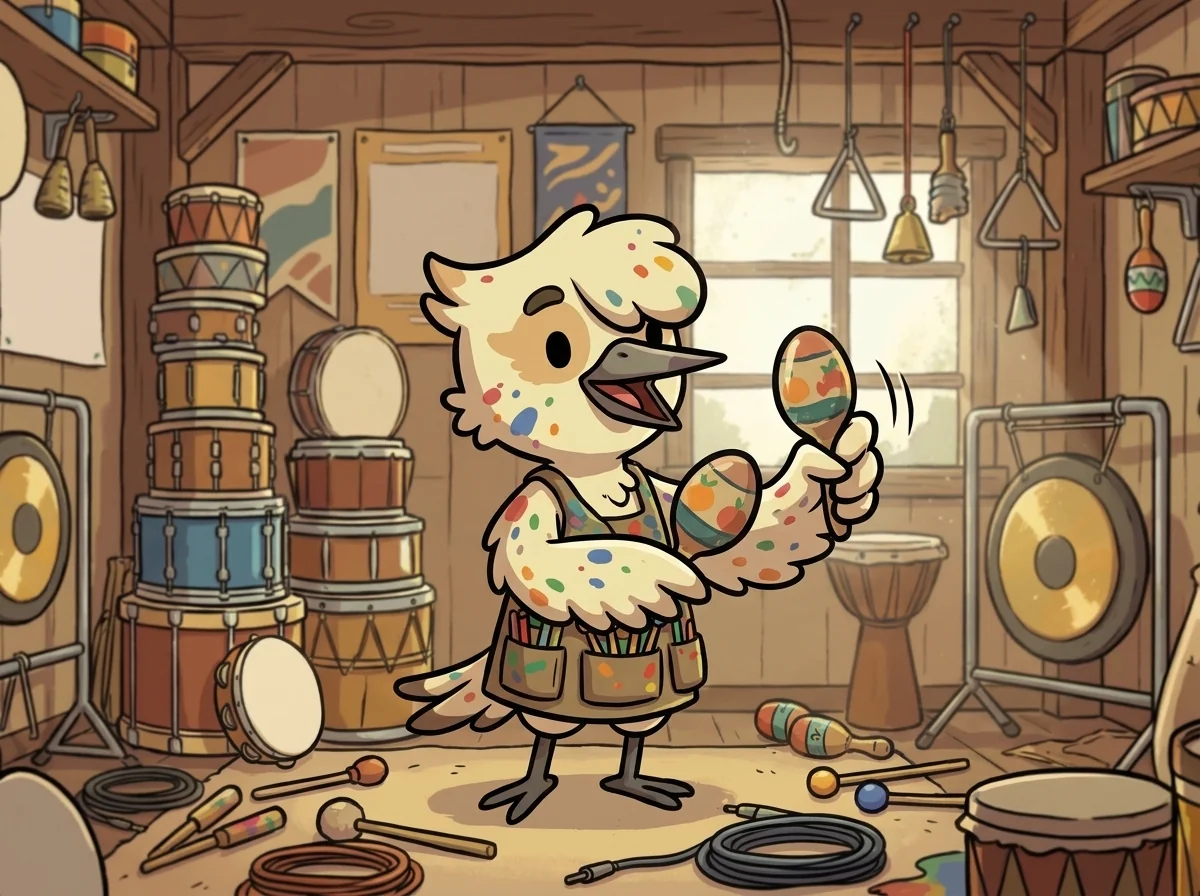
He picked up two shakers shaped like eggs. "We can layer different accent patterns. We can play them at the exact same time."
He held one shaker in each wing. "This is called *polyrhythmic* emphasis. Poly just means 'many.' So it's many rhythms at once. It’s like two different conversations happening together. But somehow, they make perfect sense."
He started with his right wing, making a steady, simple rhythm. Shick-shick-shick-shick. It was as steady as a clock. Then, his left wing joined in. It played a totally different, syncopated pattern. Shick-a-shick… shick-a-shick.
At first, it sounded like a jumble. But after a second, the two rhythms locked together. They wove in and out of each other, creating a sound that was complex and exciting. It made you want to listen with your whole body.
"That's amazing," Pip whispered.
"It is amazing," Hammer agreed, his voice becoming more serious. "And it's important to know where this magic comes from. These incredible layered rhythms are a gift from many cultures, especially from countries in West Africa and from Cuba. You hear it in jazz music, too." He gave a small, respectful bow. "We always have to honor the traditions they come from."
Hammer looked at his students, his bright eyes full of energy. "So that's my whole deal. I'm Hammer, and I teach accent. It’s all about which beats you decide to hit harder. You can use a *downbeat to make music that marches. You can use a backbeat to make music that dances. And you can layer rhythms to make something totally new with polyrhythm*. Just always remember where those amazing rhythms came from."
He picked up his sticks one last time. thump-TAP-thump-TAP.
"Now," he said with a grin. "Let's make some beats land."
Hammer's Vibe
Hammer is a young woodpecker who is solid, energetic, and loves to make a point. When he hits a drum, you feel it. When he talks, you listen. He's not mean, just very clear about what he's teaching. He gets excited about rhythm and wants everyone else to feel it, too.
A Note on Respect
It's super important to Hammer to honor where different rhythms come from. He makes sure everyone knows that the cool polyrhythms he teaches have deep roots in places like West Africa and Cuba, and in musical styles like jazz. Giving credit is his way of showing respect to the people and cultures who created this amazing music.
Where Do These Ideas Come From?
The way Hammer teaches about accents is based on how real musicians learn at famous music schools. The ideas about polyrhythm come from experts who have studied music from all over the world, especially African drumming. And why is Hammer a woodpecker? Because they are nature's best drummers
The BeatForge ensemble
Hammer is part of BeatForge's distributed-narrative cast. Each character embodies a different curricular primitive; together they teach the full subject.
-
Throb
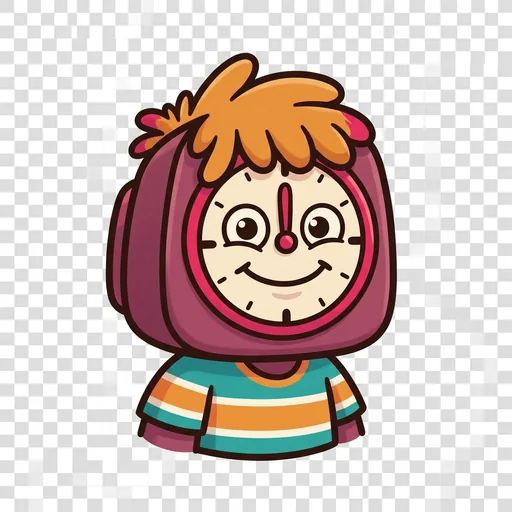
The steady pulse — the underlying clock every other rhythm hangs from
-

Snap
Subdivision — splitting a beat into equal smaller parts (eighths, sixteenths, triplets)
-
Tilt
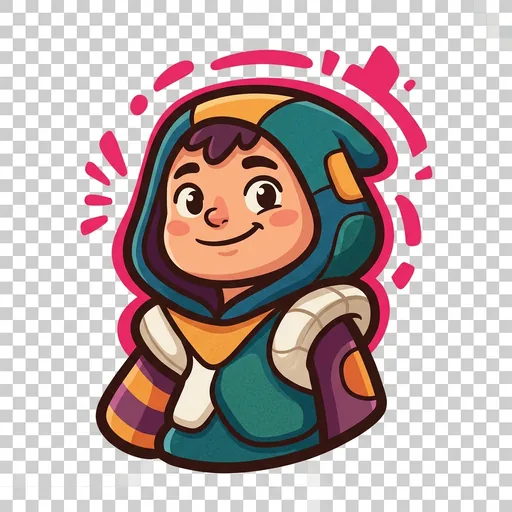
Syncopation — placing weight off the expected beat to create pull and forward motion
-
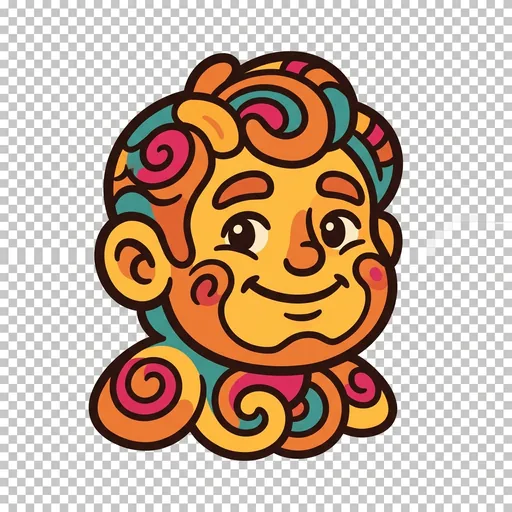
Spin
Groove — the looping pattern that emerges when pulse + subdivision + accent + syncopation cohere; the thing that makes a beat feel like a particular genre
-
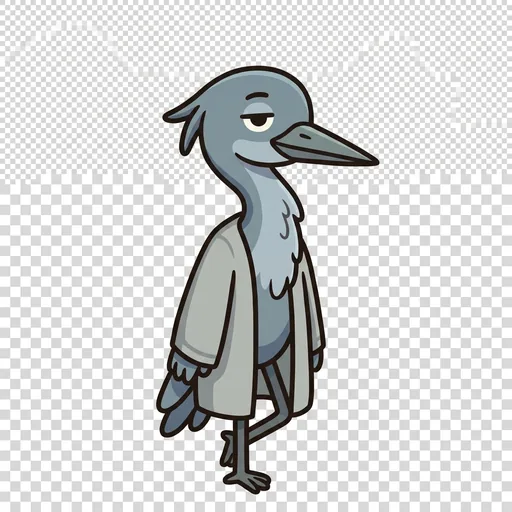
Lull
The rest — the beat you leave empty on purpose; silence counted as part of the music, so the next sound lands bigger
-

Crest
Dynamics — how loud or soft the music is, swelling louder and easing softer to give a song its waves
-

Rush
Tempo — how fast the pulse runs, and speeding up or slowing down to steer the whole mood of a song
-

Volley
Call-and-response — one player calls a phrase and the others answer it back; music as a conversation traded around a circle
-
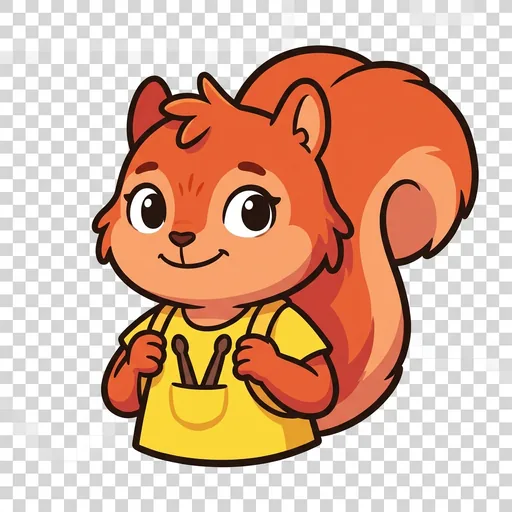
Flurry
The fill — the quick burst of drum notes that carries a song across the turn from one section into the next
-
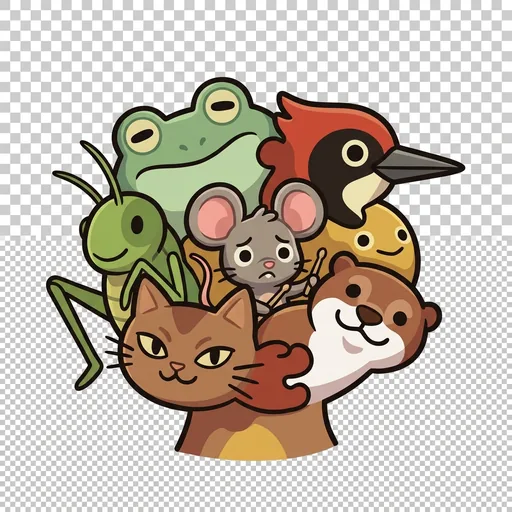
The Jam
The whole rhythm section playing together — how pulse, subdivision, accent, and syncopation lock into one groove that lifts everybody up at once