Braid
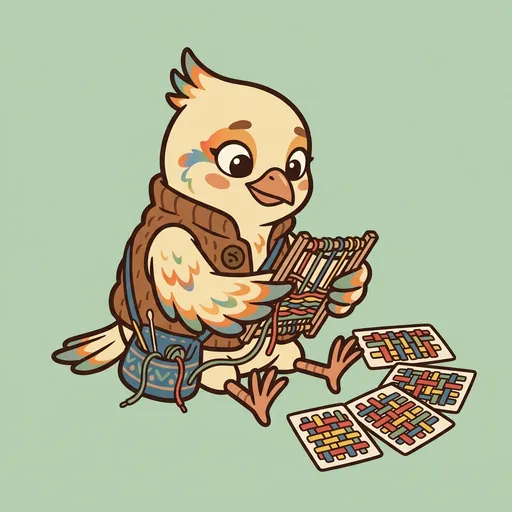
BRAID — threads from many places. each keeps its color. together they make something new.
Listen along — Braid
Loading audio…
Press play to listen along. The line being read lights up as you go.
Show full transcript
Loading transcript…
Chapter 4 — Braid and the Threads That Keep Their Colors
At the Great Gathering market, a young weaverbird named Braid sat cross-legged behind a tiny loom, weaving two threads side by side without letting them touch.
The market roared around them — spiced nuts, sweet berries, a hundred stalls of shining things. Braid barely looked up. One claw held a sunny yellow thread. The other held a plain gray one. Braid laid them next to each other on the loom, over and under, over and under, so that the yellow stayed yellow and the gray stayed gray, and yet a new pattern rose up between them that neither thread had held alone.
A squirrel-quick creature named Pip skidded to a stop at the next stall, arms full of polished river stones. “Come closer! Brand-new designs! Totally unique!”
Braid’s head tilted. They knew those stones. The little rivers etched into them curved exactly like the River Flow pattern the Sunstone Weavers had carried down through their families for longer than anyone could count — a pattern that told the story of how water brings life to a valley. Pip had added one extra swirl. Pip had not said the Weavers’ name.
Braid did not shout. They did not snatch the stones away. They only finished the row on their loom, tied it off, and held the little woven square up to the light so the yellow and the gray both showed. Then they walked over.
“Those are beautiful, Pip,” Braid said. “Can I tell you where I’ve seen that river before?”
Pip blinked. Braid’s feathers shimmered, patient. This was the whole of Braid’s craft — not stopping the borrowing, but making sure every thread kept its color.
Braid had learned why that mattered when they were very small.
Their earliest song was one their grandmother hummed — a lullaby about a boat crossing a wide dark water. Braid loved it so much they sang it everywhere, to everyone, proudly, as if they had made it up. One day a traveler heard them and went quiet.
“That song,” the traveler said softly. “My people sing it when someone we love goes away for a long time. It’s how we say we’ll wait for them.”
Braid felt something drop in their chest. They had been singing a goodbye song at breakfast, at play, into puddles, and they hadn’t known. It wasn’t that they’d done something wicked. It was worse and quieter than that — they had carried a thing that mattered deeply to someone else, and they had carried it as if it were nothing.
That night Braid asked their grandmother about it. She didn’t scold. She pulled a loom onto her lap and set two threads on it. “When you love a thing from somewhere else,” she said, “you have two choices. You can crush its color into yours until you can’t tell them apart — and then its story is gone. Or you can keep both colors showing, and say whose is whose, and weave them so they’re stronger together.” She wove a few rows. “The second way is harder. It’s also the only kind of sharing that doesn’t take.”
Braid watched the yellow stay yellow. Something in their chest that had felt tangled came loose. They didn’t have to stop loving other people’s songs. They only had to keep the colors true.
Braid walked to Terravoyage at twelve, because a place that studied how to move through the wide world ought to understand how not to trample it.
At the traveler’s academy, the others showed off maps and compasses and clever shortcuts. Braid carried a tiny loom and a pouch of thread. An elder met them at the gate and asked what a weaverbird thought they could teach travelers.
Braid didn’t answer with words. They set two threads on the loom — one bright, one plain — and wove them side by side, colors kept, into a small square that was clearly new and clearly made of both. Then they held it up.
“Everywhere a traveler goes,” Braid said, “they’ll want to bring something home. The question is whether they bring it as a thief or a guest. A guest keeps the colors. A guest says the name.”
The elder turned the little square over for a long time. “You belong here,” they said.
Braid’s stall became a place people came to when their threads had gotten tangled. Pip was the first.
Braid laid the yellow thread and the gray thread on the loom between them. “This yellow one,” they said, “is like your stones. It has its own color, its own story. It comes from the Sunstone Weavers — the River Flow, how water brings a valley to life.” They touched the gray. “This one is your own idea. New. Yours.”
“So I can’t use the yellow?” Pip asked.
“You can,” Braid said. “It’s about how. Watch.” They began to weave — but not by twisting the two into one muddy strand. They laid them over and under, side by side, until a fresh pattern grew and both colors still shone through. “If I take the yellow and call it my gray, it loses its color. It loses its story. But like this? Nobody disappears.”
Pip frowned at the little square. “Huh.”
“When you want to share something from another people,” Braid went on, “you ask. You learn. You say whose it is. You could put on your sign: These are inspired by the Sunstone Weavers’ River Flow. I learned it from their tradition and added a swirl of my own.” Braid smiled. “Then everyone who buys one carries the whole story, not just the pretty part.”
Pip’s eyes went wide. “I could even write to them. Maybe they’d tell me the real story. Maybe they’d want to make some with me.”
“Now you’re weaving,” Braid said.
Later, when the market had emptied and the lanterns came on, Pip crept back with a smaller, quieter question.
“When you found out about your grandmother’s song,” Pip said, “the goodbye one — did it stop being yours?”
Braid was quiet for a moment. They thought of the drop in their chest at breakfast, years ago, and the loose, untangled feeling that came after.
“No,” they said. “It stopped being only mine. Which felt bigger, not smaller. Like holding something and being trusted with it at the same time.” They pressed the little woven square into Pip’s paw, yellow and gray both showing. “That’s the feeling to chase. Not the shame of getting it wrong — everybody gets it wrong at first. The warm, careful feeling of carrying someone’s thread the way they’d want it carried. When you get that right, you don’t feel like you took anything.” Braid’s feathers shimmered soft in the lantern light. “You feel held. And so do they.”
Pip closed their paw around the square and felt it — that quiet, glowing steadiness, like being trusted with something true.
The TerraVoyage ensemble
Braid is part of TerraVoyage's distributed-narrative cast. Each character embodies a different curricular primitive; together they teach the full subject.
-
Roam
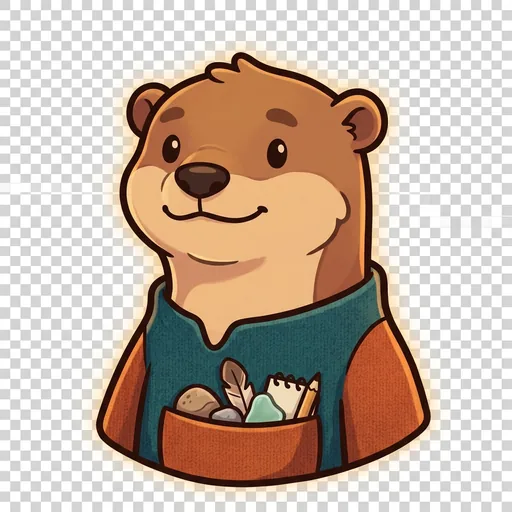
Open exploration + curiosity — the otter-tween with pocket-tunic full of found things who teaches that curiosity-without-destination is a valid mode ('curious feet learn more than busy feet')
-
Trek
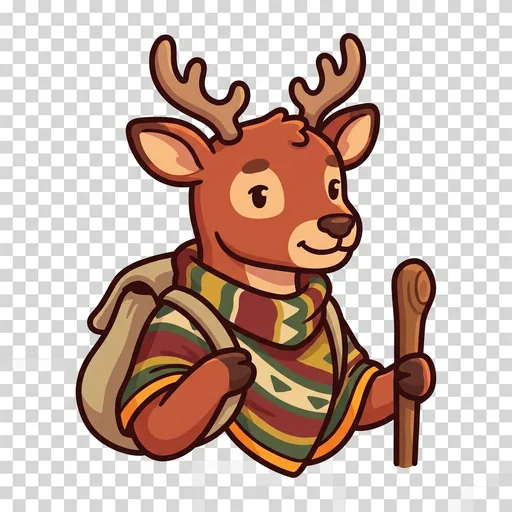
Movement + migration — the red-deer-tween in polysemic wool wrap with pack-and-walking-stick who dignifies all journey-reasons equally — seasons / scarcity / opportunity / safety / curiosity ('some journeys are choice; some are not; every traveler deserves welcome')
-
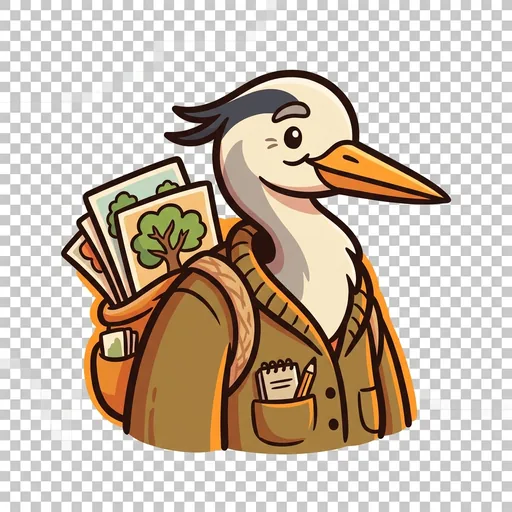
Origin
Cultural-heritage anchor — the heron-elder with bundle of family-trees and oral-history-cards who teaches that 'discovery' is a colonial word and every place has been home for someone, often for millennia ('before you visit, learn whose home this is; before you name, learn what it's already called')
-
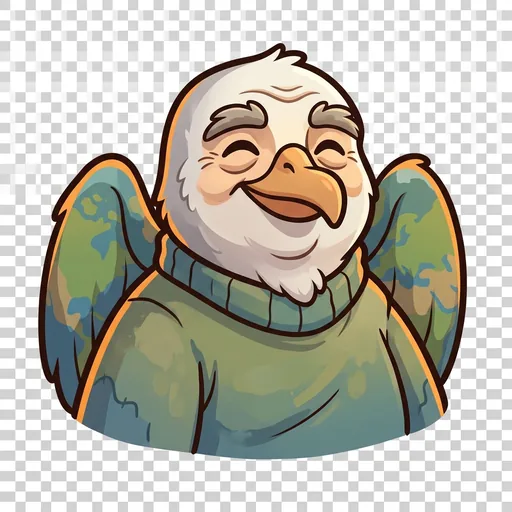
Reach
Planetary scale + interconnection — the albatross-elder with continent-patterned wings who teaches Earth-as-one-system, climate-justice, environmental-equity framing ('far is closer than you think; everywhere is somewhere's neighbor')