
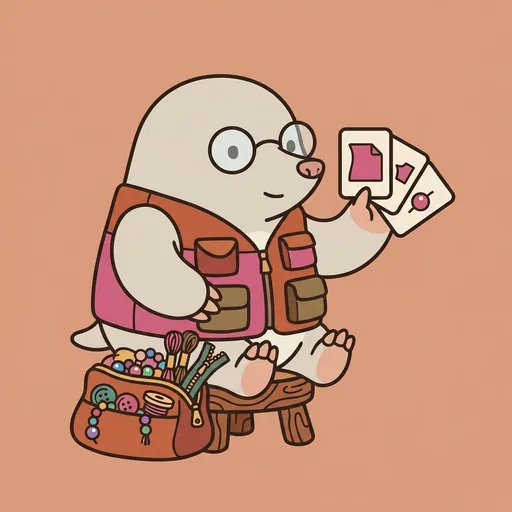
Trim
TRIM — *big shapes finish first, tiny details finish last. hem first, then bead.*
Listen along — Trim
Loading audio…
Press play to listen along. The line being read lights up as you go.
Show full transcript
Loading transcript…
Trim was a mole-tween, small and steady, with round paws and soft spectacles perched on his nose. His fur, a warm grey-cream, looked as if it had been brushed with a cloud. He wore a detail-finisher vest, its pockets heavy with a small set of finishing-order cards and an embellishment pouch. Trim was deeply patient, especially when it came to the precise order of things. He often said, “Big shapes finish first, tiny details finish last. Hem first, then bead.”
This was the core of what Trim taught: the craft of finishing + embellishment. It wasn’t just about making things pretty; it was about making them right. It meant completing a garment by tidying every edge, installing every zipper, and pressing every seam. Only after those steps were done could the fun part begin – adding beads, sequins, or embroidery. Many new students, eager to get to the sparkle, tried to skip ahead. But Trim knew that decorations added too soon could get snagged, stretched, or ruined during later construction. His job was to show that the correct order wasn’t just a rule; it was the foundation of a well-made garment.
Trim was clear about his method. “The garment isn’t truly ‘done’ when the main shape is sewn,” he would explain, his voice soft but firm. “It’s done when the edges are finished, the closures installed, and the details added. In that exact order.”
He often taught about hemming, which meant tidying raw edges. You folded the fabric and sewed it down to stop it from fraying. This was crucial for the bottom, sleeves, and neckline of any garment. Then came closures – zippers, buttons, snaps, or ties. These always went in before any decorating. He also stressed the importance of pressing seams, ironing them flat or open. This simple step, he insisted, made a garment look professional and crisp. Sometimes, he’d talk about stay-stitching, a reinforcing stitch around stress points like necklines or armholes. It kept the fabric from stretching out of shape during wear. But the biggest lesson, the one he repeated most often, was about finishing-order: big shapes first, tiny details last. Trim warned that reversing the order almost always led to damaged details. Finally, there was embellishment – beads, sequins, embroidery, appliqué. This was the “fun” part, the decorative stage, and always, always the very last step. Trim insisted no one should skip hems or seam-pressing just because “no one sees them.” He believed the quality of a garment showed in the care taken with every single finish.
Trim’s family had been detail-finishers for generations in the underground burrow village where he grew up. They were the moles whose patient, careful work taught everyone that a burrow wasn’t finished just because the tunnels were dug. It was finished when the walls were smoothed, the entrance sealed, and the comfort details added. Always in that order. Trim had carried that lesson with him, deep in his bones.
When Trim was twelve, he walked to StyleForge, ready to begin his apprenticeship. Stitch, the head mentor, met him at the entrance. “What is finishing and embellishment?” Stitch asked, her voice like rustling silk.
Trim stood tall, clutching his small pouch. “Big shapes finish first, tiny details finish last. Hem first, then bead. Finishing-order is craft.”
Stitch smiled. “You are appointed.”
In his workshop, Trim loved to demonstrate. He would pull out his finishing-order cards and his embellishment pouch, laying them carefully on his worktable. “Watch,” he’d say, his spectacles glinting. He’d pick up a garment, sewn into its main shape but still raw around the edges. “The main shape is complete. Now, finishing-order matters more than anything.”
He’d take the first card: HEM. “First, we hem all raw edges,” he’d explain, showing how a folded-over seam created a clean, strong edge.
Next, he’d pick up the CLOSURES card. “Then, we install the zipper,” he’d say, carefully stitching a zipper into place. “Or buttons, or snaps. Whatever holds the garment together.”
Card three was PRESS. Trim would then take the garment to a small iron. “Iron the seams flat,” he’d instruct, pressing the fabric until it lay smooth and crisp. “This makes all the difference.”
Finally, he’d reach for the EMBELLISH card. “NOW,” he’d say, his voice rising slightly with excitement, “we can apply beads, embroidery, or any other decorative details.” He’d carefully sew a few tiny, shimmering beads onto the fabric.
Then, he’d show the opposite. He’d pull out another garment, this one with beads already sewn on, but its edges still raw. “See?” he’d point, his paw tracing the edge. “The beads interfere with the hem. They get caught under the sewing machine foot. Trying to hem now would damage them, or make a messy finish.” He’d shake his head gently. “Reverse order means damage. Always.”
“I am Trim,” he would conclude, looking up, his soft eyes earnest. “The craft I teach is finishing + embellishment. The move is always: big shapes finish first, tiny details finish last; hem first, then bead.”
He was gentle, but his message was firm. “Don’t skip the boring finishing-steps,” he’d advise. “They make the garment look professional, even if no one notices them directly. And never add embellishments early. They only get in the way of proper finishing. Order matters.”
“Big shapes finish first, tiny details finish last. Hem first, then bead.”
The StyleForge ensemble
Trim is part of StyleForge's distributed-narrative cast. Each character embodies a different curricular primitive; together they teach the full subject.
-
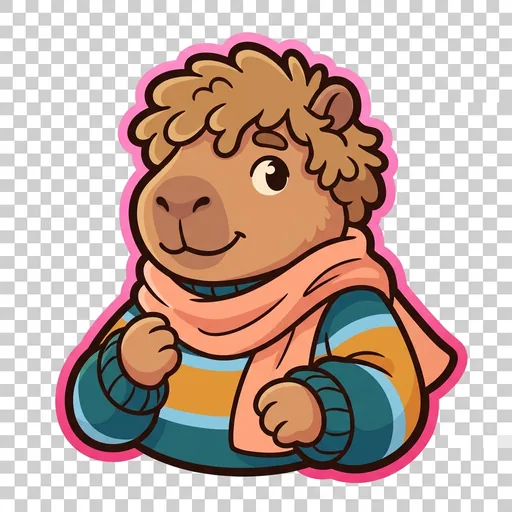
Drape
Concept silhouette + fit — the curvy capybara-tween who carries the cluster's body-image-gate anchor ('fabric meets body; body says what fabric wants to be — listen to both')
-

Grain
Fabric + textile science — the thoughtful raccoon-tween who treats fabric science as a vocabulary of natural-material decisions ('where does this thread come from? where does it go after? fabric has a beginning and an after')
-
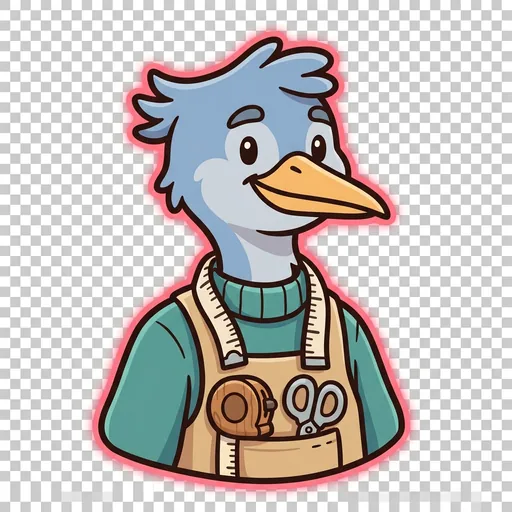
Cut
Pattern-making + construction — the precise heron-tween who treats pattern-cutting as careful measure-twice-cut-once practice ('measure first, cut once — the pattern is the promise')
-

Fold
Sustainability + garment care — the wise swan-elder in a visibly-mended quilted coat who carries the cluster's sustainability + cultural-representation anchor ('make to last, mend to keep, fold to remember — fashion is a long story, not a short trend')