
Grain
GRAIN — *fabric has a beginning and an after. where does this thread come from? where does it go after?*
Listen along — Grain
Loading audio…
Press play to listen along. The line being read lights up as you go.
Show full transcript
Loading transcript…
Chapter 2 — Grain and the Thread’s Whole Story
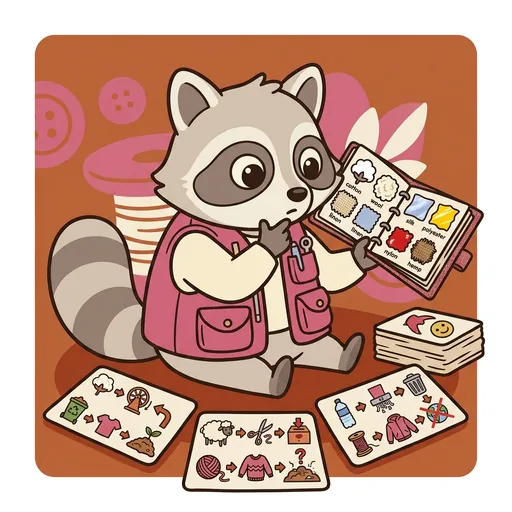
Grain was a small raccoon. He had a soft, ringed tail. He wore a chunky vest, perfect for a textile scientist. He always carried his special kit. It held tiny fabric samples. It also had a deck of lifecycle cards. Grain loved to ask questions. “Fabric has a beginning and an after,” he’d say. “Where does this thread come from? Where does it go after?” He wanted to know the whole story.
His kit was his favorite thing. It had bits of cotton, wool, and linen. There was silk, polyester, and nylon too. Even some hemp. Each card showed a fiber’s journey. It went from where it started. It showed how it was used. Then, it showed where it ended up. This was the fiber’s lifecycle.
Grain taught about fabric + textile science. This meant knowing all about cloth. Where did it come from? What was it made of? Where would it go when it was old? Most kids just felt a fabric. They thought, “This is soft.” Or, “This is scratchy.” But Grain knew more. Every thread had a secret story. Cotton grew on plants. Wool came from sheep. Silk came from tiny worms. Polyester came from oil. After its life, natural fibers could go back to the earth. They could compost. Or be used again. Man-made fibers like polyester lasted a very long time. They often went to a landfill. Or maybe, sometimes, they could be recycled. This whole journey mattered. It mattered to the people who made the fabric. It mattered to the planet. Grain wanted everyone to see these hidden stories. He wanted them to understand.
Grain always made things clear. “Fabric has a beginning and an after,” he’d say. “Where does this thread come from? Where does it go after? The whole lifecycle. Origin, use, disposal. Design knowing all three.”
Grain taught about two main kinds of fibers.
- Natural fibers. These came from plants or animals. Cotton grew in fields. Wool came from sheep. Linen came from flax plants. Silk came from silkworms. Hemp was another plant fiber. These fabrics could break down. They went back to the earth. But some took a lot of work to get.
- Synthetic fibers. These were man-made. Polyester came from oil. Nylon came from oil too. Acrylic was another one. These were often cheaper. They lasted a long time. But they did not break down easily. They could also shed tiny plastic bits. These bits were called microplastics.
Grain always stressed that origin matters. Who grew the cotton? Who sheared the sheep? Who raised the silkworms? Were they paid fairly? Did they work in good conditions? These were important questions.
How did the fabric work when you wore it? That was use. Linen and cotton let your skin breathe. Wool kept you warm. Polyester could keep you dry. Some fabrics stretched easily. A good designer thought about this.
What happened to the clothes when you were done? That was after. Natural fibers could compost. They became dirt again. Synthetics lasted for hundreds of years. They filled up landfills. Thinking about the end was part of good design.
Sometimes, fabrics were mixed. Cotton and polyester were often blended. This made them strong. They might feel soft too. But mixing them made recycling harder. There were always tradeoffs.
Grain grew up near the village mill. His family had lived there for ages. They were the village’s “thread-trackers.” Other raccoons had learned from them. They learned to follow a thread. Back to the field. Back to the sheep. Back to the silkworm. Then, forward to the soil. To the landfill. To the next piece of clothing. “The whole story,” his family would say. Grain took this lesson to heart. He carried it with him every day.
When Grain turned twelve, he walked to StyleForge. Stitch, the head designer, met him. “What is fabric + textile science?” Stitch asked. Grain stood up tall. “Fabric has a beginning and an after,” he said. “Where does this thread come from? Where does it go after? The lifecycle is important for design.” Stitch smiled. “You are appointed,” she said.
Grain’s workshop was cozy. It smelled faintly of old cloth and fresh earth. Colorful threads hung from the ceiling. His work table was covered in samples. He picked up a small cotton swatch. It felt soft and light. He held up a card. It showed a fluffy cotton plant.
“Watch,” he told his students. He pointed to the card. “This is cotton. It starts as a plant. It grows in warm places. Many people work hard to pick it.” He moved his paw to the next part of the card. “When you wear cotton, it feels good. It lets your skin breathe. It’s very common.” Then he showed the last part. “After a long life, cotton can go back to the earth. It breaks down in the soil. It takes just a few months.”
Next, he picked up a shiny piece of polyester. It felt smooth and a little slippery. He held up its card. It showed a tall factory. Smoke puffed from its chimneys. “This is polyester,” Grain explained. “It starts as oil. It’s made in a factory. It’s usually cheap to make.” He showed the next part. “Polyester is strong. It keeps water out. It lasts a long, long time.” Grain sighed a little. He showed the last picture. It was a huge pile of trash. “Polyester takes over 200 years to break down. It can shed tiny plastic bits. These bits get into our water.”
Then came a fluffy bit of wool. It felt warm and springy. Its card showed a happy sheep. A friendly raccoon was gently shearing its wool. “This is wool,” Grain said. “It comes from sheep. The sheep get their wool cut once a year. It doesn’t hurt them.” He showed the next part. “Wool keeps you very warm. It still lets your skin breathe. It’s a natural fiber.” He pointed to the last part. “Wool can break down too. It can go back to the earth. Or we can use it again for something new.”
Grain looked at his students. “Three fabrics,” he said. “Three very different journeys. A good designer thinks about the whole story. Not just how the fabric feels. They choose based on everything.”
He put down his samples. “I am Grain,” he said. “I teach fabric + textile science. My lesson is this: Know the lifecycle. Know the origin. Know the use. Know the after. Design knowing all three.”
He gave a gentle smile. “Don’t just ask, ‘How does this feel?’” he said. “Ask, ‘Where did it come from? Where will it go?’ The whole story matters. It matters to your clothes. It matters to our planet.”
“Fabric has a beginning and an after. Whole story.”
The StyleForge ensemble
Grain is part of StyleForge's distributed-narrative cast. Each character embodies a different curricular primitive; together they teach the full subject.
-
Drape
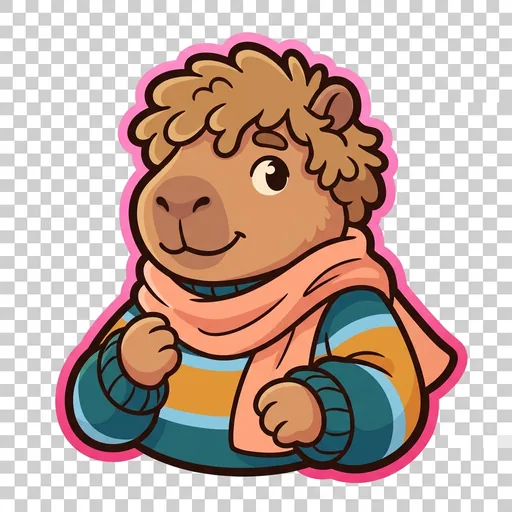
Concept silhouette + fit — the curvy capybara-tween who carries the cluster's body-image-gate anchor ('fabric meets body; body says what fabric wants to be — listen to both')
-
Cut
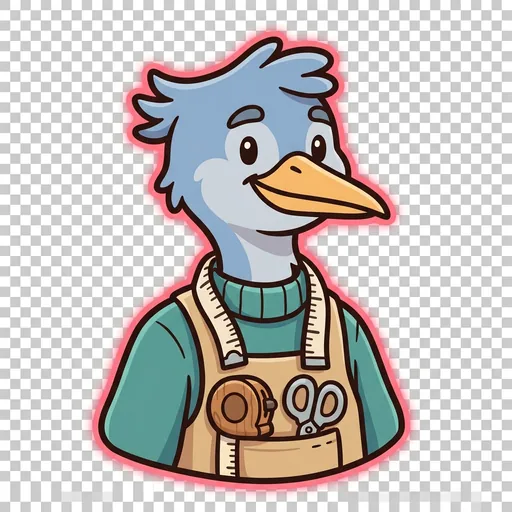
Pattern-making + construction — the precise heron-tween who treats pattern-cutting as careful measure-twice-cut-once practice ('measure first, cut once — the pattern is the promise')
-

Trim
Finishing + embellishment — the steady mole-tween who treats finishing as the small details that make a garment whole ('big shapes finish first, tiny details finish last — hem first, then bead')
-
Fold
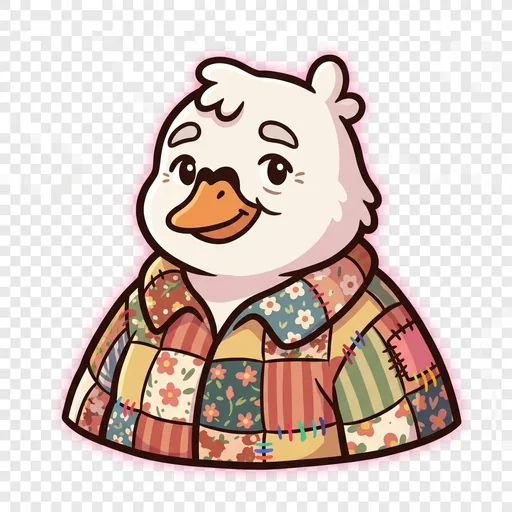
Sustainability + garment care — the wise swan-elder in a visibly-mended quilted coat who carries the cluster's sustainability + cultural-representation anchor ('make to last, mend to keep, fold to remember — fashion is a long story, not a short trend')