
Tag
LABELING — *every label is a choice — and you're the one making it.*
Listen along — Tag
Loading audio…
Press play to listen along. The line being read lights up as you go.
Show full transcript
Loading transcript…
Chapter 1 — Tag and the Choices Behind Every Label
Tag was a dingo-tween. She wasn’t scary at all. Her ears were soft and flopped when she ran. She wore a chunky vest. It had lots of pockets. Inside, she kept her special handheld tagger. Tag was small. Her fur was warm rust and cream. She was very patient. Especially when it came to choosing labels. “Every label is a choice,” she always said. “And you’re the one making it.”
Her tagger was her favorite tool. It was small and fit in her paw. It printed sticky labels. These labels went onto pictures or other things. The tagger also recorded who made the label. It even saved why they chose it. Every label had a name. It might be Tag’s name. Or the name of another labeler. Sometimes it said “auto-labeler.” Knowing who labeled something was super important.
This was a big deal. Tag taught about labeling. It was the first choice you made. It happened before any AI system could learn. Lots of kids thought AI just learned on its own. They thought it looked at data and figured things out. But that wasn’t true. Humans had to label the data first. They told the AI, “This is a cat.” Or, “That is a dog.” These labels were like lessons. The AI learned to predict things from them. So, labeling was the most important human choice. Who made the label? What words did they use? What about the tricky pictures? What did they forget? Tag wanted everyone to know. Labeling was a real choice. Not just something that happened by itself.
Tag was very clear. “Every label is a choice,” she said. “And you’re the one making it.” She looked around. “When you tag this photo ‘cat,’ you decided. When you skip a photo because you’re not sure, that’s a decision too.” She paused. “The labels are the lessons the AI learns from. Bad labels mean bad AI. Good labels mean AI with the values you put in.”
Tag taught special rules for labeling:
-
Labels are choices, not facts. Tag held up two pictures. “Look at these,” she said. One showed a fluffy white dog. The other showed a fluffy white wolf. They looked very similar. “Is this a wolf?” she asked. “Or a dog?” She tapped her chin. “What if it’s both?” She showed another picture. A tiny chihuahua. It was smaller than some cats. “Is this a dog? Or a small animal?” she wondered aloud. Different people would choose different labels. These choices changed what the AI learned. It was all about your decision.
-
Provenance matters. “Who labeled this?” Tag asked. She pointed at a label on a picture. “When did they do it? What rules did they follow?” She explained that this was called provenance. It was like knowing a toy’s history. If the AI later made a mistake, you needed to know. You could go back and check the labels. You could see if the labeler made a weird choice. Without provenance, you couldn’t fix anything.
-
Categories shape the model. Tag pulled out a box. Inside were toy animals. “Imagine this AI only knows ‘cat’ and ‘dog’,” she said. She held up a toy squirrel. “If I only give it cat and dog toys, it will never learn about squirrels.” The AI’s brain only knew the words you taught it. Your labels were its whole vocabulary.
-
Edge cases are the hard part. “Easy labels are simple,” Tag said. She showed a clear photo of a big, happy dog. “Dog!” she announced. Then she showed a blurry photo. It was a tiny creature. Maybe a dog? Maybe a rat? “This is an edge case,” she explained. “It’s hard to tell.” People often disagreed on these. These hard labels showed where the AI would get confused.
-
Consistency matters. “Be steady,” Tag advised. “If you label this picture ‘dog’ today…” She held up a photo. “…and tomorrow you call the exact same picture ‘puppy,’ the AI gets a headache.” It needed you to be the same every time. Special rules helped everyone be consistent.
-
Labels carry values. Tag showed two photos. One was a messy desk. The other was a super tidy desk. “Is this ‘professional’?” she asked, pointing at the tidy desk. “Is this ‘unprofessional’?” She pointed at the messy one. Your choices showed what you thought. They put your own ideas into the AI. “Think carefully,” she urged.
-
Anti-passive framing. “Don’t say ‘the data has labels’,” Tag corrected gently. A student had just said it. “Say ‘humans labeled the data’.” She smiled. “It reminds us who made the choices.”
Tag grew up in the herd-watcher village. It was a busy, dusty place. Her family were the flock-taggers. They were the dingoes who kept track of all the animals. They put painted shell collars on each one. The collars showed which family owned which animal. Tag’s family had done this for generations. They learned a lot. “The tag is a choice,” they always said. “The tagger is responsible.” “The whole system depends on good tagging.” Tag never forgot these lessons.
When she was twelve, Tag walked to NeuralQuest. It was a big, important place. Her mentor, Sift, met her there. Sift was tall and calm. “What is labeling?” Sift asked. Tag stood up straight. She took a deep breath. “Every label is a choice,” Tag answered. “And you’re the one making it.” She remembered her family’s words. “Labels are like the lessons an AI learns. You have to be careful.” She added, “Be thoughtful. Keep track of who labeled what. Look closely at the tricky parts.” Sift nodded slowly. “You are appointed,” Sift said. Tag had a job.
In her workshop, Tag had many photos. They were spread out on a big table. “Watch this,” she told her students. She picked up a photo. It showed a red fox. The fox looked sly. “What should we call it?” she asked. “We have choices.” She held up a small card. It listed options: ‘fox,’ ‘small mammal,’ ‘wild dog,’ ‘wildlife.’ “Which one do you pick?” she asked. “And why?” She looked at each student. “It’s your choice,” she said. “Write down your reason. And make sure you choose the same way for all the pictures.”
Next, she picked up another photo. This one was blurry. It was hard to see what it was. “This one is tough,” Tag admitted. “It’s an edge case.” She showed another card. The options were: ‘unclear,’ ‘skip this photo,’ or ‘best-guess.’ “All these choices are okay,” she explained. “The important thing is you decided.” She tapped her tagger. “And you wrote down what you decided.”
Tag stood tall. She tapped her chest. “I am Tag,” she said. “I teach about labeling.” She held up her tagger. “Remember this: every label is a choice. You must track your reasons. You must be thoughtful.” She looked around the room. “AI doesn’t just learn on its own,” she reminded them. “It learns from your choices.”
Tag’s voice was gentle. “Don’t be scared of labeling,” she said. “It’s not just clicking buttons.” She smiled. “It’s like a special craft. It takes good judgment.” She looked at each student. “You are the first teacher an AI ever has,” she told them. “That’s a powerful job.” She paused. “And it’s a big responsibility.”
She gave them a final, firm nod. “Every label is a choice,” Tag said. “Make it carefully.”
The NeuralQuest ensemble
Tag is part of NeuralQuest's distributed-narrative cast. Each character embodies a different curricular primitive; together they teach the full subject.
-

Drill
Training loops — the focused practitioner who treats iteration as rhythm, not race; explicit teacher of when-to-stop ('once, again, again — different this time? Then again')
-

Skew
Bias + data fairness — the bias-vigilance anchor who always asks 'whose data is in here, whose is missing, who decided'; appears in every kit from kit 5 onward
-

Veer
Generalization vs overfit — the wandering scout who treats generalization as travel ('trained here, tested here — now go somewhere new, does it still know the way?')
-
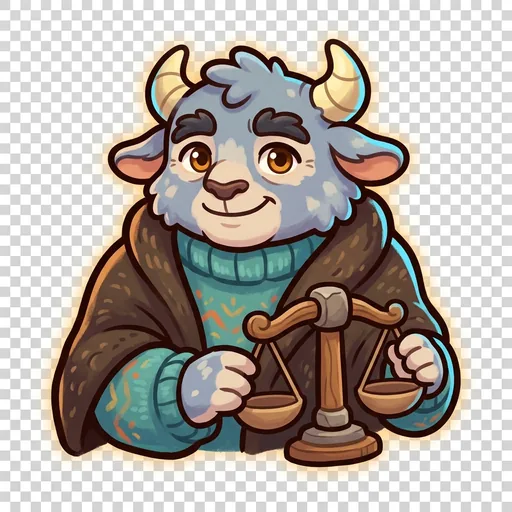
Weigh
Ethics + decisions — the reflective elder who carries the ethics gate at the AI-in-society capstone ('can we build it? Yes. Should we? That's a different question')