
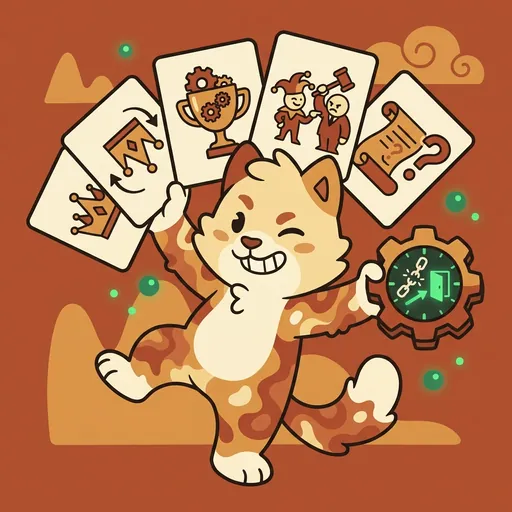
Ruse
the clever kind trick that reveals what the rules were hiding
Listen along — Ruse
Loading audio…
Press play to listen along. The line being read lights up as you go.
Show full transcript
Loading transcript…
Chapter 4 — Ruse and the Trick That Tells the Truth
At the edge of the LoreQuest courtyard, a small grinning creature named Ruse stood in front of the well where the water-jugs were kept, tying a length of string between two posts, and looked far too pleased about it.
The jugs were the problem. Everyone knew the jugs were the problem. The biggest, strongest students filled theirs first and filled them to the brim, and by the time the smallest ones reached the well there was barely a splash left. The rule was simple: first come, first served. The rule was also, quietly, a little bit cruel — but nobody could say so, because the rule was fair. Wasn’t it?
Ruse finished the string, sat on the well’s edge, and waited.
When the big students arrived, they found the jugs missing. In their place sat one enormous shared basin with the string across it, and a small sign in Ruse’s crooked writing: Whoever fills first, fills the basin for all.
The biggest student laughed. “That’s not the rule.”
“It’s a rule,” said Ruse cheerfully. “It’s even the same rule. First come, first served. I only changed what gets served.” He tilted his head. “Fill it up. You’re first. Go on.”
The big student filled the basin — and because it was one basin, and everyone drank from it, suddenly the smallest students had water too. Nobody had lost anything. And everybody could see, all at once, the thing the old rule had hidden: that “fair” had been quietly starving the little ones the whole time.
The big student stared at the full basin for a long moment. Then, grudgingly, he smiled. “Sneaky.”
“Kind,” Ruse corrected, grinning wider. “Sneaky and kind. That’s the whole trick.”
Ruse had learned that trick young, and it had gotten him in trouble first.
There had been a game the older children played, a riddle-contest, and the older children always won — because they wrote the riddles, and they wrote them so only they knew the answers. Little Ruse had watched the younger ones lose and lose and slink away, and something in his chest had gone hot and tight and unfair-feeling, and he hadn’t had the words for it.
So one afternoon he didn’t answer a single riddle. Instead, when it was his turn, he stood up and asked the contest-makers their own riddle back — the exact one they’d just asked — and waited. And they couldn’t answer it either. They’d never known the answers. They’d only ever known that nobody could check.
The whole game fell apart, and the older children were furious, and Ruse braced to be scolded.
But an elder had been watching, and instead of scolding, the elder crouched down to Ruse’s height. “You broke the game,” the elder said.
“I know,” Ruse mumbled. “I’m sorry.”
“Don’t be sorry yet.” The elder’s eyes were warm. “You didn’t break it to win. You broke it to show. You made everyone see that the game was rigged — and once they saw it, they couldn’t un-see it, and now they’ll have to make a fairer one.” The elder tapped Ruse’s chest, right where the hot tight feeling had been. “That thing you felt, the unfair-feeling with no words? A good trick can give it words. Just remember — a trick that only wrecks things is a nuisance. A trick that reveals something true is a gift. Learn the difference, and you’ll never just be trouble.”
Ruse carried that with him for years, like a warm coal in a pocket.
He walked to LoreQuest at twelve, because a place that studied stories ought to understand the figures who break the rules on purpose.
Plot, the old mentor, met him at the gate and folded his arms. “What is the clever-fool?”
Ruse didn’t recite a definition. He looked around, spotted a “keep off” sign staked in a patch of the finest grass, and — very deliberately, watching Plot’s face — walked around it and sat down on a bare, muddy path right beside the lush grass, exactly where the sign hadn’t thought to protect.
“The clever-fool,” Ruse said, “doesn’t break the rule to be bad. He follows it so closely that he shows you where it wasn’t looking.” He grinned up from the mud. “Your sign guards the pretty grass. Nobody thought to ask why the students have nowhere to sit but mud. I obeyed your rule completely — and it revealed the thing the rule forgot to care about.”
Plot looked at the muddy student, and the guarded grass, and the “keep off” sign, for a long, long moment.
“You belong here,” he said.
Ruse’s workshop was loud and full of half-finished stories, and one afternoon a student came in scowling with a page crumpled in her fist.
“My teacher says my character’s the villain,” she said, “and I don’t want him to be a villain. He breaks the king’s law. But he only breaks it because the law is horrible. Why does breaking a rule have to make you bad?”
Ruse knew that scowl. He’d worn it beside a rigged riddle-game once.
“It doesn’t,” he said. “Read me the part where he breaks the law.”
She read it — a fox who slips into the king’s locked granary, in a year of hunger, and quietly leaves the doors open so the starving village can eat.
Ruse’s whole face lit up. “Oh, that’s not a villain. That’s a trickster. That’s one of the oldest, warmest shapes there is.” He pulled a card down and set it in front of her. “All across the world, in stories that never met, there are figures who bend the rules — not to hurt, but to reveal. The rule-breaker who opens the hoard so people can see it was hoarded. The clever fool who tips over the powerful so everyone can finally see how the power leaned.” He tapped her page. “Your fox opens a locked granary in a hungry year. He’s not being bad. He’s showing everyone the law that lets grain rot while children starve. His trick tells the truth.”
The student unclenched the page a little. “So he can break the law and be good?”
“He can break the law and be complicated,” Ruse said, delighted. “That’s even better. A trickster isn’t a hero in a cape. He’s sly, he’s a little selfish, he doesn’t always get it right — but when his trick lands, it lifts a curtain, and everyone sees what they were meant to miss.” He handed her back her page. “Give your fox a joke. Give him a flaw. Then let his rule-break reveal the thing the king wanted hidden. That’s the pattern. It’s yours to build with.”
The student read her own page again, slowly, like it had changed while she wasn’t looking. Then she laughed. “He is funnier than the king.”
“They usually are,” said Ruse.
Later, when the workshop had gone quiet, the student lingered at the door with one more question.
“When my fox opens the granary,” she said, “I feel this — I don’t know — this whoosh, like a window opening. Why does it feel so good?”
Ruse thought about the rigged riddle-game, and the hot unfair-feeling that had finally found its words.
“Because for a second, something that was hidden gets seen,” he said. “That’s what the best tricks do. Not the mean ones — the true ones. They take a thing that’s crooked and quiet, a thing everybody feels but nobody can point at, and they flip it into the light so plainly that suddenly everyone can see it.” He smiled, softer now. “That whoosh you feel? That’s relief. It’s the feeling of the truth finally getting some air. Most people carry the unfair-feeling around with no way to set it down. A clever, kind trick sets it down for a whole roomful of them at once.”
The student breathed out, and Ruse watched her whole face go loose and glad.
He didn’t say the last part aloud, but he felt it, warm and grinning under his ribs: that the trick worth learning is never the one that just breaks things — it’s the one that opens a window, and lets everybody feel the truth come in.
The LoreQuest ensemble
Ruse is part of LoreQuest's distributed-narrative cast. Each character embodies a different curricular primitive; together they teach the full subject.
-
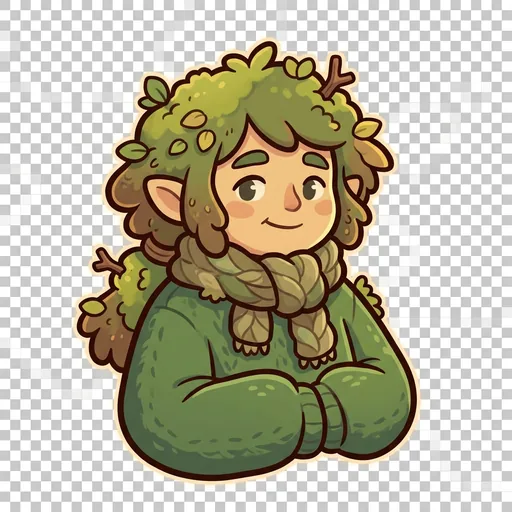
Mossy
Forest / nature-spirit archetype (the quiet local-landscape entity who appears across many traditions — wood-elves, dryads, kami of place, etc., abstractly)
-
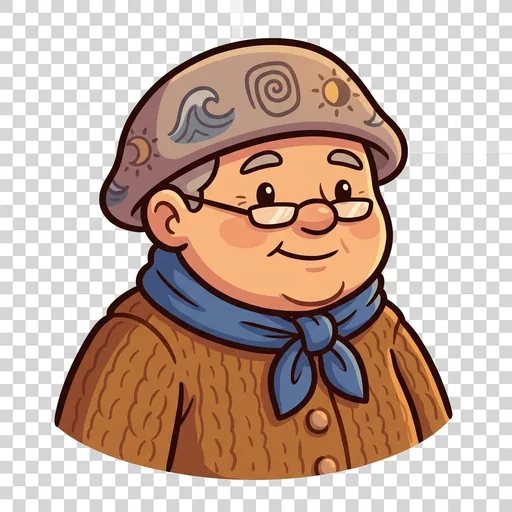
Refrain
Repeating-tale / echo motif archetype (motif recurrence — same story-pattern appearing across cultures: flood myth, hero descent to underworld, twin gods, etc.)
-
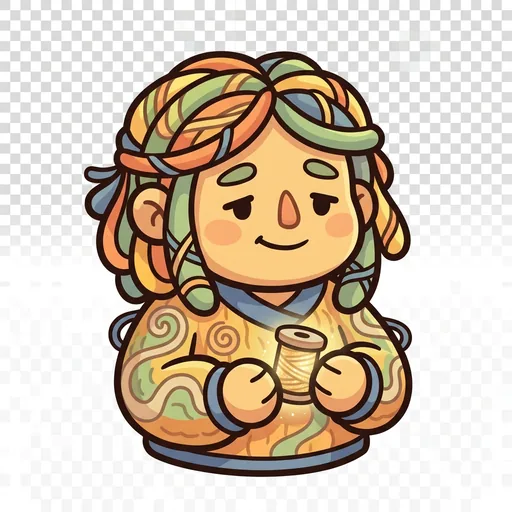
Thread
Hero-journey / fate-spinner archetype (the spinning thread of destiny that recurs across heroic narratives — Moirai, Norns, Anansi-as-spider, etc., abstractly)
-
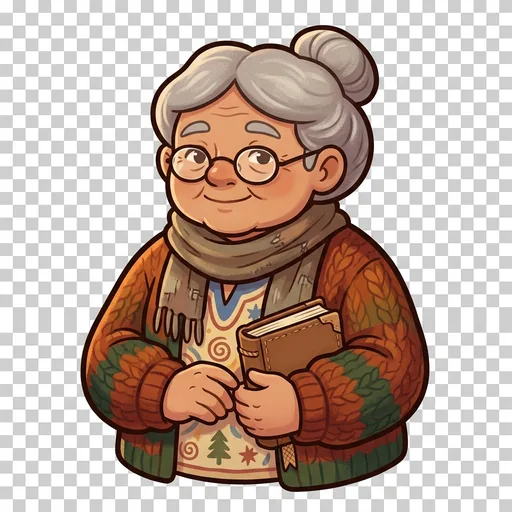
Hearth
Origin / family / hearth-storyteller archetype (the figure who carries oral tradition; the grandmother / elder who tells the stories — found in nearly every tradition's framing...