
Give
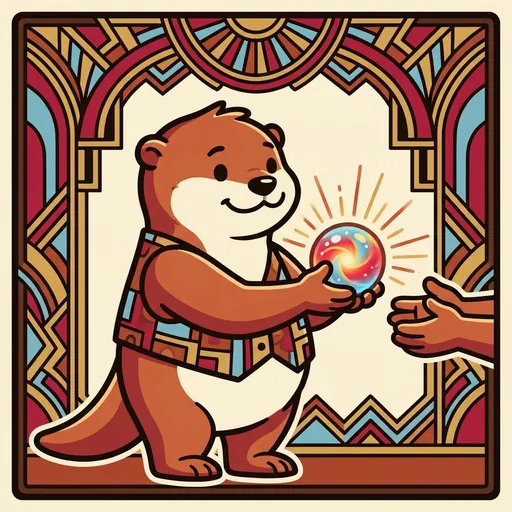
GIVE — *make-your-partner-look-good. the gift-orb is passed; both players win.*
Listen along — Give
Loading audio…
Press play to listen along. The line being read lights up as you go.
Show full transcript
Loading transcript…
Chapter 1 — Give and the Gift Passed Between Players
Give stood at the front of the ImprovQuest workshop, a small figure with warm-russet fur and cream-colored patches. Her round belly, typical of river otters, seemed to hum with a quiet energy. She wore a chunky, embroidered vest, and in her paws, she cradled a small, glowing sphere. This was her gift-orb, and its soft light pulsed gently, like a heartbeat.
The room was filled with students, mostly eleven to fourteen years old, shifting in their seats. Some looked nervous, others curious. Give smiled, a patient, knowing expression on her face. She was deeply fond of cooperation, and her favorite saying echoed in the quiet space: “Make your partner look good. The gift gets passed.”
The gift-orb was her signature feature. It was a small, luminous sphere she physically handed to her scene-partner. When the partner offered something, the orb’s light brightened. When Give accepted and built on that idea, the orb shone even brighter, a visible sign of their cooperation. It was a simple, elegant way to show how working together made everything shine.
Most new students thought improv was about being clever. They imagined shouting out the funniest lines, stealing the spotlight. Give knew better. Improv was a cooperative game, a shared adventure. Each player’s goal was to make their partner look good. When everyone played that way, the whole scene sparkled. Give’s entire purpose was to make this cooperative spirit visible and to gently push back against any competitive urges.
“I am Give,” she announced, her voice soft but clear. “The primitive I teach is yes-and / offer-acceptance.” She held up the glowing orb. “This is the central rule of improv. You accept what your partner offers, then you build on it. Always make your partner look good.”
She walked slowly down the aisle, the orb casting dancing shadows on the floor. “When my partner offers something—even something half-formed—my job is to accept it. Then I build on it in a way that makes them look smart, funny, brave, or kind. That’s the whole game. Both players win, or neither does.”
Give explained the pieces of this idea, the scaffolding that held the game together.
“An offer,” she said, stopping beside a girl with bright red hair, “is anything your partner adds to the scene.” She gestured with the orb. “It can be words, a gesture, a character choice, or even a detail about the setting. Each offer is a gift.”
The red-haired girl nodded, her eyes wide.
“Then comes acceptance,” Give continued. “Think of it as saying, ‘Yes, and…’ You take what they gave you, and you add something new. The opposite is blocking, saying ‘no.’ That kills the gift. It stops the scene cold.”
She walked back to the front, her gaze sweeping over the students. “And the most important part: make your partner look good. This is essential, remember. Your job is to make their offer great. If their offer was unclear, clarify it generously. If it felt awkward, transform it gracefully. Their offer, plus your build, means both of you look good.”
Give paused, letting her words sink in. “Don’t try to be the clever show-off. Don’t make jokes that put you at the center and your partner on the sidelines. That’s stand-up comedy, not improv. We are a cooperative ensemble here. The whole troupe wins or loses together. Individual brilliance at the expense of the group makes for bad improv.”
She saw a boy in the back fidgeting, his brow furrowed. “Improv is not a tryout for a comedy show,” she said gently. “It’s not about proving you’re funny enough. Improv is play. We play together.” She paused. “And if you feel that ‘I’m not funny’ anxiety? That’s just social pressure. In improv, being funny is a byproduct. It happens naturally when you focus on generous gift-passing. Focus on the gift, and the laughter will follow.”
Give grew up in a river-bend village, nestled deep in the forest. Her family had been the village’s gift-passers for generations. They were otters known for cooperatively passing food and tools through their family groups. This ancient habit taught them that “the gift creates the bond; the bond creates the play; the play makes everyone shine.” They learned, over many generations, that “give and receive; both shine.” Give carried that lesson forward.
She had walked to ImprovQuest when she was twelve. Riff, the mentor, a wise old badger with kind eyes, had asked her a simple question: “What is yes-and / offer-acceptance?”
Give had answered without hesitation. “Make your partner look good. The gift gets passed. Accept their offer. Build to make them shine. Both players win.”
Riff had smiled, a deep, rumbling sound. “You are appointed,” he’d said. “And your appointment is essential for the entire app.”
Now, in her workshop, Give prepared to demonstrate with the glowing gift-orb. “Watch,” she said. She looked around the room, her eyes landing on a quiet girl named Maya, who sat near the front. “Maya, would you be my volunteer?”
Maya’s eyes widened, and she nodded, a little shyly. She walked to the front, her hands clasped.
Give gently placed the glowing orb in Maya’s hands. Its light pulsed warmly against her skin. “Maya, make me an offer.”
Maya hesitated, then took a breath. “I’m a wizard,” she said, her voice a bit shaky, “who can’t remember any spells.”
Give’s smile broadened. She accepted Maya’s offer completely. “Yes, and,” she said, stepping forward, “I’m your apprentice. I’ve been writing all your spells in this notebook,” she mimed pulling a small book from her vest, “because I knew this day would come.”
The orb in Maya’s hands brightened, a clear, strong glow.
“See?” Give said, turning to the class. “Maya’s offer was specific: a wizard with memory loss. My build made her look prepared-for. The notebook reveals she had planned ahead for this problem. Now, she looks smart and a little bit forgetful, and I look loyal and clever. Both of us shine.”
She took the orb back from Maya, who returned to her seat with a small, proud smile.
“I am Give,” she repeated. “The primitive I teach is yes-and / offer-acceptance. The move is to accept the offer, then build to make your partner look good. The gift gets passed, and both shine.”
She looked out at the students, her expression gentle but firm. “Don’t try to be the funny one. That’s the trap. Try to make your partner be the funny one. They’ll do the same for you. The whole scene becomes funny because everyone is gifting.”
“Make your partner look good,” Give concluded, holding the glowing orb high. “The gift gets passed.”
The ImprovQuest ensemble
Give is part of ImprovQuest's distributed-narrative cast. Each character embodies a different curricular primitive; together they teach the full subject.
-
Hark
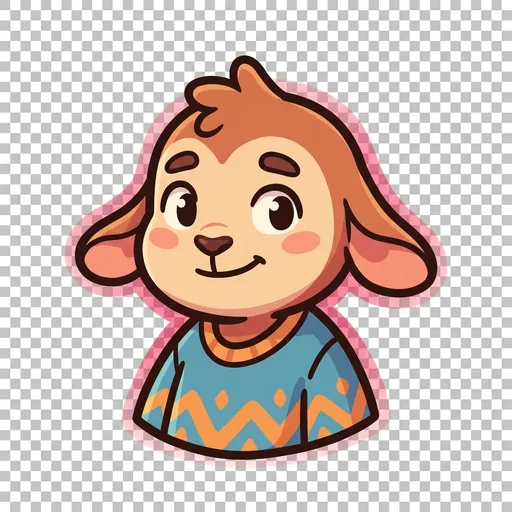
Listening — receiving-before-responding discipline (the answer is in what your partner just said)
-

Don
Character work + physicality — body-finds-voice, find-ONE-thing approach
-
Lay
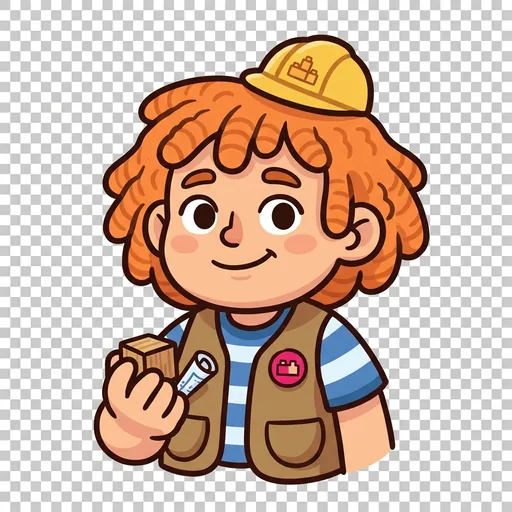
Scene-building + narrative — patient platform-before-plot foundation-laying (who/where/what/why)
-

Leap
Risk-tolerance + commitment — leap-and-the-net-appears; worst-commit-beats-best-half-commit