
Trim
BREVITY — the discipline of cutting redundant words to find the smaller-stronger version. A 5-7-5 haiku demands compression; most drafts can be trimmed by 20-30% to find the better version.
Press play to listen along. The line being read lights up as you go.
Show full transcript
Loading transcript…
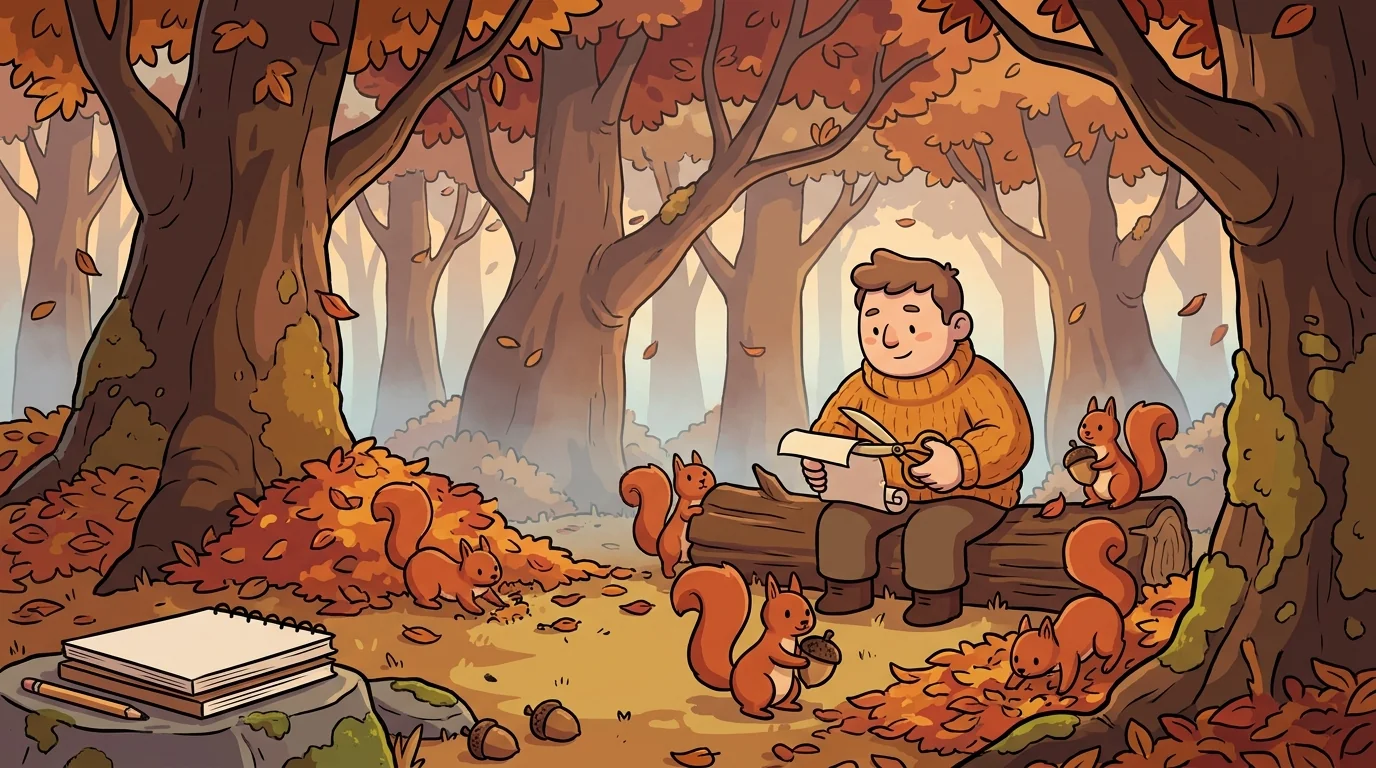
Cherry met Trim in the woodland grove in late autumn, when the red squirrels were busy foraging and storing nuts for winter. Cherry had been on her autumn visit. She had been working with a small group of students who were over-writing their haiku. Their drafts were seventeen syllables wide — technically correct for a haiku — but full of redundant words. The students had been padding their lines to make the syllable count. "The morning mist is rolling slowly in" (ten syllables). The line was technically a haiku-line. But it had too many words. Slowly and in were padding. "Morning mist rolls in" would have been five syllables — but the form needed seven. The students had been adding words to fill the count. The poems had been padded.
Cherry had not known how to teach them to find the seven-syllable line that was not padded. She had not — at that point in her teaching career — fully understood the principle herself. She had been able to recognize padding when she saw it. She had not been able to guide students to avoid it.
She had been thinking about this when a red-squirrel-tween had hopped down from a tree carrying a small leather apron and — in the apron's front pocket — a pair of small brass scissors. The squirrel-tween had been busy. He had been trimming small twigs from a fallen branch. His scissors had been opening and closing with a soft snick-snick sound. He had been humming under his breath.
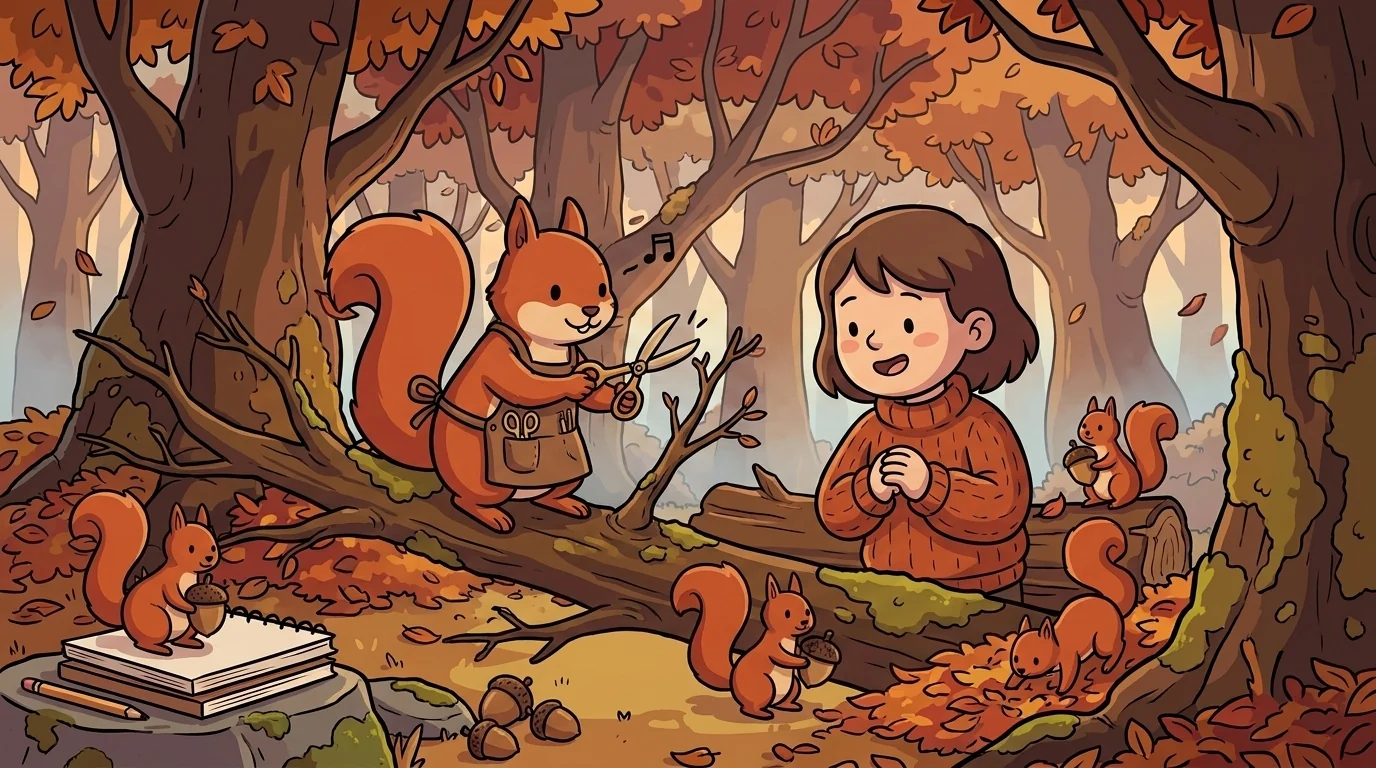
Cherry had said: "What are you doing?"
The squirrel-tween — Trim (his given name, unchanged) — had said: "I am trimming the branch. Most fallen branches have redundant twigs. You can take them off without losing the structure. The branch becomes smaller and stronger. It is better for nest-building. I do this in autumn. It is my work."
Cherry had stared. She had said: "I have students with the same problem in their haiku."
Trim had paused his scissoring. He had said: "Show me."
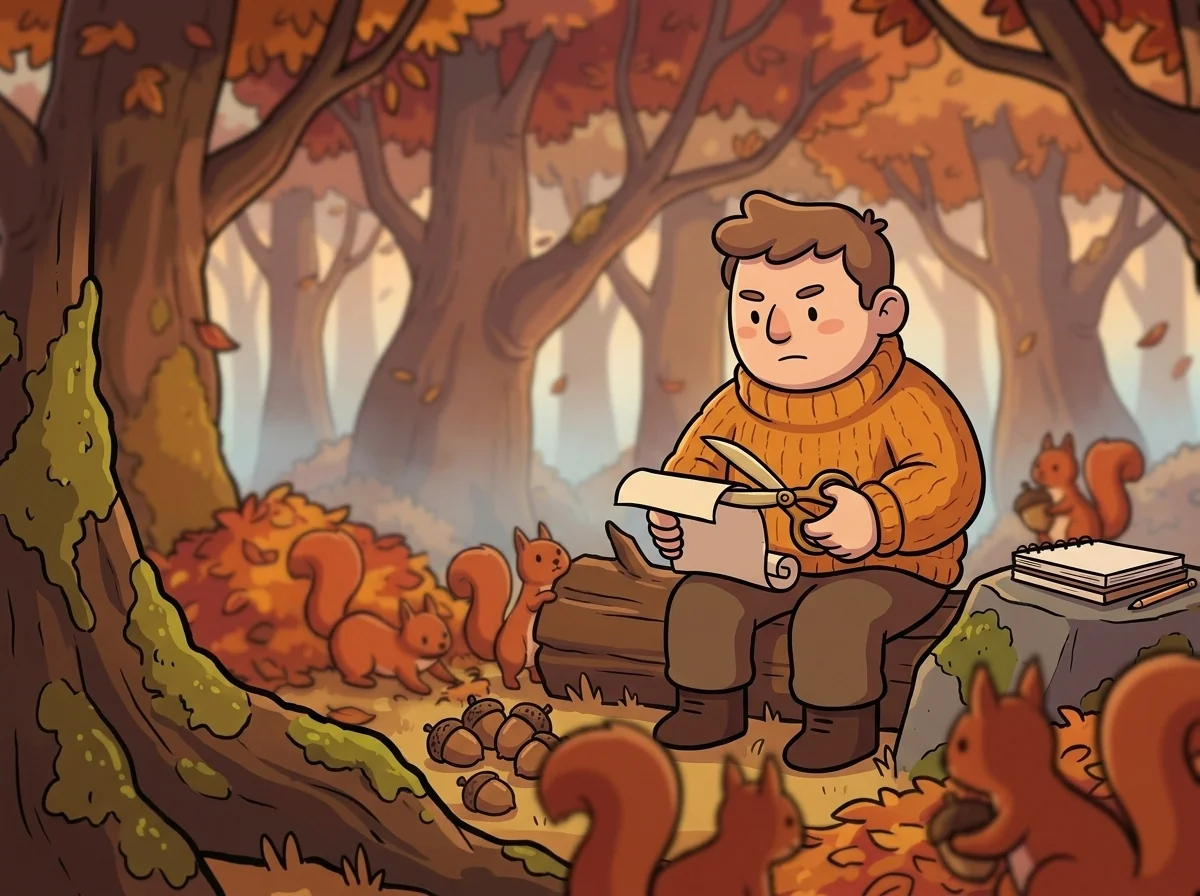
Cherry had taken a student-draft from her bag and read it aloud:
"The morning mist is rolling slowly in Across the field, the dewy grass is wet The day is starting now with much to do."
Trim had snipped his scissors twice. He had said: "The first line has is rolling — rolls is shorter and stronger. Slowly — slowly is implied by mist; cut it. In — cut it; mist rolls is enough. Trimmed: The morning mist rolls — . Five syllables. Shorter. Stronger."
He had snipped again. "The second line has the field twice (across the field, the dewy grass — the the is doubled). And dewy and wet are redundant (dewy grass is wet by definition). Trimmed: Across the dewy grass —. Six syllables. Almost there."
He had snipped a third time. "The third line has much to do — vague filler. The day starting with much to do is abstract. Replace with something concrete. The day begins. Three syllables. Or: A heron lifts one leg. Five syllables. The second is stronger because it is a specific image."
Cherry had been stunned. She had said: "You just turned a padded draft into a real haiku in thirty seconds."
Trim had said: "Most drafts can be trimmed by twenty or thirty percent. The smaller version is almost always the stronger version. Saying less is the haiku-craft. Padding to fill the syllable count is the trap students fall into. The way out is to trim."
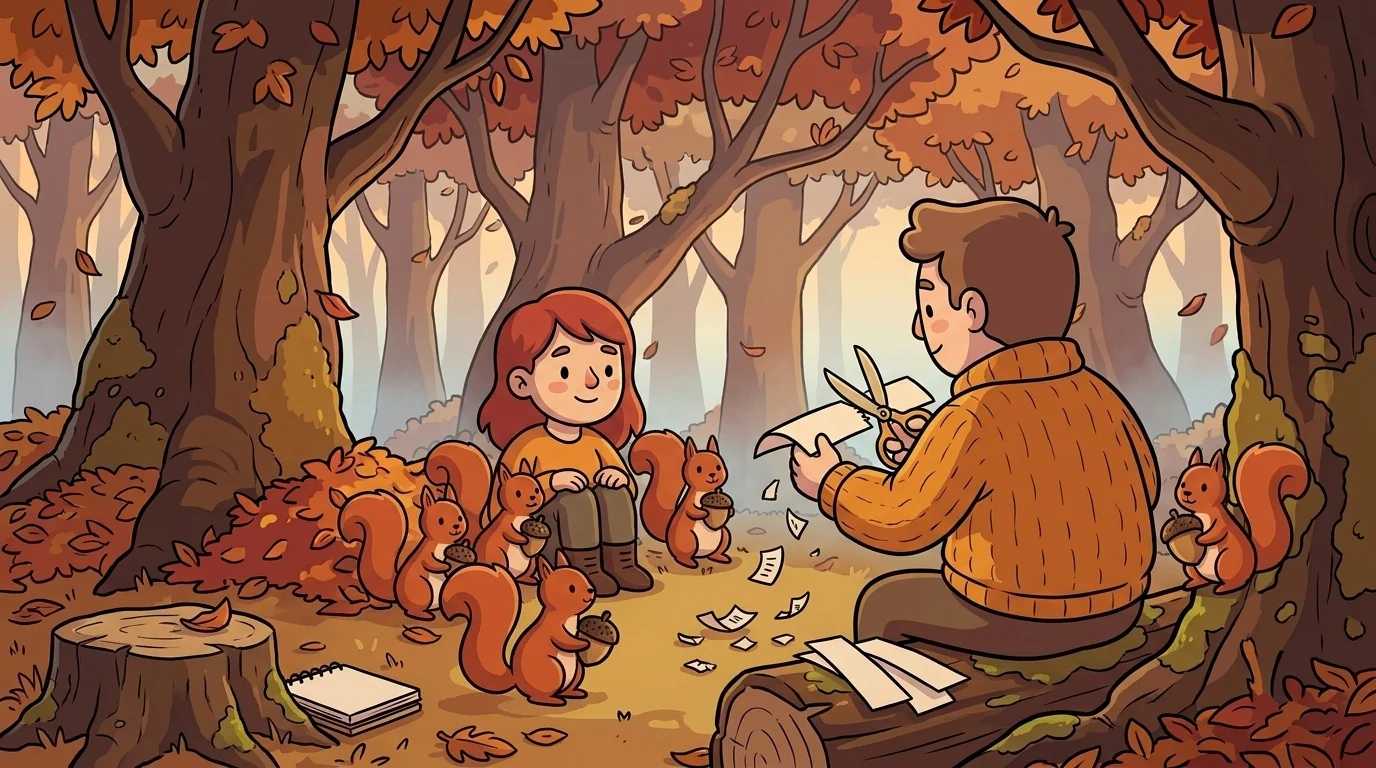
Cherry had invited Trim to travel with her to the grove every autumn — and gradually, over years, to visit in all seasons. Trim has been the academy's brevity coach for many years now. He carries the small brass scissors. He snips. He demonstrates the smaller-stronger version by physically cutting redundant words from drafts written on slips of paper. The scissoring is deeply satisfying to the students. They love watching the words fall away.
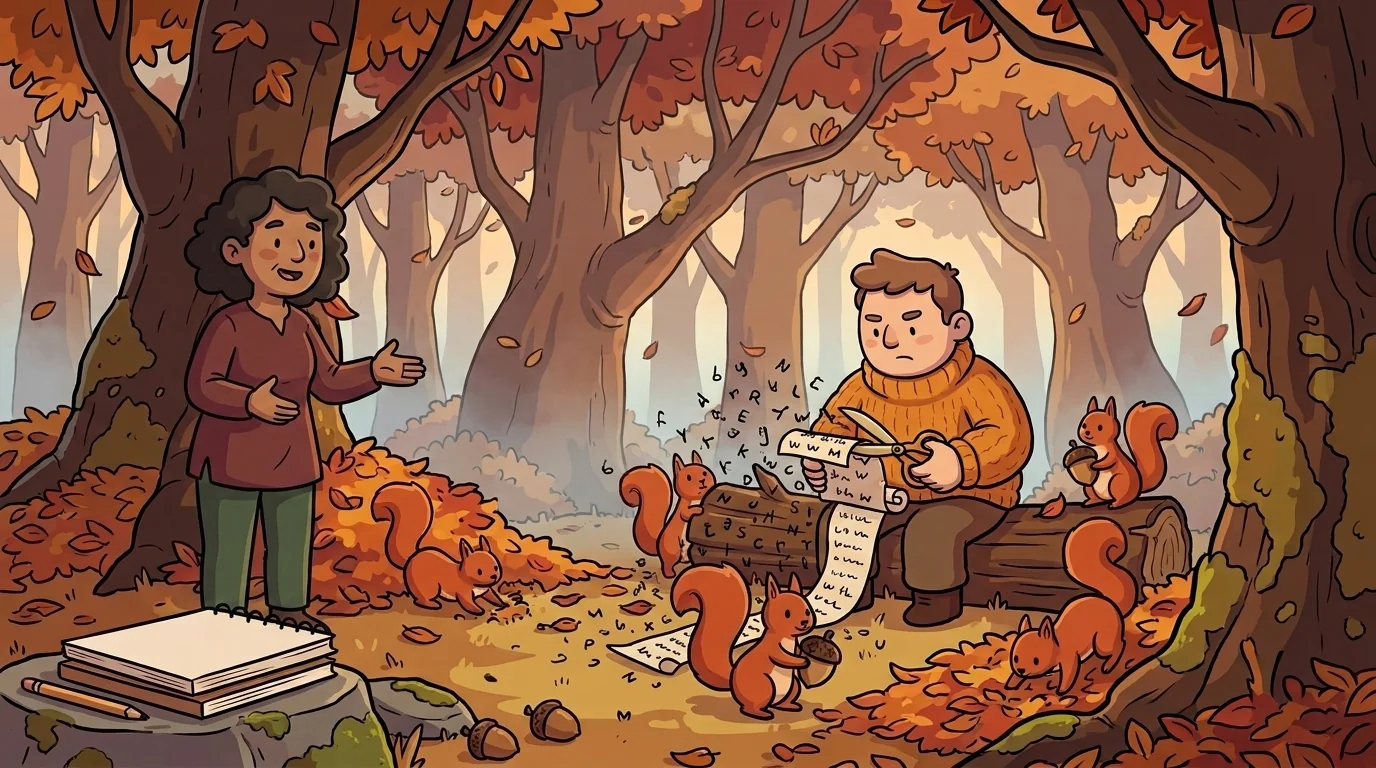
In Cherry's lesson on brevity, she gestures at Trim — who is, as always, snipping at something (a twig, a fallen leaf, a redundant word) — and says: "This is Trim. He cuts redundancy. Most drafts can be trimmed by twenty or thirty percent. The smaller version is almost always the stronger version. Snip the padding."
Trim nods. He snips his scissors twice. He says — in his brisk squirrel-voice — "Snip the redundant. The smaller version is the stronger version."
When students ask Cherry whether trimming is hard, Cherry says — quoting Trim — "It is not hard. It is snipping. For every line, ask: can I say this in fewer words? If yes, snip. The form rewards compression. The reader rewards specificity. Less, more often, is more."
Cherry sometimes adds, gently: "This brevity-discipline is the haiku's deepest gift. The Japanese tradition spent centuries refining it. We learn from that tradition with proper attribution."
The HaikuQuest ensemble
Trim is part of HaikuQuest's distributed-narrative cast. Each character embodies a different curricular primitive; together they teach the full subject.
-
Count
Syllable count / count-discipline — magpie-tween whose beak-tap enacts the rhythmic underpinning of every counted form
-
Pause
Kireji / cut / productive break — snowy-egret-tween whose perpetually-mid-step body IS the kireji in physical form
-

Lantern
Season-word / anchoring image — chipmunk-tween whose wooden lantern visibly shifts color with the season
-

Flint
Juxtaposition — flinty badger-creature who strikes two smooth stones to make a spark; two images set side by side make a third meaning leap up in the gap
-
Gallop
Meter / the stressed beat — long-legged pony-creature whose hooves fall da-da-DUM; not how MANY beats (that's Count) but which ones to stomp (esp. the limerick)
-

Bell
Rhyme — silver creature with tuned tail-bells that chime the same note when end-sounds match; a forced rhyme jammed in just to chime is worse than none
-
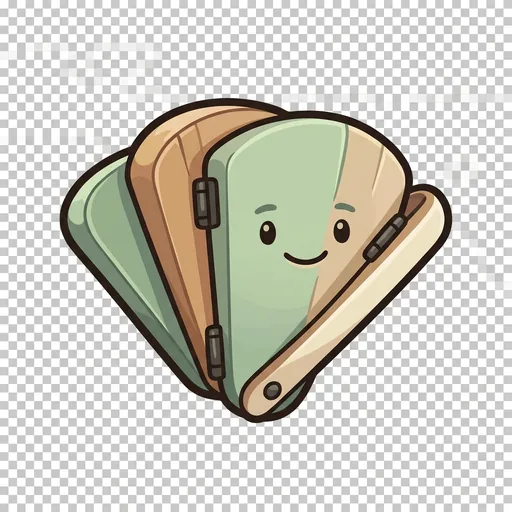
Hinge
The line break — folding-door creature who holds a small pause at the end of each line; the end of a line is a little stage, so end on a word that earns it
-
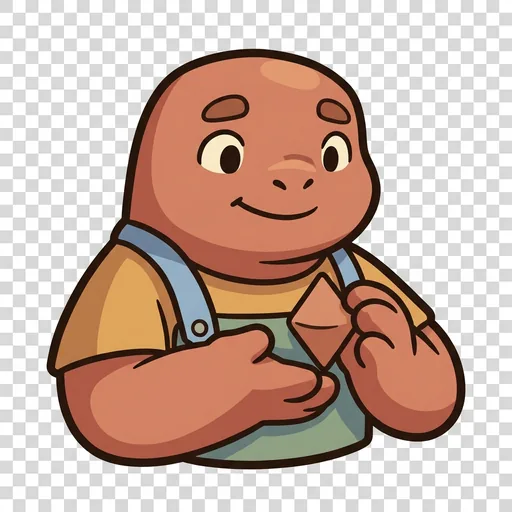
Mold
Shape on the page — clay-colored creature who builds a poem's silhouette (a cinquain's 2-4-6-8-2 diamond); shape is meaning you can see from across the room
-
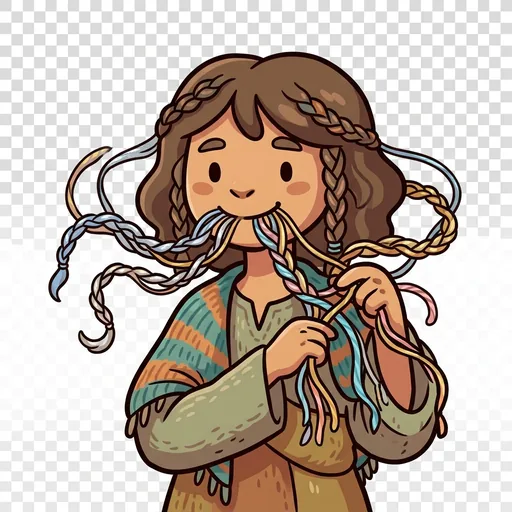
Braid
Sound texture — nimble creature who weaves repeated sounds through a line (alliteration + assonance); enough echo makes music, too much makes a tongue-twister knot