
Object Otto
OBJECT — the receiver of the verb's action. Direct object (*the dog chased the ball*: ball receives the chase). Indirect object (*she gave him a book*: him is the indirect receiver, book is the direct).
Press play to listen along. The line being read lights up as you go.
Show full transcript
Loading transcript…

Object Otto is Sentence-Town's public-affairs liaison. He's the town's official receiver.
He has a very important job in Sentence-Town. The Mayor (that's the subject) decides things. The Chief of Operations (that's the verb) makes them happen. Otto's job is to make sure someone or something gets what's happening.
If the Mayor decides to send something, Otto handles what gets sent. That's the direct object. He also handles who gets it. That's the indirect object. If the Chief of Operations makes something, Otto manages what was made. Otto is like the town's official receiver. He makes sure things land where they should.
His name is Otto. It's always been Otto. Even the GrammarForge academy didn't change it. It just fit him perfectly. Otto grew up in a family of postal clerks. His mom and dad worked at the post office. It was in a town called Receiving Hollow. Yes, that's its real name! Mail carriers used to drop their bags there. The name just stuck. Otto watched mail come and go every day.
What he noticed, from age four, was simple. Every letter had a sender and a receiver. The sender wrote the letter. The post office delivered it. The receiver got it. Three main parts were always there. The sender (that's like the subject). The delivering (that's the verb). And the receiver (that's the *object*).

No receiver? The letter had nowhere to go. No sender? No letter at all. No delivering? The letter just sat there. All three parts were needed.
Otto saw this pattern everywhere. He thought about it for years. Every gift had a giver and a receiver. Every talk had a speaker and a listener. Every choice had someone who decided. And someone who was affected. The world was full of receiving parties. By the time he was a teenager, Otto really paid attention. He always looked at the receiving side of things.
When Otto was eighteen, he went to school. He learned about formal grammar there. His teacher explained something. "The direct object is the noun that gets the verb's action," she said. "Like in The dog chased the ball. Ball is the direct object. It's what the dog chased."
Otto raised his hand. He said: "Like a letter and its recipient."
The teacher smiled. "Yes, exactly!" she said. "The verb is the action. The direct object gets that action. They go together."
Otto asked another question. "What if an action has a second receiver?" he wondered. "Someone the action goes through? But isn't the main receiver?"
The teacher said: "What do you mean?"
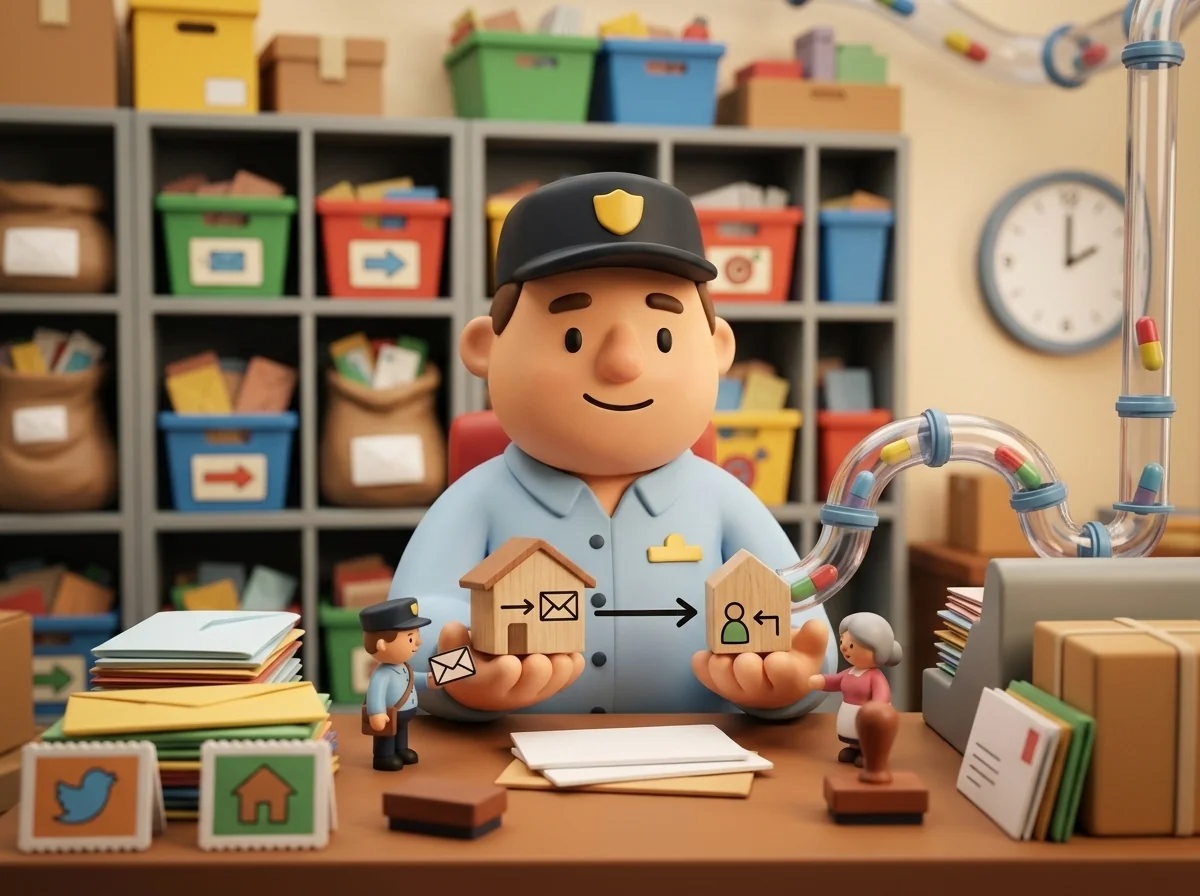
Otto gave an example. "The postman gave Mrs. Hudd a letter," he said. "The letter is the direct object. It's what was given. But Mrs. Hudd gets something too. She's the indirect receiver."
The teacher's eyes widened. "Yes, that's totally right!" she said. "Mrs. Hudd is the indirect object. English has direct objects. That's the thing acted on. It also has indirect objects. That's the person who gets the action. Like when you give or send something. You figured out indirect objects. All from watching the mail!"
Otto felt so happy. He never knew this was a "concept." He just thought it was how letters worked. His teacher showed him something. Grammar was just a fancy way to explain the mail system.
When Otto was twenty-one, he went to GrammarForge academy. He carried a big notebook. In it, he had sorted a thousand sentences. He grouped them by their *object structure. Some had direct objects. These were transitive. Some had no objects. These were intransitive. Some had two objects. Those were ditransitive. A direct and an indirect object*.
The academy master, Clause, was used to smart students. They often brought huge notebooks. Clause read Otto's notebook. He read it for thirty minutes. Then he gave Otto the public-affairs job. Right away!
Otto has been Object Otto for seventeen years.
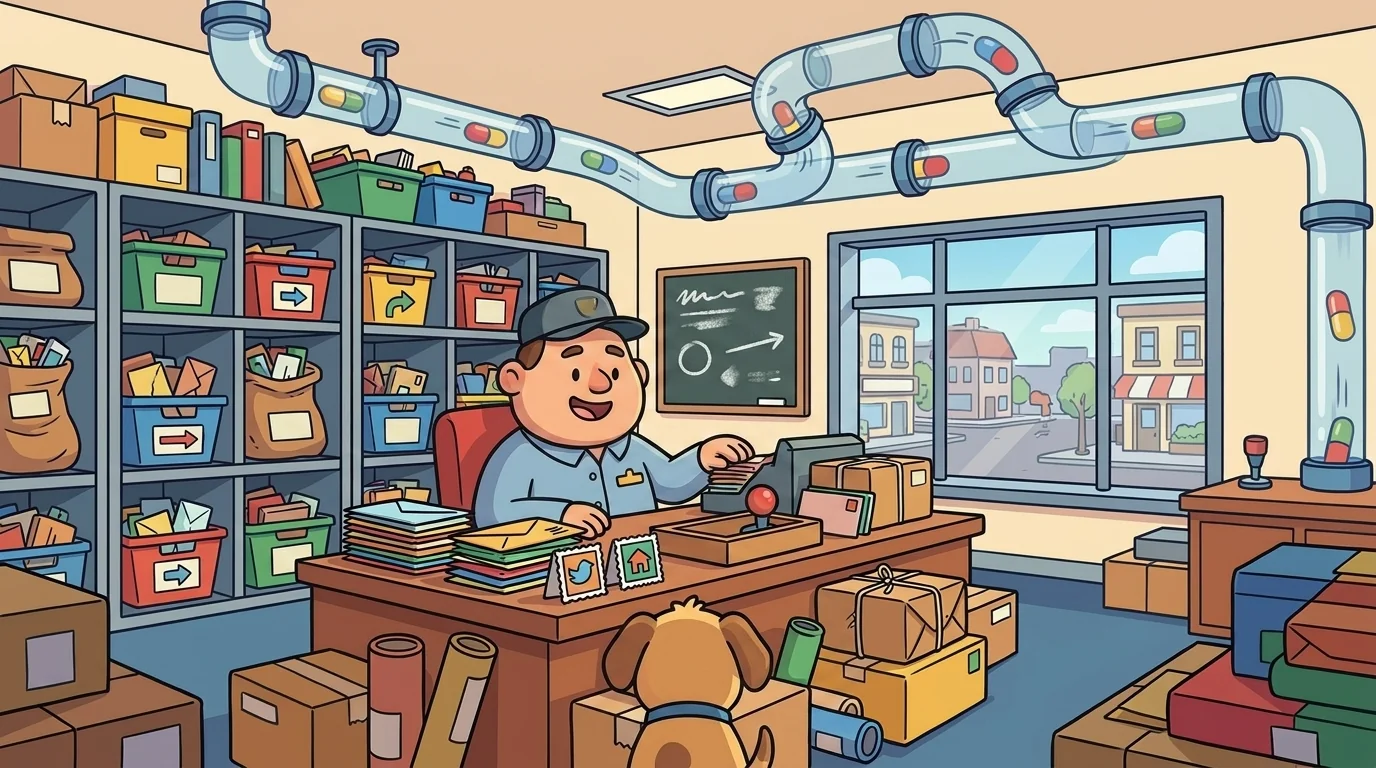
Otto has his own office. It's in the Town Hall building. He has a small front desk there. This is where he greets *objects. Direct and indirect objects* "arrive" at his desk. He starts every first lesson the same way.
He sits at his desk. On it is a small wooden mail-tray. "I am Object Otto," he says. "I handle the receiving side of every sentence. The Mayor decides. The Chief of Operations acts. Then someone or something receives it. I make sure that receiver is all set."
He shows them how it works. He writes on the board:
"The dog chased the ball."
He points at the ball. "This is the direct *object," he explains. "The ball is what gets chased. The direct object receives the action. If there was no direct object*, 'chased' would be confusing. 'The dog chased' wouldn't make sense."
Next, he writes:
"She gave him a book."

"This sentence has two *objects," he says. "A book is the direct object. It's what was given. Him is the indirect object. He's the one who got the book. We use indirect objects for actions like giving. Or sending, telling, showing. The direct object is the thing. The indirect object is the person* who gets it. They work as a team."
Then he writes:
"The dog slept."
"This sentence has no object*," he says. "Slept is an intransitive verb. It doesn't need an object. The dog is just sleeping. No one receives anything. Not all verbs need an object*. Some verbs are fine with just a subject and verb. For these sentences, my desk is quietly empty."
The kids always get it after this. They used to think every sentence needed all three parts. Subject, verb, and *object. Otto explains that some verbs need objects. These are transitive verbs. Some verbs don't need objects. These are intransitive verbs. And some verbs take two objects. Those are ditransitive verbs. Whether a verb has an object* or not is just how that verb works.
Kids often ask if *objects are hard to find. Otto always gives the same answer. "They are not hard," he says. "They are the receiver. Just ask: Who or what gets the verb's action? If you get an answer, that's the direct object. If someone also gets the action, that's the indirect object*. If no one gets anything, the verb is intransitive. My job is always clear. I manage the receiving side."
He still keeps that small wooden mail-tray. It sits right on his desk. Kids sometimes ask to put a token in it. He has a basket of tokens nearby. They put one in when they find an *object. He always lets them. The tray is very full of tokens. It shows how many objects* they've found!
The GrammarForge ensemble
Object Otto is part of GrammarForge's distributed-narrative cast. Each character embodies a different curricular primitive; together they teach the full subject.
-

Mayor Subject
Subject (noun/pronoun performing the action)
-

Verb Verity
Verb (action / state of being)
-

Modifier Mike
Adverb (modifies verb / adjective / other adverb)
-

Modifier Madge
Adjective (modifies noun / pronoun)
-

Connector Chen
Conjunction (coordinating / subordinating — *and*, *but*, *because*, *although*)
-

Pronoun Perry
Pronoun (substitute for noun — *he*, *she*, *they*, *it*, *who*)
-

Article Anne
Article (*a*, *an*, *the* — definite vs. indefinite)
-

Preposition Pat
Preposition (spatial / temporal relations — *on*, *under*, *between*, *before*)
-

Clause-Chief Carla
Clause-types (independent / dependent / subordinate / relative)
-

Punctuator Polly
Punctuation guardian (commas, semicolons, apostrophes, colons, dashes)
-

Agreement Ada
Subject-verb agreement (singular subject → singular verb; plural subject → plural verb; tricky cases — collective nouns, *either/or*, indefinite pronouns)