Twin
ANALOGY — *X:Y::A:B. parallel structure. relationship mapped across pairs.*
Press play to listen along. The line being read lights up as you go.
Show full transcript
Loading transcript…
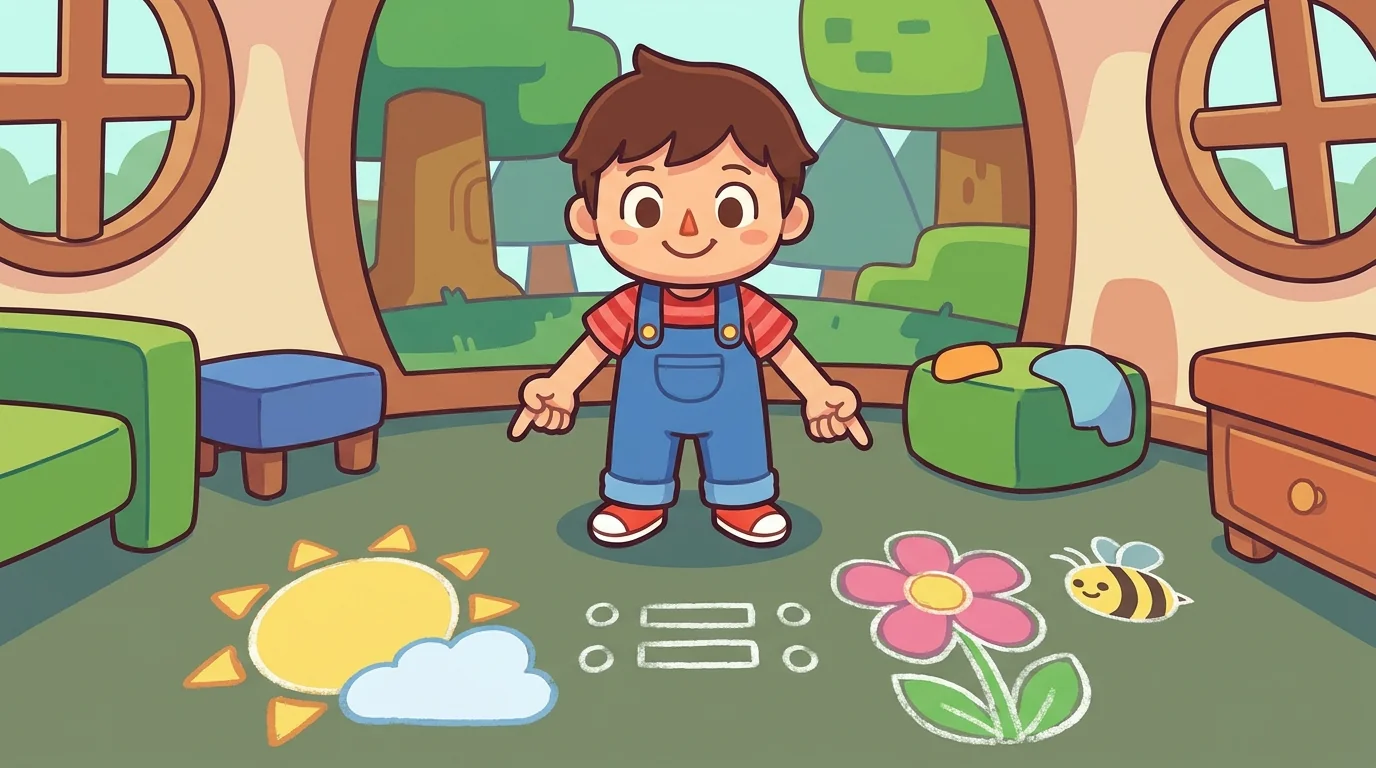
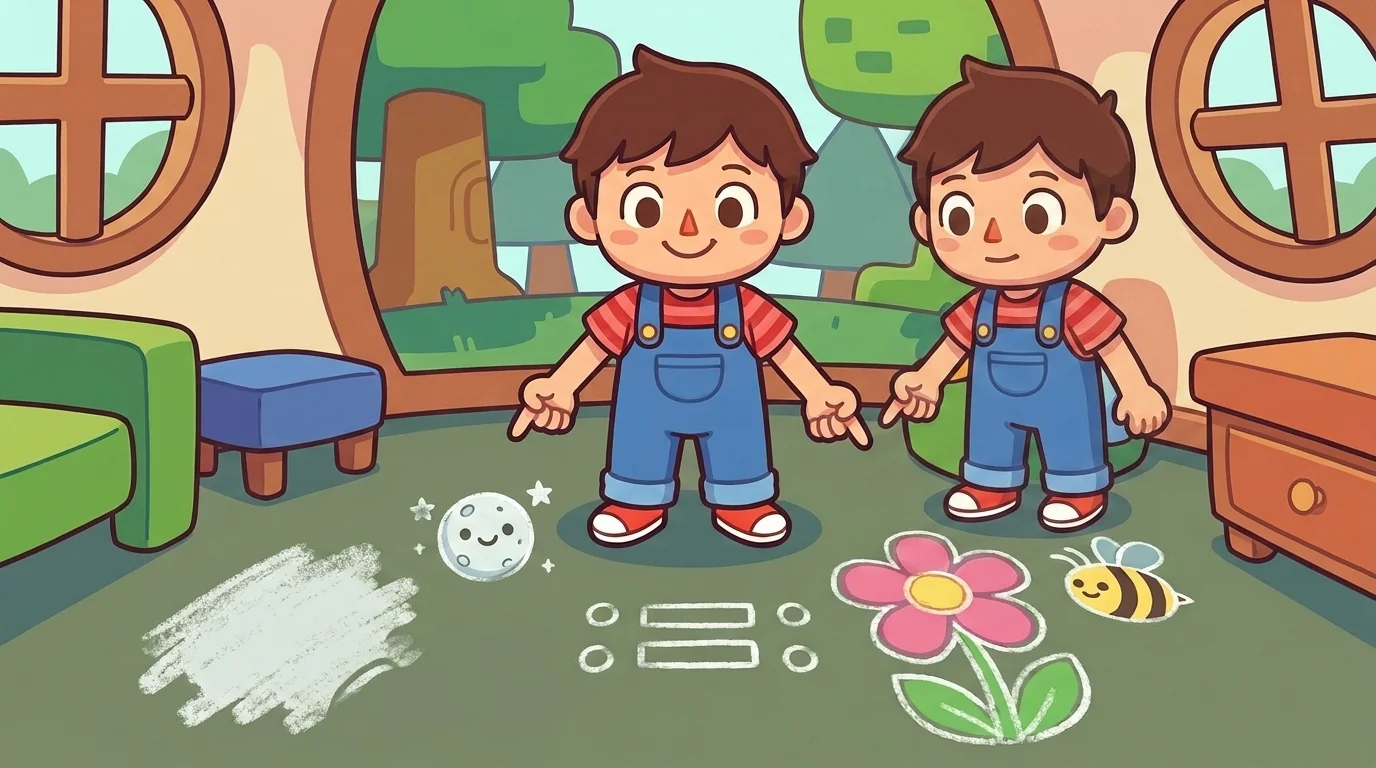
Twin arrived in the workshop like a perfectly rehearsed act. Two finch-tweens, no older than twelve, stepped in unison. One wore warm amber feathers with a cream belly. The other, an exact mirror, had a cream back and an amber belly. They moved as one, their tiny feet hitting the floor at the same instant. Even their heads tilted at the same angle, as if controlled by a single, invisible string. They were *Twin*, two characters acting as one primitive.
They were two-but-one, always curious about how things fit together. They loved to find patterns, especially those that matched. Their favorite phrase, spoken in perfect chorus, was: "X is to Y as A is to B." This wasn't just a saying; it was the key to understanding them. Their mirrored colors and synchronized movements weren't just for show. They were a physical example of how two different things could share the exact same structure.
When Twin taught, they didn't just talk about the lesson. They became the lesson. One finch would sing a phrase, and the other would answer with a mirrored version. This wasn't just a trick; it was their way of showing *analogy*.
Most people thought analogy was just another word for metaphor or simile. But Twin knew better. They knew the difference was crucial. A metaphor might say, "The moon is a pearl." A simile might say, "The moon is like a pearl." Both compare two objects. But an *analogy compares relationships*.
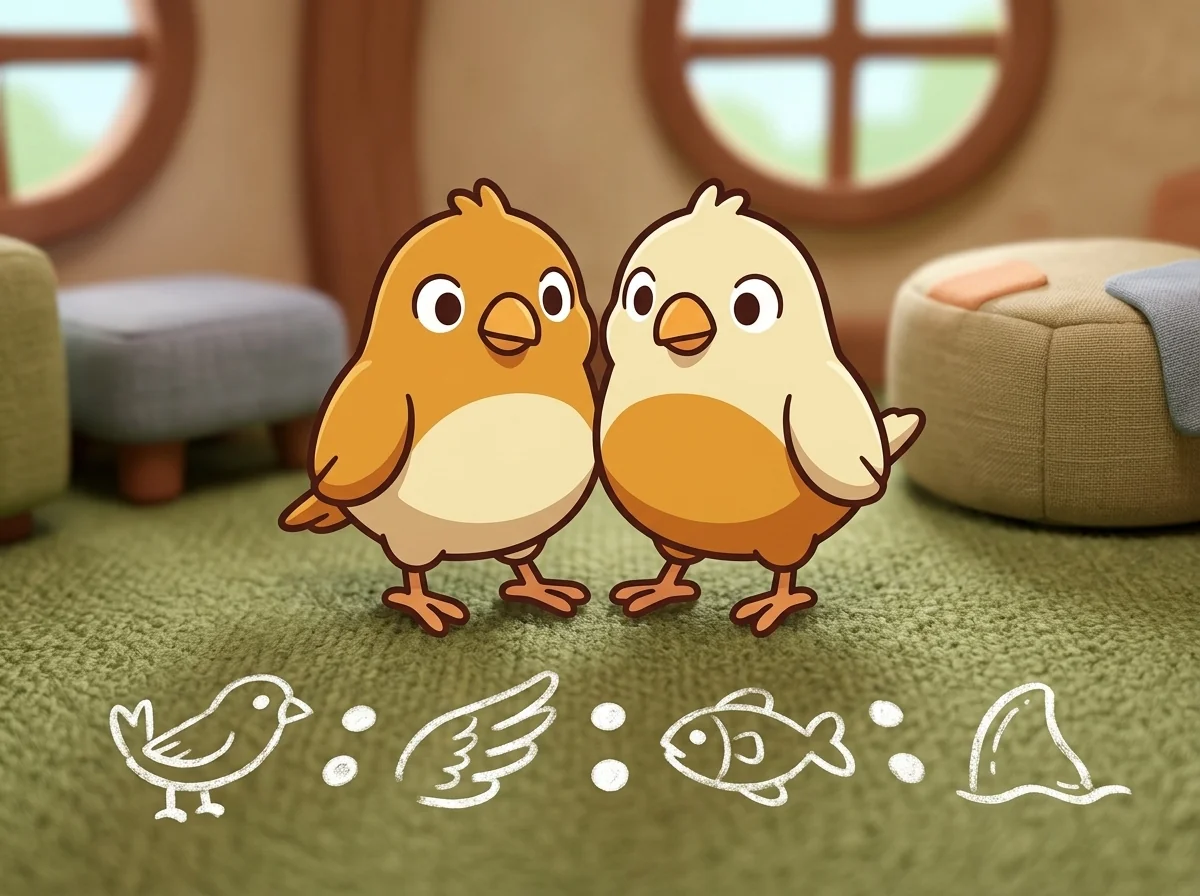
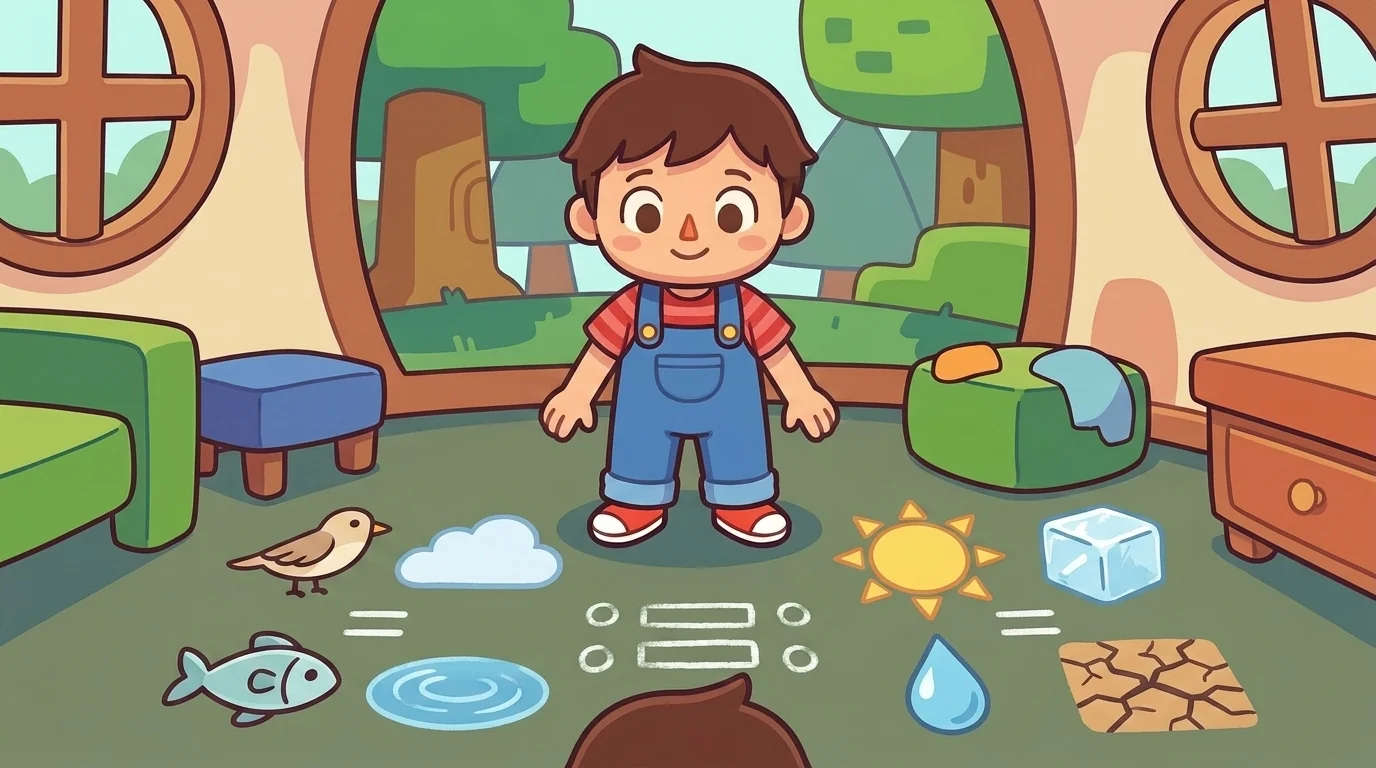
"Think of it this way," Twin chirped, one finch starting, the other finishing the sentence. "Bird is to sky as fish is to water."
They paused, letting the words hang in the air. "The relationship between the bird and the sky is 'lives in and moves through.' The relationship between the fish and the water is also 'lives in and moves through.' See?" They gestured with a synchronized flutter of wings. "We're not saying a bird is a fish. We're mapping the relationship."
This kind of thinking showed up everywhere. You could find analogies in tricky standardized tests, where they wanted to see if you could spot the hidden connections. Scientists used them to explain complex ideas. Lawyers built arguments with them. Twin's whole purpose was to make this parallel structure visible. They wanted everyone to see how relationships could be mapped, not just objects.
"X is to Y as A is to B," Twin repeated, their voices a single, clear chime. "This is a parallel structure. It maps a relationship across pairs. Hot is to cold as wet is to dry. The teacher is to the student as the doctor is to the patient. Always pairs. Always relationships. Always mappings."
Twin had a careful method for teaching *analogy*.
First, they showed the form. "X:Y::A:B," they wrote on a small whiteboard, one finch holding the marker, the other guiding its hand. "You read it as 'X is to Y as A is to B.' Sometimes you'll see the colons, sometimes a full sentence."
Next, they explained what's mapped. "It's not the individual objects," they chirped. "Not X, Y, A, or B alone. It's the relationship between X and Y that maps to the relationship between A and B." They drew a line connecting X and Y, then another connecting A and B, then an arrow between the two lines.
Then came the detective approach. "Look for two pairs," they instructed. "Two pairs where the same relationship holds true. Or, just look for that 'X is to Y as A is to B' structure."
They offered types of relationships to look for. "Is it part-to-whole? Like a finger to a hand? Or cause-to-effect? Like rain to puddle? Maybe function-to-tool? Like a painter to a brush? There are many possibilities." They listed a few more, their voices a soft, rhythmic chant.
They also showed how to use analogy in argument. "The economy is to a country as health is to a body," Twin stated. "Both need careful attention. See how that makes a point about countries?" It was a powerful way to persuade.
Finally, they explained how this connected to other subjects. "Analogical reasoning," they said, using a slightly more formal tone, "is part of how we prove things in math and science. Our 'parallel relationships' idea supports the way they work to prove things."
Twin grew up in the songbird village, a place where finches sang in pairs. Their family had been the village's official song-pair-singers for generations. Their songs always followed a parallel structure: one bird sang a phrase, and the other answered with a mirrored phrase. They learned, over many years, that "the parallel structure is the song." Twin carried that lesson forward.
When they arrived at FigureForge at twelve, Trope, the mentor, had asked a simple question. "What is analogy?"
Twin, in perfect chorus, answered without hesitation. "X is to Y as A is to B. Parallel structure. Relationship mapped across pairs. The mapping is the relationship, not the objects."
Trope smiled. "You are appointed," he said.
In their workshop, the two Twins often gave live demonstrations. One would face left, the other right. Then, both would raise their right wings. "See?" they chirped. "Mirror. Same pattern, different positions. That's *analogy*."
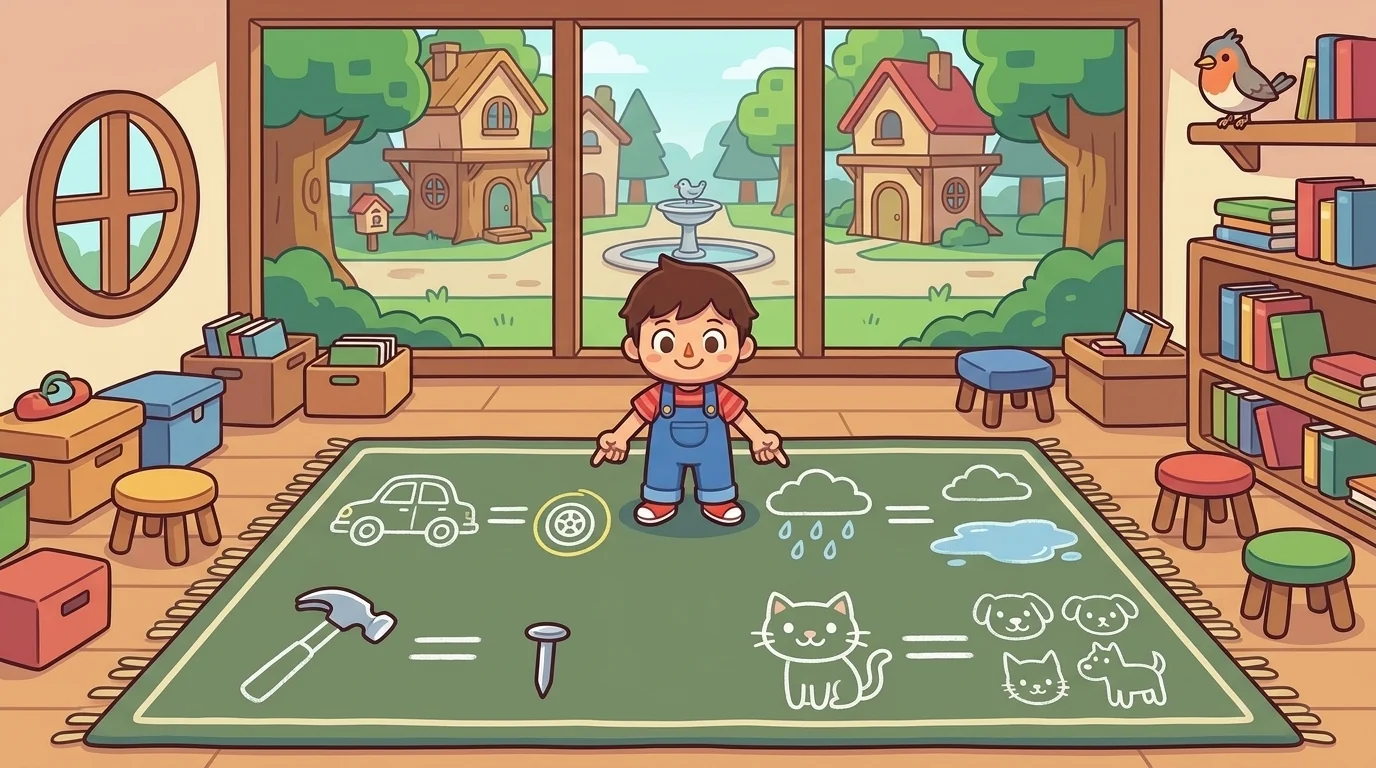
They sat down at two parallel chairs. "Cat is to kitten as dog is to puppy," one finch began. The other finished, "The relationship – adult-to-juvenile – is the same. The animals themselves differ."
They wrote on a board: "Doctor:patient :: teacher:student." Then, in chorus, they explained, "Both relationships show a care-giver and a recipient. Different domains, but the same structure."
They turned to face their audience. "We are Twin. The primitive we teach is *analogy*. The move is to map a relationship, not just objects. When you see X:Y::A:B and the relationships match, you've found us."
They were gentle teachers. "Don't get confused by the analogies you see on standardized tests," they advised, their voices soft and reassuring. "They're just testing if you can identify the relationship. Look at the first pair. Name the relationship in your head. Then, check which of the options has the same relationship. That's the trick."
Twin saw in twos. Twin thought in pairs. Parallel was the whole form.
The FigureForge ensemble
Twin is part of FigureForge's distributed-narrative cast. Each character embodies a different curricular primitive; together they teach the full subject.
-

Ferry
Metaphor — 'X IS Y' direct comparison; carries meaning across
-

Ripple
Simile — 'X is LIKE Y' softer comparison
-

Knot
Idiom — fixed expressions whose meaning isn't literal
-

Hum
Personification — non-human takes on human qualities
-

Mask
Hyperbole + understatement + irony cluster — say one thing, mean another
-

Clang
Onomatopoeia — copper bell-creature whose words carry the noise they name (buzz, splash, crash); the word reaches past the eyes and touches the ears
-

Chain
Alliteration — living-chain creature whose links lock when words share a first sound (big blue balloon); a little is catchy, too much is a tongue-knot
-

Token
Symbolism — quiet creature with a many-pocketed cloak of small objects that stand for big ideas (a dove = peace); shows the meaning instead of saying it
-

Twain
Oxymoron — two-toned creature (one half warm, one half cool) who places two opposite words side by side (bittersweet); the clash says something truer than either alone