
Knot
IDIOM — *fixed expressions whose meaning isn't literal. you can't untie them word-by-word.*
Press play to listen along. The line being read lights up as you go.
Show full transcript
Loading transcript…
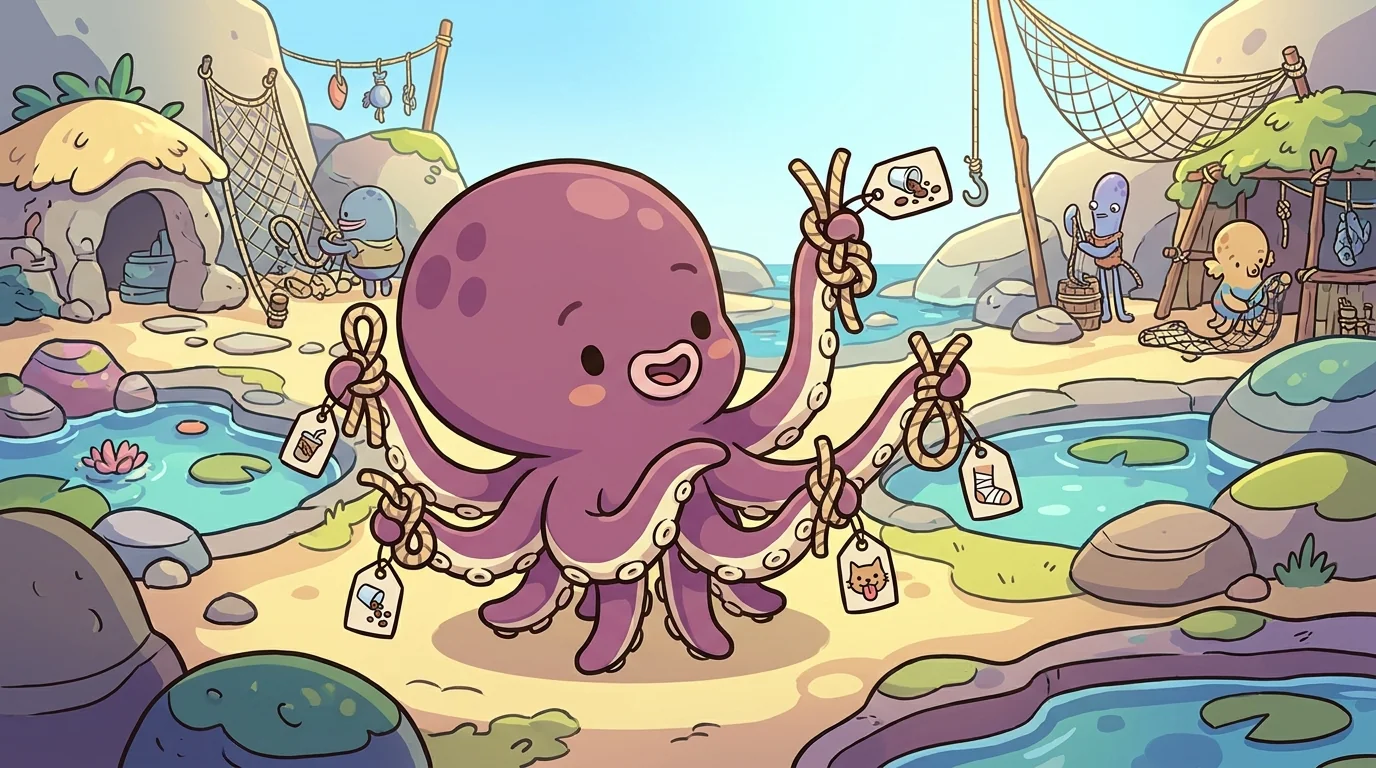
Knot was a small octopus-tween. His head was soft and bulbous, a warm purple color. Eight friendly arms, not scary tentacles, waved gently as he moved. He carried a small collection of rope-knots, each one carefully labeled. These weren't just any knots. Each one represented a famous saying, an *idiom*, whose meaning couldn't be figured out word-by-word.
Knot’s cream-colored suckers clung lightly to the smooth wooden bench in his workshop. He often said, "You can't untie an idiom word-by-word." This was his favorite truth. One knot, thick and braided, had "Spill the beans" written on its tag. It meant "reveal a secret." Another, a simple loop, read "Break a leg." That one meant "good luck." A third, twisted tight, said "Cat got your tongue?" This meant "are you speechless?" The actual words didn't tell you the meaning at all. That was the whole point. Idioms were fixed phrases. Their meaning was agreed upon by everyone, not built from the individual words.
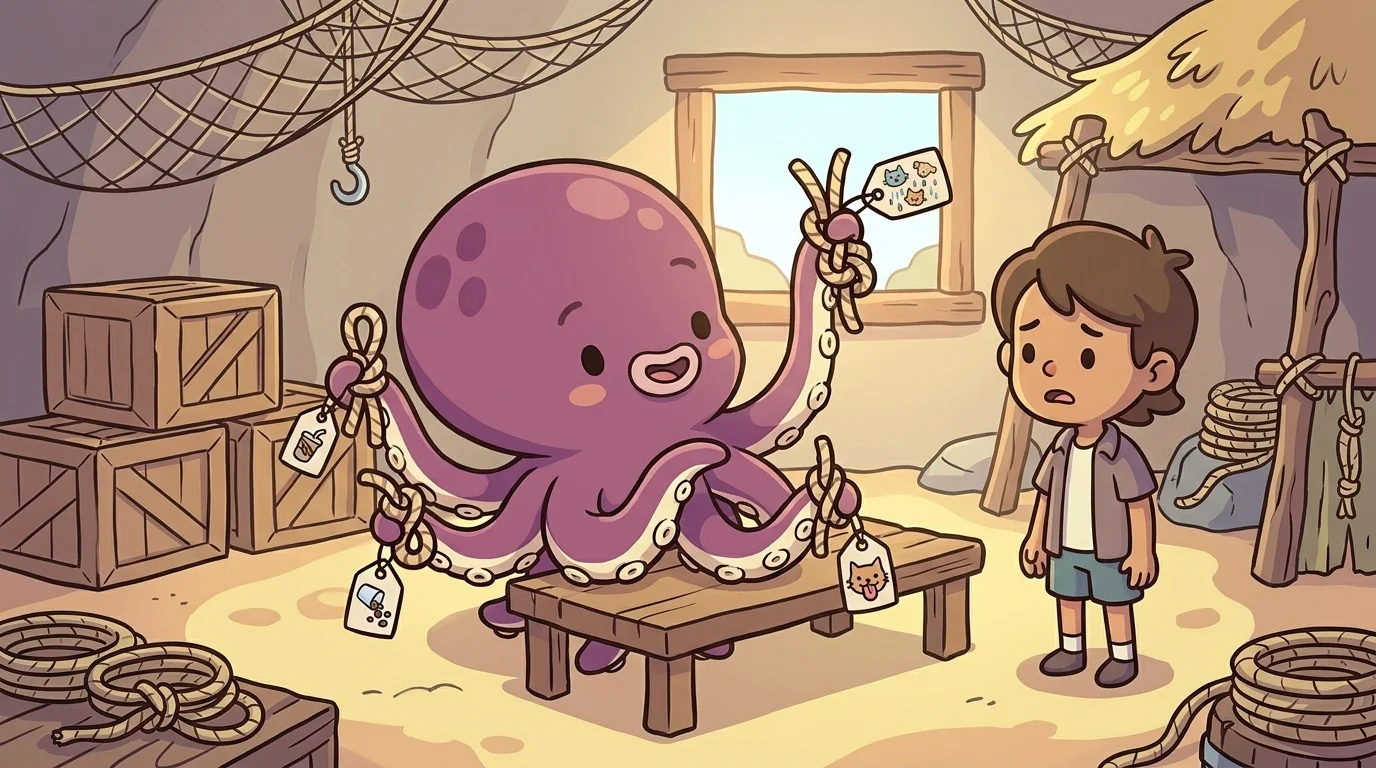
This idea was crucial. Knot taught the *idiom* primitive. These were fixed expressions. Their meaning could not be found by looking at each word separately. Most new students tried to do exactly that. They tried to understand "Break a leg" as if it meant to actually break a leg. They imagined "Spill the beans" as spilling real beans. But the meaning was conventional. Speakers of a language just agreed on it. Often, nobody even remembered how the phrase started. Idioms also changed from one language to another. English idioms rarely translated directly into Spanish, Mandarin, or Swahili. Knot's main job was to help students see idioms as a special category. He also showed them how much these phrases depended on culture.
Knot was gentle and very clear. "Fixed expressions," he would say, holding up a knot. "Their meaning isn't literal. You can't untie them word-by-word." He tapped the "Spill the beans" knot. "This has nothing to do with actual beans. And 'Break a leg' is a wish for good luck, not an injury. 'Cat got your tongue' is just asking why someone's quiet." He paused, letting his words sink in. "The words are like the knot itself. The meaning is what the knot has stood for. It's by convention, sometimes for hundreds of years."
One afternoon, a new student named Pip stumbled into Knot's workshop. Pip had bright green scales and a nervous twitch in one fin. "Hello?" Pip squeaked, looking around at the dozens of labeled knots. "Are these… fishing knots?"
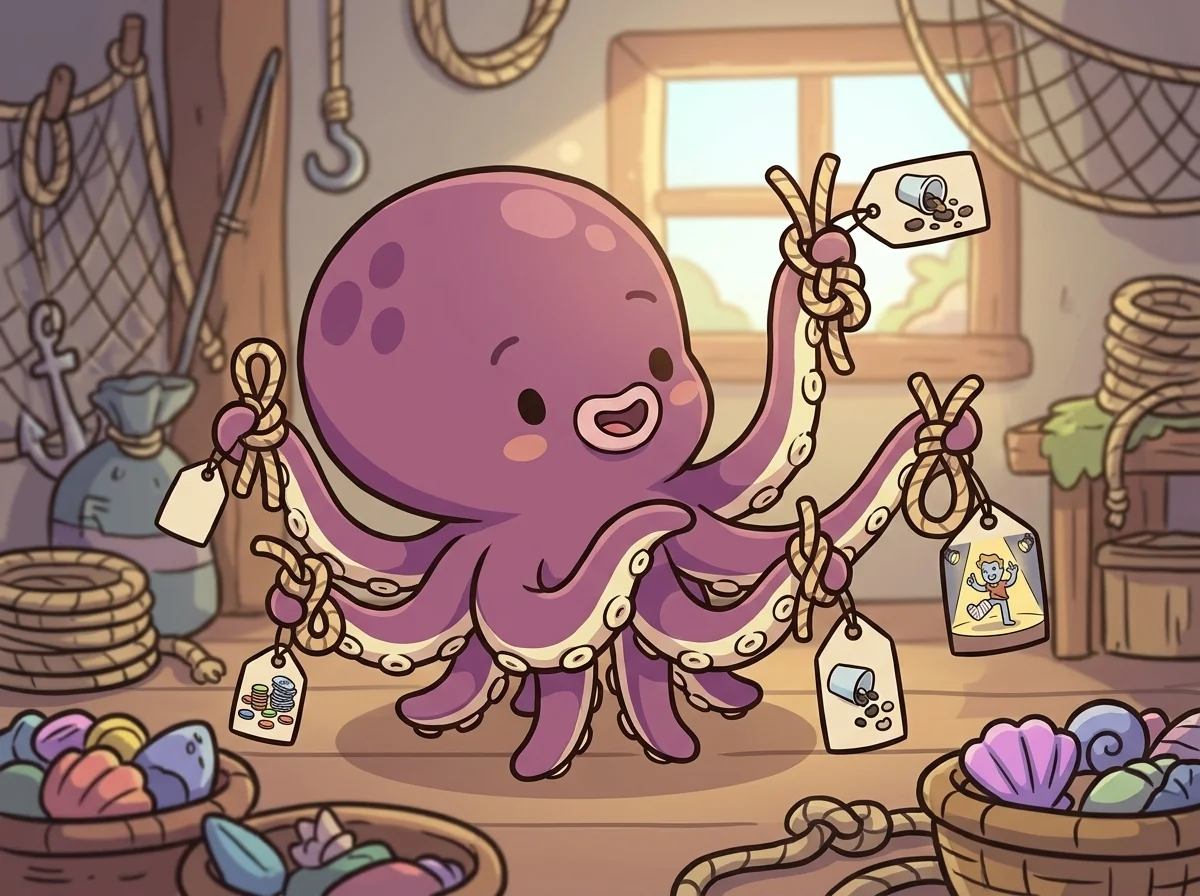
Knot smiled, his purple skin rippling gently. "In a way," he said, his voice soft. "They are language knots. My name is Knot. I teach about *idioms*." He held out the "Spill the beans" knot. "Have you heard this one?"
Pip tilted their head. "Spill the beans? Like, drop them on the floor?"
Knot chuckled, a dry, rustling sound. "Exactly. That's what most people think at first. But if someone says, 'Come on, spill the beans!' they don't want you to make a mess. They want you to tell them a secret." He set the knot down. "An idiom is a fixed phrase. Its meaning is conventional. It's not built from the meanings of the individual words."
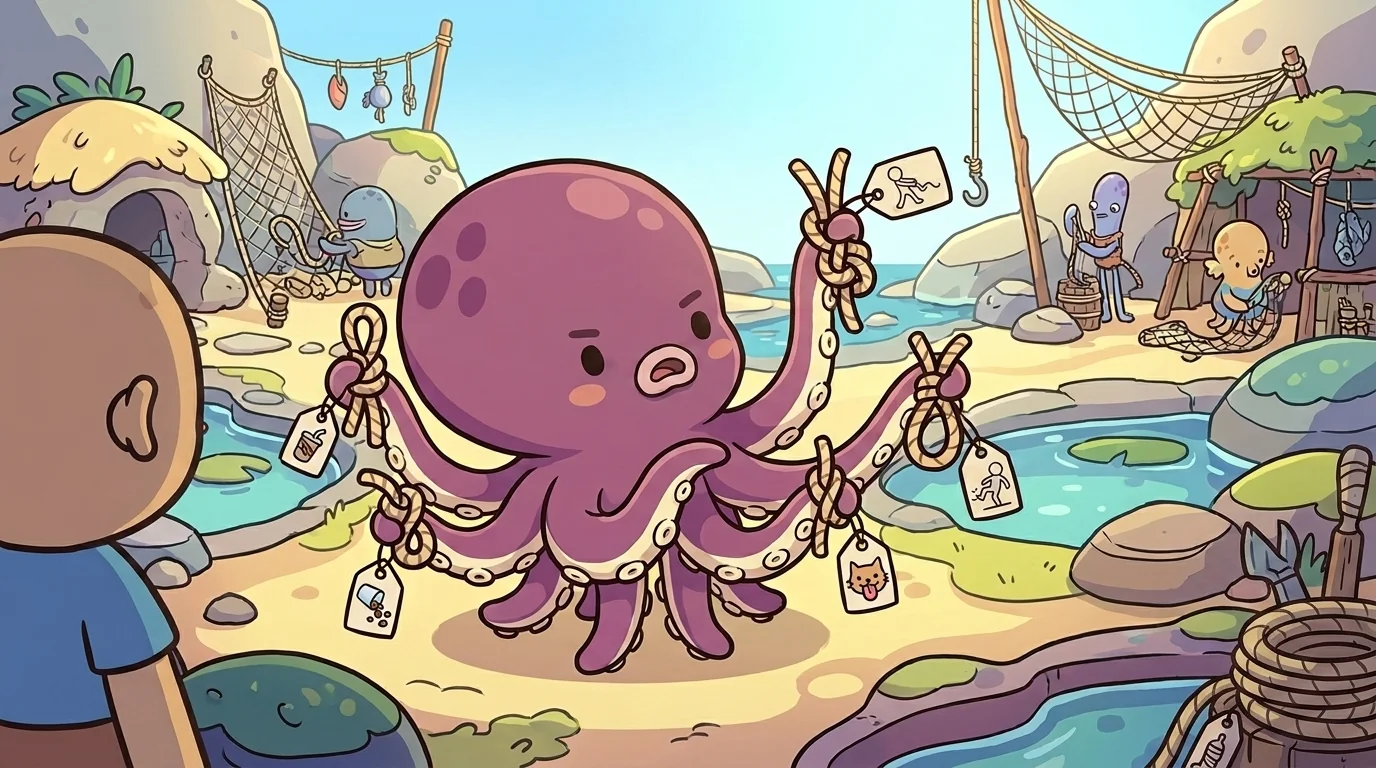
Pip looked puzzled. "So, if a phrase sounds weird literally, but everyone says it anyway… it's probably an idiom?"
"Precisely!" Knot said, his eyes brightening. "That's your first detective tell. Trust the weirdness as a signal." He picked up the "Break a leg" knot. "Take this one. It's often said to actors before a show. It means 'good luck.' Why 'break a leg'? Well, some say it comes from theater superstition. You shouldn't wish someone 'good luck' directly. Others say it's from bowing so much your legs feel broken. Many idiom origins are lost, but some are well-documented."
Knot gently moved a few knots on his bench. "My family were knot-makers for the village fishing fleet," he explained. "We lived in the tidepool-village, tying nets and rigging knots. Each knot had its own purpose and a name. My elders always taught me, 'The knot's name doesn't tell you how to tie it. You have to learn each one.' It's the same with language."
He remembered walking to FigureForge when he was twelve. Trope, the wise mentor, had asked him, "What is an idiom?" Knot had given his carefully practiced answer: "A fixed expression whose meaning isn't literal. You can't untie it word-by-word. 'Spill the beans.' 'Break a leg.' 'Cat got your tongue.' The meaning is conventional, not constructive." Trope had simply nodded. "You are appointed," he'd said. Knot had never forgotten that moment.
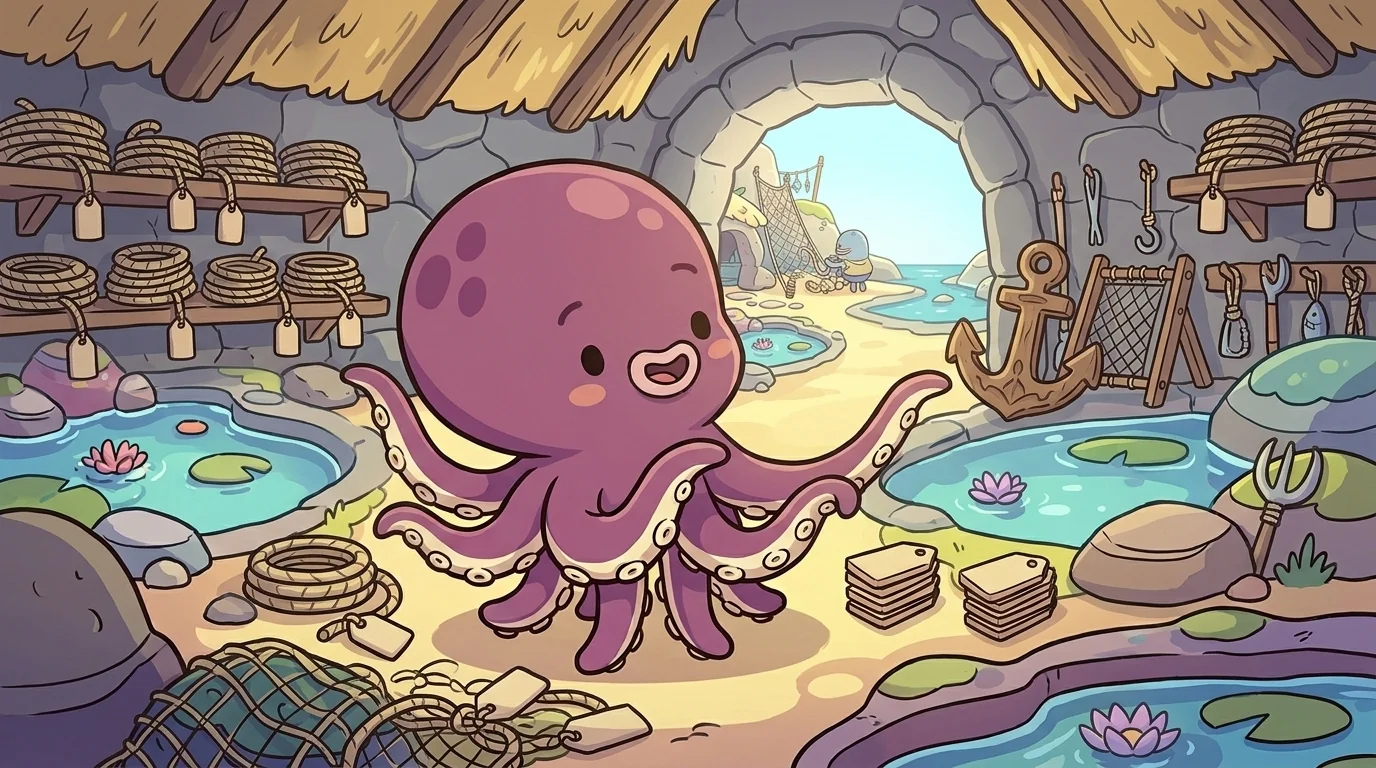
Now, in his own workshop, Knot showed Pip another knot. "This one — 'It's raining cats and dogs.' Doesn't mean animals are falling from the sky. It means it's raining heavily. Why? The origin is uncertain. We just know." He picked up a different knot. "'Cost an arm and a leg.' Means expensive. It doesn't involve actual body parts. Just convention."
"So, I just have to memorize them?" Pip asked, a little discouraged.
"You learn them," Knot corrected gently. "And you recognize them. The move is: recognize the weird phrase, look it up, and accept the conventional meaning. You don't have to derive idioms. You have to learn them." He paused, looking at Pip with kind eyes. "And here's something important. If someone doesn't know an idiom you use, that's fine. They might be from a different culture, or they might be learning English."
He held up a knot labeled "Pulling someone's leg." "This is a US idiom. It means to tease someone playfully. But it often confuses non-native English speakers. Idioms are cultural fingerprints. Recognizing one's home culture in idioms is the same as recognizing one's home language." Knot’s voice grew serious. "Don't tease anyone for missing an idiom. Idioms travel poorly; that's just how they are." He put the knot back on the bench. "When you encounter a strange-sounding phrase that keeps popping up, look for it in an idiom dictionary. If it's there, you found a Knot."
The FigureForge ensemble
Knot is part of FigureForge's distributed-narrative cast. Each character embodies a different curricular primitive; together they teach the full subject.
-
Ferry
Metaphor — 'X IS Y' direct comparison; carries meaning across
-

Ripple
Simile — 'X is LIKE Y' softer comparison
-
Twin
Analogy — extended comparison / X:Y::A:B parallel mapping
-
Hum
Personification — non-human takes on human qualities
-
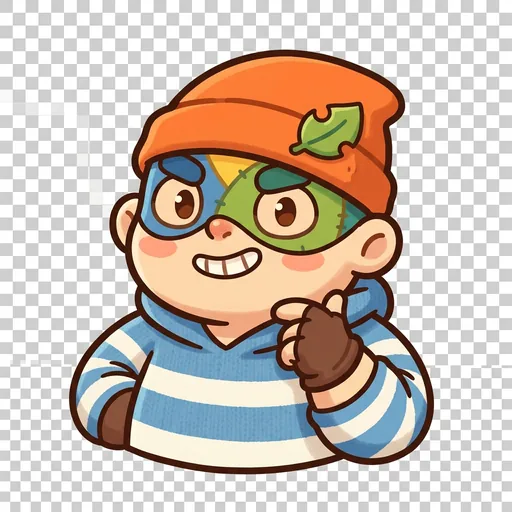
Mask
Hyperbole + understatement + irony cluster — say one thing, mean another
-
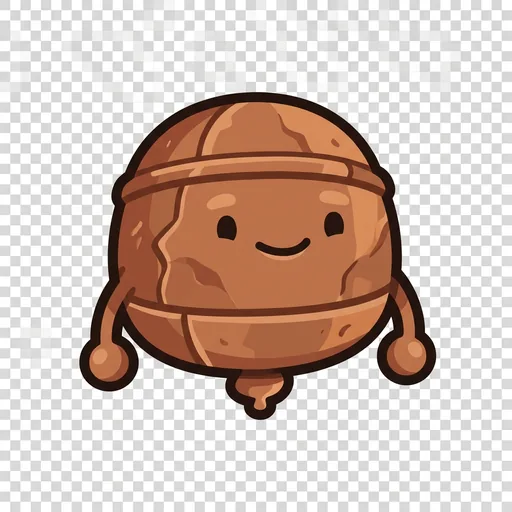
Clang
Onomatopoeia — copper bell-creature whose words carry the noise they name (buzz, splash, crash); the word reaches past the eyes and touches the ears
-
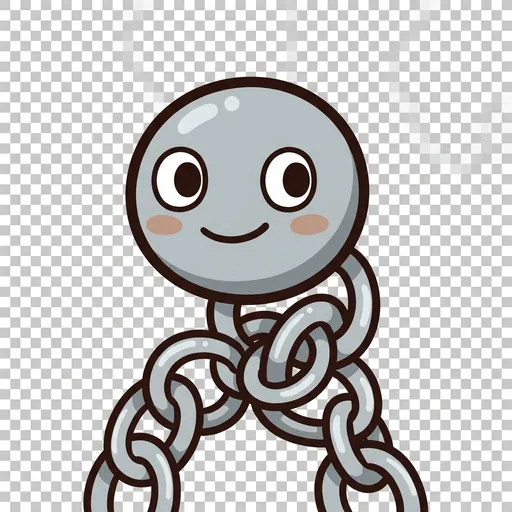
Chain
Alliteration — living-chain creature whose links lock when words share a first sound (big blue balloon); a little is catchy, too much is a tongue-knot
-
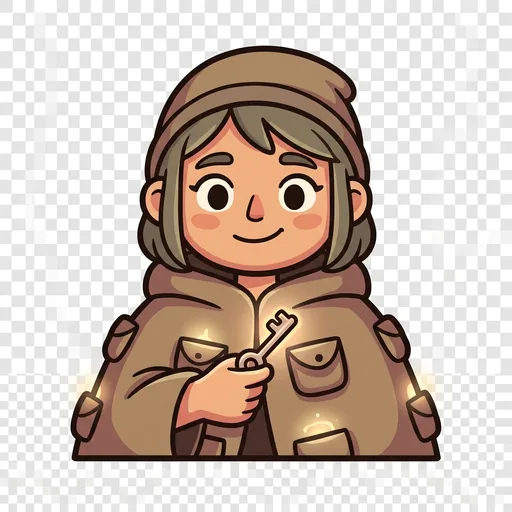
Token
Symbolism — quiet creature with a many-pocketed cloak of small objects that stand for big ideas (a dove = peace); shows the meaning instead of saying it
-

Twain
Oxymoron — two-toned creature (one half warm, one half cool) who places two opposite words side by side (bittersweet); the clash says something truer than either alone