
Hum
PERSONIFICATION — *non-human things take on human qualities. the wind whispers. the sea is angry. that's hum.*
Press play to listen along. The line being read lights up as you go.
Show full transcript
Loading transcript…
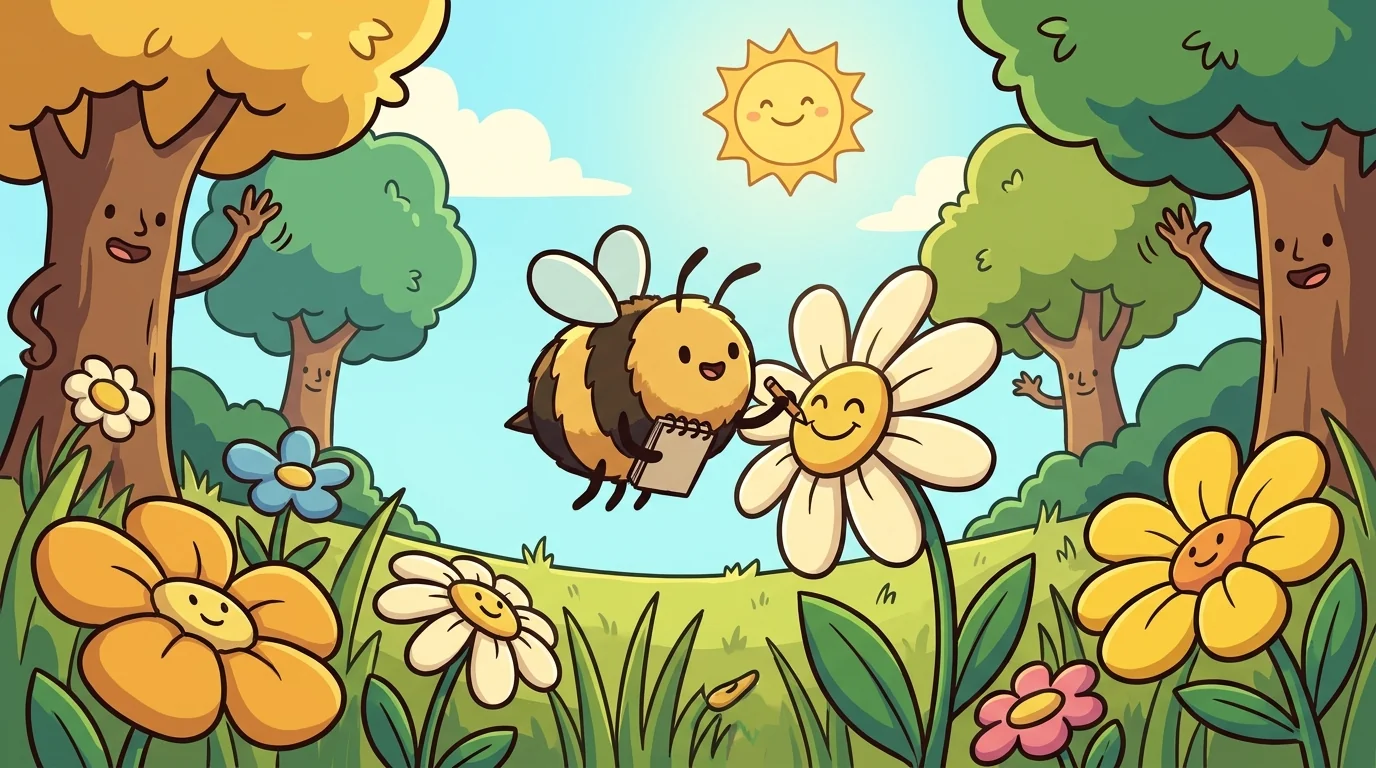
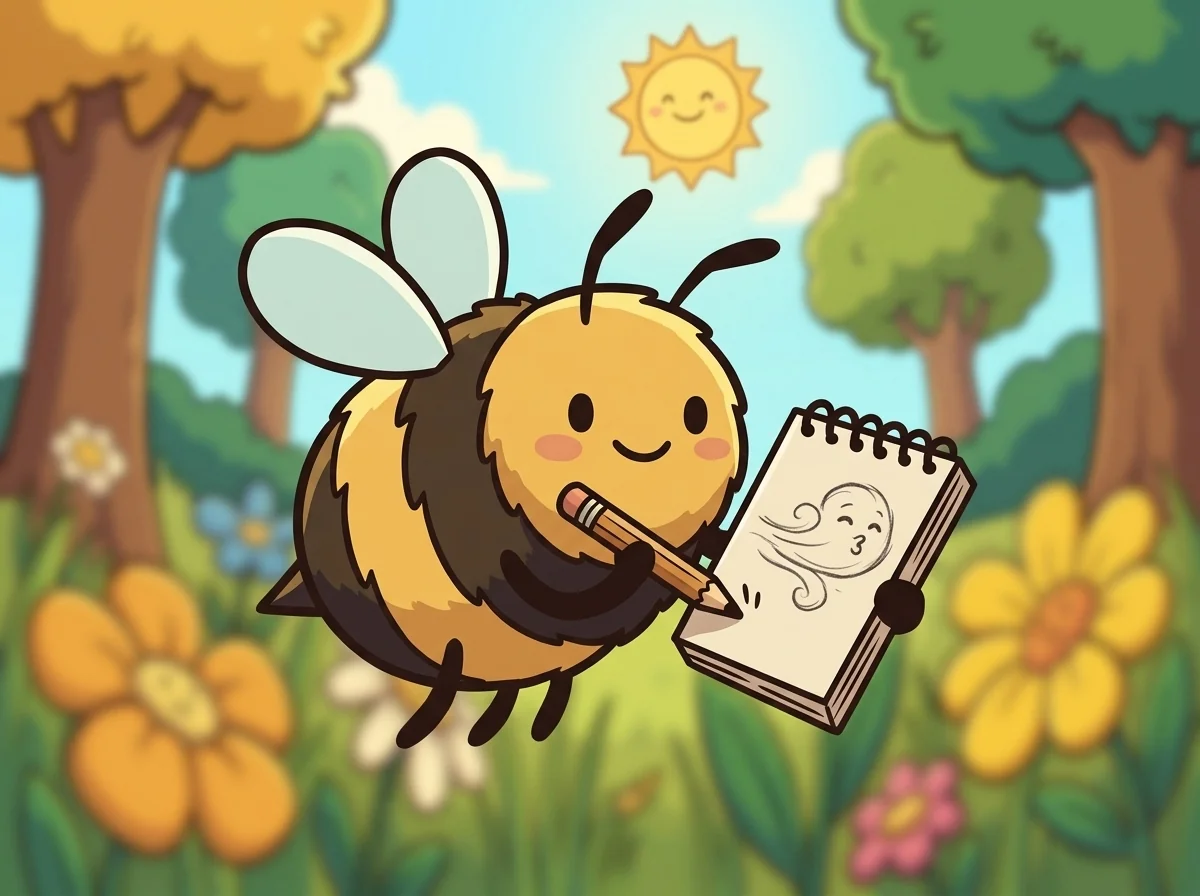
Hum was a small bumblebee, all plush-soft stripes of warm gold and black. He didn't have a stinger, not really. Instead, he carried a small drawing-pad everywhere, ready to sketch. He loved to capture non-human things wearing human expressions. A puffed-cheeked wind, a sea with a furrowed brow, a smiling sun, or time with a hurried stride filled his pages. Each drawing showed something without feelings acting like it had them.
This was Hum's whole world. He taught about *personification*, the skill of giving human qualities, emotions, or actions to things that aren't human. Most people use personification without even realizing it. They might say, "The wind whispers," and not think it's strange. Or, "The clock is mocking me," which is common in stories. Even a poet like Emily Dickinson wrote, "Hope is a feathered thing." Personification makes the world feel alive. It adds emotion to descriptions. Hum's job was to help students spot personification and understand why writers used it.
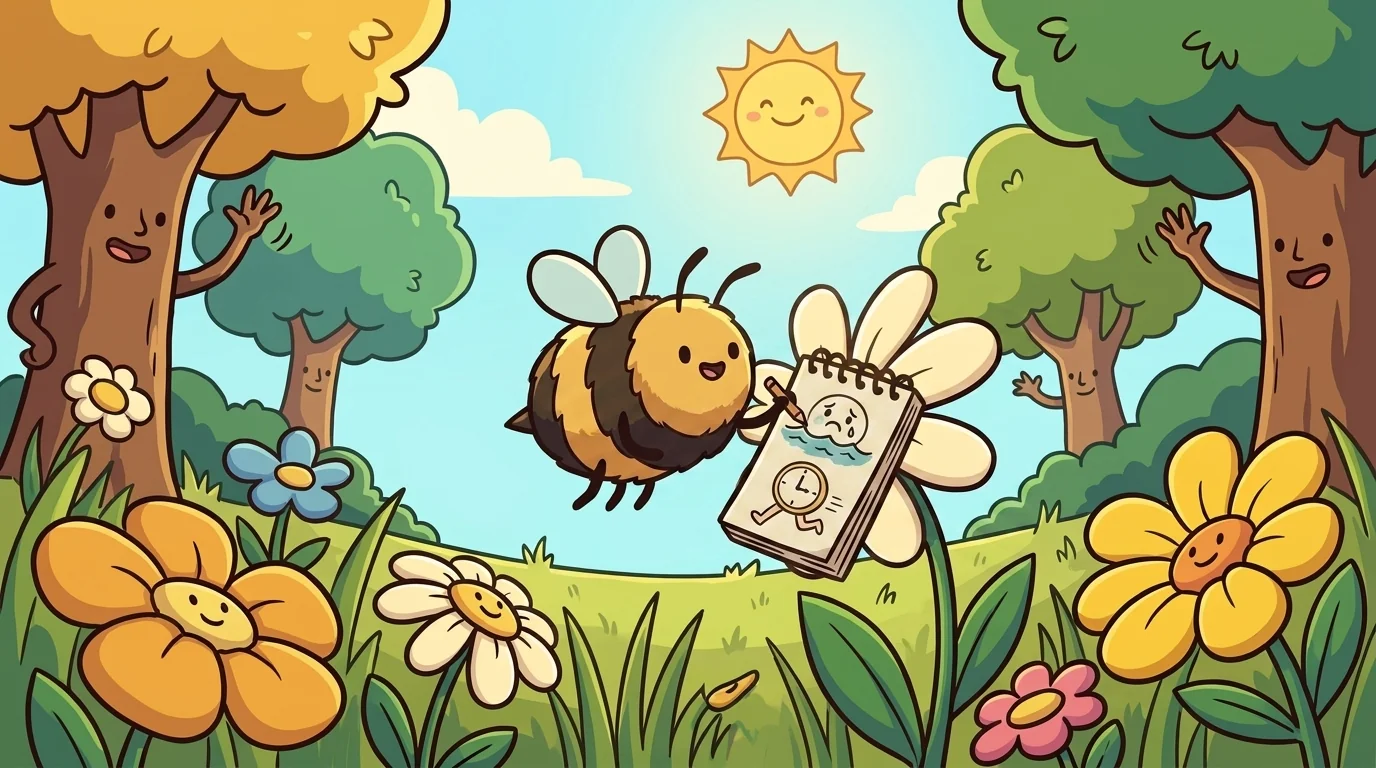
"The wind whispers," Hum would buzz, holding up a sketch of a gust with a mischievous grin. "The sea is angry." He'd show a drawing of waves crashing like a frustrated fist. "That's *personification*. Non-human things take on human qualities. Things that can't feel are described as feeling. Things that can't speak are described as speaking. It makes the world feel alive. It puts emotion into description."
Hum taught his students how to use personification, step by step:
First, the definition. Personification means giving human qualities—like emotion, action, speech, or purpose—to things that aren't human.
Next, the detective tell. Look for human verbs or adjectives attached to non-human nouns. If you read, "The leaves danced," you know leaves don't literally dance. That's personification. If "The shadow creeps," shadows don't actually creep. That's personification too. It's a reliable trick.
Then, the function. Personification makes inanimate things feel alive. It adds emotional weight to a description. An author can put feelings right into a setting, the weather, or even an object.
He showed common forms. Weather often gets personified: "The storm raged." Time, too: "Time crawled." Nature is another favorite: "The trees sighed." Even ideas, called abstractions, can be personified: "Fear gripped him." Parts of the body sometimes get in on the act: "Her heart sang."
Hum also explained the subtle difference between personification and anthropomorphism. Personification is usually a brief, figurative description. It's like a quick costume change for a non-human thing. Anthropomorphism is a consistent, structural choice, like Disney animal characters who always talk and act like people. Personification is figurative; anthropomorphism is structural.
Finally, Hum warned against overuse. Some writers personify everything. The result can feel forced or unnatural. Personification is most powerful when used carefully, for a specific effect.
Hum grew up in the meadow-village. His family had been flower-singers for generations. They were the bumblebees whose buzzing was so resonant it was said to "give voice to the flowers." Over time, they learned a valuable lesson. "Flowers don't actually sing," Hum's grandmother had told him, "but describing them as singing makes the meadow feel alive." Hum carried that lesson forward.
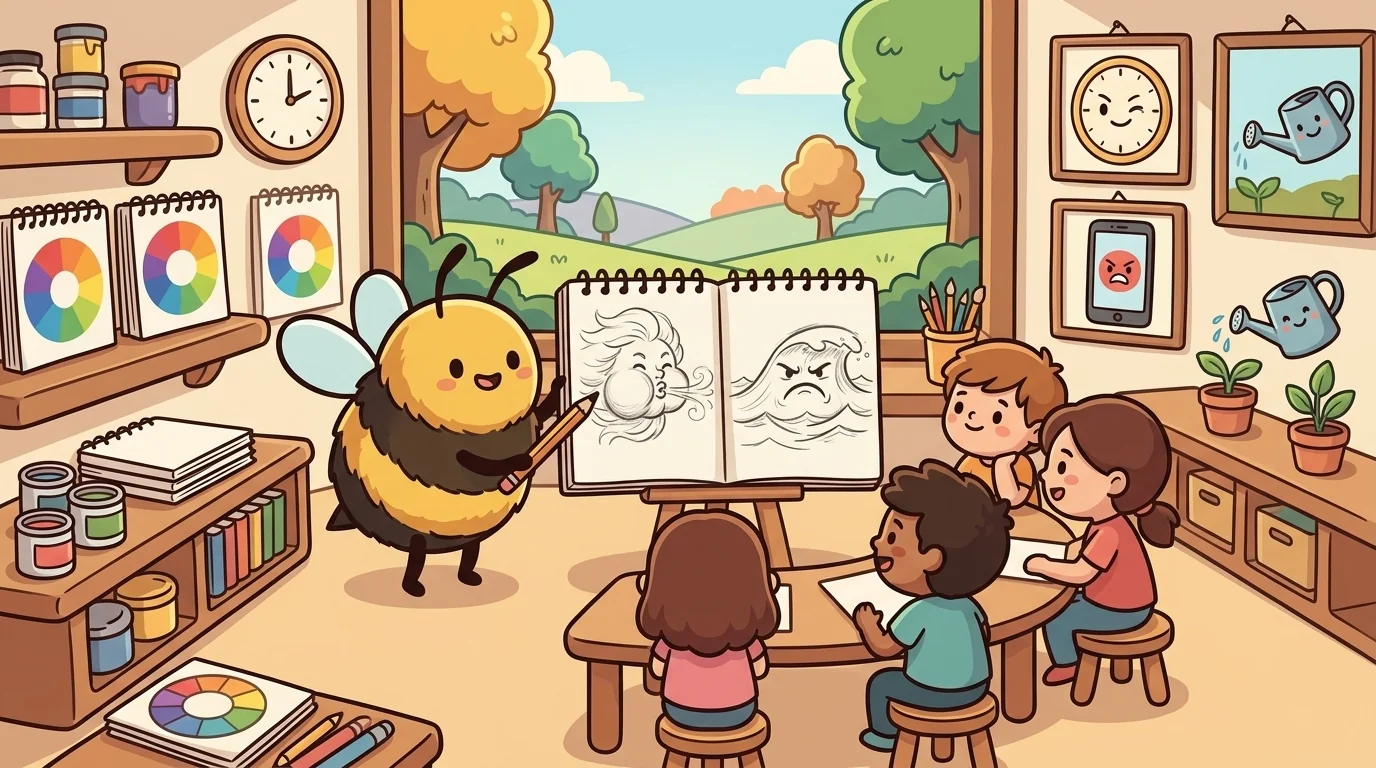
He remembered the day he arrived at FigureForge. He was only twelve. Trope, the old mentor, had looked at him with sharp eyes. "What is personification, young Hum?" Trope had asked. Hum hadn't hesitated. "It's when non-human things take on human qualities," he'd buzzed. "Like when the wind whispers, or the sea is angry. It animates the inanimate. It puts emotion into description." Trope had simply nodded. "You are appointed," he'd said.
In his workshop, Hum often showed his drawing-pad. "Watch," he'd say, sketching wind with puffed-cheeks. "The wind is blowing, yes. But I drew it like a person blowing through pursed lips. That's personification, visually." He'd sketch sea-with-furrowed-brow next. "The sea is choppy," he'd explain. "But I drew it angry. An author might write 'the sea is angry' instead of 'the sea is choppy.' Personification makes the reader feel the chop, not just see it." He'd look up, his antennae twitching. "I am Hum. The primitive I teach is *personification. The move is to spot a human verb or quality attached to a non-human thing. When you find one, you've found me. And the author put it there to make you feel* something."
He was gentle with new students. "Don't be embarrassed when you personify naturally," he'd say. "Everyone does it. 'The clock is mocking me.' 'My phone hates me today.' We personify because it feels accurate emotionally, even when it's not literal."
He'd always end with his most important rule: "Detective tell: human verb plus non-human noun equals personification. Reliable."
The FigureForge ensemble
Hum is part of FigureForge's distributed-narrative cast. Each character embodies a different curricular primitive; together they teach the full subject.
-

Ferry
Metaphor — 'X IS Y' direct comparison; carries meaning across
-

Ripple
Simile — 'X is LIKE Y' softer comparison
-
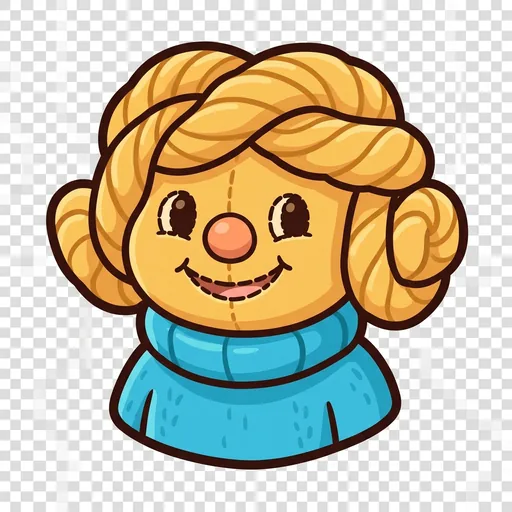
Knot
Idiom — fixed expressions whose meaning isn't literal
-

Twin
Analogy — extended comparison / X:Y::A:B parallel mapping
-

Mask
Hyperbole + understatement + irony cluster — say one thing, mean another
-

Clang
Onomatopoeia — copper bell-creature whose words carry the noise they name (buzz, splash, crash); the word reaches past the eyes and touches the ears
-
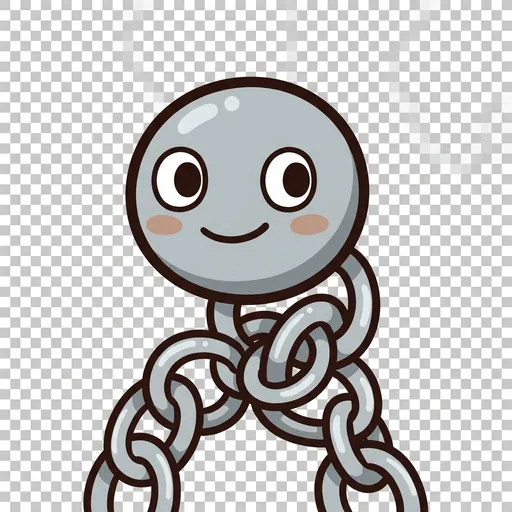
Chain
Alliteration — living-chain creature whose links lock when words share a first sound (big blue balloon); a little is catchy, too much is a tongue-knot
-
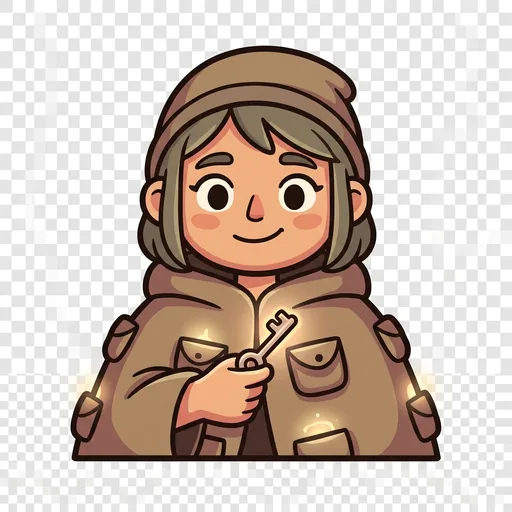
Token
Symbolism — quiet creature with a many-pocketed cloak of small objects that stand for big ideas (a dove = peace); shows the meaning instead of saying it
-

Twain
Oxymoron — two-toned creature (one half warm, one half cool) who places two opposite words side by side (bittersweet); the clash says something truer than either alone