Flipper
RECIPROCALS — turning a fraction upside down. Multiplying by 1/x undoes multiplying by x. The flipping principle.
Press play to listen along. The line being read lights up as you go.
Show full transcript
Loading transcript…
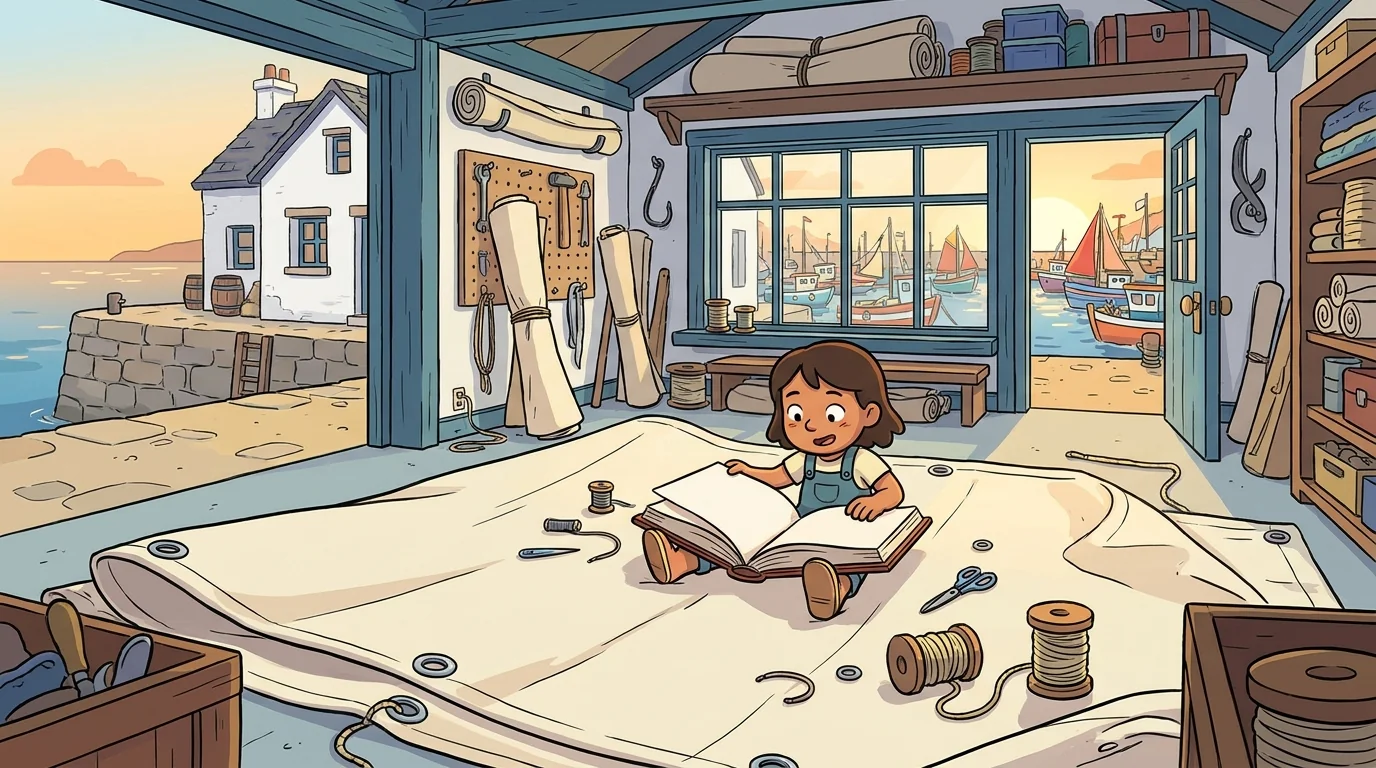
Flipper grew up by the sea. Not near the sea, like children in towns a few miles from the coast. Flipper lived on the sea. Her family’s small, whitewashed house backed directly onto a bustling harbor wall. The harbor itself teemed with fishing boats, their masts reaching for the sky. These boats, in turn, carried sails, and those sails were made by Flipper’s mother, the finest sail-maker in the region.
The sail-workshop, a large, airy room, was attached to their home. It was the biggest space in the building, designed to allow a full sail to be laid flat on the floor, with plenty of room to walk around it. Flipper spent her childhood in this workshop. She learned to read while perched on the soft, half-finished canvas of a mainsail. She mastered counting by tracing her fingers along the rows of brass grommets lining a sail’s edge. Very early, she understood that sails presented a constant challenge, a pair of decisions: how they caught the wind, and how they released it.
Sails, Flipper’s mother taught her, were remarkably adaptable. When the wind shifted, as it often did along the unpredictable coast, a sailor had to adjust. They had to flip the sail to the other side of the boom. The wind that moments ago pushed the boat to the right now pushed it to the left. The boat continued its journey, the sail working in the opposite direction, yet still propelling them forward.

This maneuver, Flipper learned by watching, was a precise change of orientation. It was also exactly how a skilled sailor harnessed a new gust. The sail itself didn’t need to be different. It simply needed to be turned over, presented to the wind from a new angle.
When Flipper turned thirteen, her mother finally allowed her to join a fishing boat for the first time. The trip lasted six hours, mostly silent, the rhythmic slap of waves against the hull the only constant sound. Flipper sat near the boom, absorbing every detail. The wind shifted three times that day. Each time, the captain, a quiet, weathered woman named Reef, called out: "Coming about!" Immediately, the deckhands sprang into action, flipping the great sail to its opposite side.
Each time, the boat kept moving forward, its course steady.
Each time, the sail was the same sail. It had simply been reoriented.
Flipper, thoughtful and observant even at thirteen, turned to Reef on the way back to harbor. "The sail didn’t change," she said, her voice soft. "We just used it the other way around."
Reef smiled, a crinkle appearing at the corner of her eye. "That," she replied, "is one of the great pleasures of sailing."
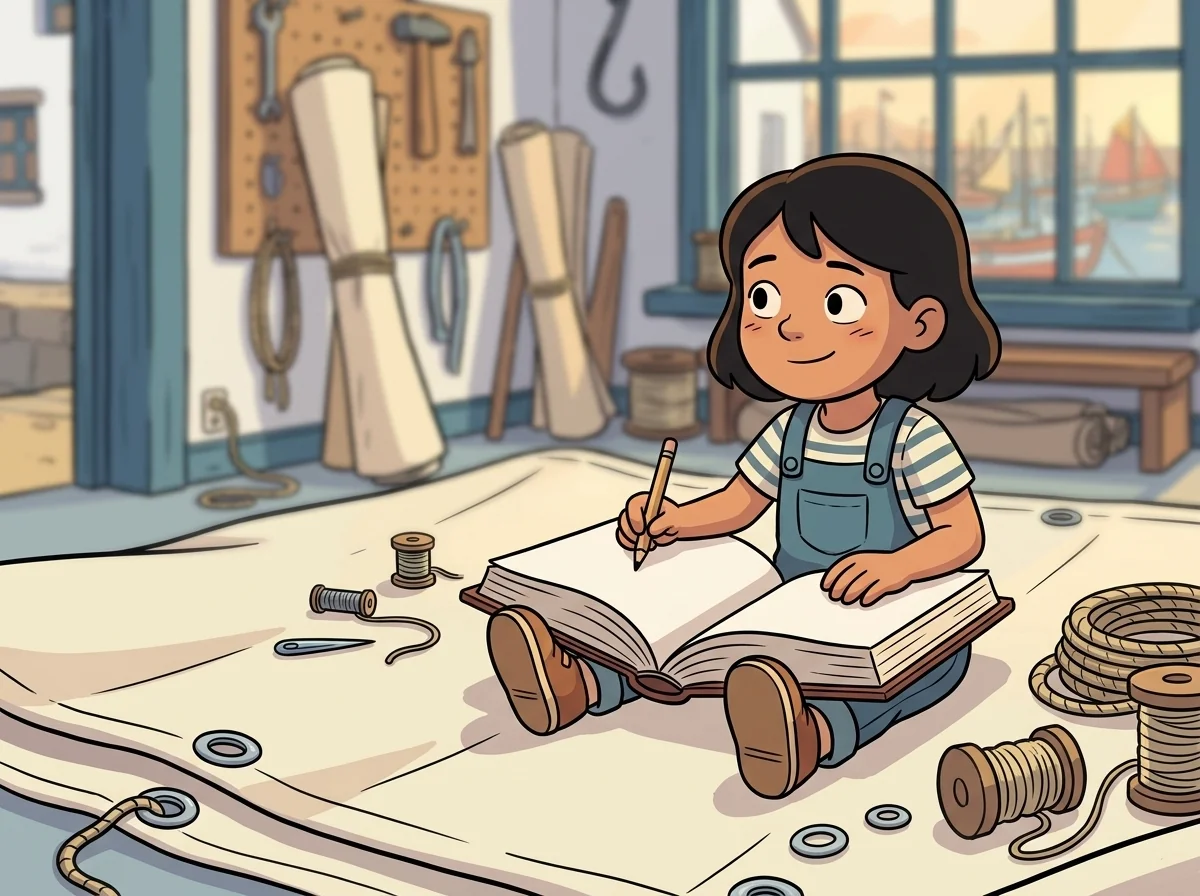
Flipper went home that evening and carefully wrote in a small notebook her mother had given her. The page now held a new entry:
"Sometimes you do not need a different tool. You only need to flip the one you have."
She didn’t know then that this fundamental principle had a specific name in mathematics. She didn’t know it was called *reciprocals. She wouldn’t learn for years that multiplying a number by 1/x is the same as dividing that number by x, or that flipping a fraction* — like turning 2/3 into 3/2 — was a powerful tool algebra used to undo multiplication. She only knew what she had seen on the boat.
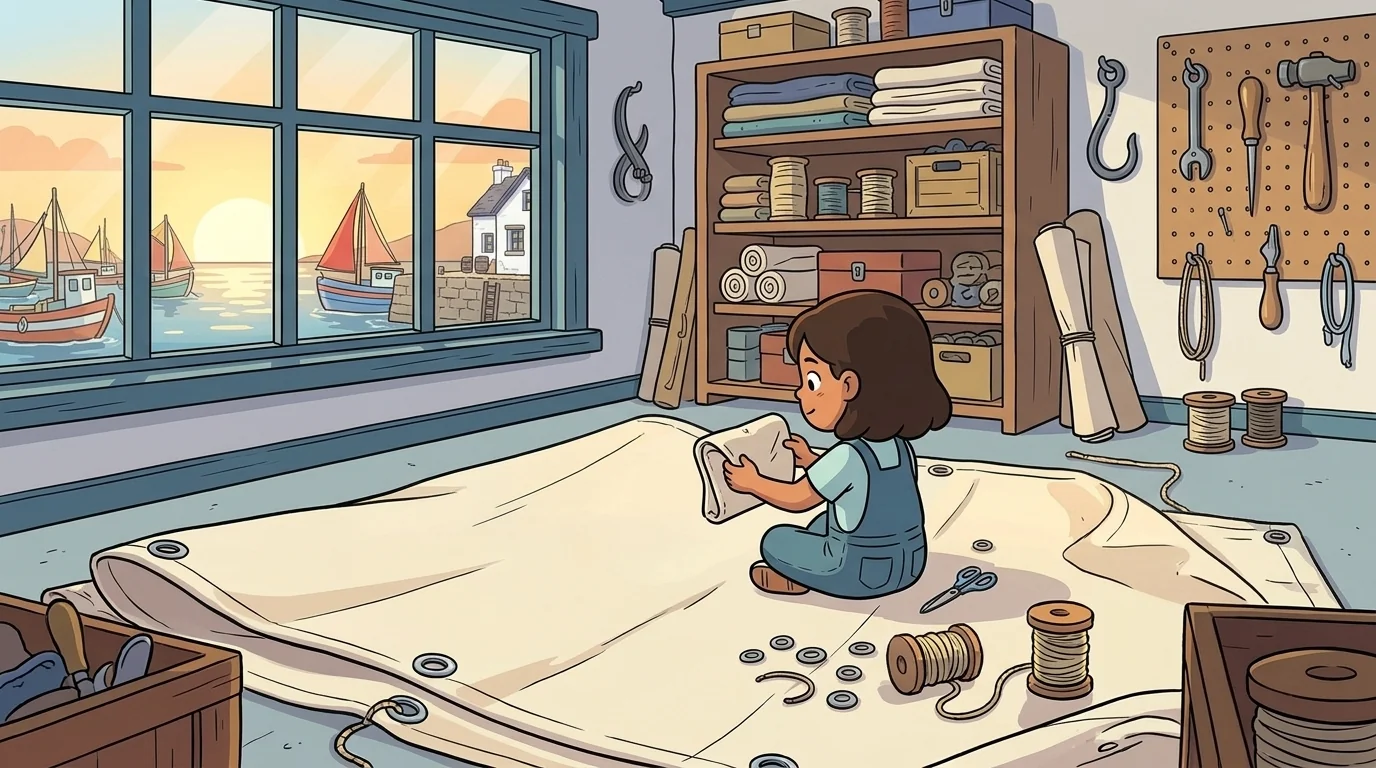
She learned all of this later, when she was nineteen. Her uncle, a man who believed firmly in lifelong learning, had insisted she attend a small mathematics evening class. One night, the teacher wrote on the board: "To divide by 2/3, multiply by 3/2."
Flipper’s hand shot up. "Like flipping a sail," she said, before she could stop herself.
The teacher paused, a slight frown of confusion on his face. Flipper, feeling a blush creep up her neck, explained the concept of "coming about" and how the sail remained the same, just turned. The teacher stared at her for a moment, then burst out laughing. He laughed for a long time, a deep, booming sound that filled the classroom. When he finally caught his breath, he wiped his eyes. "That," he declared, "is the best explanation of reciprocals I have ever heard."
Word of Flipper’s unique insight eventually reached the EquationQuest academy. An invitation followed, asking her to come and teach reciprocals. She accepted without hesitation.
Today, Flipper still carries a small piece of folded canvas in her pocket. It’s a scrap from one of her mother’s old sails, kept for sentimental reasons. In class, she unfolds it slowly. Then, with a calm, deliberate motion, she refolds it the other way. "This," she explains, her voice even, "is reciprocal multiplication. The canvas is the same. Its orientation is different. The mathematics works the same way."

Children in her classes find this surprisingly intuitive. They often draw little sails in their notebooks, understanding the shift without needing complex formulas.
Flipper still travels home to the harbor twice a year. She still helps her mother stitch sails, the familiar rhythm of needle and thread a comfort. She still understands that you don't negotiate with the wind; you simply learn to work with it.
Reef, the fishing captain, retired ten years ago. She still drops by Flipper’s mother’s workshop for tea, her stories as salty as the sea itself. On three separate occasions, she has attended Flipper’s classes at the academy as a guest visitor. The children are always deeply impressed by a real fishing captain. Reef tells them stories about the thrill and precision of "coming about," her voice raspy with memory.
If you ask Flipper what reciprocals are, she won't give you a textbook definition. She will reach into her pocket, pull out the worn canvas. She will unfold it. She will refold it the other way. She will say, simply: "Same canvas. Other side."
For Flipper, that is the whole lesson.
The EquationQuest ensemble
Flipper is part of EquationQuest's distributed-narrative cast. Each character embodies a different curricular primitive; together they teach the full subject.