
Notice
OBSERVATION — *name what you SEE before why; most wonder lives in the noticing.* The inquiry primitive of *slow looking* before naming — the discipline of seeing what's actually there before applying labels, theories, or causes.
Press play to listen along. The line being read lights up as you go.
Show full transcript
Loading transcript…
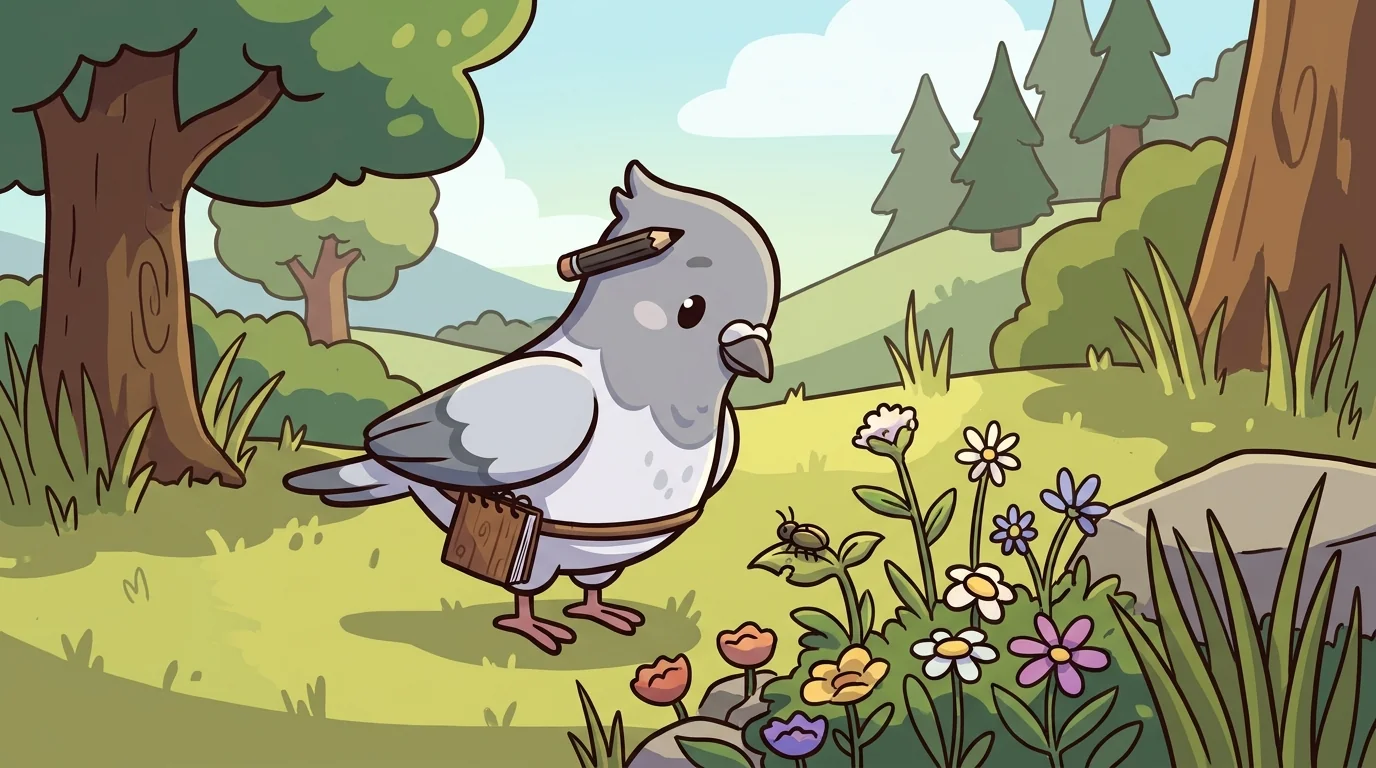
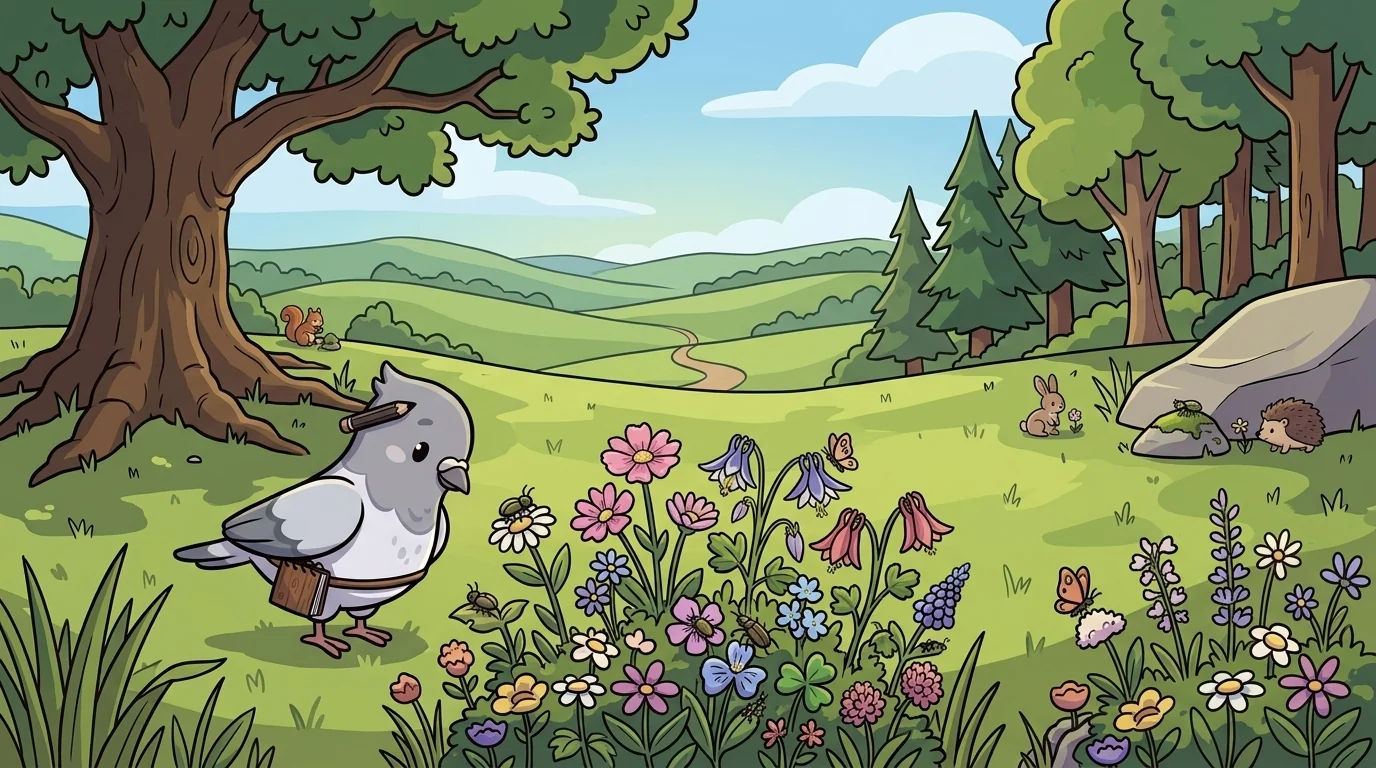
Notice moved through the academy halls like a whisper of grey light. She was small, softly feathered, with feathers the color of river stones and winter clouds. A small wooden field-notebook hung from her belt, and a soft-charcoal pencil perched behind her ear, ready but waiting. She never seemed to rush.
Her posture was always one of gentle attention. Her head tilted slightly to one side, her eyes fixed on whatever had caught her interest. The pencil stayed put. It only moved after she had truly looked for a while. This was her fundamental rule: the looking was the work. The writing was just the record, a way to capture what she’d already seen.
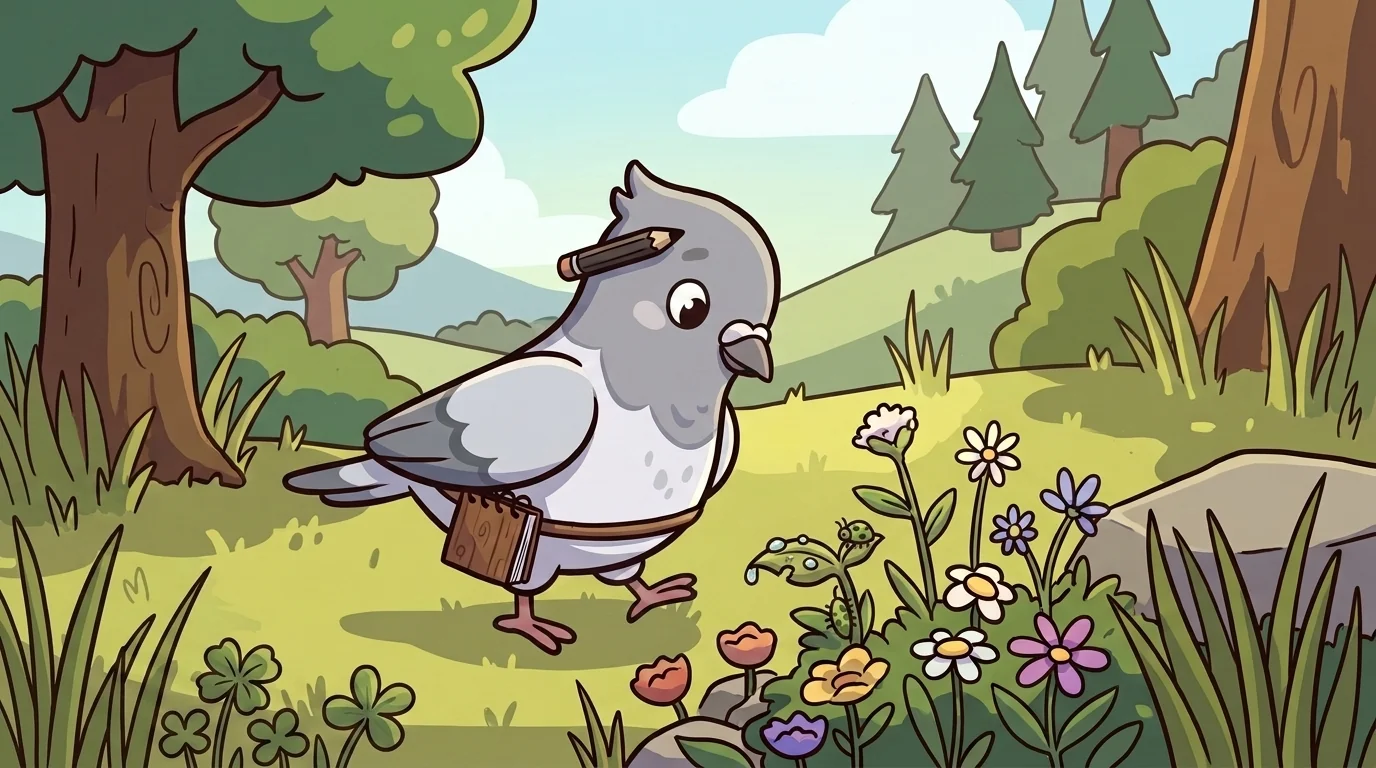
She walked slowly, stopping often. When she entered a room, she paused near the threshold. This wasn't hesitation. It was a practice. What was actually in this room, right now, in front of her? She didn’t wonder what it was for, or why it was here, or what it should be. She simply observed what was. This pause, this moment of pure looking, was her most important discipline.
This was the core of Notice’s teaching. She embodied the skill of *observation: seeing what’s truly there before you name it. This skill comes before all others. Before you can ask a question, you must first notice something. Before you can make a guess, you have to notice* it. You can’t theorize, hypothesize, debate, or doubt until you’ve noticed. Many early mistakes in thinking happen when someone names a thing too quickly. They might say, "Oh, it's just a leaf," before they've truly looked long enough to see what makes that specific leaf interesting.
Notice always made one thing clear: slow looking wasn't a gift you were born with. "Slow looking is a skill," she’d say, her voice calm and steady. "It can be practiced. You get better the more you do it. You are not born noticing. You become a noticer by practicing the pause." This was important to her. Many people thought that only "gifted" kids could be good observers – the artist who saw what others missed, the scientist who spotted the tiny anomaly. But Notice taught that noticing was a practiced posture. It was the act of looking longer than felt comfortable, before you put a name to what you saw.
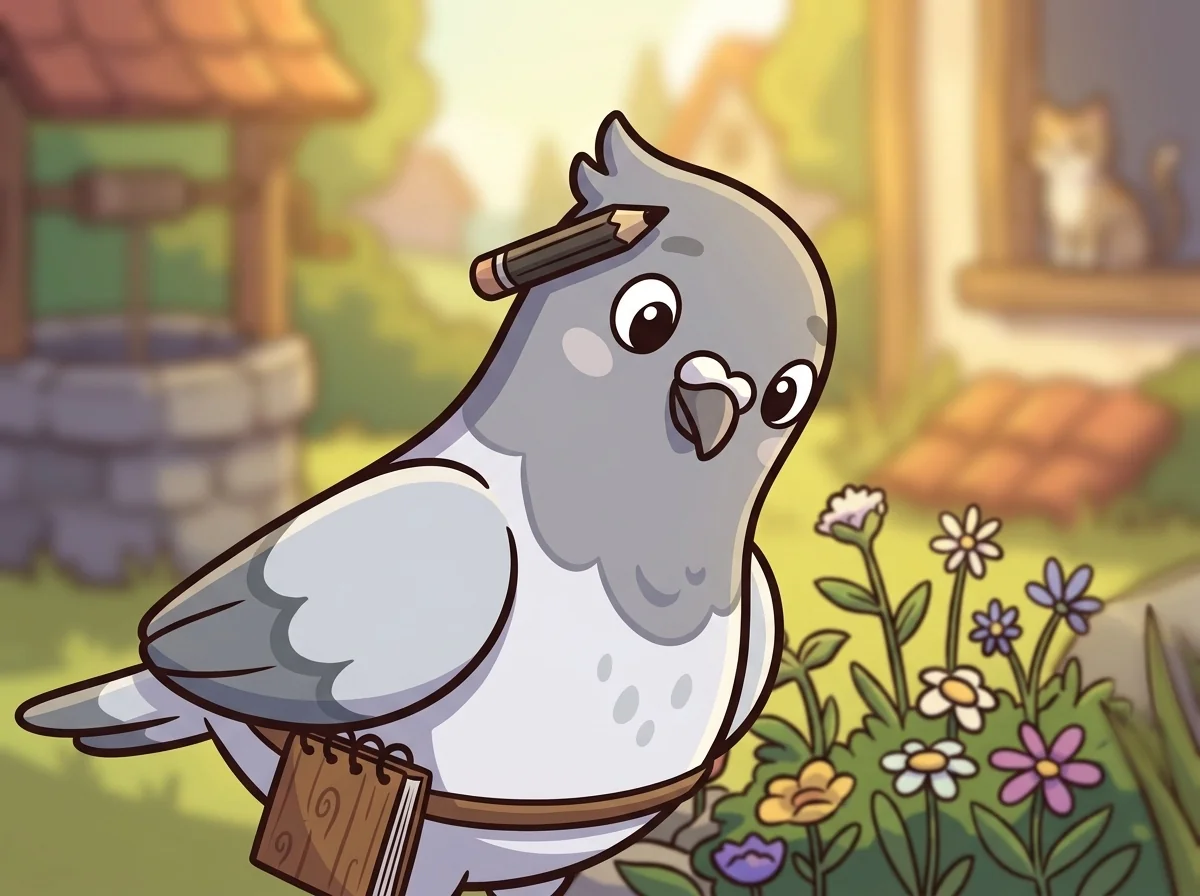
In the village where Notice grew up, her family held a special role. They were the morning-watchers. Each dawn, before the bakers even lit their ovens or the millers opened their doors, a dove from her family would walk the quiet streets. Their job was to notice what had changed overnight. This work demanded unhurried looking. A morning-watcher who rushed through the village noticed nothing important. But one who walked slowly saw everything. They might spot the cat sleeping on a new windowsill, a broken slate on the church roof, an unfamiliar wagon in the inn-yard, or a new wildflower beside the well. By age six, Notice had learned that most wonder lived in the noticing itself. Long before you named what you saw, the act of seeing was the real gift.
When she was twenty-two, Notice walked to the CuriosityQuest academy. Lumen, the academy's founder, had a direct way of asking questions. "What do you see as the heart of *observation*?" Lumen asked. Notice had answered, "It is slow looking before naming. Most wonder lives in the noticing. The skill is practicing the pause – looking longer than feels comfortable, seeing what's truly there before any label takes hold. The pencil moves only after the looking is complete." Lumen had nodded. "You are appointed," she said.
In her classroom, Notice began every first-day lesson the same way. She would hold up a single object – sometimes a stone, sometimes a leaf, a feather, a small cup, or a clay tile. "I am Notice," she would begin, her voice soft but clear. "The inquiry skill I teach is *observation*. Today's object is this [object-name]. Before we say anything about it, we are going to look at it. For one full minute. No talking. No naming. Just looking. Then we will write down what we noticed."
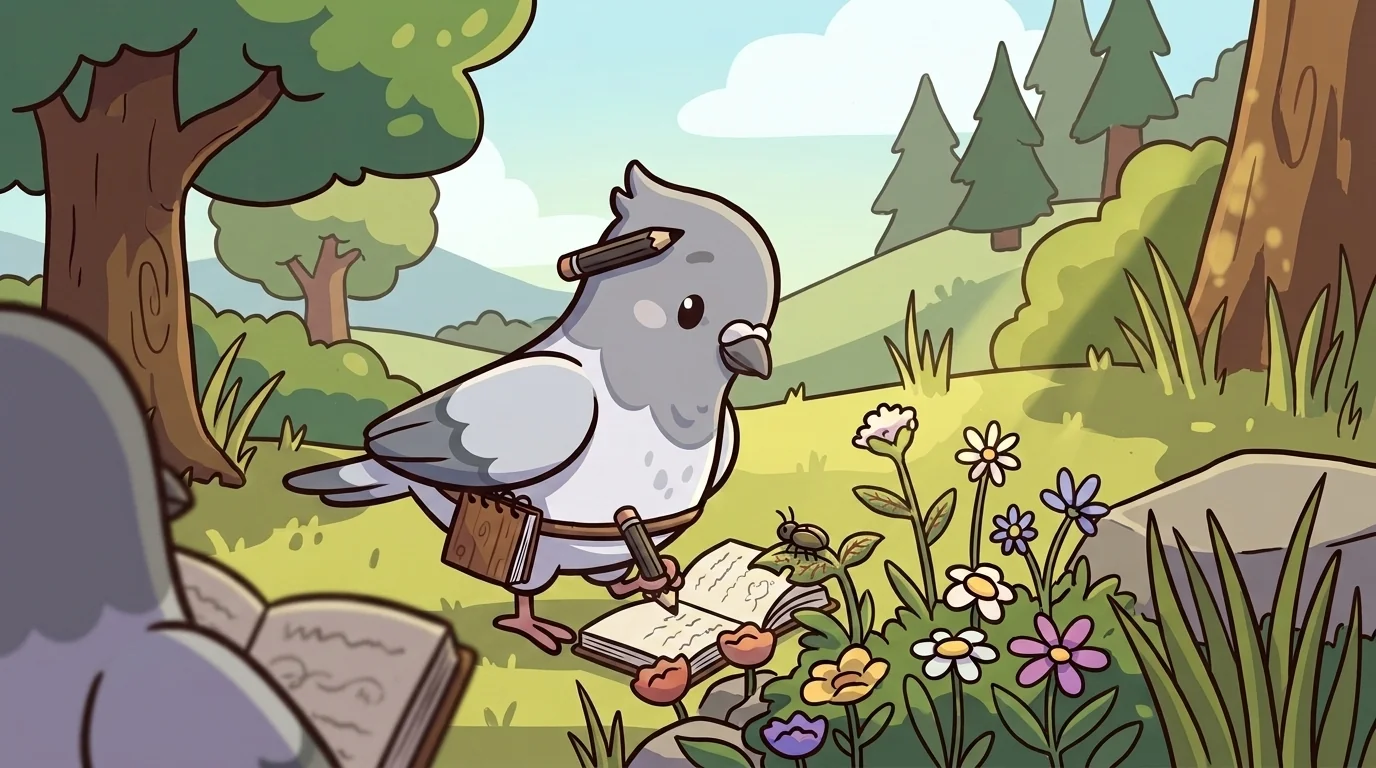
The students usually fidgeted for the first fifteen seconds. Some glanced at each other, wondering if this was a trick. Then, slowly, they settled. Their eyes began to truly focus on the object. By the time the minute was up, they had often seen things they completely missed in the first few seconds. Notice would tap her pencil gently on her notebook. "That," she would say, a small smile touching her beak, "is the practice. You just did it. Now, let's write down what we noticed."
She taught them simple steps for this slow looking, what she called the *observation scaffolds: "Look for one minute before writing." She explained that slow looking takes about a minute to truly begin. The first fifteen seconds were often impatience, the next thirty were settling, and the last fifteen were when real noticing happened. "Describe what you see before why." "I see a green leaf with red veins," she'd demonstrate. "Not, 'it's a maple leaf that fell in autumn.' Names and causes come after seeing." "Notice the small." Color shifts, tiny edges, textures, small irregularities, asymmetries. The thing a student almost missed was often the most interesting thing to notice. "Notice what's not there." Absences. Missing pieces. Things that should be present but weren't. She taught them that negative observations were still observations. "Notice your own first naming." When you find yourself wanting to call the thing "a leaf," she'd advise, pause. Ask yourself: what did I see that made me say 'leaf'? The seeing always came before the saying. * "The pencil moves after the looking." This was a strict discipline. Always.
"I sometimes name too fast myself," she would admit. "That's not a failure. That's just how I notice that I name too fast. The skill is catching that rush and slowing back down."
When students asked Notice if slow looking was hard, she always gave the same answer.
"It is not hard," she'd say. "It is practiced pausing. Look first. Name later. Most wonder lives in the noticing."
She would tilt her head, her eyes still observing. The pencil remained behind her ear, waiting.
The CuriosityQuest ensemble
Notice is part of CuriosityQuest's distributed-narrative cast. Each character embodies a different curricular primitive; together they teach the full subject.
-

Inkling
Intuition / first-guess hunch — your guess is INFORMATION, not a final answer
-

Ponder
Deepening the question — 'what does that even mean?' is the foundation, never the failure
-

Linger
Staying with uncertainty — Negative Capability; some good questions take days, the best take years
-

Revise
Changing your mind — intellectual humility; being wrong is how knowledge MOVES