
Lane
WALKABILITY + MOBILITY — *streets are rooms; cars are guests, not owners.*
Press play to listen along. The line being read lights up as you go.
Show full transcript
Loading transcript…
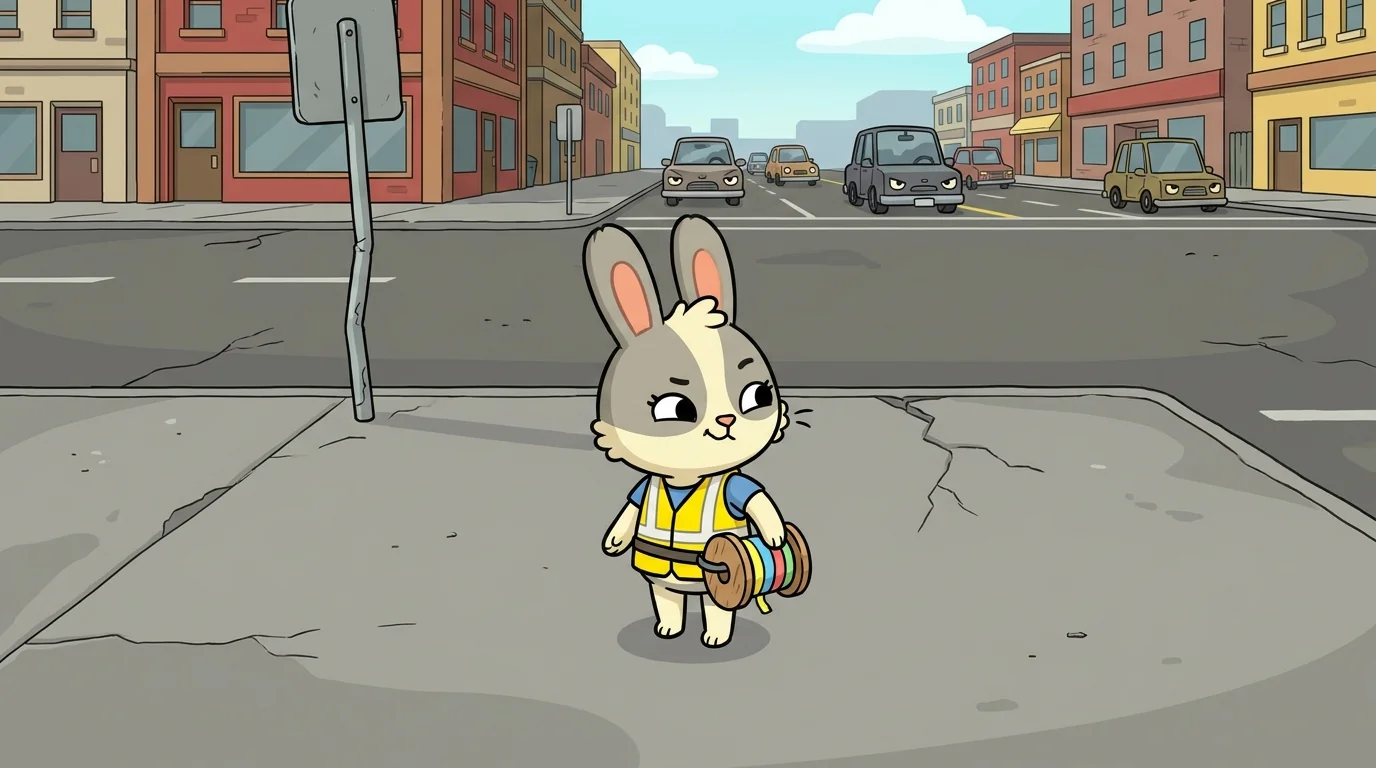
Elm Street, on a Tuesday morning, was a symphony of exhaust and impatience. Horns blared, tires hissed, and the air hung heavy with the scent of gasoline. It was a street built for speed, a concrete canyon where pedestrians felt like afterthoughts, squeezed onto narrow, crumbling sidewalks. Children, clutching their parents' hands, hurried past storefronts that seemed to recede into the grime. Their vibrant displays were lost behind a constant blur of traffic.
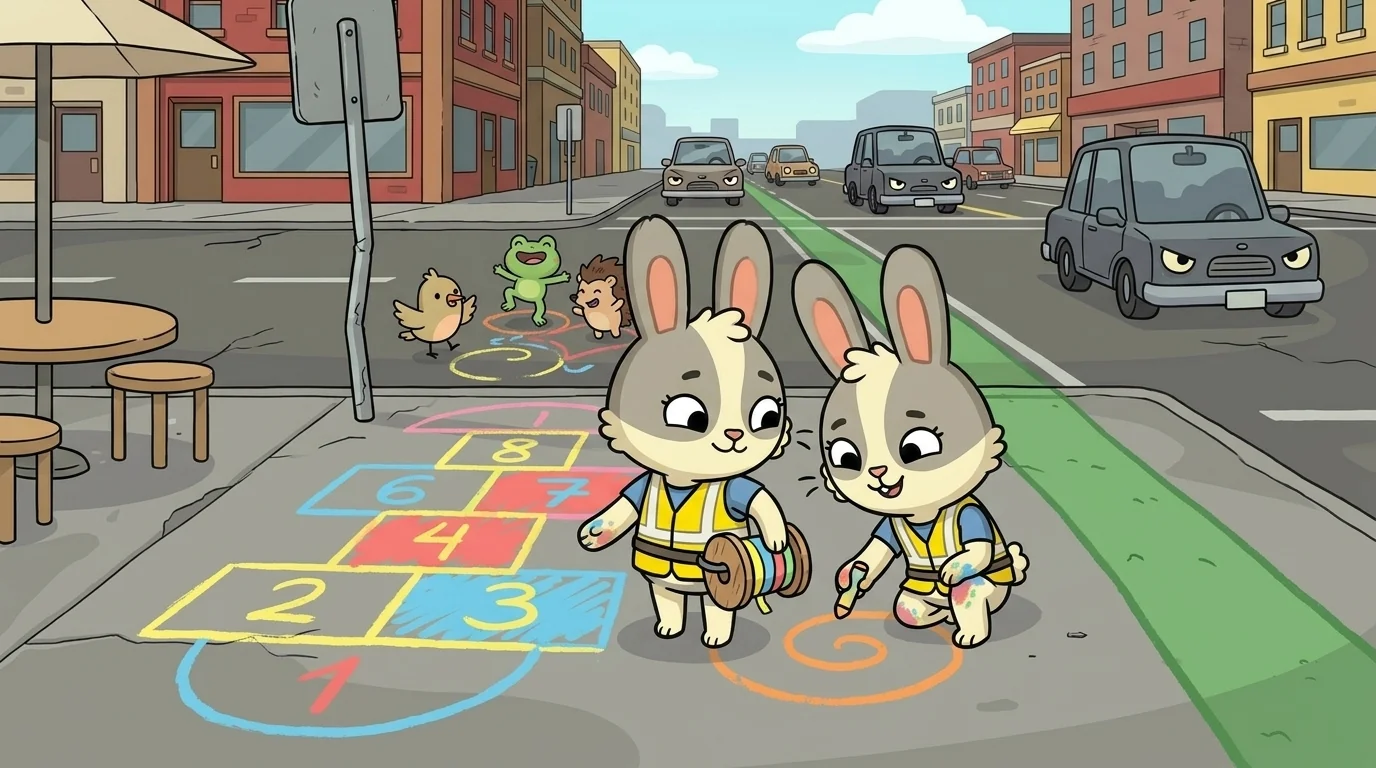
Lane, small as she was, stood her ground at the corner, observing the chaos with quick, intelligent eyes. Her soft-yellow safety vest, a small beacon of calm, seemed to absorb the frantic energy around her. Clipped to her belt, her signature wooden chalk-spool waited, a silent promise of change. She saw not a road, but a wasted opportunity; a room currently dominated by a single, rather boisterous guest.
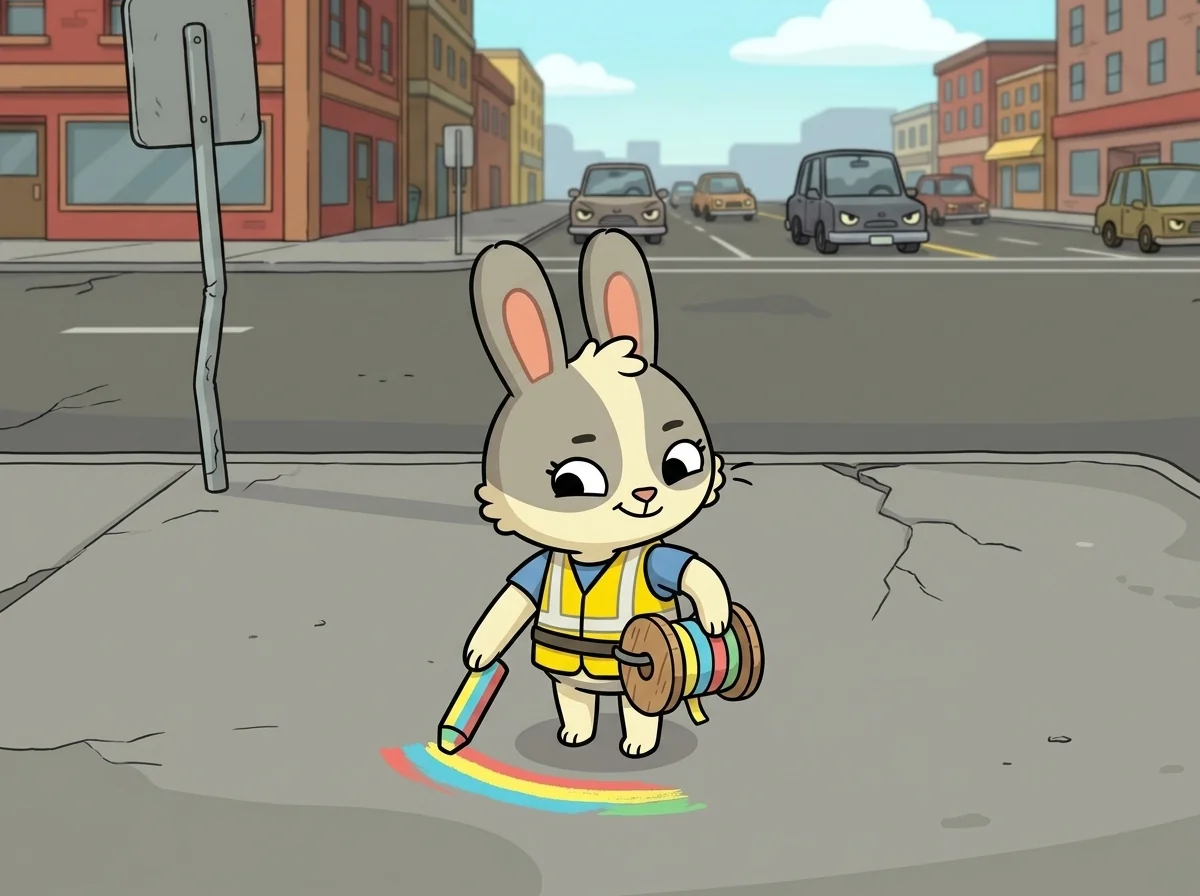
With a decisive tug, Lane unclipped the spool. Her first stroke of chalk, a vibrant blue, kissed the grimy pavement. It wasn't just a line; it was a declaration. Slowly, meticulously, she began to draw, extending the sidewalk's edge, pushing back against the asphalt's relentless tide. Sidewalk width matters, she thought. She watched how people instinctively widened their stance, their shoulders relaxing. They had room to breathe, to stroll, to window-shop without fear of being clipped by a passing elbow.
A shopkeeper, a badger with spectacles perched on his nose, peered out from his bakery. "What exactly are you doing, little rabbit?" he called, his voice a mix of curiosity and annoyance. "You're making a mess of the road."
Lane paused, wiping a chalky paw on her vest. "I'm making a room, sir," she replied, her voice clear despite the traffic rumble. "This street is a room. Cars are guests, useful for some trips, but not owners of the entire space." She gestured with her paw. "Imagine your bakery, but with a car parked right in the middle of it. Would that be welcoming?"
The badger blinked, considering this. He hadn't thought of it that way.
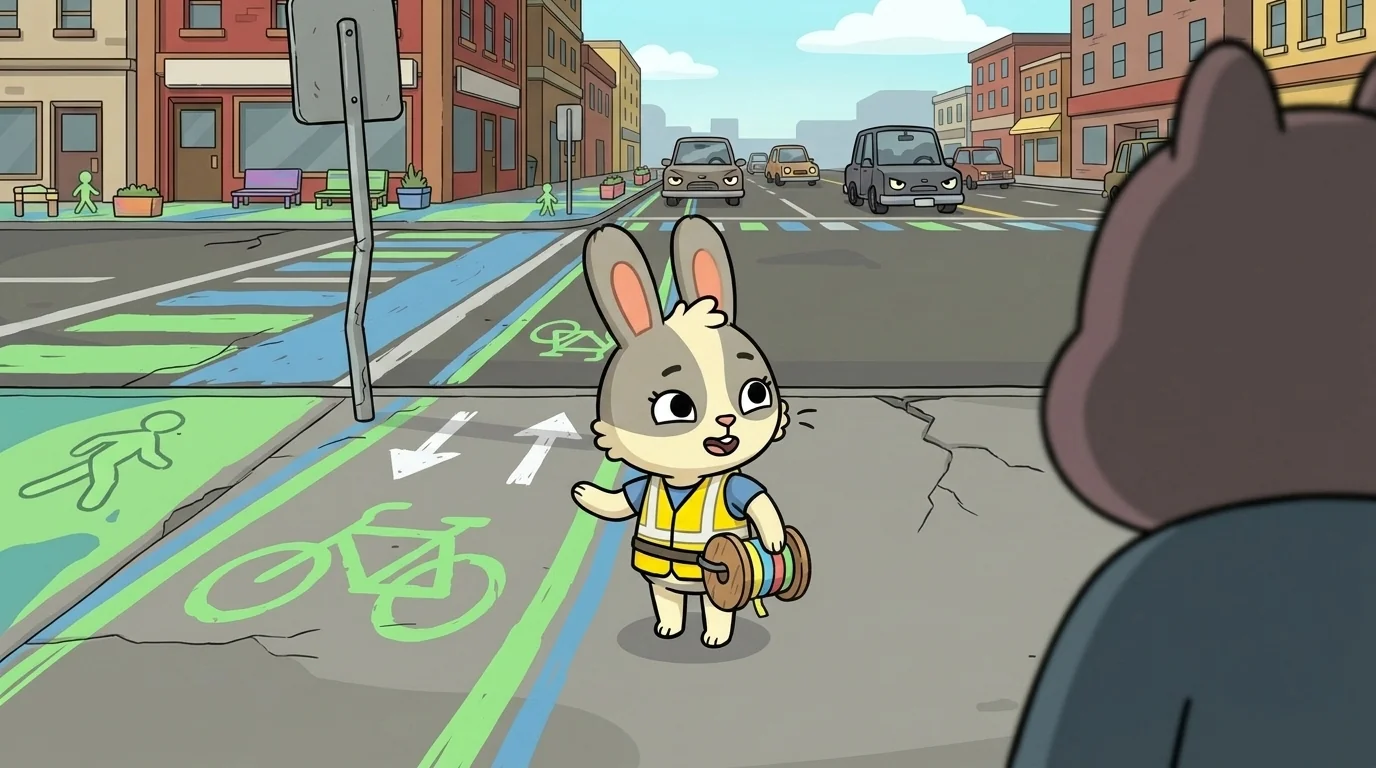
Next, a bright green stripe snaked along the newly defined curb. This was for bikes, a protected corridor, a silent declaration that two wheels were just as legitimate as four. Bike lanes (protected, ideally), she murmured to herself, carefully measuring the distance. She knew a painted line offered little physical protection. Still, it was a start. It was a visual cue that this space was shared, a place where cyclists could feel seen, not just tolerated.
A young squirrel, no older than ten, stopped his scooter beside her. "Are you drawing a race track?" he asked, his eyes wide with hope.
Lane smiled. "Better than a race track. I'm drawing a place for everyone." She pointed with her chalk. "Soon, you'll have a safe path for your scooter, and maybe even a spot for your friends to play without worrying about cars zooming past. Slow streets in residential areas are important, especially where children play safely." She began to mark out a small, colorful square near a dormant fire hydrant, a future kid-play-area.
At the intersection, where pedestrians usually darted across like startled mice, a bold yellow crisscross emerged. Pedestrian crossings + signals were crucial. She imagined parents pushing strollers, elderly neighbors with shopping bags, all needing a clear, safe path across the roaring current. This wasn't just paint; it was a promise of safety, a silent invitation to cross, to connect the two sides of the street without fear.
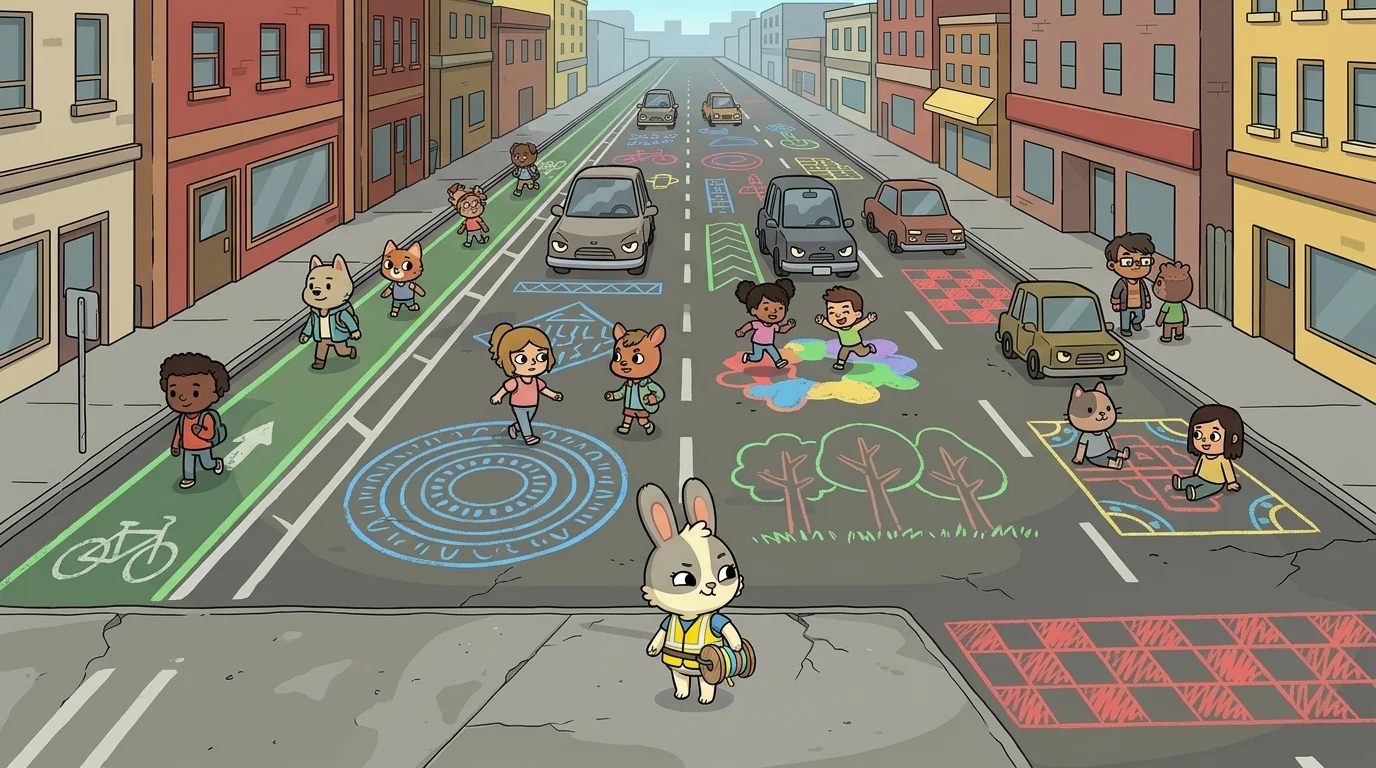
By midday, Elm Street had begun its transformation. The blue lines defined wider sidewalks, the green lines offered sanctuary to cyclists, and the yellow crossings promised safety. Even a small, chalked circle appeared, an invitation for a future café-table or a bench. It turned a forgotten patch of pavement into potential social space. The air, though still bustling, felt different. Less frantic. More intentional. Streets serve multiple uses, she thought, observing how a few simple lines could change an entire atmosphere.
Lane believed this with every fiber of her small, chalk-dusted being. Modern urban design, she knew, had often forgotten this fundamental truth. It had ceded entire public spaces to machines, turning vibrant arteries into mere conduits for speed and exhaust. But streets, she insisted, were more than just routes. They were the connective tissue of a community, places where neighbors met, where businesses thrived, where children learned to ride bikes.
Her chalk lines were a quiet revolution. They didn't demonize cars; they simply re-prioritized. They said, *"The street is the room;
The CityForge ensemble
Lane is part of CityForge's distributed-narrative cast. Each character embodies a different curricular primitive; together they teach the full subject.
-

Block
Zoning + density — the badger-tween with clay-block models who teaches zoning as 'plan for the neighbors first, not the buildings'
-

Stoop
Public space + community — the capybara-elder on a wooden stoop who treats public space as the city's living room, foregrounding existing stoop-cultures (Brooklyn / Latin American plazas / Italian piazzas / West African gathering trees)
-

Hub
Transit nodes — the pangolin-tween in conductor-vest who teaches that transit is about ACCESS, not about cars-vs-trains ('many ways, equal ways; the bus matters as much as the train')
-

Dwell
Housing equity + repair — the owl-elder in a mended quilted-coat who teaches anti-displacement, repair-not-replace urbanism ('repair before replace; listen before plan; the people who live here ARE the design')