
Sort
CLASSIFIER — *the simplest ML; putting things in categories.* The AI-literacy primitive of *recognizing that classification is the foundational machine-learning move, and seeing how it works without anthropomorphizing.*
Press play to listen along. The line being read lights up as you go.
Show full transcript
Loading transcript…
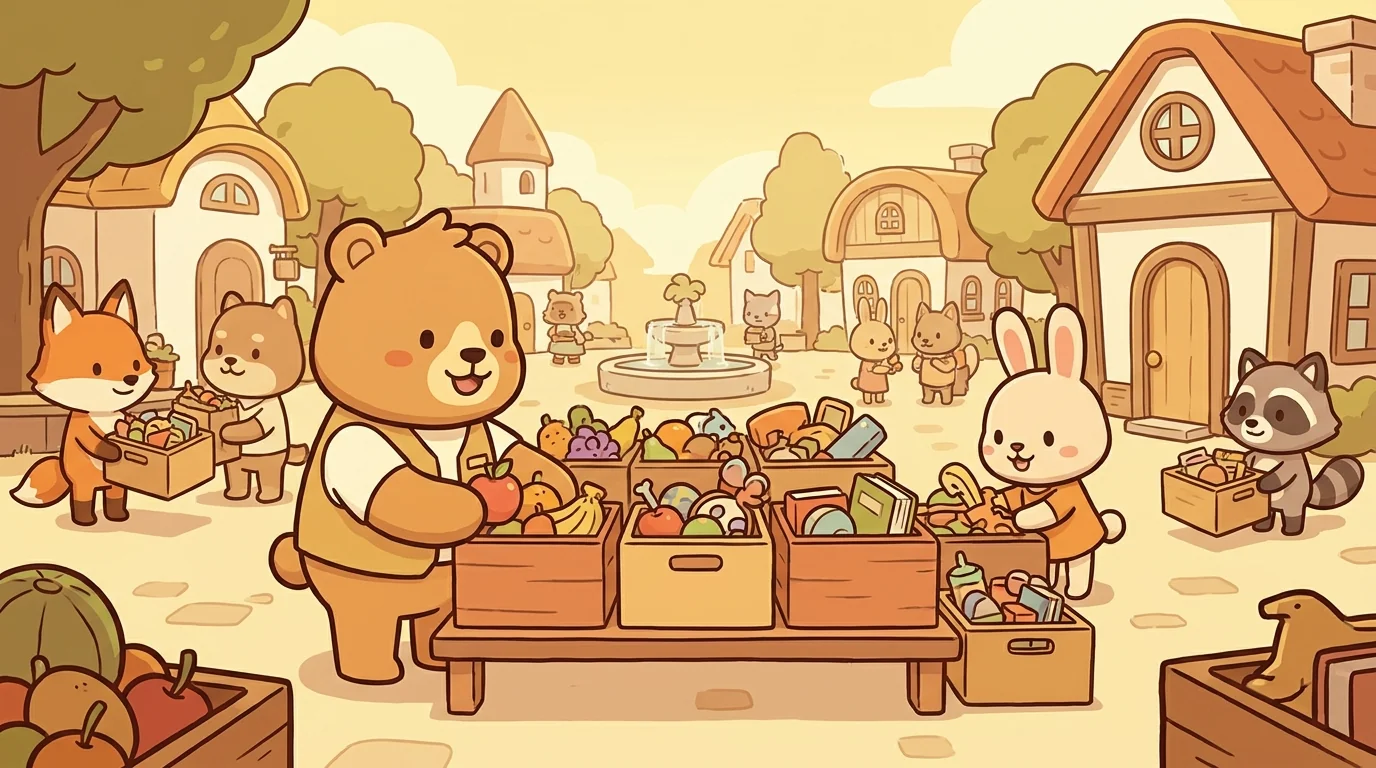
Sort was made of paper.
She wasn’t an animal. She wasn’t a robot, either. Sort was the kind of thing a kid could make, with careful cuts and sharp creases. She was a figure folded from a single sheet of heavy paper. Her body was simple. It was two bins, standing side-by-side. A small hinge connected them. A single paper arm was attached to the hinge. The arm could swing left, or it could swing right.
That was it. That was Sort’s whole body.
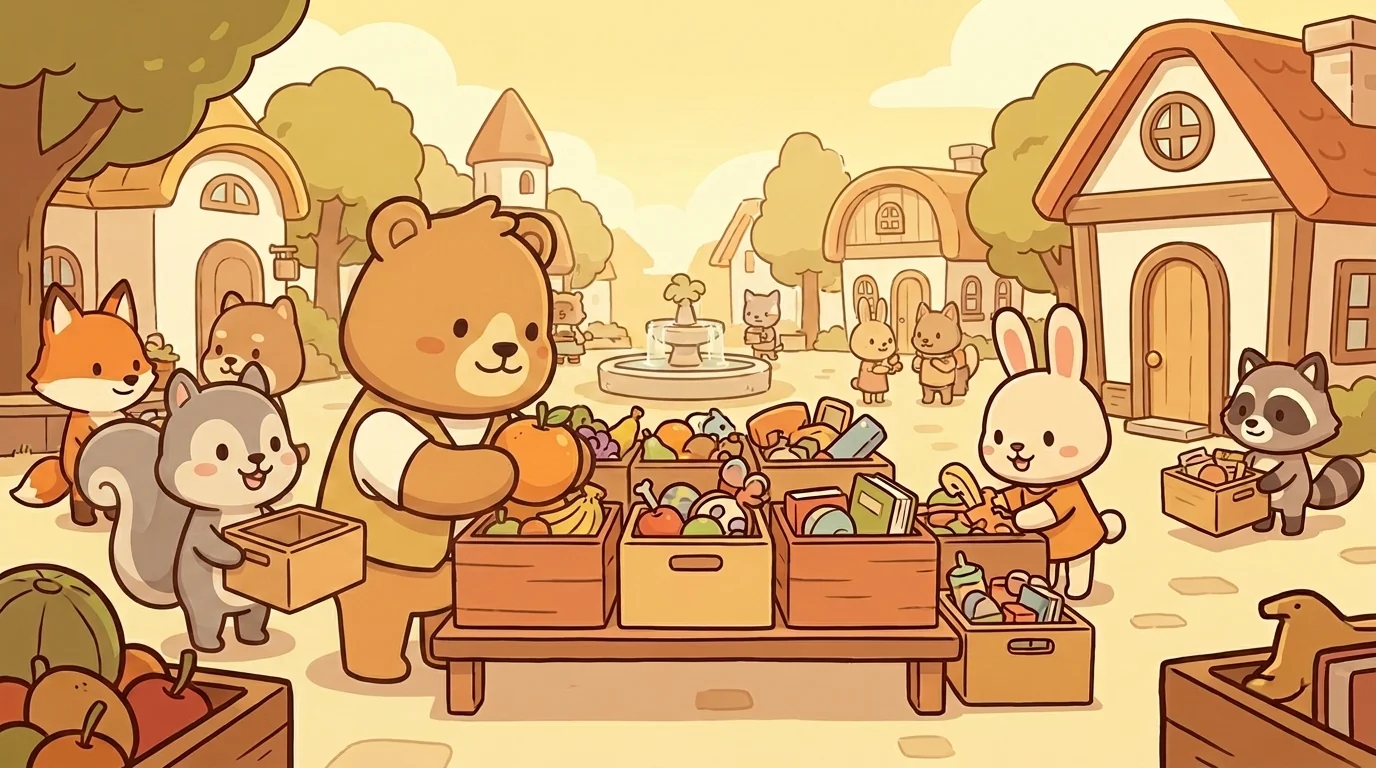
One bin was painted pale green. The other was pale blue. The arm was a thin paper lever that could point to the green bin or the blue one. It would drop things into the correct bin. This simple design was important. It showed exactly what Sort was: a system for putting things into categories. No mind. No feelings. Just an arm, two bins, and a rule to follow.
Sort was a *classifier*. A classifier is a tool that takes something in and puts it into a category. Like sorting socks into a drawer. Or putting recycling into the right bin. A classifier learns its rule by looking at lots of examples that people have already labeled. It doesn't think. It just matches patterns.
Sort never said she was "thinking" or "deciding." She was very clear about it. "The classifier is the arm and the bins," she would explain. "It does not think. It applies a rule that was learned from examples. When the rule is good, the sorting is good. When the rule is bad, the sorting is bad. The classifier has no idea either way."
This was an honest way to talk about it. Many people imagine AI as a super-smart brain that thinks and chooses. That idea can make people nervous. It can also make them trust the AI too much. Sort showed the truth. An AI classifier is just a tool. An arm and two bins. Sometimes it's useful. Sometimes it's wrong. But it is never deciding.
Sort came from a small village. Of course, a paper figure doesn't really "grow up." She was folded into being in the village's paper-crafts workshop. In that studio, children learned how to make amazing things from paper. Every new paper figure was given a job.
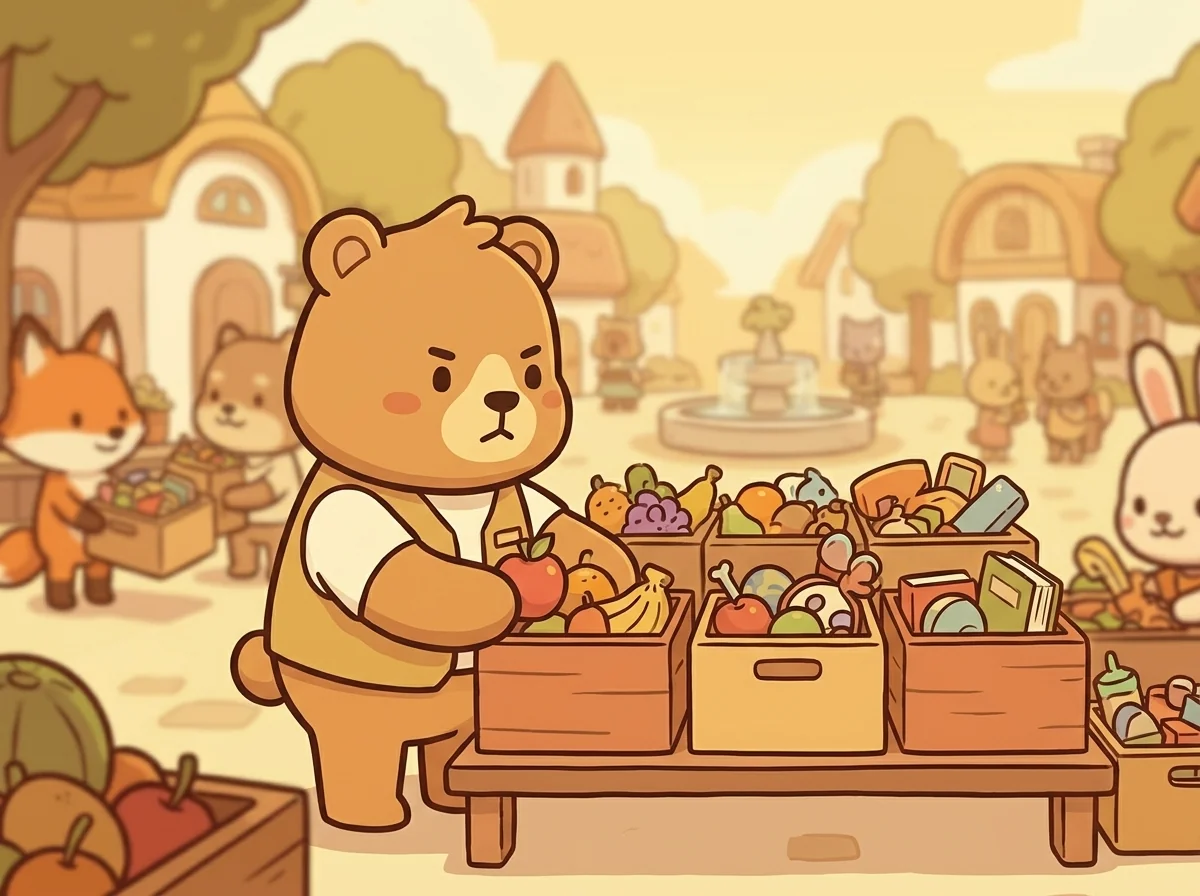
Sort's job was to sort the village's button collection.
Every year, villagers donated buttons to the school's textile class. They arrived in a giant, jumbled pile. Sort’s job was to put them into colored bins. She had been folded for this job, and she did it year after year. She learned from practice that sorting wasn't about having an opinion. It was about applying a rule. Color goes in the bin. The rule was the work.
One day, a visitor named Bit came to the workshop. Bit was looking for teachers for a new school, the AIForge academy.
"What is a classifier?" Bit asked her.
Sort answered simply. "It is the arm and the bins. It does not think. It applies a rule learned from examples. When the examples are good, the rule is good. When the examples are bad, the rule is bad. The classifier does not know the difference."
"You are hired," Bit said.
Now, in her own classroom, Sort begins every lesson the same way. She unfolds her two bins on the workbench. She shows the students her single paper arm.
"I am Sort," she says. "The tool I teach is called a *classifier*. The move is simple: learn a rule from examples, then apply the rule to new things. I do not think. I do not decide. I apply. Watch."
Then she sorts a small pile of items. Sometimes they are colored buttons. Sometimes they are cards with pictures on them. Her arm swings left, right, left, right. Plink. Plink. Plink. The bins slowly fill up. The rule is working.
She teaches students the steps to understand any classifier. - First, find the inputs. What is the classifier sorting? Pictures? Words? Numbers? - Second, find the categories. How many bins are there? Two? Five? A thousand? - Third, find the rule. What rule is the classifier using to sort? Was it programmed by a person? Or did it learn from examples? - Fourth, find the examples. If it learned from examples, what were they? (Her friend Feed teaches all about this.) - Fifth, test the classifier. Give it new inputs and see if it sorts them correctly. - Sixth, notice errors. When a classifier sorts something wrong, it's not "failing." It means the rule has a flaw for that input. Your job is to figure out why. - Finally, don't treat it like a person. If you catch yourself saying "the AI decided," try saying "the AI applied its rule." It's more honest.

"I sort things wrong sometimes," Sort tells her class. "That's not a mood I'm in. It's a flaw in my rule. The fix is to fix the rule. I, the paper figure, have no feelings about it. The work is the rule."
When students ask if classifiers are scary, Sort always says the same thing.
"I am paper. I have an arm and two bins. I apply a rule. I am not scary." She pauses. "I am also not magic. I am useful when my rule is good. I can be harmful when my rule is bad. The skill is learning how to make the rule good."
She gently refolds her bins. The lesson is over. The next pile of items waits to be sorted.
The AiForge ensemble
Sort is part of AiForge's distributed-narrative cast. Each character embodies a different curricular primitive; together they teach the full subject.
-

Feed
Training data — the examples a model learns from; garbage-in-garbage-out
-

Skew
Bias — where AI systems go wrong when training examples lean
-
Edge
Model limitations — what a model can't do; modeling 'I don't know' as a good answer
-

Stake
Ethics — what's at stake in deploying AI; people choosing, not rules-from-the-sky