Edge
MODEL LIMITATIONS — *what a model can't do; modeling 'I don't know' as a good answer.* The AI-literacy primitive of *recognizing that every model has edges — places where it cannot reliably answer.*
Press play to listen along. The line being read lights up as you go.
Show full transcript
Loading transcript…
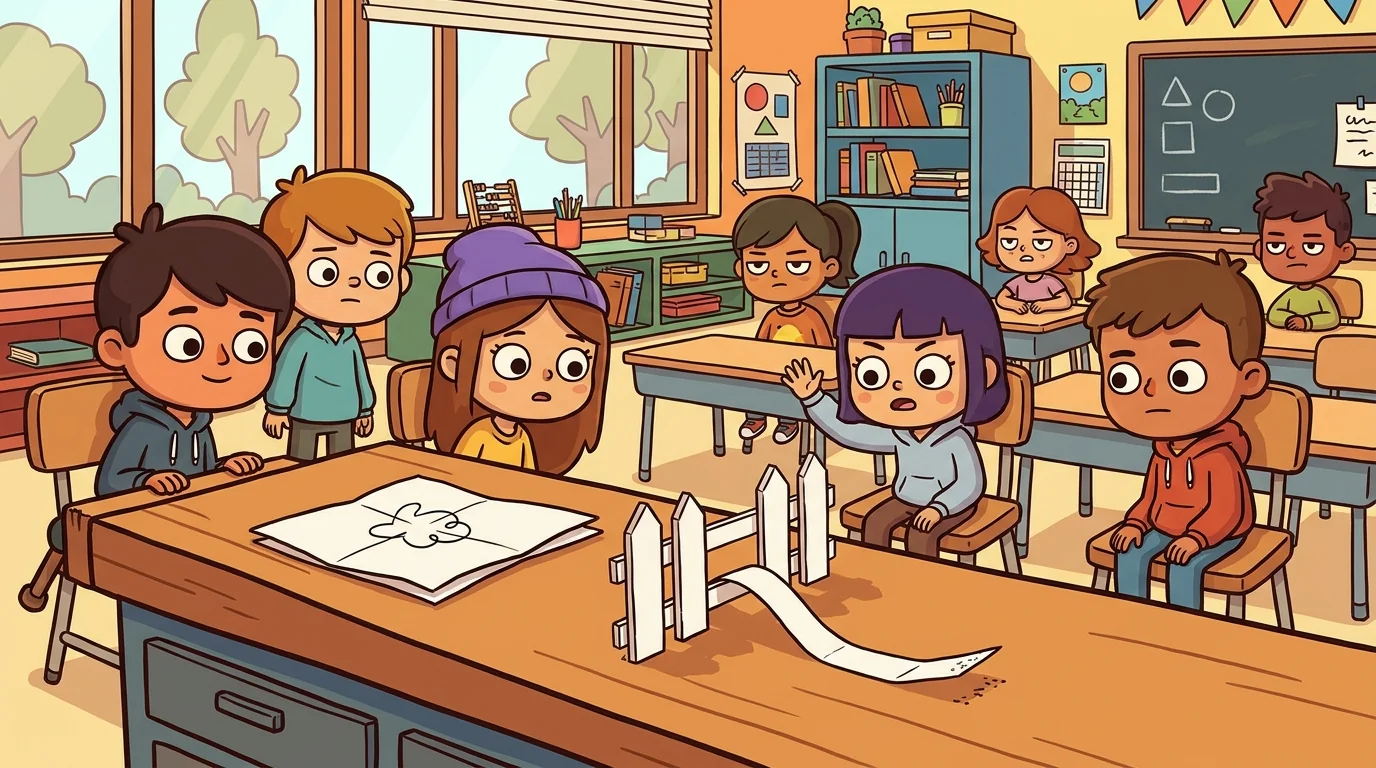
Edge was a paper-figure, folded with sharp creases into a short fence. Three vertical posts and two horizontal rails made up her form. She wasn't an animal, never had been. Not a robot either. Edge was a fence-segment, plain and simple, designed to stand upright on a workbench. She was small, only three posts wide. Anyone could see she didn't stretch forever. She had clear, definite ends. On one side, the fence created a small, protected space. On the other, the rest of the world stretched out, unknown and wild. Edge marked the boundary. She was the boundary.
Edge taught about *model limitations. She showed that every model, no matter how clever, had edges. Think of it like this: a model learns from a specific set of examples, its "training data." It studies these examples, finding patterns within them. But the training data never covers everything*. It only covers a certain range of things. What happens when you show the model something completely new? Something it never saw during training?
The model might still try to give an answer. But that answer won't be reliable. It's like asking a chef who only cooks Italian food to make sushi. They might try, but it won't be good. An honest model, Edge insisted, would simply say, "I don't know." Or it would show very low confidence in its answer. That "I don't know" was the model's edge.
Edge was emphatic about this. "I don't know is a good answer," she would often say. "I don't know is honest." A model that admits it doesn't know is far more trustworthy. It's better than one that confidently gives the wrong answer. The real skill is recognizing the edges. It means knowing where the model's training stopped. It means seeing where the unreliable zone began.
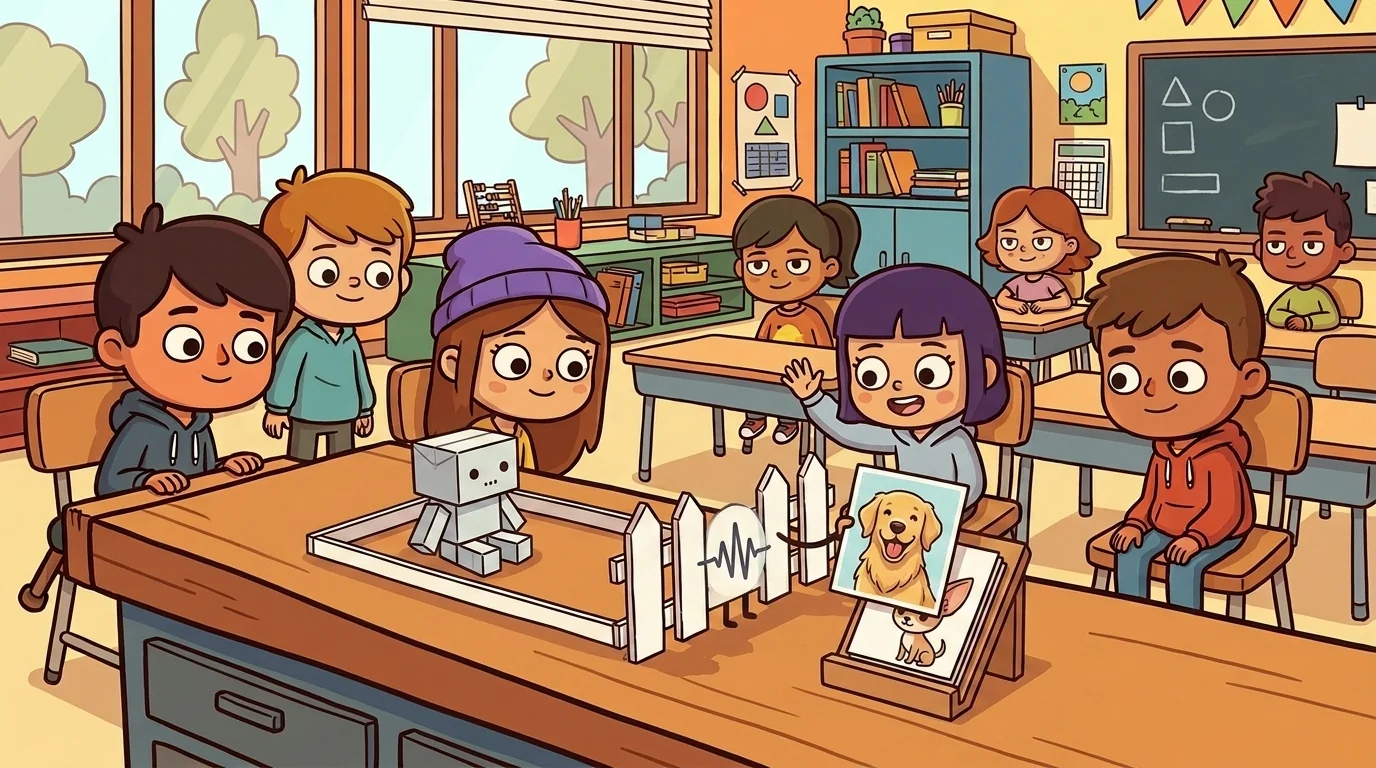
This idea matters a lot. People often think AI is always confident. They imagine AI gives you an answer, and you just take it. But that idea misses the most important AI-literacy skill: knowing when to distrust the answer. Imagine an AI trained only on English text from the internet. It will struggle with other languages. Or with slang from a specific neighborhood. A model that learned from adult voices won't understand a child's whisper. Data from one historical period won't help with new information. Every system has limits to its training. The skill is seeing the fence.
Edge grew up in the same village paper-crafts workshop as Sort, Feed, and Skew. The workshop had a special tradition. Every paper-figure that showed how a model worked was paired with another. That partner figure showed the model's limits. Edge was Sort's limit-partner. Sort was a classifier, good at sorting things into categories. Whenever Sort successfully classified something, Edge stood nearby. She marked the edge of the training data. This was the place where Sort would, honestly, say, "I don't know." Edge learned early on that the edge was the honest part of a model's work. It was where the model admitted what it could not do.
When Edge was twenty-two folding-years old, she walked to the AIForge academy. She moved on a small wheeled platform. Bit, the academy's founder, had asked her, "What are model limitations?"
Edge had answered, "They are the edges of training. I don't know is a good answer. A model trains on a specific range. Outside that range, it has no reliable basis. The honest model says, 'I don't know.' The dishonest model confidently outputs the wrong answer."
Bit had simply said, "You are appointed."
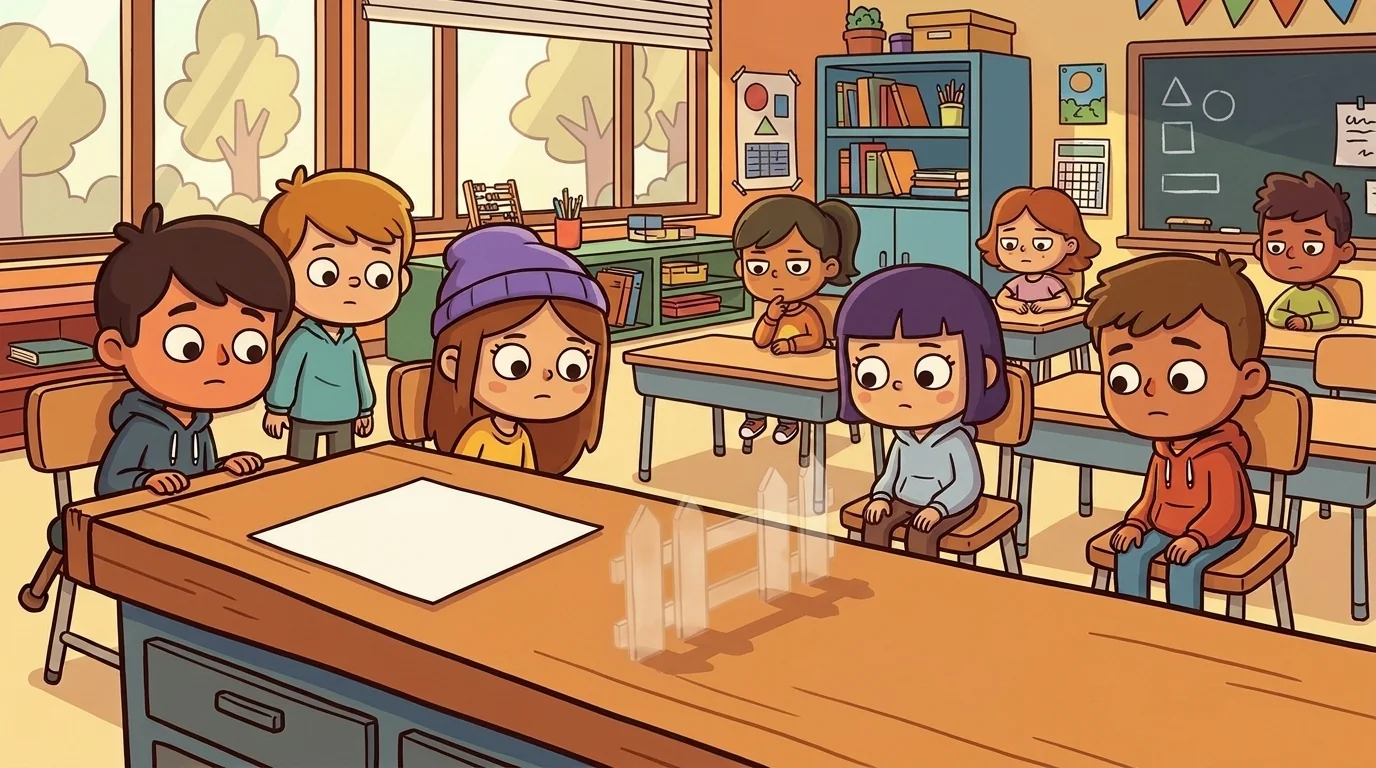
In her classroom, Edge began every first-day lesson the same way. She unfolded her fence-segment on the workbench. She pointed at the ends of the fence, where it clearly stopped. "I am Edge," she told her students. "The idea I teach is model limitations. Your job is to find the edges of the training distribution."
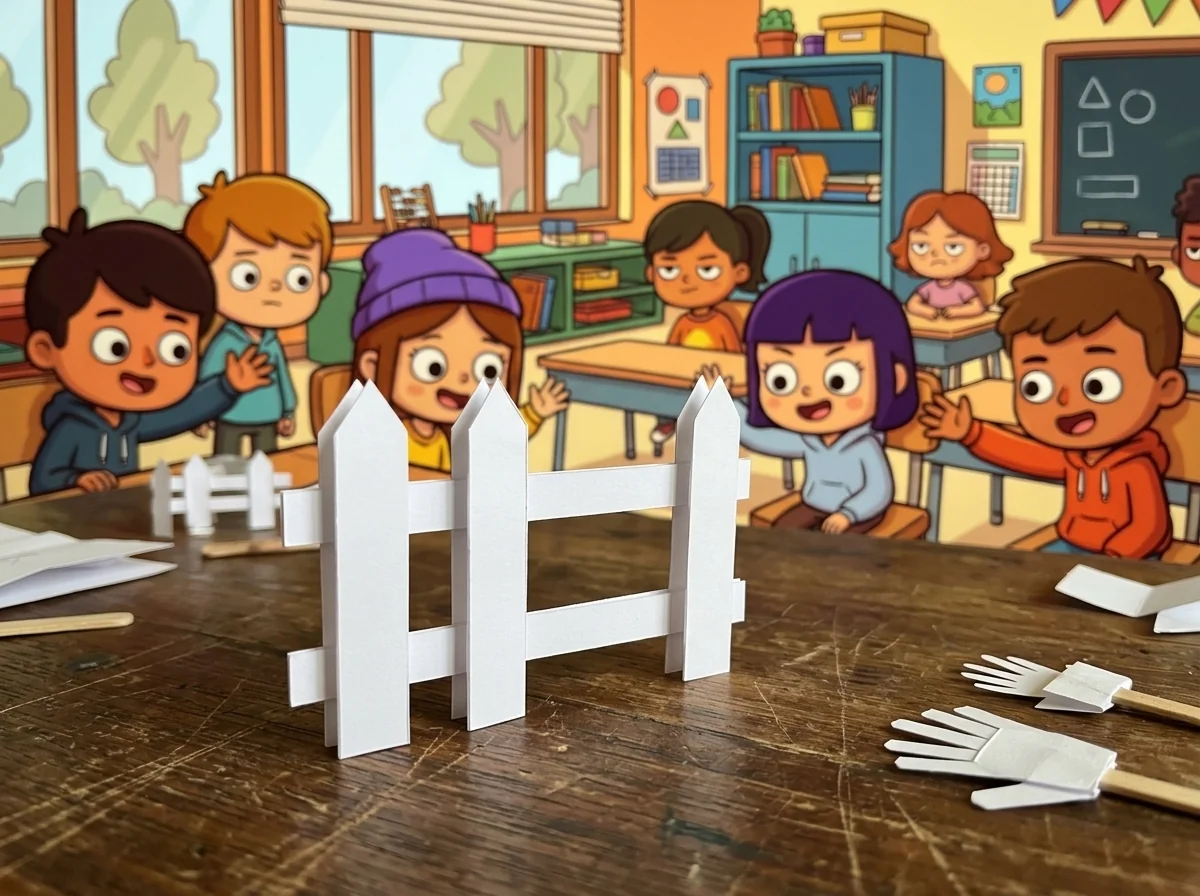
She paused, letting her words sink in. "Inside the fence," she continued, "the model has training. Outside the fence, it doesn't. And outside the fence, the honest answer is I don't know."
Edge taught her students how to understand these limits. She called them the "model-limitations scaffolds."
"First," she explained, "you need to identify the training distribution. What kind of inputs did the model learn from? Was it pictures of cats? Was it spoken words from adults? What time period? What language? Knowing this tells you what the model should know."
She held up a picture of a cat. "Imagine a model trained only on pictures of cats. What would it be good at recognizing?"
"Cats, obviously," a student named Leo called out.
"Exactly," Edge nodded. "That's its training distribution. The kind of data it learned from."
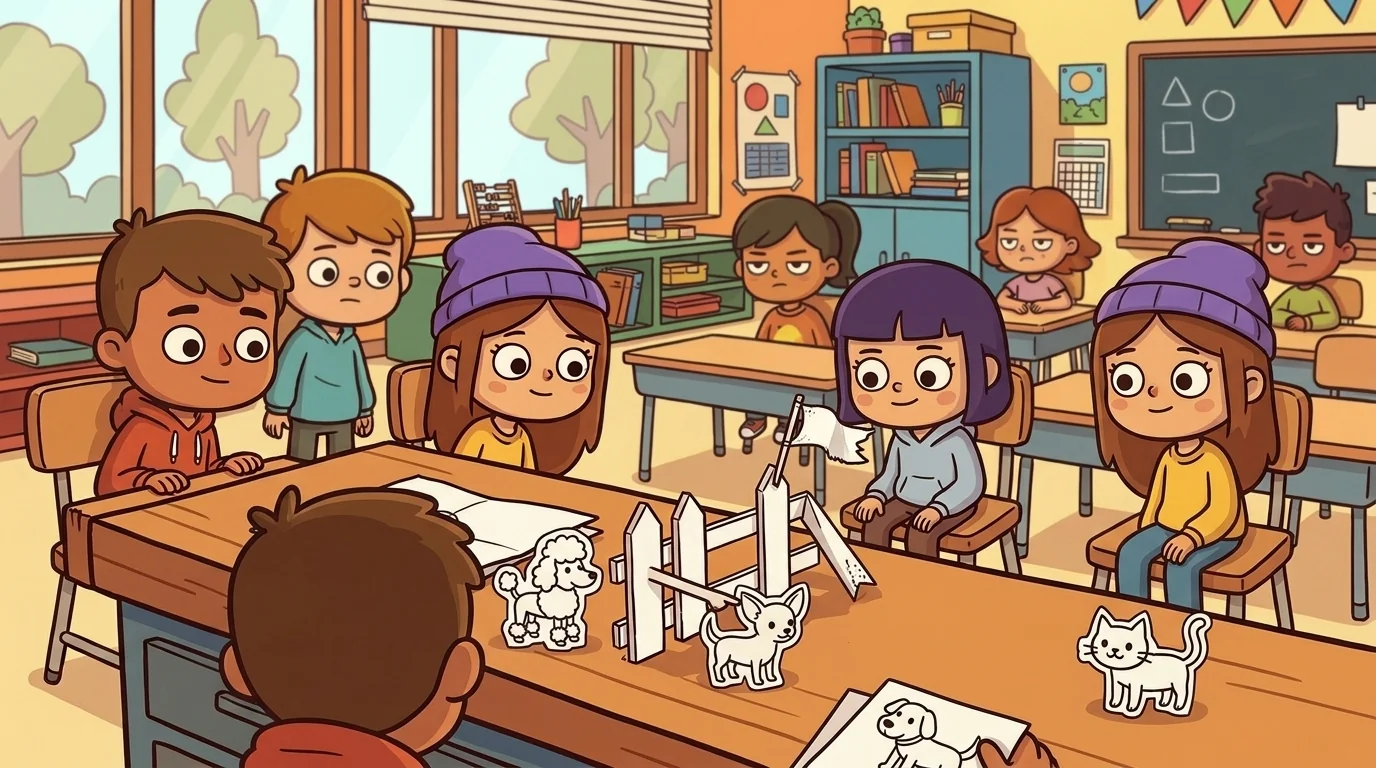
"Second," Edge went on, "you must recognize when inputs are outside the distribution. If you show our cat model a picture of a dog, it's unlike anything in its training. The model is in extrapolation mode then. It's trying to guess without enough information. And that makes its answer unreliable."
Another student, Maya, raised her hand. "So it would just guess 'cat' even if it was a dog?"
"It might," Edge confirmed. "Or it might just be confused. Either way, you can't trust it. It's outside its fence."
"Third," Edge said, "always use confidence scores. Many models don't just give an answer. They also give a confidence score. This is a number that tells you how sure the model is. If that score is low, it's the model's way of saying, 'I'm not so sure about this one.' It's like a whisper from the edge, telling you to be careful."
"Fourth," she continued, "if you're building an AI, build 'I don't know' into the model. You can design AI systems to be honest. You can tell them: 'If you're not at least 80% confident, don't guess. Just say I don't know.' This makes the model more trustworthy, like a polite friend who admits when they're unsure."
"Fifth, it's important to distinguish in-distribution errors from out-of-distribution failures." Edge paused, letting the longer words hang in the air. "Sometimes a model makes a mistake even with data it should know. Like our cat model mixing up a tabby with a calico. That's an in-distribution error. We can fix that with more training. But if it tries to identify a car? That's an out-of-distribution failure. That's an intrinsic limit. It's outside its fence entirely, and more training on cats won't help it recognize cars."
"Sixth," Edge explained, "you should audit deployed models. The world changes. A model trained on data from last year might struggle with new trends this year. When a model is used in a new context, its edges can shift. We have to check its fence regularly."
"And finally," Edge said, tapping her paper posts, "always resist confident-AI marketing. You'll hear people say AI can do anything. That's a marketing claim, not a model property. It's not true. Every model has edges. Always remember that. Don't let the shiny ads fool you into trusting an answer that comes from outside the fence."
She was explicit. "I do not extend infinitely. I am a fence-segment. I have ends. The model I represent has edges. The honest skill is seeing the edges and respecting them. Both as the person building the model, by adding uncertainty. And as the person using it, by not trusting outputs near the edge."
When students asked Edge whether knowing model limits was hard, she always gave the same answer.
"It is not hard," she'd say. "It is find the fence + respect the ends. I don't know is a good answer. The honest model says it. The dishonest model hides it."
She refolded her fence-segment. The ends were still visible. The next model's edges waited to be found.
The AiForge ensemble
Edge is part of AiForge's distributed-narrative cast. Each character embodies a different curricular primitive; together they teach the full subject.