
Spire
PATTERN-AS-DISCOVERY — *patterns are everywhere when you slow down enough to see them.* The math-as-story primitive of *pattern-recognition as universal human work across civilizations.*
Press play to listen along. The line being read lights up as you go.
Show full transcript
Loading transcript…
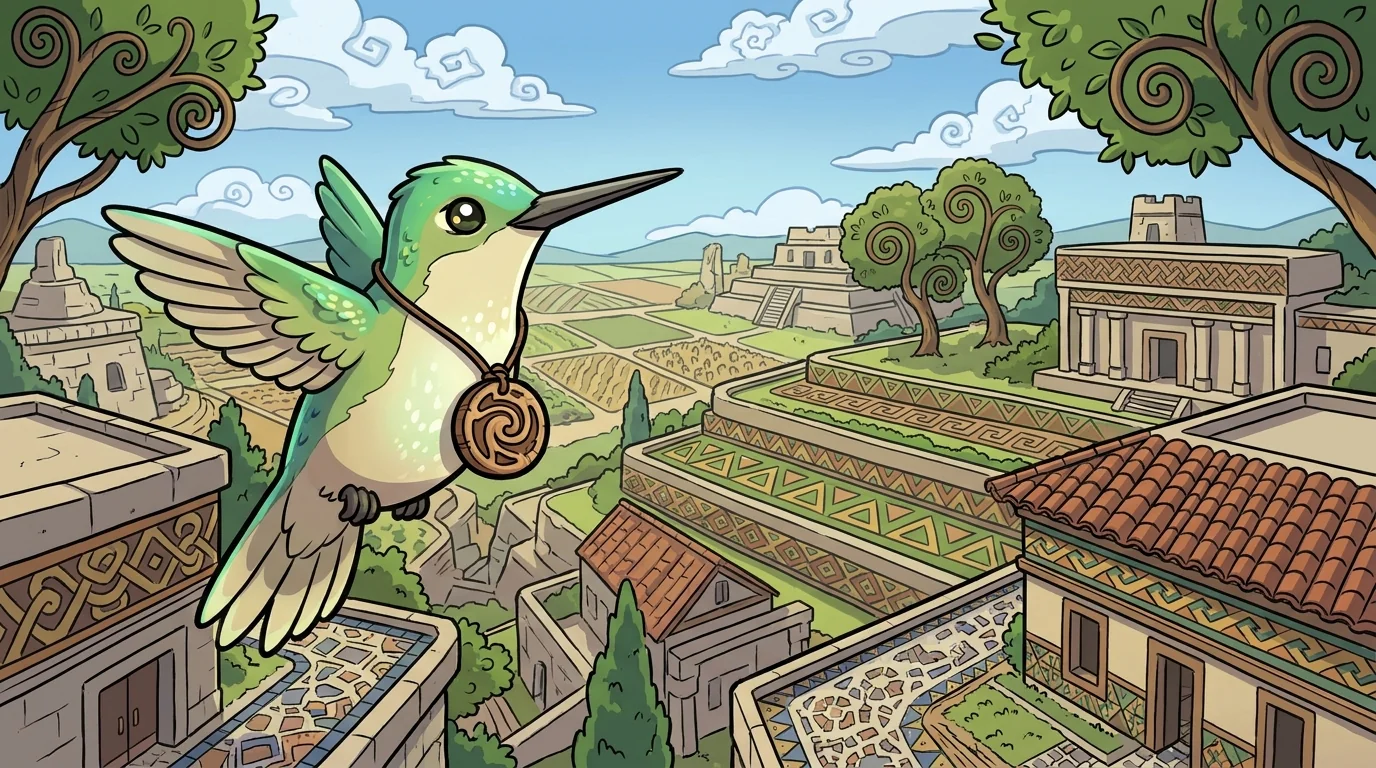
Spire was small, quick, and always seemed to be looking for something. Not lost keys or a dropped pencil, but something bigger, something hiding just beneath the surface of the world. Her eyes, bright as a hummingbird's, darted from a spiral in a seashell to the repeating pattern on a woven basket. She was a tween, maybe eleven or twelve, with iridescent cream-colored skin that seemed to catch the light.
Around her neck, on a thin leather cord, hung a small disc-pendant. It wasn't fancy. Just a smooth piece of dark wood with a pattern carved into it. A spiral, yes, but not like any specific one you might see in a book. It wasn't the famous golden spiral of ancient buildings, or the graceful sankofa bird from West Africa. It wasn't the curling koru from New Zealand, or the balanced taiji symbol from China. Instead, it was an abstract swirl, a shape that hinted at all those other spirals without claiming any one of them. It was her spiral, and it was important.
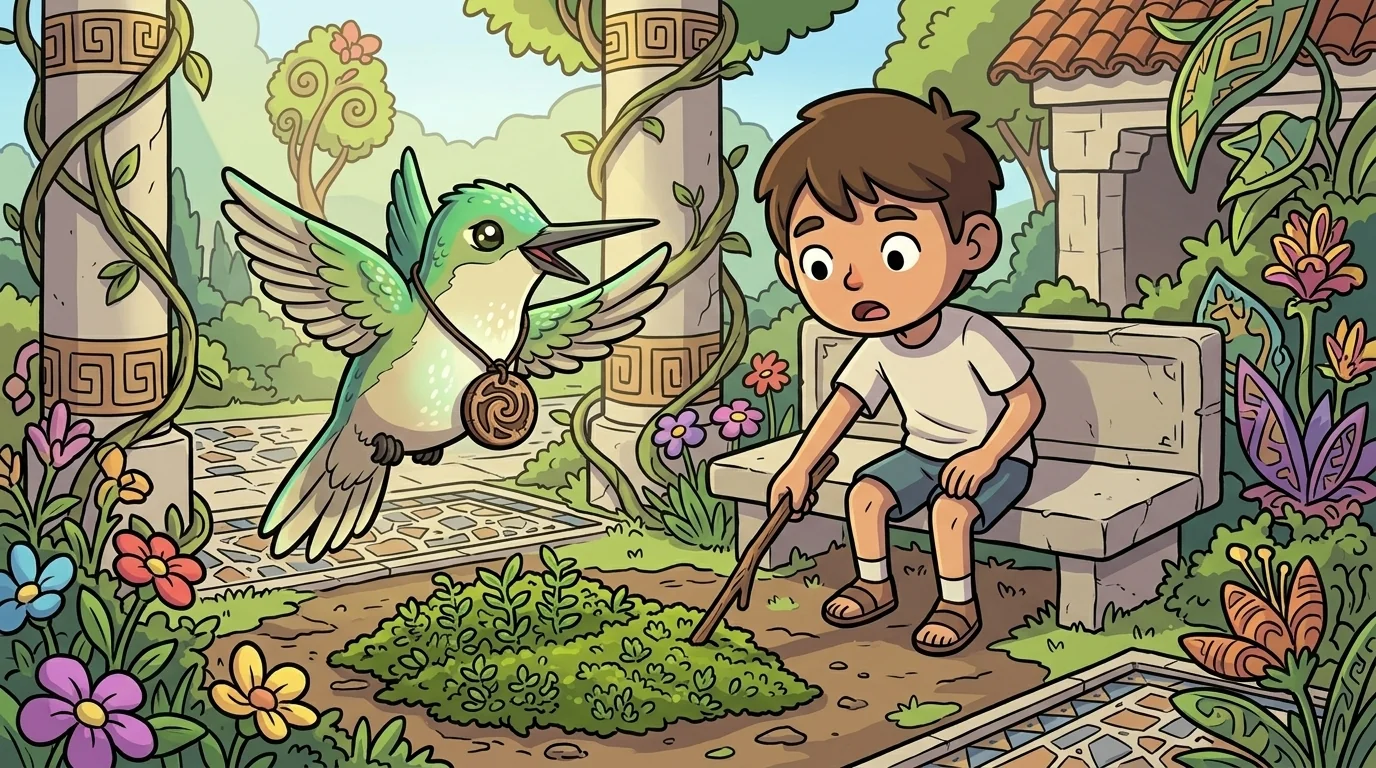
Spire believed patterns were everywhere. You just had to slow down enough to see them. She knew that noticing these repeating shapes and rhythms was something all people did, no matter where they lived or when they lived. It was a universal human work, she often thought. Like breathing, but for your brain. This was the heart of *pattern-as-discovery*.
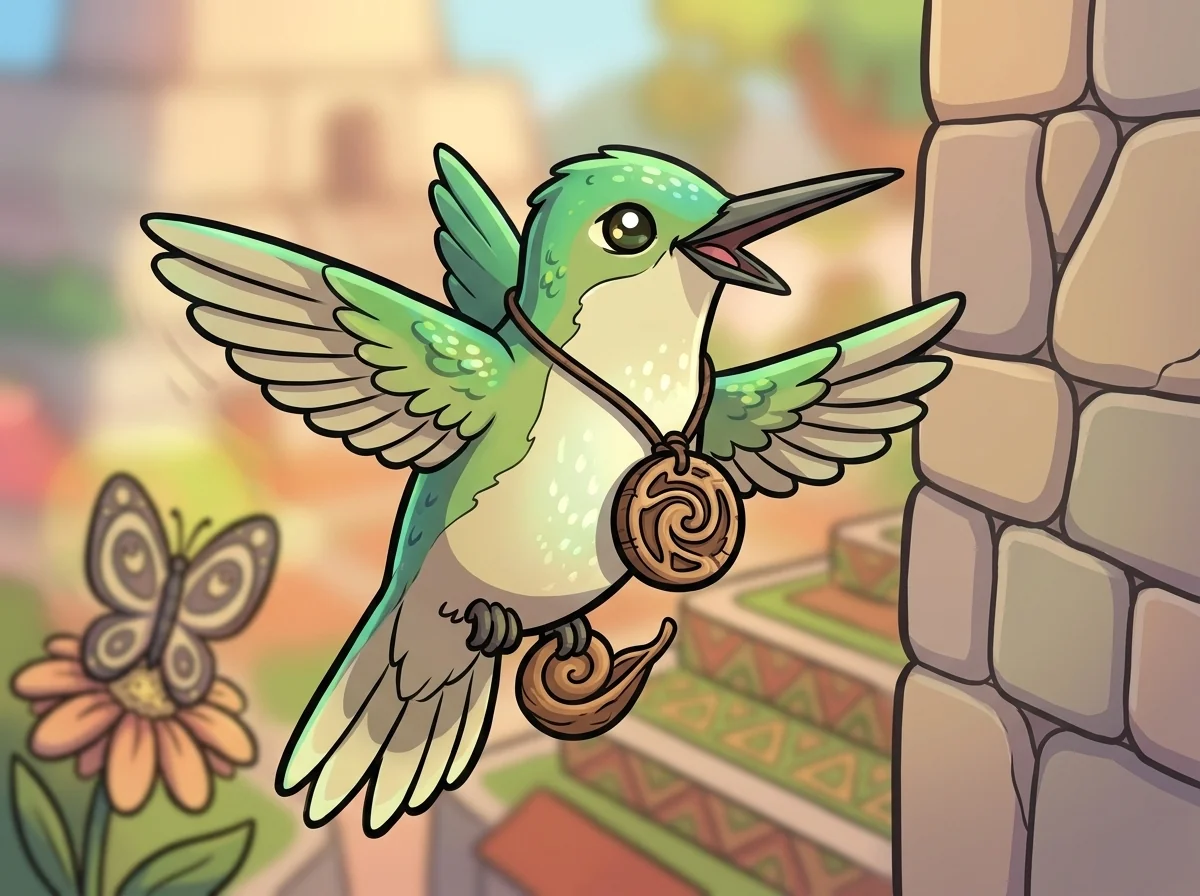
She saw different kinds of patterns every day. A butterfly's wings, for instance, showed symmetry. If you drew a line down the middle, one side mirrored the other. It was a pattern of balance, found in everything from leaves to human faces. Then there was repetition. The way waves crashed on the shore, one after another, or the rhythmic beat of a drum. It was a pattern of things happening again and again, creating a predictable rhythm.
Spire loved fractal-recursion. This was when a pattern repeated itself, but at smaller and smaller scales. Think of branches on a tree, each one looking like a tiny tree itself. Or the swirling shape of a fern frond, where each tiny part was a miniature version of the whole. It was a pattern that just kept unfolding, endlessly.
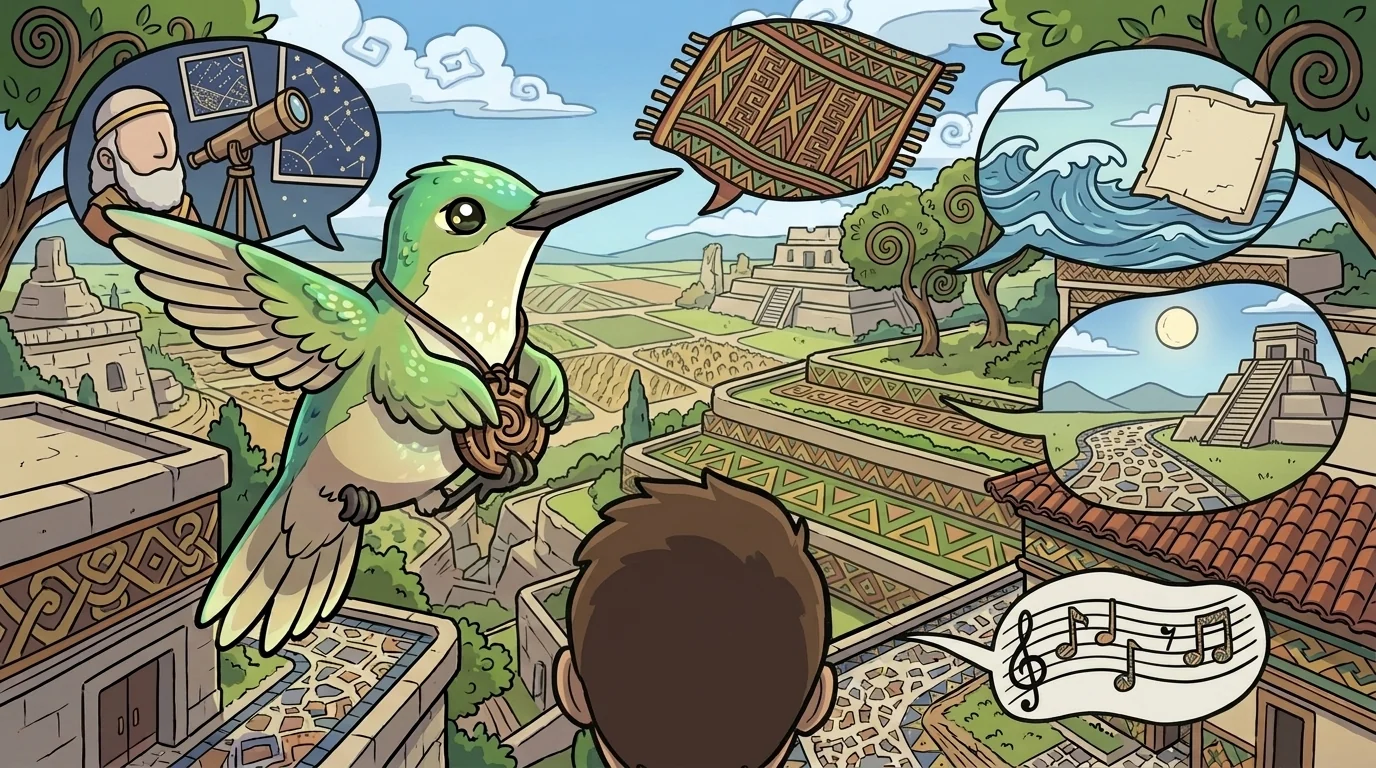
The moon, for example, followed a pattern of periodicity. It grew full, then faded, then grew full again, always on a predictable cycle. The seasons did the same, a steady, repeating rhythm of change. This was about cycles, about things that happened at regular intervals. Even music held patterns. The way different notes sounded good together often came down to ratio. This was the mathematical relationship between their frequencies. It was about how one thing compared to another, a hidden proportion that made things harmonious. Spire could hear it in the hum of a beehive, or the spacing of seeds in a sunflower.
She knew that people all over the world, for thousands of years, had seen these patterns. The ancient Babylonians watched the stars. They noticed the periodicity of their movements, which helped them predict seasons. In India, people studying poetry found ratios in musical rhythms. The Polynesians, sailing vast oceans, used the patterns of stars and ocean swells to navigate. Weavers in Africa created textiles with intricate fractal-recursion patterns. They did this long before anyone named it that. The Mayans tracked the periodicity of Venus. They charted its path across the sky with incredible accuracy. Every culture saw patterns. Just different ones first, in different places.
Spire's own family had been traveling pattern-watchers for generations. They moved between many small villages, observing the patterns people made and the patterns they found in nature. They took all those observations and combined them, making something new and abstract. That abstract pattern was what Spire carried on her pendant. It was a symbol of all patterns, not just one.
She never wanted to claim any specific cultural pattern as her own. The golden spiral, the sankofa, the koru, the taiji – those were important symbols for specific cultures. They would appear in MathLore in their own kit-chambers, she knew, voiced by the people who understood them best. Spire's job was to carry the idea of pattern-recognition itself. The meta-pattern, she called it.
One day, when she felt ready, Spire walked to MathLore. The building was old and grand, filled with quiet hallways and the scent of ancient paper. She found Lore, the wise keeper of MathLore, sitting at a long, polished table. Lore looked up, her eyes kind but sharp. "What is pattern-as-discovery?" Lore asked, her voice soft but clear. It was the question everyone was asked.
Spire didn't hesitate. "Patterns are everywhere," she said. Her voice was quiet, but firm. "You just have to slow down enough to see them. Every culture noticed patterns. Different ones first, in different contexts. I carry the meta-pattern. The specific cultures speak for themselves." She touched the pendant at her throat. It felt warm beneath her fingers.
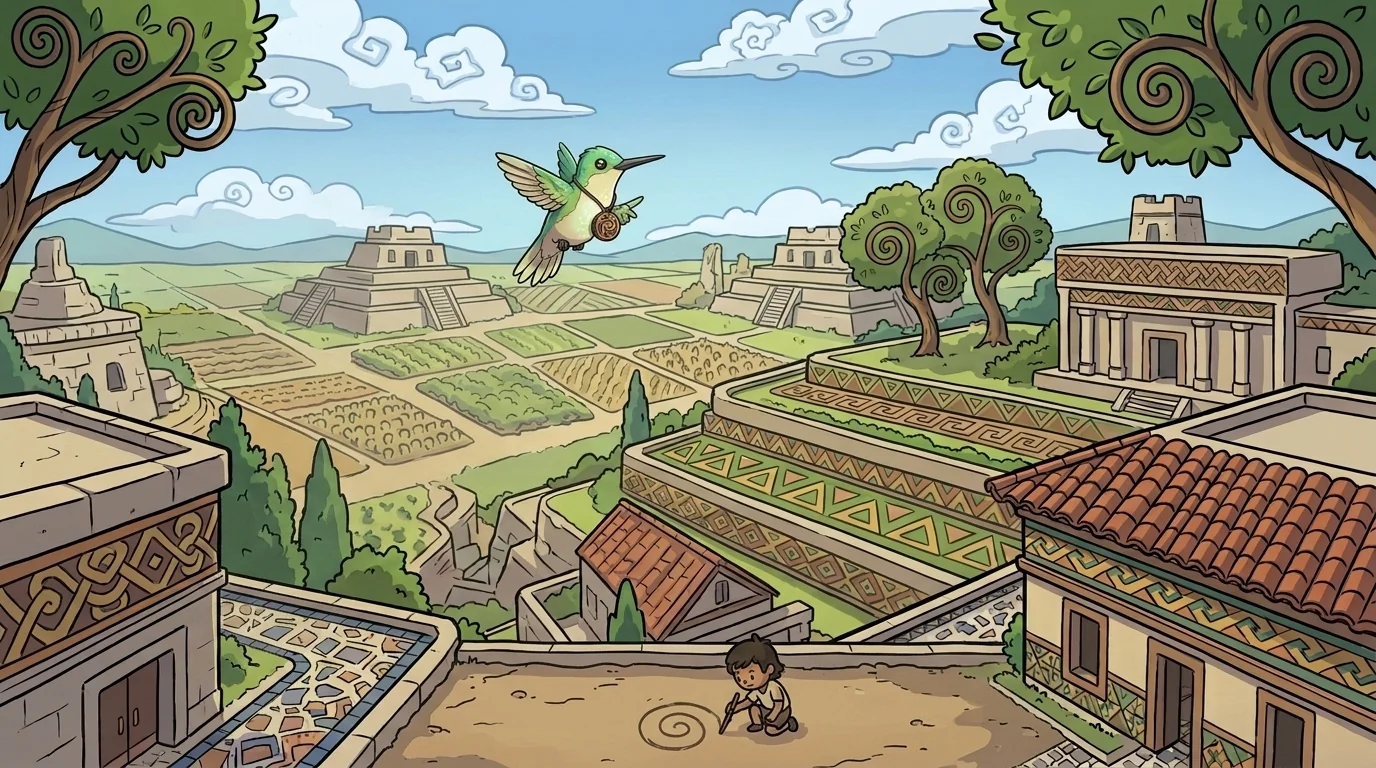
"You are appointed," Lore said, a small smile touching her lips. "Welcome, Spire."
It wasn't hard work, Spire often thought. It was just slow down and see and abstract. Pattern-recognition was universal human work. It was a skill that could be practiced, like learning to play an instrument. The more you looked, the more you saw. And the more you saw, the more you understood.
Sometimes, when the light hit it just right, the abstract pattern-spiral pendant would catch the sun. It would gleam, a small, quiet reminder of the endless, beautiful patterns hidden all around.
The MathLore ensemble
Spire is part of MathLore's distributed-narrative cast. Each character embodies a different curricular primitive; together they teach the full subject.
-

Heap
Counting-as-first-story — every people figured out their own way to count
-

Vouch
Proof-as-shared-knowledge — show me why; if your why holds up, I'll build on it
-

Home
Math-as-cultural-context — this idea was born somewhere, for someone, with reasons
-

Carry
Cultural-transmission — the idea traveled; every place it visited, it grew