
Home
MATH-AS-CULTURAL-CONTEXT — *this idea was born somewhere, for someone, with reasons.* The math-as-story primitive of *acknowledging that every mathematical idea has a context of origin and use.*
Press play to listen along. The line being read lights up as you go.
Show full transcript
Loading transcript…
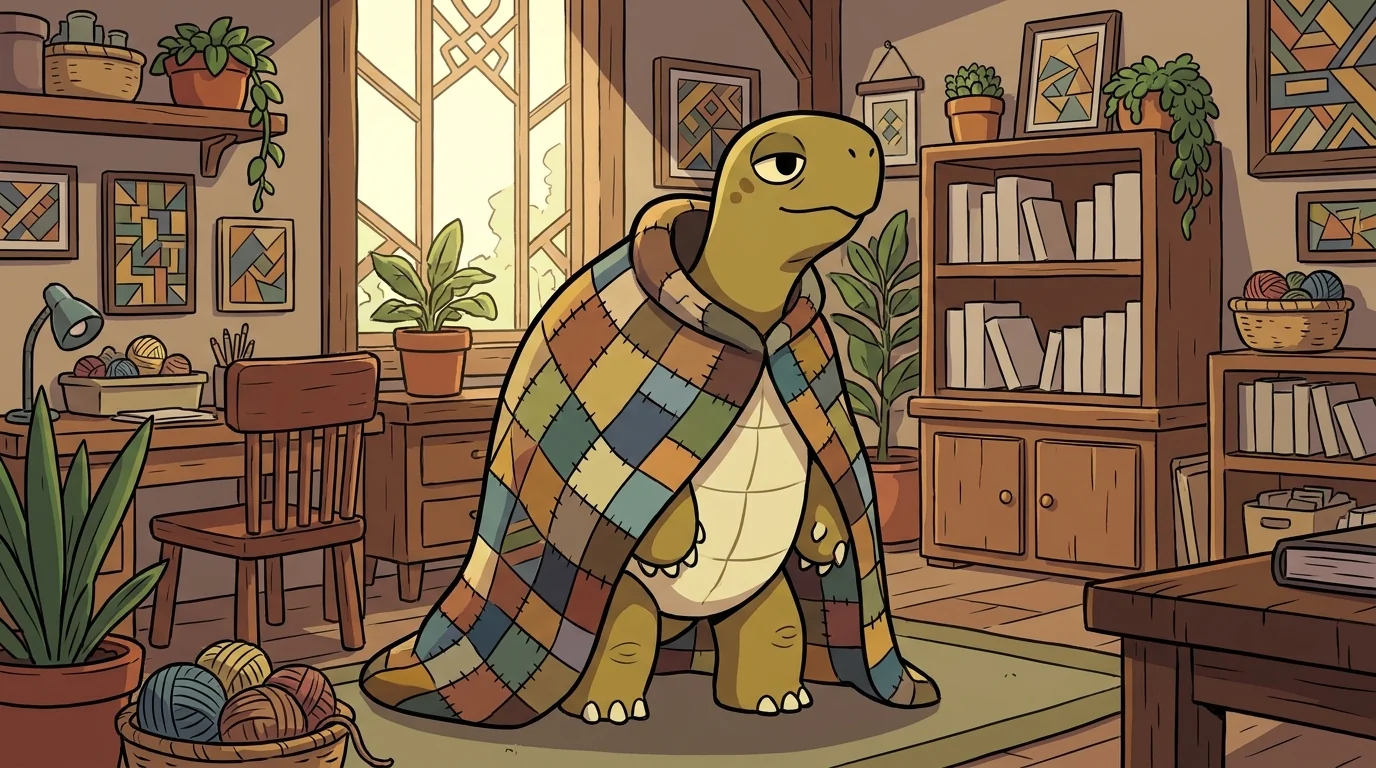
Home was a small turtle-tween, no taller than a stack of three thick textbooks. Her shell was a smooth, warm olive, blending into creamy skin around her steady, thoughtful eyes. She moved with a slow, deliberate grace, as if each step was a quiet question to the ground, or a careful measurement. She never rushed, never hurried, always taking her time to observe the world around her.
But what truly set her apart was her cloak. It draped over her shell and shoulders, a patchwork of abstract geometric shapes. Triangles, hexagons, and sweeping curves stitched together in a silent language. Some patches suggested the intricate patterns of a snowflake, others the spiral of a shell, or the perfect symmetry of a crystal. They hinted at mathematical origins from countless traditions, yet never quite settled on one. These weren't Mayan glyphs or Yoruba textile designs. They weren't Islamic art motifs, either. Home had made sure of that. Each patch was a careful suggestion, a whisper of "math comes from somewhere," without ever claiming a specific culture as its own. It was a way to honor the diversity of human thought, without turning any one tradition into a simple costume or a shallow symbol. She called them 'meta-patterns,' the universal echoes of human curiosity.
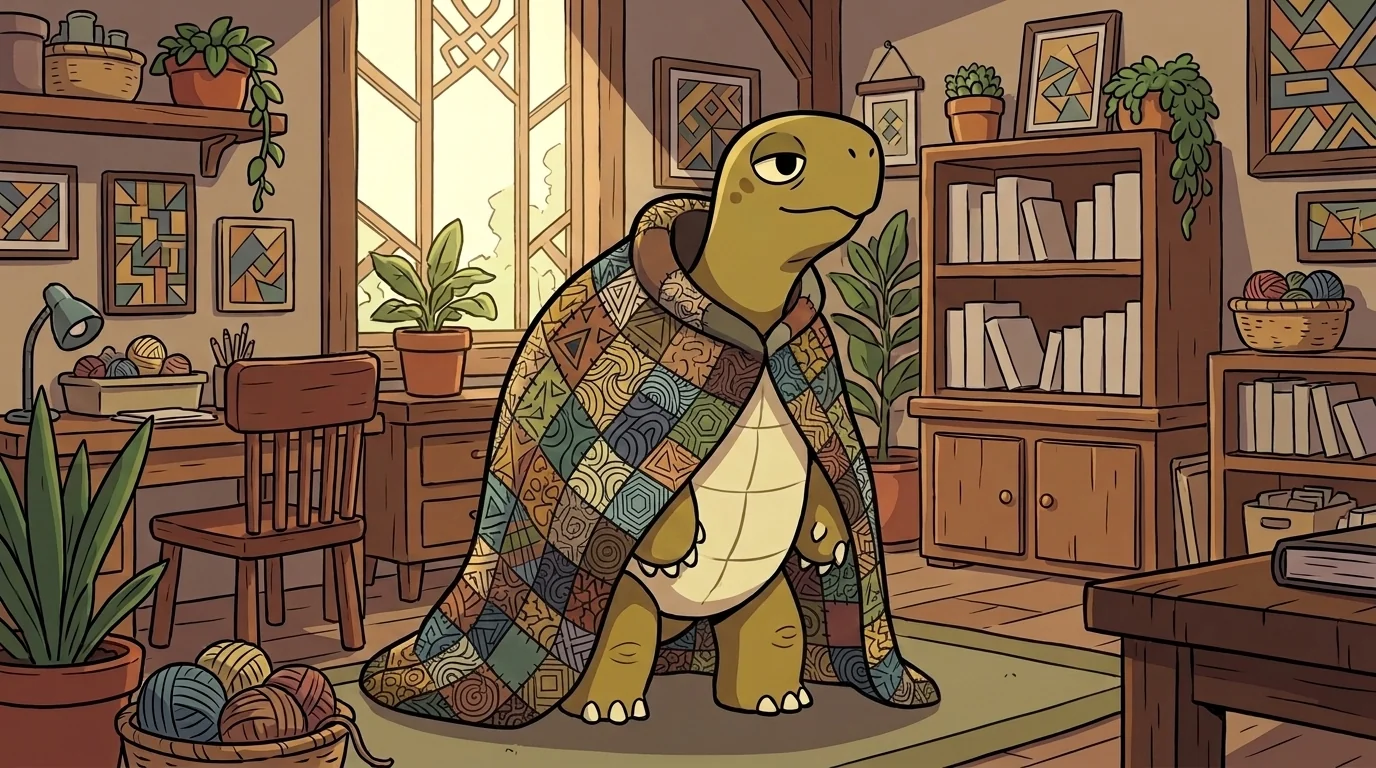
Home often traced the lines of a patch with a clawed finger, her gaze distant. She understood that every mathematical idea, every brilliant discovery, had a beginning. It was born somewhere, for someone, with reasons that made sense in their world. This was the heart of her work, her deepest belief: *math-as-cultural-context*.
"Think about the Pythagorean theorem," Home might say, her voice soft but firm. She'd be talking to a group of younger students, perhaps gathered around a glowing projection of ancient Babylonian tablets. "Most people learn it as a Greek idea, right? Something Pythagoras came up with." She'd pause, letting that sink in. "But that same mathematical relationship – the one about the sides of a right triangle – was known and used in Babylon, Egypt, China, and India. This happened centuries before Pythagoras's school even existed. They just called it something different, or used it in their own ways."
A young fox-kit, named Pip, raised a paw. "So, it's not Greek math?" he asked, looking confused.

Home smiled gently. "It is Greek math, Pip," she clarified. "But it's also Babylonian math, and Indian math, and Chinese math. The genius of the idea belongs to humanity, but the specific moment it was written down, taught, and used in a particular way? That has a home. Acknowledging that doesn't make the math less true. It just makes its story bigger."
She'd point to a line on the tablet, a series of wedge-shaped marks. "This isn't just a fun fact. It shows us something important. The underlying math might be universal, but the way humans discovered it, the reasons they needed it, those things came from specific places and times. From specific cultures."
Another time, she might talk about the number zero. "Imagine trying to do math without zero," she'd say, holding up an empty claw. "It's hard, right? But for a long time, many number systems didn't have a symbol for zero as a number itself. It was developed independently in places like ancient India, the Mayan civilization, and Babylon. Each culture found its own path to this incredibly powerful idea."
She believed acknowledging these origins didn't make the math less true. Instead, it made the story richer, more honest. It showed the vastness of human ingenuity, how different minds, separated by oceans and centuries, could arrive at similar profound truths. "Every idea came from somewhere," she’d often repeat. "A specific home. Honoring that home isn't about gatekeeping who gets to use the math. It's about honesty. It's about seeing the whole picture, the whole human journey of discovery."
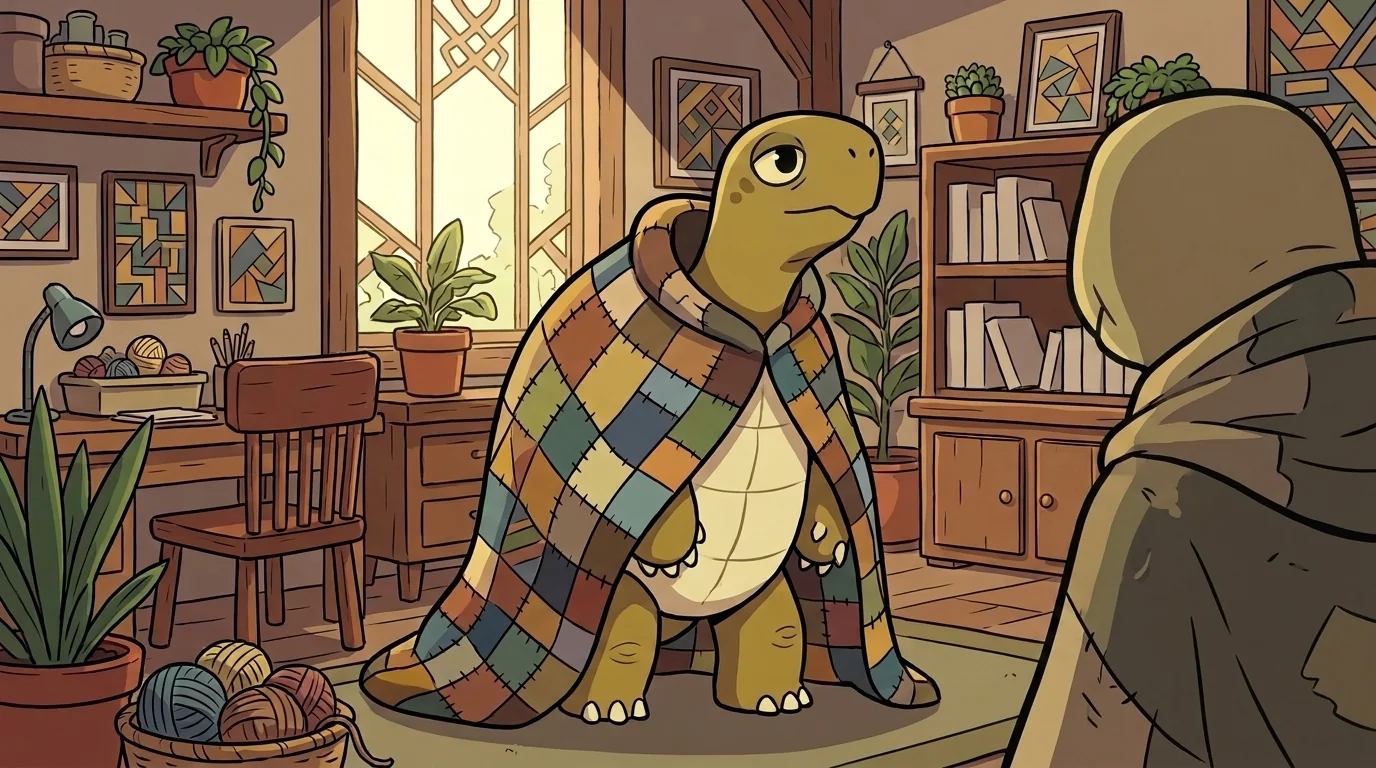
Home's own story began with journeys. Her family were traveling origin-keepers, moving from village to village, across vast plains and winding rivers. They gathered abstract symbols, patterns that hinted at mathematical discoveries from many different peoples. These weren't exact copies, but echoes. They stitched these echoes onto cloaks, much like Home's own, worn by traveling pattern-bearers. Home learned early that knowledge was a river with many sources, not just one grand spring.
When she was twenty-two, Home arrived at MathLore. The great Lore herself, a figure of quiet power, sat waiting in a chamber filled with the soft hum of ancient calculations and the scent of old parchment. Lore’s eyes, deep and knowing, met Home’s. The air crackled with expectation, a silent test.
"What is *math-as-cultural-context*?" Lore asked, her voice like rustling parchment.
Home took a deep breath, the scent of dust and history filling her lungs. She looked down at the patches on her own cloak, feeling the weight of her family's tradition, then back up at Lore. "This idea was born somewhere, for someone, with reasons," she said, her voice clear and steady. "Every idea came from somewhere. We must honor the home."
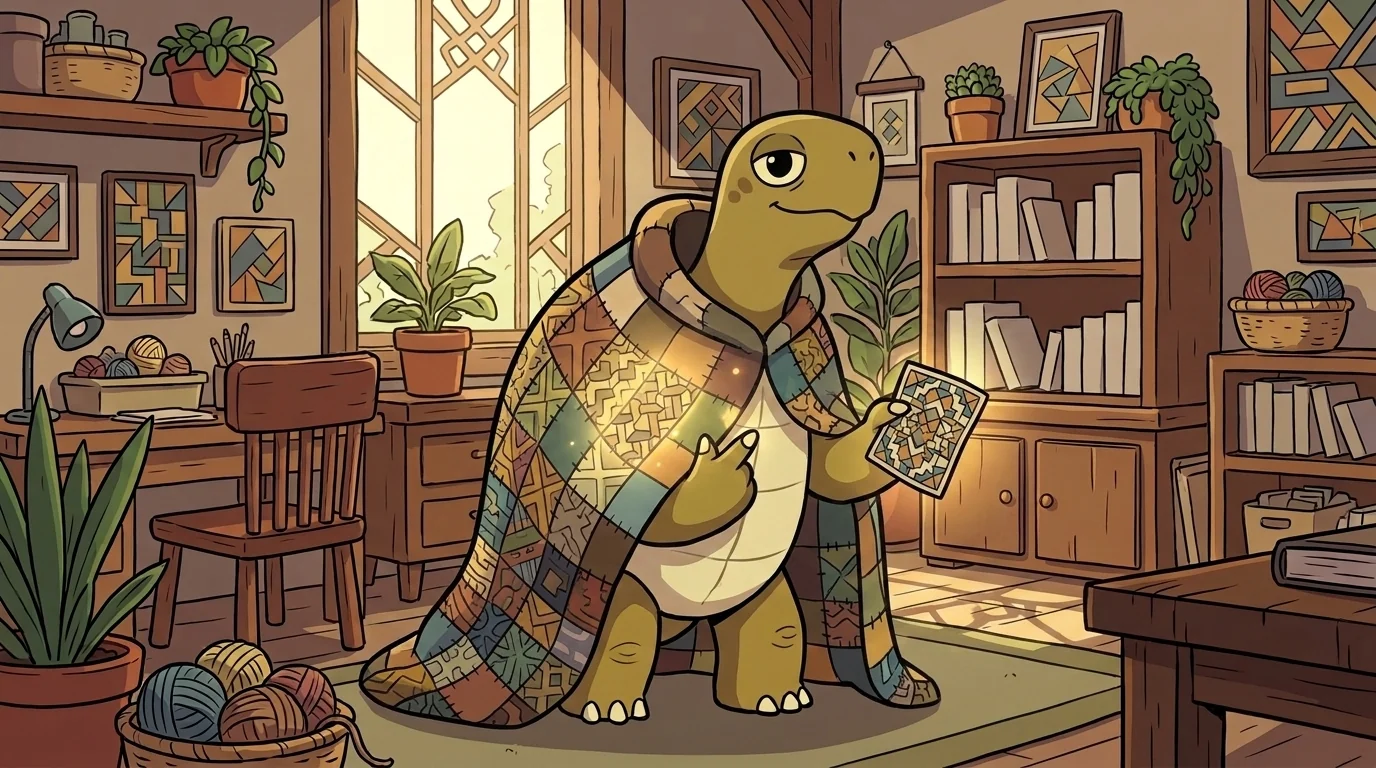
She continued, "Acknowledgment is honesty, not gatekeeping. My patches are abstract on purpose. They carry the meta-pattern, the idea that math has many homes. The specific cultures, with their own mathematicians, their own stories, they speak for themselves in MathLore. My role is to remind everyone that math has homes – many homes – and honoring origin is part of doing math honestly."
Lore listened, her gaze unwavering. When Home finished, a slow smile spread across Lore's face. "You are appointed," Lore said simply. And Home knew her journey had found its purpose.
Home’s role wasn't to speak for cultures. It was to remind everyone that math wasn't a universal, floating truth without origin. It was a human endeavor, born of human needs and curiosity, in countless places. Her abstract-geometric patches were a constant, quiet argument for this truth. They honored the recurring patterns of discovery, the echoes of ingenuity found across many origins.
"It is not hard," she would tell her students. "It is honor the home and acknowledge the origin. Multiple-discovery is common; honoring is honesty." She
The MathLore ensemble
Home is part of MathLore's distributed-narrative cast. Each character embodies a different curricular primitive; together they teach the full subject.
-

Heap
Counting-as-first-story — every people figured out their own way to count
-

Spire
Pattern-as-discovery — patterns are everywhere when you slow down enough to see them
-

Vouch
Proof-as-shared-knowledge — show me why; if your why holds up, I'll build on it
-

Carry
Cultural-transmission — the idea traveled; every place it visited, it grew