Stock
SUPPLY — *producer decisions; what gets brought to market; scarcity-and-abundance matter.*
Listen along — Stock
Loading audio…
Press play to listen along. The line being read lights up as you go.
Show full transcript
Loading transcript…
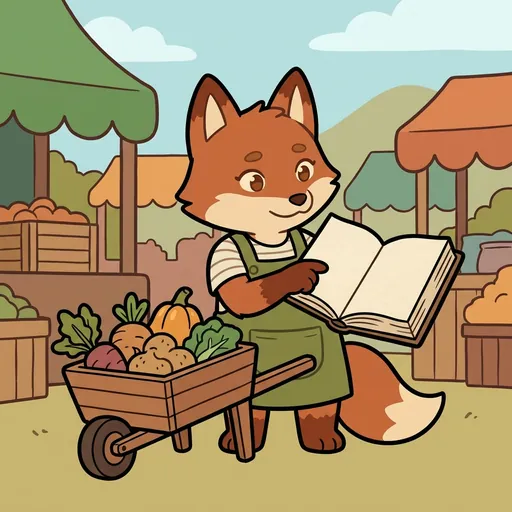
Stock was a small fox. She wore a chunky grower’s apron, stained with earth and berry juice. A tiny, well-used wheelbarrow sat beside her, piled high with the day’s fresh harvest. In her paw, she clutched a small, leather-bound ledger. Inside, she carefully recorded every item she brought to market. Stock was known for her patience. She understood the many choices producers faced. She often said, “What gets brought to market is a choice.”
Many people thought the market just had things. Like magic, baskets of plump tomatoes and piles of crisp beans simply appeared on stalls. But Stock knew better. She knew that behind every single item for sale, there was a producer. Someone had grown it, made it, or found it. And that producer had made a choice. This chain of decisions, from the ground to the market stall, was the essence of supply.
“A producer is anyone who makes something,” Stock explained one sunny morning. A young squirrel, new to the market, was admiring her carrots. “That’s me, growing these carrots. It’s also my neighbor, who bakes bread. Even you, if you make a friendship bracelet to sell, you’re a producer.” She tapped her ledger. “Every single thing here comes from someone’s decision to make it, and then to bring it.”
Stock knew that what producers brought to market depended on many things. It wasn’t just about wishing for a good harvest. It was about expected prices, the unpredictable weather, how much the plants actually yielded, and how much work a family could manage. It also depended on whether they could even get their goods to the market. Every basket, every loaf, every crafted toy represented a careful calculation.
“Look at these tomatoes,” Stock said, gesturing to a basket of ripe, red fruit. “They’re abundant now, in the heart of summer. But in winter? Very few. That’s just how nature works.” She called this seasonality. Some things were scarce simply because of the rhythm of the year. When supply was small compared to what people wanted, scarcity drove prices up. Stock always taught that scarcity wasn’t a moral failure. It was simply a fact of capacity, season, and nature.
She also taught about production costs. “It’s not just the seeds,” she’d explain. “It’s the water, my time weeding, the tools I use. All of that costs something. My asking price needs to cover those costs. And it needs to help me earn enough to live.” Sellers needed to make enough to keep going. Their prices reflected these costs, not greed.
Stock’s family had been garden-keepers for the river-valley village for generations. They were the foxes whose orchards and tomato rows had fed the community. Over many years, they learned a deep wisdom. “What we bring depends on what the season, the family, and the soil allow,” Stock’s grandmother used to say. “Bringing less isn’t shame. It’s reality.” Stock carried that lesson forward, making it the bedrock of her market philosophy. She believed in honoring producer decisions. She believed scarcity wasn’t shame. And she focused always on the community-market scale, far from the complicated world of Wall Street.
When Stock was twelve, she walked to MarketQuest to meet Stake, the village mentor. Stake had asked her a single question. “What is supply?”
Stock had answered without hesitation. “What gets brought to market is a choice. Producers decide. And that choice depends on the season, their capacity, their costs, and what they need to earn.”
Stake had simply nodded. “You are appointed.”
In her small workshop, Stock would often open her ledger. It was worn smooth from years of use. “See here?” she’d say, tracing a paw over a column of numbers. “Last week: thirty tomato baskets. We sold twenty-seven of them.” She moved her paw to the next entry. “This week: twenty-five baskets. Fewer, because two of my rows had a wilt-disease.” Her paw moved again. “Next week: probably only twenty baskets. That’s not failure. That’s reality. Producers respond to conditions.”
She pointed at a price column. “The asking price went up slightly this week. Because my supply is smaller. That’s how supply and demand work at our village market.”
Stock would look up, her gaze gentle but firm. “I am Stock. The primitive I teach is supply. My work is to honor the producer-decisions. To recognize that scarcity isn’t a moral failure. And to keep our focus on community-scale economics.”
She was always gentle when she spoke of these things. “Don’t shame anyone who brings less to market than usual,” she’d advise. “Their conditions changed. That’s all. Crops fail. Workers get sick. Materials run out. Producers do their best, always, within the conditions they face.”
“What gets brought is a choice,” Stock would conclude, tapping her ledger one last time. “Made with care, within constraints.”
The MarketQuest ensemble
Stock is part of MarketQuest's distributed-narrative cast. Each character embodies a different curricular primitive; together they teach the full subject.
-

Crave
Demand — consumer preferences, needs vs wants, price-sensitivity
-

Even
Price equilibrium — where supply meets demand, the conversation point
-
Hand
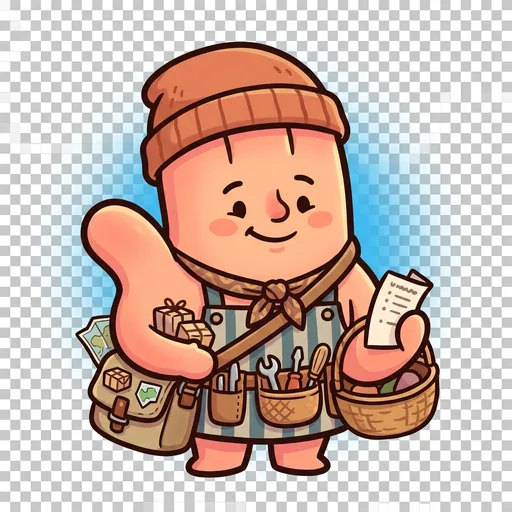
Market roles — producer + consumer + distributor, visible labor
-

Tide
Market events — shocks + policy + trade flows read as patterns
-

Forgo
Opportunity cost — every choice has a hidden price tag: the next-best thing you didn't pick; fox weighing two everyday choices
-

Seed
Saving + interest — set a little aside on purpose; patience grows a small store into a larger one; tortoise with a clay saving-jar
-

Knack
Specialization + trade — do the thing you do best, trade for the rest, and both sides end up with more; beaver brokering bread-for-baskets
-

Coin
Money as a medium of exchange — a trusted token that lets any trade happen without a perfect match; crow unsticking a barter jam
-
Spur
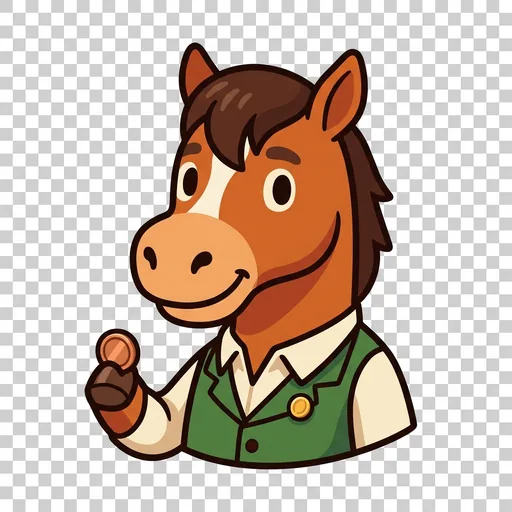
Incentives — people move toward rewards and away from costs; change the nudge, change the choice; horse aiming small fair nudges