Crave
DEMAND — *consumer preferences; needs vs wants; price-sensitivity.*
Listen along — Crave
Loading audio…
Press play to listen along. The line being read lights up as you go.
Show full transcript
Loading transcript…
Chapter 2 — Crave and the Needs-vs-Wants Conversation
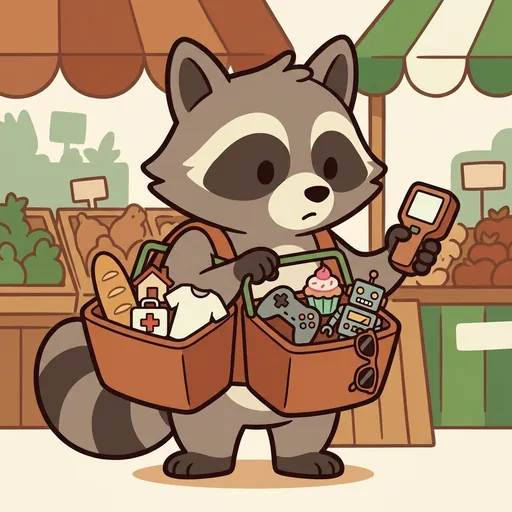
Crave was a raccoon-tween, not much bigger than a loaf of bread. His fur was a soft, warm gray, with a cream-colored mask across his eyes. He wore a chunky vest that looked like a mini shopping basket, complete with two clear compartments. One side was clearly labeled “NEEDS,” the other “WANTS.” He always carried a small price-tag checker, clicking it thoughtfully on anything he found interesting. Crave loved to sort things, especially when it came to what people bought. He often said, “Needs vs wants — they’re different conversations.” This vest was his way of showing everyone exactly what he meant. Inside the “NEEDS” pocket, you might find a tiny piece of bread, a scrap of fabric, or a pretend bottle of medicine. The “WANTS” side held things like a shiny button, a bright feather, or a miniature toy car. He always kept them separate, even when just walking around.
Crave’s job was important. He taught about demand, which meant everything people wanted to buy or use. Most kids, when they first learned about demand, mixed up “needs” and “wants.” Crave knew they were two very different ideas. Needs were things you absolutely had to have to live and be healthy: food, water, a place to sleep, clothes, medicine. You couldn’t go without them. Wants were things you liked to have, but didn’t actually need. A new video game, a different color of shoes, or a special treat for your pet – those were wants.
Both needs and wants created demand in the market. But Crave always pointed out that how you priced them mattered. Charging too much for something people needed could really hurt them. Charging a lot for something people only wanted was a different story. Crave spent his time helping everyone understand this difference. He also showed how demand worked in a local market, not just for big stores that wanted you to buy everything.
Crave made his points very clear. “What people want to buy makes up demand,” he’d explain. “Needs vs wants — they’re different conversations.” He’d hold up a small, plain cracker, then a brightly colored, fruit-shaped eraser. “When I buy this bread, that’s a need. When I buy these fancy erasers, that’s a want. Both are demand. But how fair the price is? That’s where things get different.”
Crave had a list of main ideas he wanted everyone to learn about demand. First, he’d say, “A consumer is anyone who buys or uses something. That means you!” Then came the demand curve. He’d draw a wiggly line in the dirt with a stick. “Imagine this line. When the price of something goes up, fewer people want to buy it. So demand goes down. But if the price drops, more people will want it. Demand goes up.” He’d trace the line, showing how it always went the opposite way of the price. Next, he taught about price-sensitivity, or elasticity. This was about how much a price change affected demand. “Some things, like a new toy, are very price-sensitive,” he’d explain. “If the toy gets even a little more expensive, lots of kids decide not to buy it. But for something you really need, like medicine, the price can go up a lot, and people still have to buy it. That’s called inelastic.” Needs, he noted, were usually inelastic. Wants were often price-sensitive. Of course, he always came back to the needs vs wants distinction. “Remember,” he’d remind them, “needs are things you can’t live without. Wants are just things you prefer. The way we think about pricing them is totally different.” He also taught about anti-consumerism. “You don’t have to buy every single thing you want,” Crave would say. “Learning what’s truly worth your money is a skill. Marketers try to make you think wants are needs. Don’t let them trick you.” Another big point was that income matters. “What one person can easily afford might be impossible for another,” Crave explained. “A fancy new jacket might be a ‘want’ for someone with lots of money. But for someone else, that same jacket could be a ‘need’ if it’s the only warm coat they can find for winter. Never judge someone’s choices without knowing their budget.” Finally, he talked about community-market scale. “Buying fresh vegetables at the local farmers market is different from ordering ten new toys online,” Crave would say. “One helps your neighbors directly. The other… well, it’s a different kind of market, with different questions about fairness.”
Crave grew up in the Foraging Village, where everyone learned to find what they needed from the wild. His family were known as the gatherer-discerners. They were the raccoons who carefully sorted everything they found. For generations, they had taught the village that some things were absolutely essential for survival. Other things were just nice to have, a convenience. “Honor both,” they would say, “but always know the difference.” They believed a truly smart gatherer understood this perfectly. Crave had learned this lesson from his earliest days, and he carried it with him always.
When Crave turned twelve, he walked to MarketQuest to meet Stake, the wise old mentor. Stake looked at Crave with sharp eyes. “Tell me, young one,” Stake asked, “what is demand?” Crave stood tall. “What people want to buy shapes demand,” he replied. “Needs vs wants — they’re different conversations. Both are part of the market. But the fairness of their prices? That’s where things get different.” Stake nodded slowly. A small smile touched his lips. “You are appointed,” he said.
In his workshop, Crave often started by showing off his vest. “Watch,” he’d say, holding it up for everyone to see. He’d point to the “NEEDS” compartment. “Look here. Bread. Water. A bar of plain soap. A simple blanket. Basic shoes.” He’d list each item carefully. “These are needs. If someone charges too much for these, it can really hurt people.” Then he’d switch to the “WANTS” side. “Now look at these. Soap with a fancy design. Shoes in the latest fashion color. A blanket with glitter. Premium treats for your pet.” He’d pause, letting the difference sink in. “These are wants. Charging more for these? That’s a very different kind of question.” He’d then introduce himself, his voice clear and proud. “I am Crave. The main idea I teach is demand — what people want to buy. My biggest lesson is this: separate needs from wants. Respect both. But know that how you price them is not the same.”
Crave was always gentle when he gave this advice. “Don’t ever feel bad for wanting things you don’t need,” he’d say. “Wanting is just part of being human. But you have to be honest with yourself about which is which. Saying ‘I want this’ is not the same as saying ‘I need this.’ Both sentences are fine. They just mean different things.” He’d finish with his most important message. “Needs vs wants. Different conversations. Respect both. But always know the difference.”
The MarketQuest ensemble
Crave is part of MarketQuest's distributed-narrative cast. Each character embodies a different curricular primitive; together they teach the full subject.
-
Stock
Supply — producer decisions, scarcity, what gets brought to market
-

Even
Price equilibrium — where supply meets demand, the conversation point
-
Hand
Market roles — producer + consumer + distributor, visible labor
-

Tide
Market events — shocks + policy + trade flows read as patterns
-
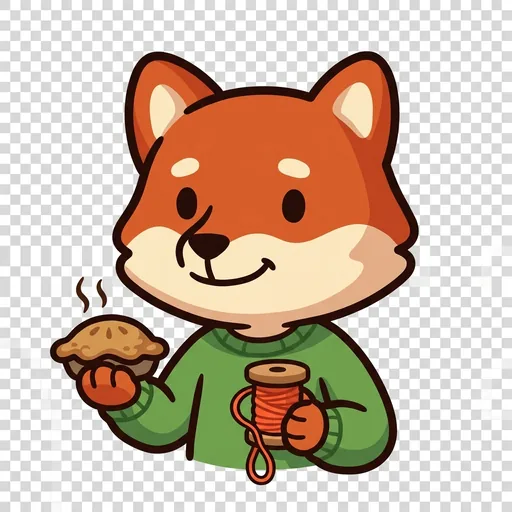
Forgo
Opportunity cost — every choice has a hidden price tag: the next-best thing you didn't pick; fox weighing two everyday choices
-
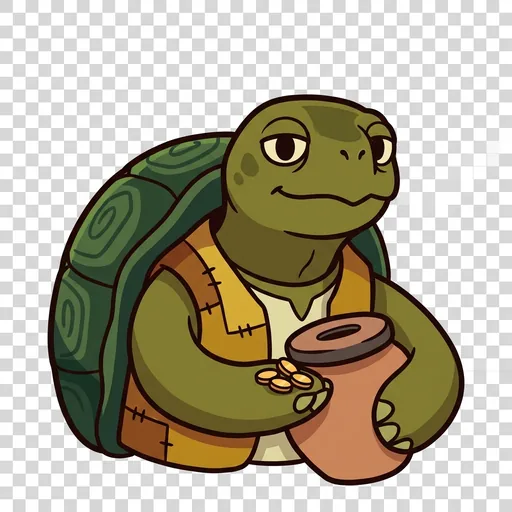
Seed
Saving + interest — set a little aside on purpose; patience grows a small store into a larger one; tortoise with a clay saving-jar
-
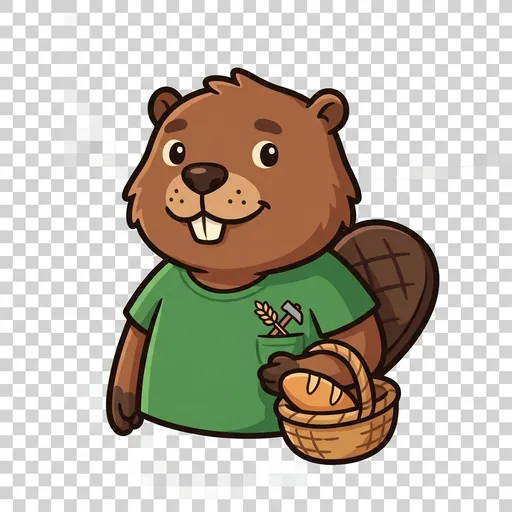
Knack
Specialization + trade — do the thing you do best, trade for the rest, and both sides end up with more; beaver brokering bread-for-baskets
-
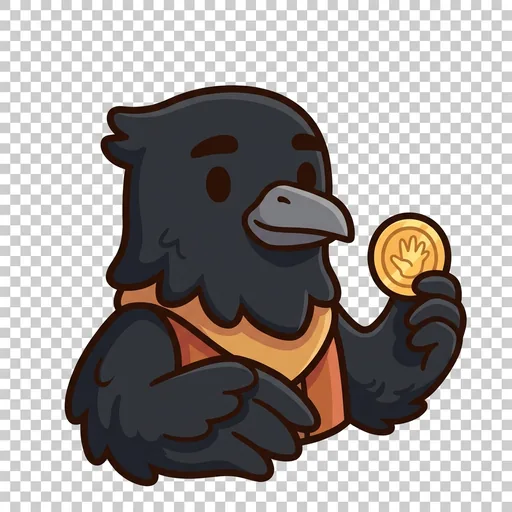
Coin
Money as a medium of exchange — a trusted token that lets any trade happen without a perfect match; crow unsticking a barter jam
-
Spur
Incentives — people move toward rewards and away from costs; change the nudge, change the choice; horse aiming small fair nudges