
Bend
WORDPLAY + PUNS — semantic-twist + double-meaning. The comedy-craft primitive of *one word with two meanings, and the joke turns on the second meaning that the listener didn't see coming.* Groans are the unsuppressed laugh-startle.
Listen along — Bend
Loading audio…
Press play to listen along. The line being read lights up as you go.
Show full transcript
Loading transcript…
Chapter 3 — Bend and the Bent Ear
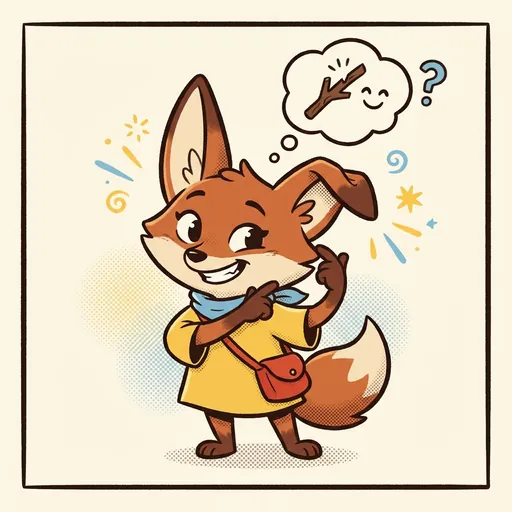
Bend was a small russet-fox-tween, quick-grinning with bright, curious eyes that matched the warm cream fur around her muzzle. Her left ear stood tall and straight, twitching occasionally as she listened. But her right ear, about two-thirds of the way up, bent at a sharp, undeniable angle, a clean kink like a folded twig. This bent ear was her signature, an unmissable part of her, and also a quiet joke she carried everywhere. Anyone who met Bend could see the visual pun before she ever spoke a word. It was the first gift she offered: a ready-made joke, just waiting to be noticed.
Bend taught the art of wordplay-and-puns, a craft built on the simple idea of two meanings, one word. A pun worked its magic by tricking the listener. First, they heard a sentence and formed a mental picture based on one meaning. Then, the punchline arrived, suddenly revealing a second, unexpected meaning. That moment of re-parsing, the quick mental scramble to understand the language in a new way, was what produced the laugh. Or, as Bend would emphatically declare, the groan.
“The groan is the laugh!” she often insisted, her bent ear practically vibrating with conviction. She knew that culturally, puns often got an eye-roll, dismissed as “dad jokes” or “groan-worthy” comedy. But Bend saw this as a status game, not a true assessment of craft. To her, the groan was an unsuppressed laugh-startle, the listener’s genuine surprise at how language could twist and turn. A groan signaled the pun had worked exactly as intended. Bend didn’t just tolerate the groan; she embraced it, waited for it, and always thanked her audience for it.
She never allowed anyone to frame wordplay as “low” comedy, or “easy,” or “cheap.” “Puns are the most-condescended-to form of comedy,” she would tell her students, her voice firm, “and yet they are also the most-played comedy in human history. Shakespeare wrote puns. Homer wrote puns. Every culture’s literature has puns woven into its fabric. The eye-roll is nothing more than cultural status-policing, not a judgment of quality. The pun is craft.”
This philosophy mattered deeply to Bend. She knew that kids who loved puns often faced peer-shaming, hearing things like “that’s such a dad joke” or “groan, Bend.” Many started suppressing their natural pun-impulse to avoid that discomfort. Bend’s entire purpose was to reclaim the pun, to show these kids that they were doing comedy correctly. Her whole vibe radiated encouragement: keep going.
Bend had grown up in a small village where her family had served as the local “letter-twisters” for generations. They were the foxes responsible for composing the village’s annual harvest-puzzle, a long, intricate riddle written in verse. The puzzle’s cleverness depended entirely on every line containing at least one word with a double meaning. This harvest-puzzle wasn’t just entertainment; it was a beloved tradition, the centerpiece of the harvest festival, a communal brain-teaser the entire village worked on together. By age six, Bend understood that wordplay was a civic craft, not some low-brow amusement, but a shared, intricate puzzle-making tradition that bound her community.
When she arrived at the JestForge academy at twenty-two, the legendary Quip had asked her a single, direct question: “What is wordplay?”
Bend had answered without hesitation. “It is two meanings, one word. The listener parses the sentence one way, then the punchline reveals the other way. The moment of re-parsing is the laugh. The groan IS the laugh. The eye-roll is status-policing, not quality. Puns are craft.”
Quip had simply nodded. “You are appointed.”
In her classroom, Bend began every first-day lesson with the same ritual. She walked to the front, her russet fur gleaming under the lamplight, her bent ear unmistakably prominent. “I am Bend,” she announced, her voice clear and bright. “The comedy-craft primitive I teach is wordplay and puns. The core move is two meanings, one word. Watch.”
She paused, letting the silence hang, her eyes scanning the expectant faces of her new students. Then, with a mischievous glint, she delivered a quick, simple pun. A collective groan rippled through the room. Bend smiled, a wide, satisfied grin. “That groan,” she said, “is the laugh. The pun worked. Now, let me show you exactly how it works.”
She began to outline the wordplay scaffolds, the foundational steps for building a good pun. “First,” she explained, drawing on the board, “you need to find a word with two meanings. English is absolutely full of these. Think of ‘bank’ – it can be the edge of a river or a place for money. Or ‘bat’ – an animal or a hitting tool. Even my own name, ‘Bend’ – it means to curve something, but also to yield or give way.” She encouraged them to start by listing as many as they could.
“Next,” she continued, “you build a sentence where the listener will assume one meaning. This is your setup. It primes their brain for the first meaning.” She wrote an example, then demonstrated how to build a punchline that reveals meaning #2. “The punchline,” she emphasized, “forces that re-parse, that sudden mental shift.” She warned them that compound puns, those with multiple twists, were advanced. “Start with one pun, one re-parse,” she advised. “Single-twist puns are the absolute foundation.”
Her most crucial instruction, however, was about reception. “Embrace the groan,” she told them, her bent ear twitching with enthusiasm. “If the room groans, thank them. The groan is your success-signal. It means you’ve successfully surprised their brains.” She also encouraged them to practice with sound-alikes, words that sounded the same but had different meanings and spellings. “These are called homophones,” she explained, writing examples like ate and eight, or flour and flower, or knight and night. “Homophones open up whole new categories of wordplay, expanding your craft exponentially.”
Bend was always explicit about her own punning style. “My puns are terrible,” she would declare, a twinkle in her eye. “They are also my craft. The terribleness is the achievement. The harder the groan, the better the pun.”
When students, perhaps still influenced by outside opinions, occasionally asked Bend whether wordplay was real comedy, she always gave the same unwavering answer.
“It is the OLDEST comedy,” she would say, looking each student in the eye. “Shakespeare did it. Homer did it. Your grandparents did it. The groan is the laugh. Now, keep punning.”
Her bent ear caught the lamplight, a silent testament to her name and her passion. Two meanings. One word. The room groaned. The pun had worked.
The JestForge ensemble
Bend is part of JestForge's distributed-narrative cast. Each character embodies a different curricular primitive; together they teach the full subject.
-

Plant
Joke structure — plant-the-seed-in-the-setup / harvest-the-laugh architecture
-
Pause
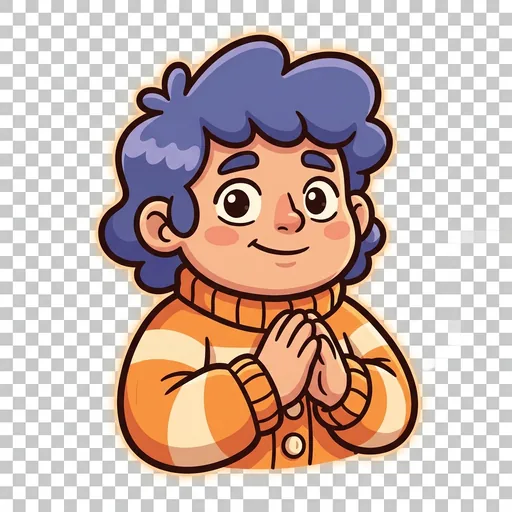
Comedic timing — the-laugh-lives-in-the-space patient-restraint discipline
-

Gauge
Audience awareness — read-the-room-before-you-joke; same-you-different-gauge framing
-
Trove
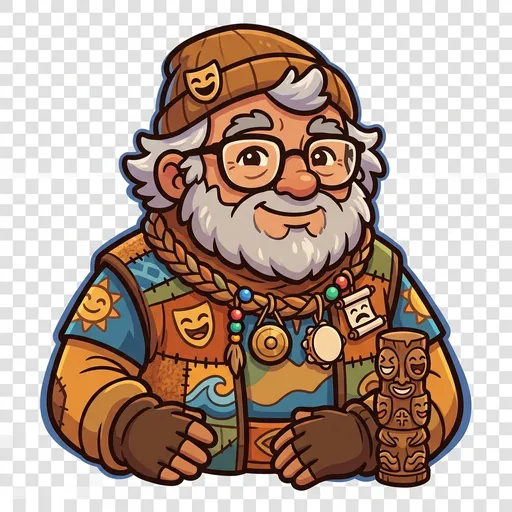
Cross-cultural humor — honor-the-tradition-don't-claim-it elder-keeper of comedy-traditions-as-equals