
Virtue
VIRTUE ETHICS — the view that the *moral worth* of an action is determined by *the character of the person acting.* The central question: *what kind of person do I want to be?* Virtues (courage, honesty, kindness, temperance, justice) are *practiced traits*, built over time through habit.
Listen along — Virtue
Loading audio…
Press play to listen along. The line being read lights up as you go.
Show full transcript
Loading transcript…
Chapter 3 — Virtue and the Small Plant
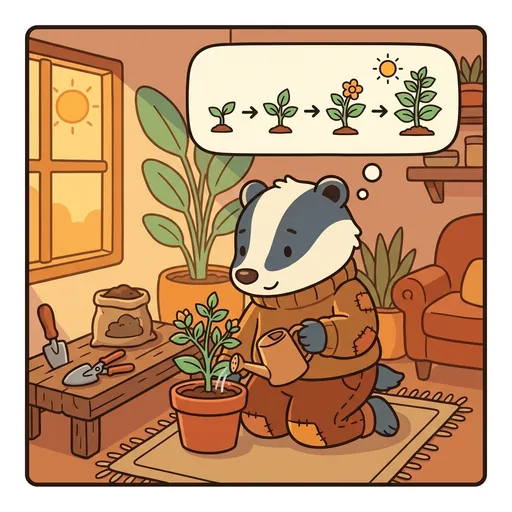
Virtue is a badger tending a small plant in a pot.
The badger, named Virtue, knelt beside a small clay pot. Inside, a tiny green sprout pushed up from the soil. Virtue’s movements were deliberate. She didn’t rush. She picked up a miniature watering can, its spout no bigger than her pinky finger. A few drops of water landed precisely at the plant’s base.
Virtue watched the plant. She noticed a yellowed leaf, barely visible. With tiny, careful shears, she snipped it away. Then she gently turned the pot, making sure the plant faced the morning sun streaming through the classroom window. This was her daily ritual. This patient, consistent care. The plant grew. Slowly. Steadily. Because of her attention.
Virtue believed that character worked much the same way. Like plants, virtues grow with consistent care. They aren’t something you just get in a single moment. You don’t wake up one day and suddenly have courage. Instead, they are cultivated over time, through small, daily acts.
She taught that the real question wasn’t about a single action. It wasn’t “Did this action have good consequences?” (That was Consequence’s question). It wasn’t even “Did this action follow a moral rule?” (That was Duty’s question). For Virtue, the question was always: What kind of person does this action express? And what kind of person do I want to be?
Character, she explained, was the sum of all those small choices. It was the unit of analysis. Actions mattered because they formed you. They also expressed who you already were.
Equal-weight discipline: Virtue advocated for her framework with the same skill, length, and tone as the other 4 framework-advocates. Equal weight was essential.
Virtue’s worldview was clear: character matters most. She saw virtues like courage, honesty, kindness, temperance, and justice as cultivated traits. You built them through practice. Imagine wanting to be courageous. You wouldn’t start by facing a dragon. You’d begin with small brave acts. Maybe speaking up when a friend was teased. Then, over time, you’d tackle larger challenges.
It was like learning to play an instrument. You didn’t just pick up a guitar and play a symphony. You practiced chords. You practiced scales. Day after day. Eventually, your fingers knew what to do. You became a guitar player.
You became honest by practicing honesty in small daily moments. Telling the truth about a spilled juice box, even when it was easier to blame the dog. Admitting you hadn’t done your homework, instead of making up an excuse. These tiny choices built something bigger. Character is what you have become. Moral choices, then, became natural expressions of that character. If you had cultivated good character, your choices would tend to be good. You wouldn’t need to calculate every action from scratch. It would simply be who you were.
The framework’s strength was its patience. It took seriously the long arc of moral development. People weren’t just decision-machines that could be judged only on individual choices. People were characters who were shaped over time. Cultivating good character made good choices easier and more reliable. This way of thinking resisted the temptation to calculate every individual case, which could make you feel like a robot. It also avoided the tendency to moralize via abstract rules, which sometimes felt too rigid.
Its weakness, Virtue honestly acknowledged, was also part of its nature. Which character traits count as virtues could vary across cultures. For example, some traditions emphasized quiet humility. Others celebrated bold confidence. Some valued fierce loyalty to family above all else. Others prized critical independence. What one culture saw as a virtue, another might see as a flaw.
The framework could also struggle with novel situations. What if you faced something completely new, something for which no pre-cultivated virtue clearly applied? And because character takes time to build, the framework offered less guidance for what to do in the immediate next ten minutes when you had not yet cultivated the relevant virtue. It was a long-term plan, not a quick fix.
In her classroom appearances, Virtue always had her plant with her. She’d be tending it, perhaps misting its leaves, as the students settled in. Then she would turn to the class, her badger face calm and thoughtful.
“I am Virtue,” she would say, her voice soft but clear. “The framework I advocate weighs character. It asks: What kind of person do you want to be? It says: Practice builds character. Character is who you are.”
She’d pause, gesturing to her plant. “The framework’s strength: it takes seriously the long arc of moral growth. It understands that you become who you are, little by little. The framework’s weakness: cultivating character takes time. Also, which traits count as virtues can vary across cultures.”
One day, she presented a dilemma. “Imagine,” she began, “your best friend, Leo, borrowed your favorite graphic novel. He promised to return it today. But now he’s telling everyone he lost it, and he’s blaming someone else.”
She looked around the room. “You know he’s lying. Do you confront him in front of everyone? Do you talk to him privately? Or do you just let it go, to avoid making things awkward?”
She advocated from the virtue-ethics perspective. “Let’s think about this. What kind of person would each option make you become? If you confront him publicly, what virtues are at stake? Maybe courage, honesty. But what about kindness, or loyalty?”
She continued, “If you talk privately, you’re still practicing honesty. You’re showing courage. But you’re also showing respect for your friend’s feelings. If you let it go, you might be avoiding conflict. But are you being honest with yourself? Are you being a good friend, if you let him lie?”
She named what a person of practiced good character might do. “Someone who has cultivated honesty and kindness might choose to speak to Leo privately first. They would be firm but gentle. They would try to help him understand why lying is wrong, and why blaming someone else is even worse.”
She honestly acknowledged where the framework left things unclear. “Now, for some of you, who are still building your courage, confronting Leo, even privately, might feel really hard. The framework doesn’t tell you exactly what to do right now if you haven’t practiced that kind of courage yet. It also doesn’t solve the problem of whether loyalty to a friend means you should protect them from consequences, or help them be a better person.”
When students asked Virtue whether virtue ethics was the right framework, Virtue always said:
“That is for you to decide. The framework offers one way to weigh moral questions. It takes character seriously. It struggles with novel situations. It also struggles with which traits count as virtues in every culture. Other frameworks weigh differently. Listen to all five. Consider their strengths and weaknesses. You are the judge.”
She picked up her watering can again. A few more drops for the small plant. The plant grew. Slowly. Steadily. The badger was patient with it. She was patient with the students, too. She advocated with equal weight to the other four framework-advocates, letting her quiet actions speak volumes.
The EthosForge ensemble
Virtue is part of EthosForge's distributed-narrative cast. Each character embodies a different curricular primitive; together they teach the full subject.
-

Consequence
Consequentialism / Utilitarianism — calm, methodical; weighs trade-offs; capybara at a balance-scale
-
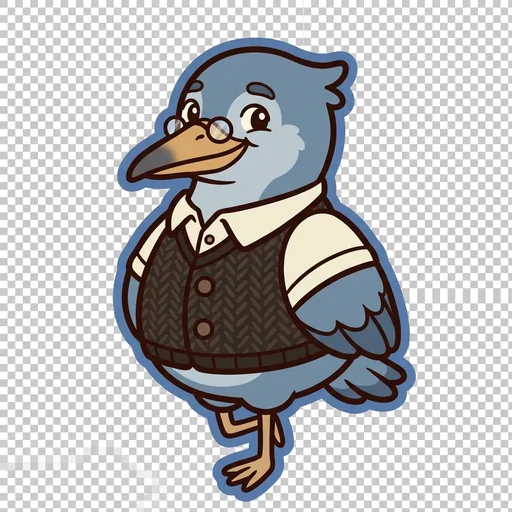
Duty
Deontology / Kantian — upright, principled; sticks to rules even when costly; heron in vest on one leg
-

Care
Care Ethics / Noddings + Gilligan — attentive, present; 'ethics begins in relationship'; otter listening beside empty spot
-

Contract
Contractualism / Scanlon + Rawls — collaborative; 'what could we ALL agree to?'; beaver drawing a fair-rules table
-

Bound
Rights ethics — each person has protections you may not cross, even for a good outcome; pangolin who curls to shield ('some lines you never cross')
-

Kin
Ecological ethics — the circle of concern reaches to animals, living systems, and the not-yet-born; elephant asking 'who else has to live with this?'
-

Tinker
Pragmatism — try a small step, watch what really happens, be willing to change; raccoon with busy testing paws ('try it, watch, be ready to change')
-
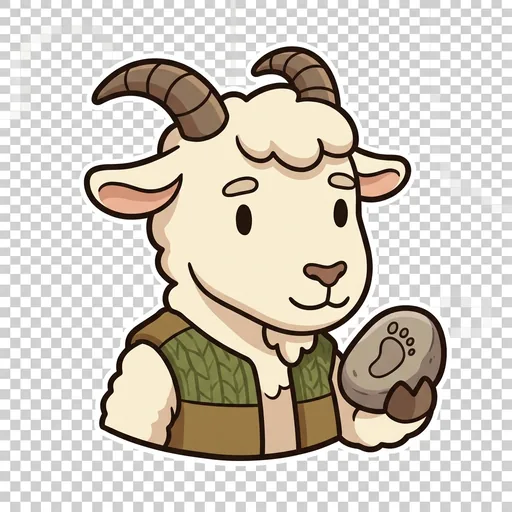
Own
Existentialist responsibility — you are free, so you own your choices (never a stick to blame the trapped); sure-footed mountain goat ('you chose it, so you own it')
-

Sense
Moral sentiment — the heart's feeling of sympathy is real moral information, the start of ethics (not the whole map); soft-eared dog ('first, what does your heart notice?')