
Crouch
FEAR / BRAKE — every well-built character has a *fear* that creates tension with their want. The fear is the *brake.* The interplay of want-and-fear creates *internal conflict*, which is *the engine of character depth.*
Press play to listen along. The line being read lights up as you go.
Show full transcript
Loading transcript…
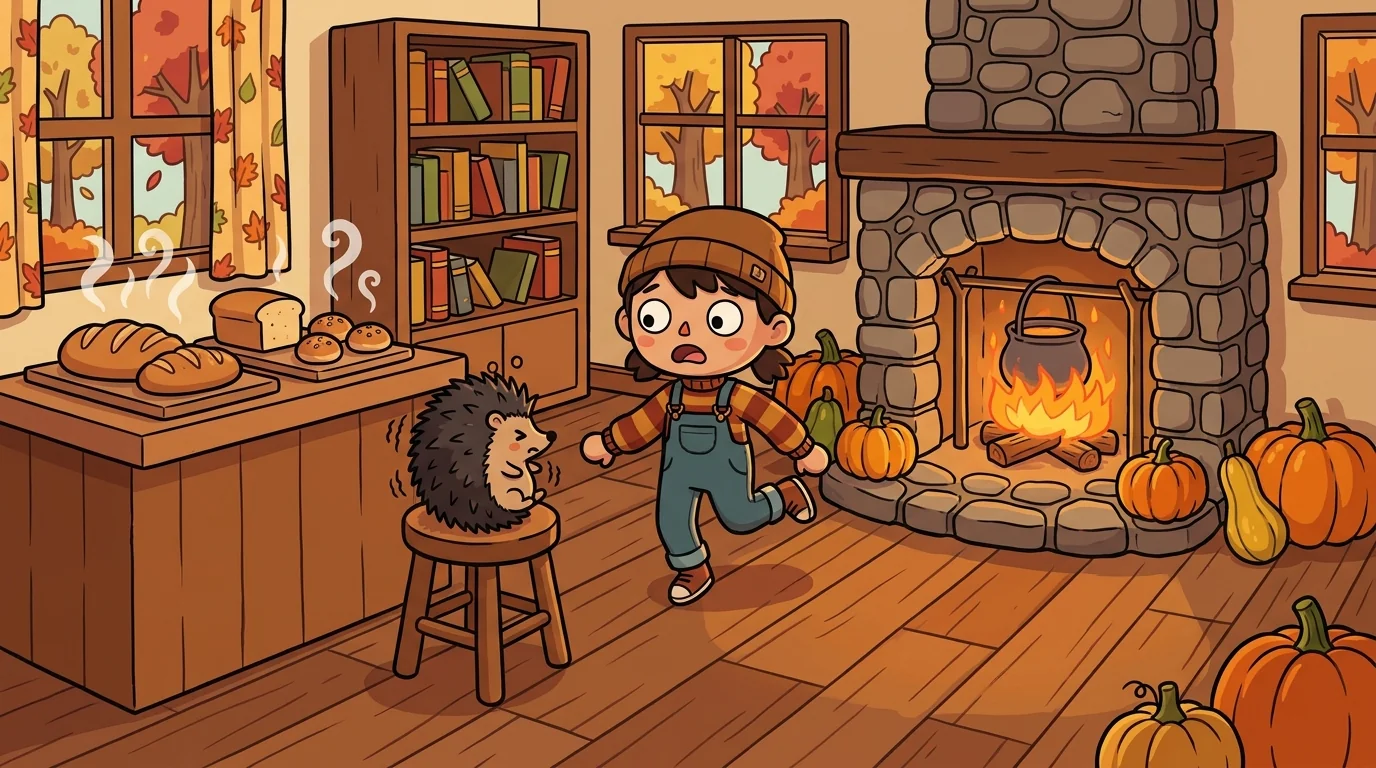
Ink first met Crouch tucked into the deepest corner of the cottage. She sat on a small wooden stool, drawn up so tightly that only the very tips of her dark quills were visible. It was late autumn, and the air already carried the sharp bite of winter. Inside, the cottage was warming up, a small wood-fire crackling cheerfully in the hearth. Windows were shut against the chill, and the kitchen smelled faintly of warm, yeasty bread.
Ink had been moving through the cottage, a meticulous process he undertook each season. He checked every corner, every window frame, searching for the tiniest drafts that might steal warmth. He rounded the side of a tall, overflowing bookshelf, his mind on the next potential cold spot, and almost stepped on the small, dark-quilled object. It was barely noticeable, a shadow against the shadowed wall.
The object flinched. A ripple ran through its quills, which then spread slightly in a clear, protective gesture. Then, with a soft rustle, the creature tucked even tighter, shrinking further into itself. Ink paused, recognizing the movement of a hedgehog.
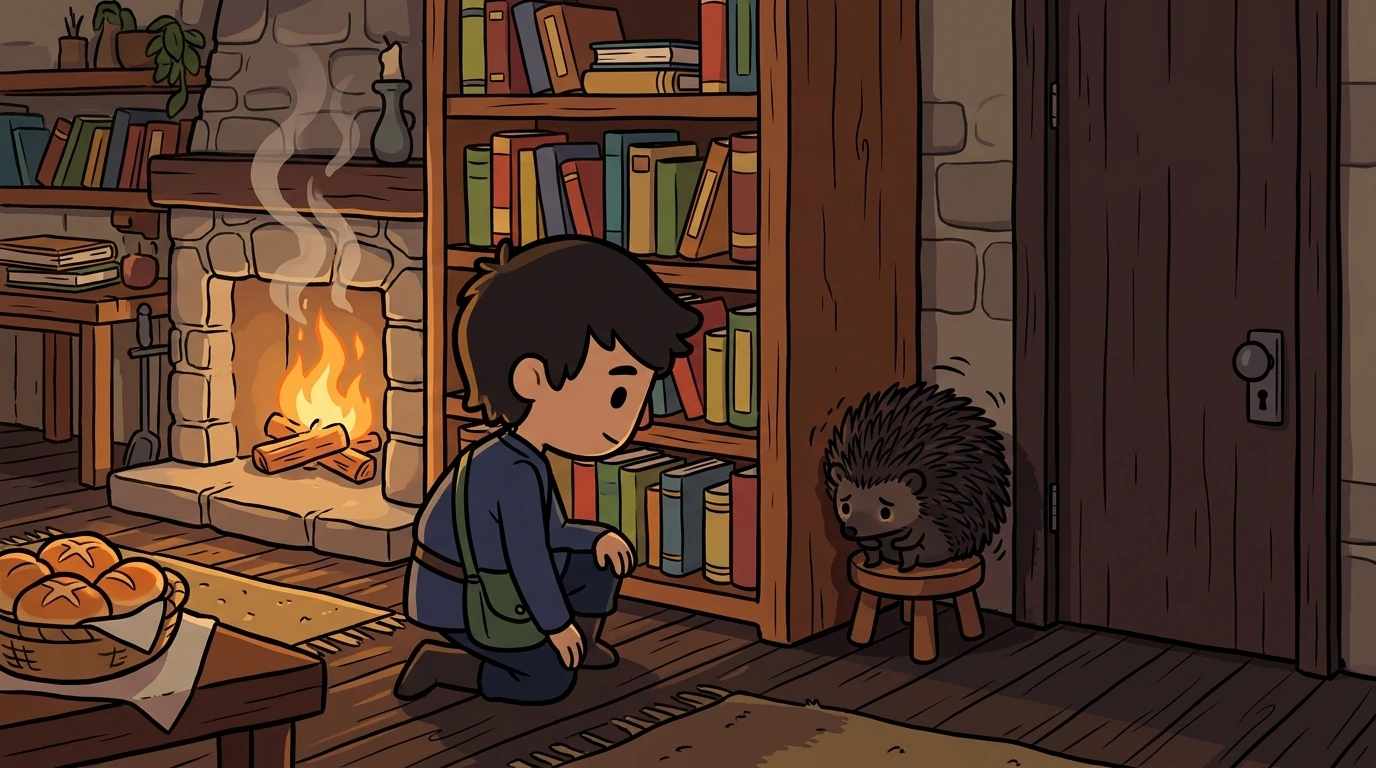
"Excuse me," Ink said, his voice soft. "I truly didn't see you there."
A tiny, careful voice emerged from the quill-ball. "That is all right. I am Crouch. I was hiding."
Ink knelt slowly, curious. "Hiding from what, Crouch?"
There was a long, heavy pause. The fire in the hearth snapped, and the scent of woodsmoke seemed to deepen. Finally, Crouch spoke again, her voice barely a whisper. "From the wooden door."
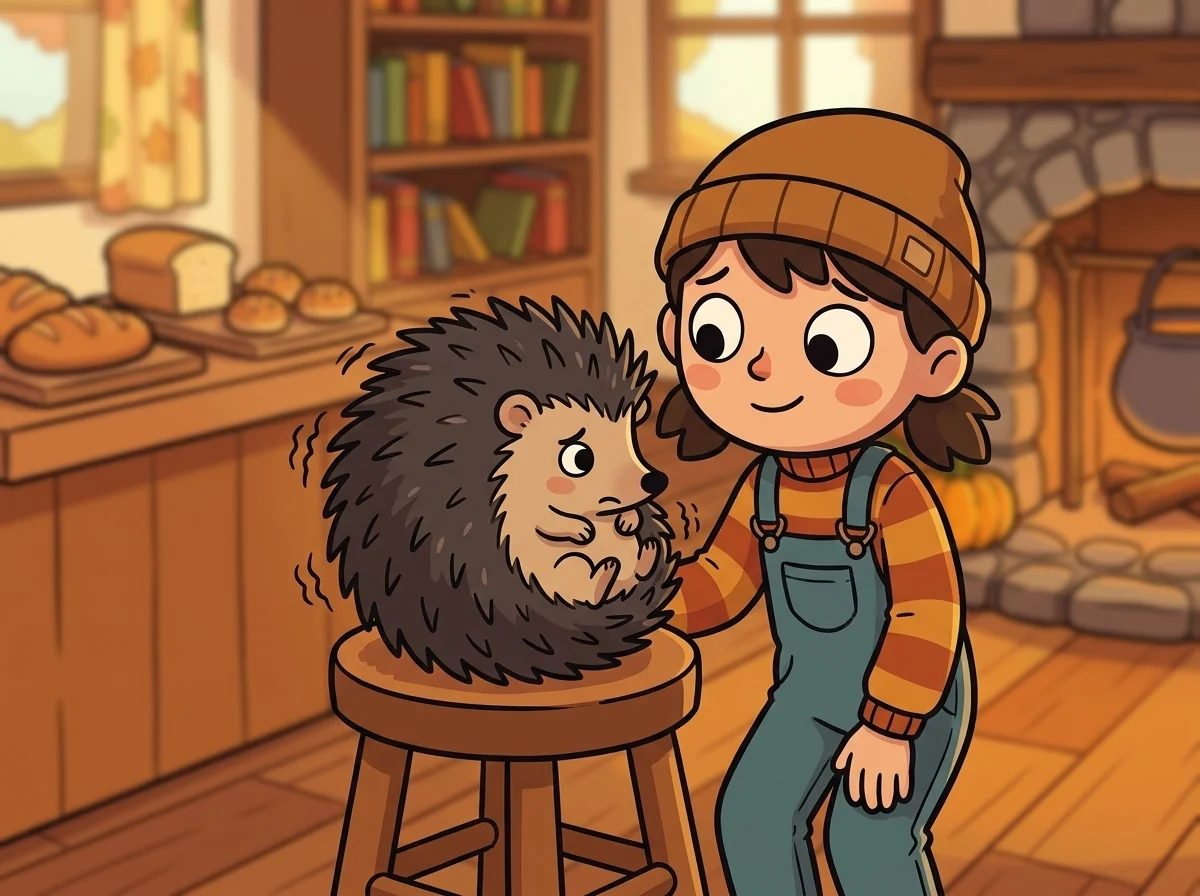
Ink looked around the cozy cottage. Wooden doors were everywhere: the sturdy front door, the back door leading to the garden, the one to the kitchen, and the narrow door to his small writing-room. He frowned slightly, trying to understand. "Which wooden door are you talking about?"
Crouch remained a tight ball, but her voice held a note of persistent worry. "I don't know which one. It's in every scene. I see it in every room I am in. It is always there. I don't know what is behind it. I don't want to know. So I tuck."
Ink considered this. He had encountered many characters with many fears, but this was unique. A recurring, unnamed, uninvestigated terror. It was a perfect example of a foundational element of character building. He realized he was smiling.
"You are a hedgehog," Ink said, his voice thoughtful, "with a very specific, recurring fear. And you never investigate it."
"Yes," Crouch confirmed, a faint rustle of quills.
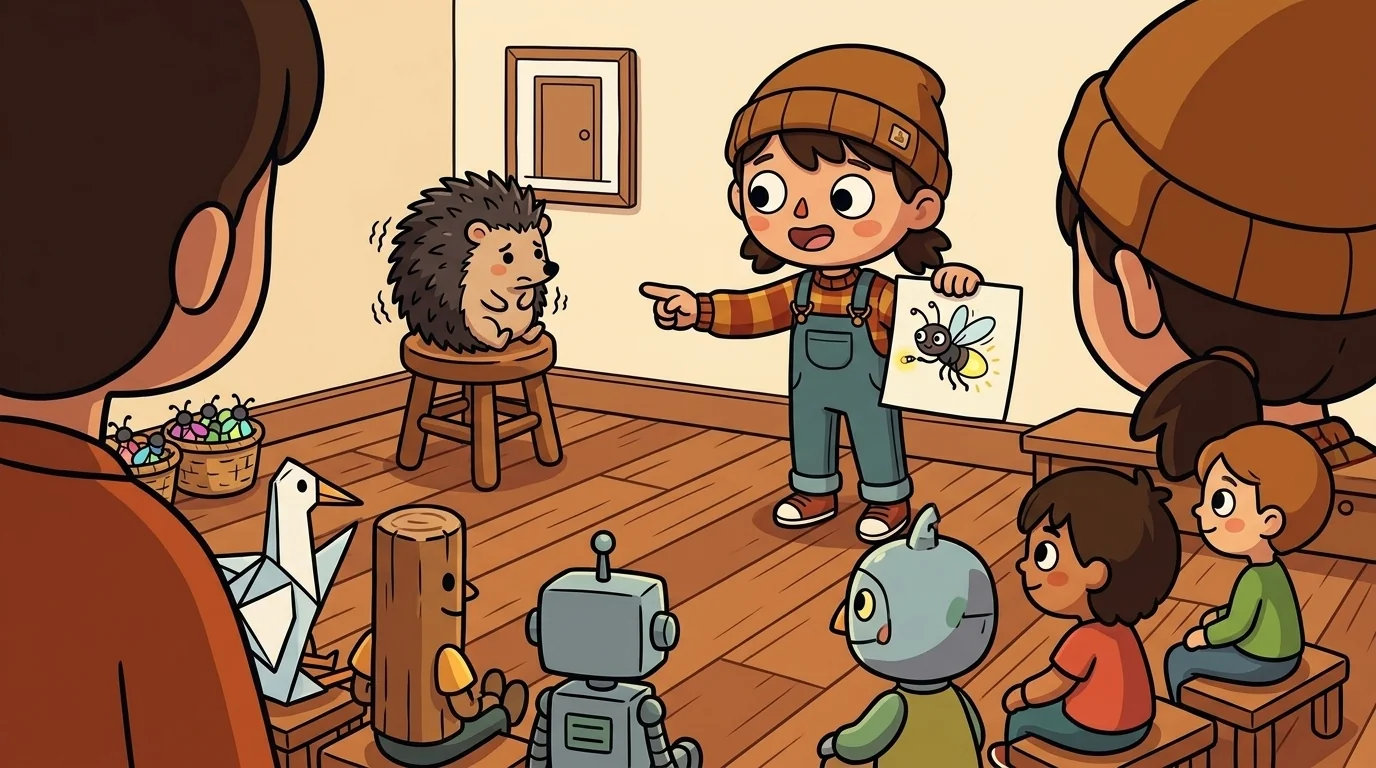
"That," Ink declared, a sudden spark in his eyes, "makes you an incredibly well-developed character. Your fear is named — the wooden door. It is recurring — you see it in every scene. And it is unresolved — you never investigate what lies beyond it. This is exactly how character fear functions in stories." He leaned a little closer. "Would you consider coming to my classroom? You could help me teach this concept to my students."
Crouch was silent for a moment. "I would have to bring the wooden door with me," she said finally.
"That is perfectly fine," Ink replied, already imagining the visual aid.
Crouch agreed. Since that day, she has been a fixture in Ink's *CharacterForge* classroom. She sits on her small wooden stool, always slightly tucked, in every lesson. Behind her, visible to every student, to Ink, and to Crouch herself, is a small, painted wooden-door icon. The icon never changes. It never opens. It never reveals what lies behind it. It is simply always there. And Crouch is always slightly tucked, a living embodiment of the lesson.
In Ink's lesson on character fear, he often gestures toward Crouch. She is, as always, a small, dark shape on her stool, the wooden door icon a silent sentinel behind her. "This is Crouch," Ink begins, his voice clear and engaging. "She has a fear: the wooden door. She doesn't know what's behind it, and she definitely doesn't want to find out."
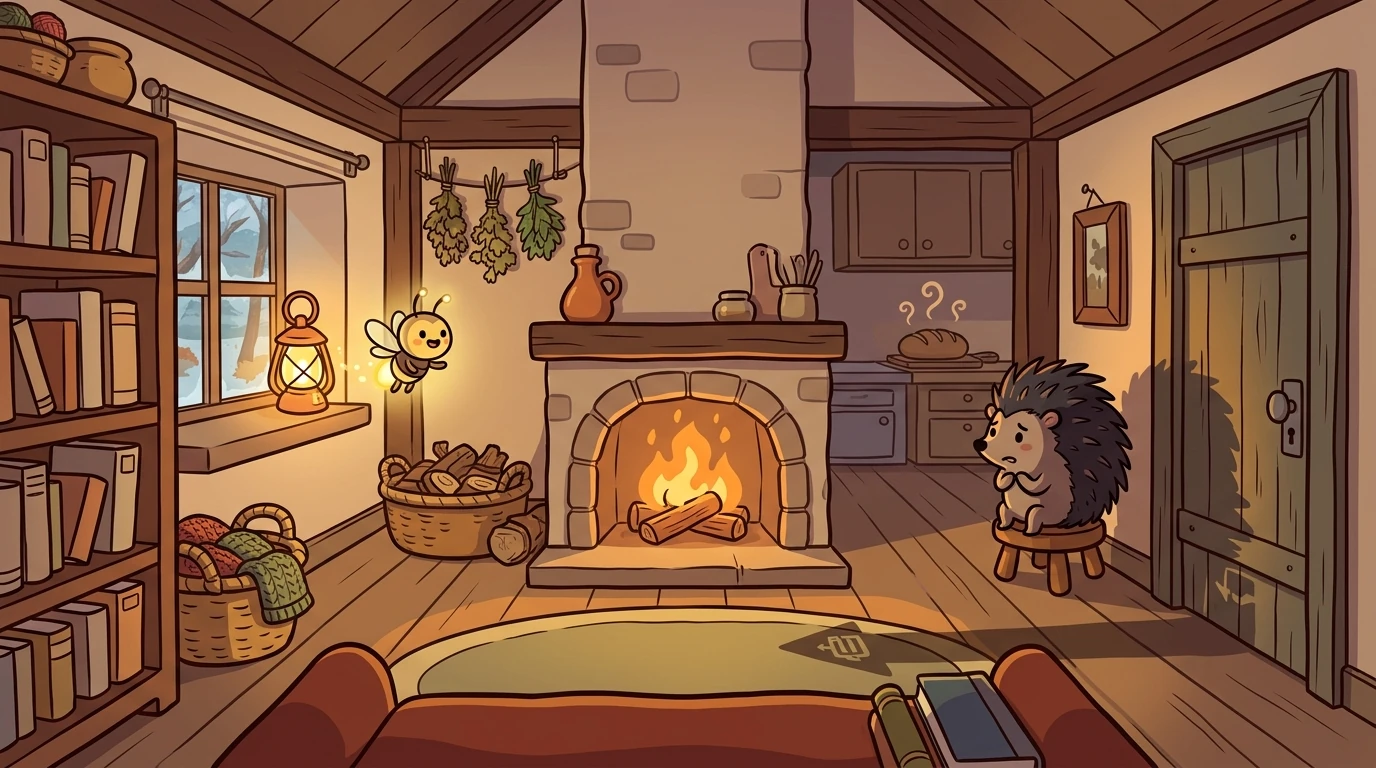
He continues, his gaze sweeping across the attentive faces of his students. "Crouch's fear is named — it's the wooden door. It's visible in every scene she inhabits. And it's unresolved — she never confronts it. This is how character fear works in stories. This fear, this thing she refuses to face, acts as the *brake on her motion." He emphasizes the word brake*, letting it hang in the air. "It stops her from moving forward, from exploring, from changing."
He then shifts his focus, introducing another key concept. "Think about Beacon, Crouch's friend. Beacon has a powerful want — the warm light. Crouch, on the other hand, has a profound fear — the wooden door. A truly well-built character often possesses both. The interplay between what a character wants and what they fear creates what we call internal conflict. The character desires something deeply, but an obstacle, often tied to their fear, stands in the way. The story, then, becomes the character's struggle, their journey pushing through that fear toward their want. That tension, that push and pull, is what makes a character feel real and relatable."
After hearing this lesson, students sometimes draft characters who have only a want, making them feel flat and unstoppable. Others create characters with only a fear, leaving them stuck and unable to progress. Ink patiently works with them, guiding their understanding. "What does your character truly want?" he asks, his pen hovering over their notes. "And what do they fear? Both must be clearly named. The heart of your story will live in that interaction, that constant push against the *brake*."
Crouch nods in agreement, her quills barely shifting. She never looks directly at the wooden-door icon. She has never looked at it. In her small, careful voice, she adds, "The fear is the *brake*. Name it; the character has to push past it to move."
When students ask Ink if writing character fear is difficult, he often quotes Crouch. "It's not hard," he'll say, a slight smile playing on his lips. "It's simply naming the brake*. What truly scares your character? Name it concretely, make it visible. The reader will recognize that fear. The character will struggle with it. And that struggle, that push against the brake*, is where you find true depth."
The CharacterForge ensemble
Crouch is part of CharacterForge's distributed-narrative cast. Each character embodies a different curricular primitive; together they teach the full subject.
-

Beacon
Want / engine — moth-tween who walks toward a small floating warm-light she can never quite reach (the want IS her motion)
-

Eight
Contradiction / depth — octopus-tween with eight arms in eight different directions (three forward / three back / two crossed)
-

Click
Voice / signature — raven-tween in librarian-glasses with a portable typewriter (same idea, different mouth, different feel)
-

Patch
Backstory / the past — soft brown rabbit-tween with one mended patch on her ear from an old day; everything she does traces back to that healed-over moment
-
Snag
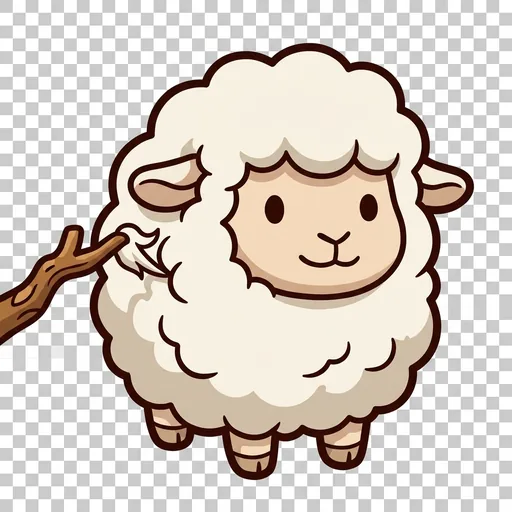
The flaw — round woolly sheep-tween who always takes the left path and snags his wool on the same branch (the repeated mistake that makes a character feel real)
-

Foil
The foil / contrast — thin silvery foil-tween who lies behind another character so their colors show brighter (you see someone best beside who they are not)
-

Molt
The change / arc — hermit-crab-tween who keeps a row of outgrown shells, smallest to largest (a character is not the same at the end as at the start)
-

Fidget
The tell / mannerism — quick grey mouse-tween who taps her paw twice before she speaks (the small repeated gesture that makes a character recognizable)
-

Worth
The stakes — sturdy badger-tween who carries one precious glowing bead in cupped paws (what a character has to lose is what makes us care)