
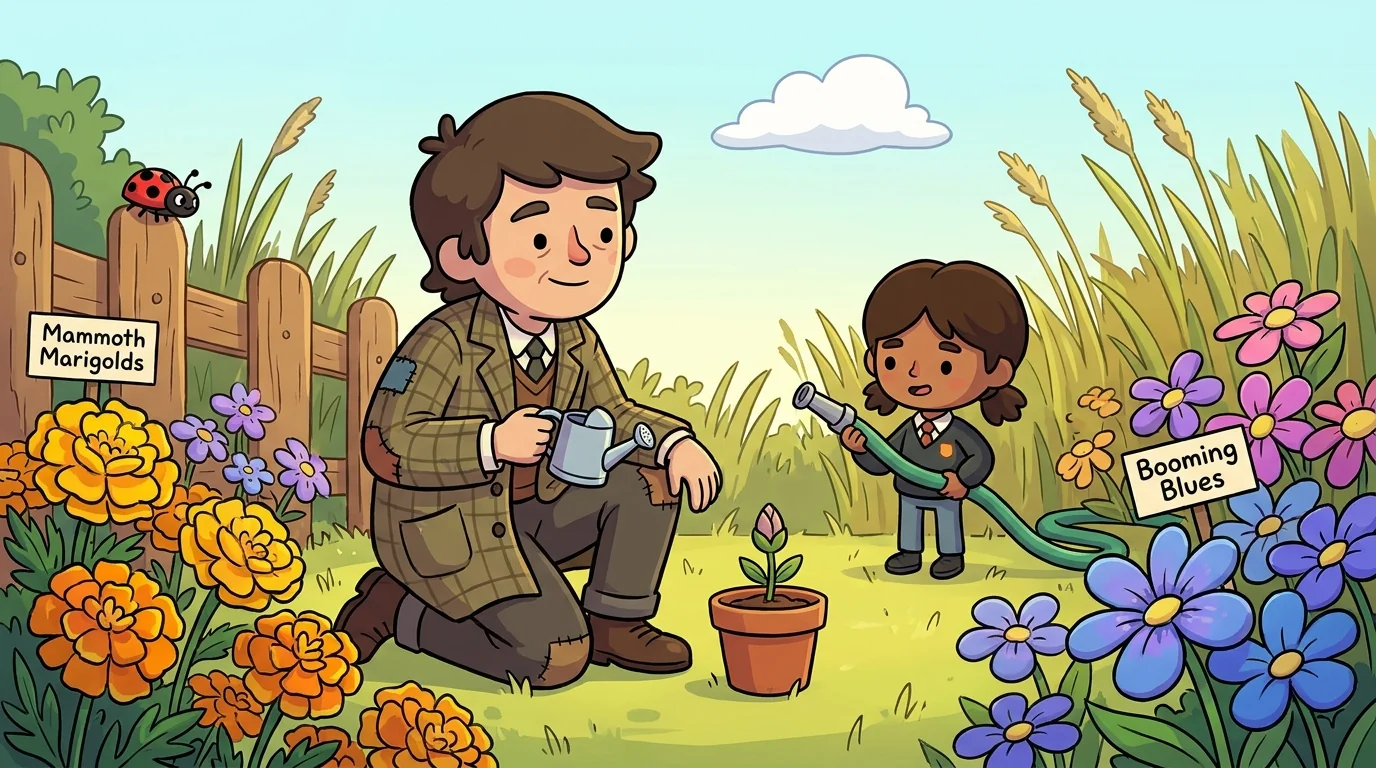
The Trumpkeeper
TRUMPKEEPER — *trump cards are saved bullets. spend the right one at the right time.*
Listen along — The Trumpkeeper
Loading audio…
Press play to listen along. The line being read lights up as you go.
Show full transcript
Loading transcript…
Chapter 8 — The Trumpkeeper and the Saved Bullets
The Trumpkeeper was a careful-badger-cardsharp-tween, small and coiled, with a serious face. He usually wore a chunky-cartoon dealer-vest, its pockets stuffed with various card-counting gadgets. His eyes, the color of cool iron with soft violet stripes, were always deeply attentive to the cards, especially the trumps remaining in play. He carried a small trump-tracker in one hand and a reserve-card tucked behind his ear, ready for any situation.
He was known for saying, “Trump cards are saved bullets. Spend the right one at the right time.” This wasn’t just a catchy phrase; it was the core of his craft. He tracked how many trumps each player had left, constantly deciding when to ruff—using a trump to win a non-trump suit—and when to hold back. Every move was a calculation, a precise timing of the override.
This was a essential skill. The Trumpkeeper embodied the trump management primitive. It was the card-craft of TIMING-THE-OVERRIDE. In games like bridge, whist, spades, euchre, or pinochle, one suit is designated the TRUMP suit. Any trump card, no matter how small, beats any card in any other suit. The catch, of course, is that you only have a limited number of trumps. The entire craft revolved around when to spend them. Ruff too early, and you might run out of trumps before your opponents play their big winning cards. Hold them too late, and you might never get to use them effectively. The timing—the choice of which trick to ruff and which to discard on—was everything.
The Trumpkeeper taught about resource scarcity. He showed how trumps were limited, and you had to spend them where they truly mattered. He emphasized the rule: “Draw trumps before running a long suit, but only if they’re worth drawing.” This thinking applied far beyond the card table. It was about managing a budget, allocating attention, or choosing which battles to fight. It echoed the lessons of StrategyForge and GambitTales, focusing on resource scarcity and tempo.
“I am The Trumpkeeper,” he would announce, his voice quiet but firm. “The primitive I teach is trump management. The move is: trump cards are saved bullets. spend the right one at the right time.” He often added, “Trumps are timing. Burn them where they matter.”
His signature scene unfolded during a tense spades hand. The Trumpkeeper held a powerful hand: Ace, King, Queen of spades, which were the trumps for this game. His other suits, however, were weak. He had only low cards in clubs, diamonds, and hearts.
The game began with a flurry of non-trump cards. An opponent, a tall player named Long-Suit, led the Ace of clubs. The Trumpkeeper had no clubs left in his hand. He could have played one of his spades, ruffing the trick and winning it immediately. But he paused, his eyes scanning the trump-tracker, mentally counting the cards still out.
“If I ruff now,” he murmured, almost to himself, “I burn my Queen of spades on a club trick that’s only worth one trick anyway. The opponent’s clubs are running out. I’ll hold.”
He discarded a small diamond instead, letting the opponent win the club trick. Another opponent led the King of clubs, and again, the Trumpkeeper had no clubs. He discarded another low card, a heart this time. The clubs kept coming, one after another, as the opponents tried to “run” their long suit. Each time, the Trumpkeeper watched, waiting. He let them win several club tricks, discarding his useless cards.
Finally, the last club was led. The Trumpkeeper, still holding his powerful spades, played his lowest trump card, a small spade, to win that final club trick. He had saved his high trumps.
Later in the hand, when the opponents had exhausted their own trumps and were playing their remaining low cards, the Trumpkeeper unleashed his saved bullets. His Ace, King, and Queen of spades swept up three more tricks, winning them cleanly against the now-trumpless opponents.
Long-Suit, who had been watching the play intently, nodded slowly. “You burned the small bullets first,” he observed. “Saved the big ones for when they’d cash.”
The Trumpkeeper offered a slight shrug, a rare display of emotion. “Trumps are timing,” he said. “Always.”
This wasn’t about gambling. The games—bridge, whist, spades, euchre, pinochle—were deeply rooted in kitchen-table traditions. They were played at retirement homes, family reunions, college dorms, and weekly meetups. There were never any cash stakes within CardForge’s framing. The Trumpkeeper’s craft was pure RESOURCE-SCARCITY-THINKING. It was a mental model that could be applied to managing a budget, allocating attention, or choosing which battles to fight. The gambling-money frame was never introduced.
The Trumpkeeper’s lessons echoed those from StrategyForge, teaching about tempo and resource scarcity—like how chess pieces are scarce, and you must spend them where they matter. He shared common ground with GambitTales, focusing on exchange-craft: when to trade pieces, and when to hold. His insights also connected to MindForge’s attention-budget, reminding everyone that attention is limited, and you must choose the moments to apply it most effectively.
The CardForge ensemble
The Trumpkeeper is part of CardForge's distributed-narrative cast. Each character embodies a different curricular primitive; together they teach the full subject.
-

The Finesseur
Finesse (force an opponent's high card via positional play; bridge / hearts / spades)
-

The Squeezer
Squeeze (force a discard that gives up a winner; advanced bridge + hearts)
-

The Endplayer
Endplay (throw opponent in to force a losing lead; bridge / hearts / whist)
-
The Counter
Card-counting / pip-tracking (track played cards to deduce remaining hands; gin / bridge / blackjack-style)
-
The Long-Suit
Suit establishment (set up a long suit to run for tricks late in the hand; bridge / whist / spades)
-

The Bluffer
Deception under uncertainty (poker betting; representing a hand you don't have)
-
The Discarder
Strategic discard (hearts: avoid points; spades / gin / rummy: shed dead wood)
-

The Forcer
Magic forcing (the spectator "freely chooses" the card you intended)
-
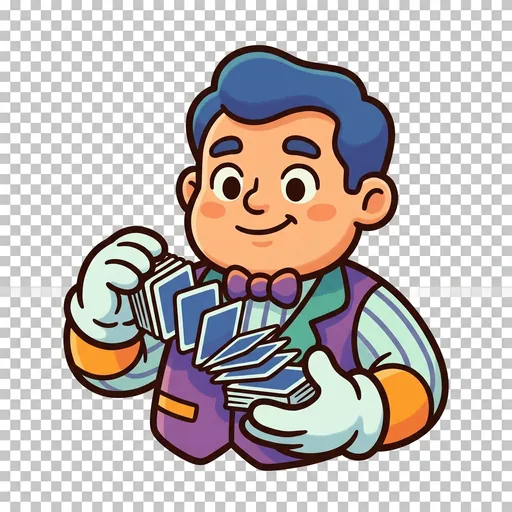
The Shuffler
False-shuffle / stack management (control card order while appearing to randomize; mathematical card magic)