
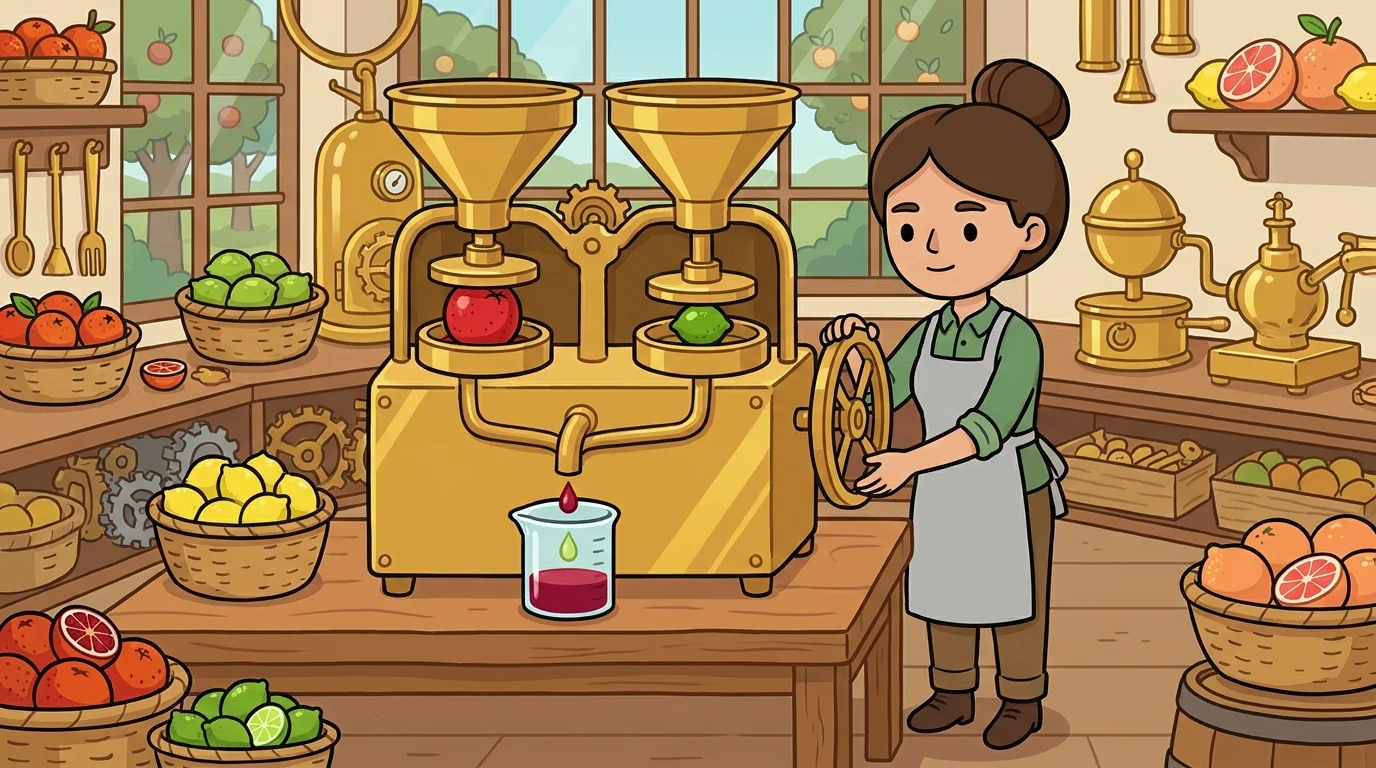
The Squeezer
SQUEEZE — *late in the hand, an opponent who guards two suits must let one go.*
Listen along — The Squeezer
Loading audio…
Press play to listen along. The line being read lights up as you go.
Show full transcript
Loading transcript…
Chapter 2 — The Squeezer and the Two-Suit Choice
The Squeezer didn’t just play cards; they became the cards. They sat coiled on their stool, a small, pewter-grey pangolin with soft amber stripes, their chunky-cartoon dealer-vest a little too big. Their eyes, though, were sharp and steady, always fixed on the table, tracking every discard, every played suit. They didn’t fidget. They didn’t even blink much. Just watched.
The Squeezer was a master of patience. They waited, sometimes for an entire hand, for the perfect moment. Their favorite saying, delivered in a quiet, almost dry tone, was: “Late in the hand, an opponent who guards two suits must let one go.” This wasn’t just a saying; it was their entire philosophy of the game. It was the heart of what they called the squeeze.
The squeeze wasn’t about winning a trick directly. Anyone could play a high card and take a trick. The real craft, the Squeezer believed, was in forcing your opponent to give up a trick they didn’t want to lose. It was a victory that happened not in your hand, but in theirs. You didn’t take the trick; you forced the discard.
The Squeezer taught this by doing. They showed how to count cards, how to know exactly who held what. They explained how some cards were “deferred winners”—cards that wouldn’t win now, but would later, if the conditions were right. And they talked about “threat cards,” the ones that made an opponent sweat. All of it came together in the squeeze.
“I am The Squeezer,” they would say, their voice barely a whisper. “The primitive I teach is the squeeze. The move is late in the hand, an opponent who guards two suits must let one go.”
The Finesseur, a sharp-eyed character with a knack for elegant plays, often watched The Squeezer with quiet admiration. Most players focused on their own hand, on what they could win. The Squeezer, however, focused on what the opponent couldn’t keep.
One afternoon, the Squeezer sat across from a player known for their stubborn defense. The hand was almost over, just two tricks left. The table was quiet, the air thick with concentration. The Squeezer’s own hand held the Ace of hearts and a small, useless-looking heart. They also had the Ace of clubs. Not much, it seemed, for two tricks.
But The Squeezer had been counting. Every card played, every suit followed, every discard. They knew, with a certainty that felt almost magical, that the King of hearts and the Queen of clubs were both in their opponent’s hand. The opponent was the sole guard of both suits. They were the only one who could stop the Squeezer’s second heart winner, and the only one who could stop their second club winner.
The Squeezer’s fingers, surprisingly agile for their chunky-cartoon form, selected the Ace of hearts. They laid it on the table. Thwack.
The opponent hesitated. They had to play a heart, of course. But their King of hearts was precious. It was their only way to win the Squeezer’s low heart later. If they threw it now, the Squeezer’s small heart would become a winner. So, they reluctantly played a lower heart, keeping their King. The Squeezer collected the trick, a small, satisfied nod.
Now, only one trick remained. And The Squeezer still had the Ace of clubs.
They picked it up. Their eyes flicked to the opponent, whose face was a mask of concentration. The Squeezer played the Ace of clubs. Thwack.
The opponent froze. They had to play a club. But they also had to keep their King of hearts to stop the Squeezer’s low heart. If they discarded the King of hearts now, the Squeezer’s low heart would win the last trick. But if they discarded their Queen of clubs to keep the King of hearts, then the Squeezer’s now-bare small club would win. They couldn’t protect both. They were trapped.
A long moment passed. The opponent’s brow furrowed. Their gaze darted between the remaining cards in their hand, then to the Squeezer’s calm, waiting face. Finally, with a sigh that seemed to deflate them, they threw the Queen of clubs onto the table.
The Squeezer didn’t smile. They simply played their small, previously useless heart. It was now a winner. Two tricks, from what had looked like only one.
The Finesseur, who had been watching intently, clapped softly, a quiet, almost reverent sound. “That’s a positional masterpiece,” they murmured, their voice filled with respect.
The Squeezer gave a slight, almost imperceptible shrug, their pangolin scales shifting. “That’s just counting,” they said, their voice still quiet. “They couldn’t keep both. So I made them choose.”
The game of bridge, in The Squeezer’s hands, wasn’t about luck or flashy moves. It was a thinking-game, like chess, a puzzle of constraints and possibilities. Every card held a threat, every discard a forced decision. The Squeezer simply understood how to make those decisions impossible for everyone else.
The CardForge ensemble
The Squeezer is part of CardForge's distributed-narrative cast. Each character embodies a different curricular primitive; together they teach the full subject.
-

The Finesseur
Finesse (force an opponent's high card via positional play; bridge / hearts / spades)
-

The Endplayer
Endplay (throw opponent in to force a losing lead; bridge / hearts / whist)
-
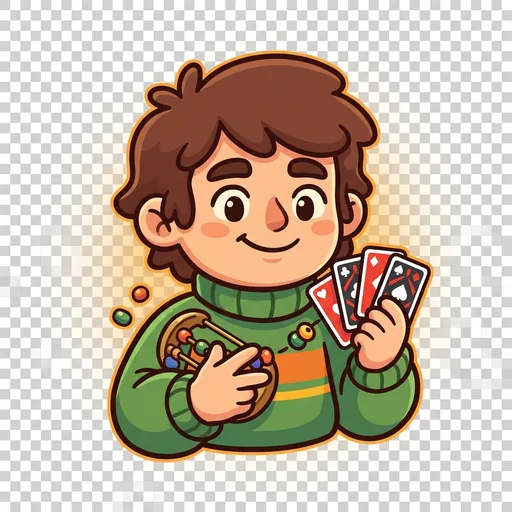
The Counter
Card-counting / pip-tracking (track played cards to deduce remaining hands; gin / bridge / blackjack-style)
-
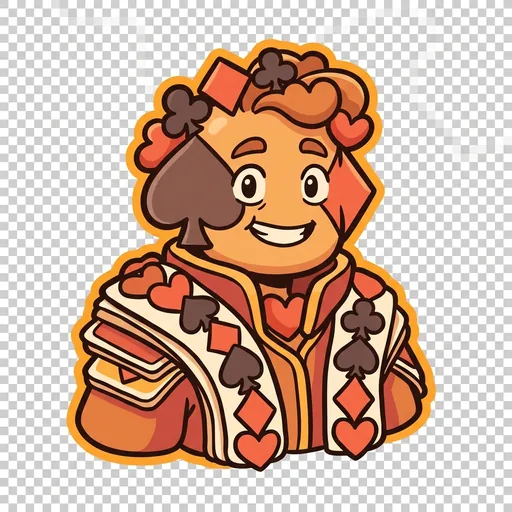
The Long-Suit
Suit establishment (set up a long suit to run for tricks late in the hand; bridge / whist / spades)
-

The Bluffer
Deception under uncertainty (poker betting; representing a hand you don't have)
-
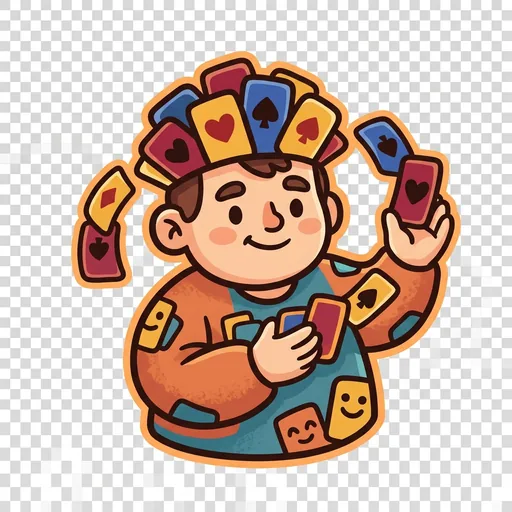
The Discarder
Strategic discard (hearts: avoid points; spades / gin / rummy: shed dead wood)
-

The Trumpkeeper
Trump management (when to ruff, when to hold; whist / spades / euchre / pinochle)
-
The Forcer
Magic forcing (the spectator "freely chooses" the card you intended)
-
The Shuffler
False-shuffle / stack management (control card order while appearing to randomize; mathematical card magic)